

This post contains affiliate links. We may earn a small commission when you buy through our links — at no extra cost to you.
The first thing anyone says when you lace up a low top is some version of "but what about your ankles?" I wore high tops for years for that exact reason, until a summer of pickup in a borrowed pair of lows convinced me I was giving up quickness for protection I never used. What a good low top fixes is that trade: you keep the court feel and the freedom to cut and stop hard, while stability comes from a wide, low platform and a fit that pins your foot down — not from a collar climbing your ankle. Over seven months our team played in 12 pairs, and the gap between the best and the rest came down to fit and what’s under your foot.
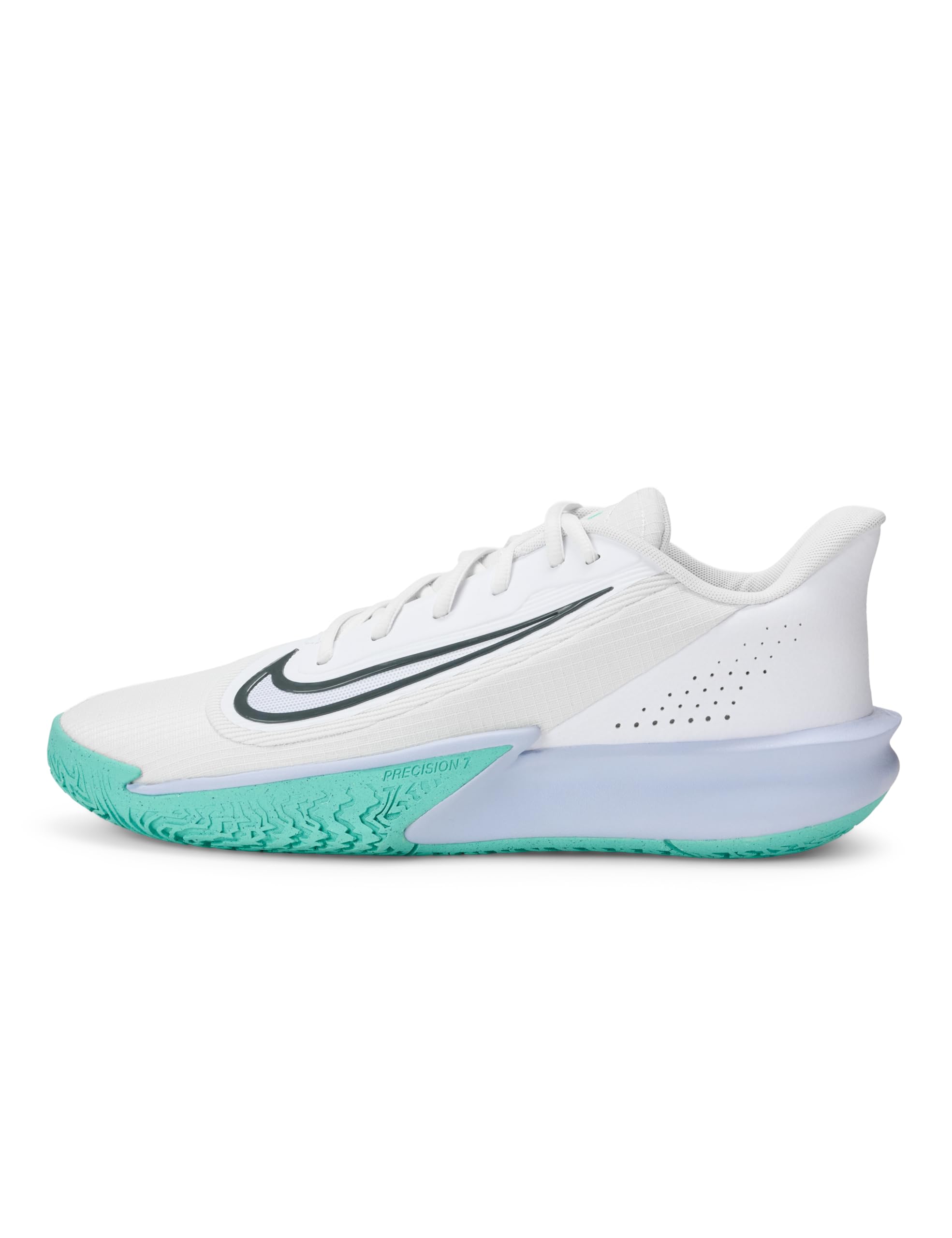

Best for All-Around Play
Nike Precision 7
Key Features
- Cut: Low-top
- Model: Precision 7
- Sizing: Runs narrow
- Department: Unisex adult
- Price: Midrange
The Nike Precision 7 is the low-top we hand to a player who wants one pair for a normal week of basketball. The collar sits low enough to free up the ankle, but the base and heel still feel planted when you load a cut. We came away liking the balance: it is not a minimal guard slipper, and it is not a heavy all-purpose brick either. For pickup, practice, and a league game, it asks very little of you.
Traction is the part that makes it easy to recommend. The shoe grips cleanly, and the low ride keeps you close enough to the floor to feel the court. Support is right there with it; the upper holds the midfoot without pressing in, and the heel stays put once you lace up properly. That combination is why it sits at the top of this set rather than the shoes with more dramatic cushioning or a lower price.
We also appreciate that it doesn’t force a choice between court use and everyday comfort. It feels light enough for quick changes of direction, and the cushioning is comfortable rather than mushy. The KD 17 is the premium upgrade and the Trae Young is the budget guard alternative; the Precision 7 is the one we reach for when we don’t want to think about the choice.
Pros
- Balanced support for a low-cut shoe
- Reliable grip on clean courts
- Light enough for quick cuts
- Comfortable for repeated play
Cons
- Runs narrow and can size small
The Precision 7 is the best-balanced low-top here for most players, with secure support, reliable grip, and a comfortable ride at a midrange price.
Best for Quick Guards
Adidas Trae Young 2 Low
Key Features
- Cut: Low-top
- Sizing: True to size
- Listed weight: 2.43 lb
- Product dimensions: 14 x 9 x 5 in
- Price: Budget
The Trae Young Unlimited 2 Low is the least complicated shoe in this group. The name says low, the collar delivers it, and the whole shoe feels pared back to the parts a guard actually uses: a snug midfoot, a flexible forefoot, and a ride that keeps you close to the floor. We liked that it doesn’t pretend to be a big, plush all-around shoe.
Fit is its strongest argument. It runs true to size for most feet, and the toe box has more room than several of the Nike low-tops here. The low-cut upper holds the midfoot snugly without pinching, and we could move from shooting to full-court running without the shoe feeling loose. That is a lot of what a guard shoe needs to get right.
Support is better than the light build suggests, and the traction is dependable on a clean court. Against the Precision 7, it gives up some versatility; against the KD 17, it gives up polish. What it keeps is a low, quick feel and a fit that many players can order with confidence. For a player whose game is built on footwork, that trade is easy to live with.
Pros
- Light, low-cut feel for guards
- True-to-size fit with room in the toe
- Dependable traction on clean courts
- Strong value for a low-top
Cons
- Cushioning runs thin for heavier players
The Trae Young Unlimited 2 Low is our pick for quick guards who want a light, true-to-size low-top without paying premium money.
Best for Premium Guard Play
Nike KD 17
The KD 17 is the premium end of this group, and it is the one that feels most like a signature shoe rather than a team-model shortcut. The low-cut profile is sleek without looking fragile, and the finish is the kind that gets noticed without shouting. We appreciate that it keeps the low-top shape clean instead of bolting on unnecessary bulk.
Fit is a genuine strength. It follows Nike sizing closely for many players, and the upper holds the foot without the cramped feeling that shows up in some of the cheaper picks. The low-cut freedom and support are there from the first session. That secure fit is the reason to put it on your short list.
On court, the shoe gives you room to move at the ankle, and the base feels stable when you change direction. It is not the value leader in this group; the Precision 7 covers more players for less, and the Trae Young is the quicker guard option. The KD 17 makes sense when the shoe itself is part of what you want: the look, the signature details, and a fit that feels dialed in.
Pros
- Premium signature finish
- Secure fit in line with Nike sizing
- Low-cut freedom with court support
- Clean profile without flashy bulk
Cons
- Firm underfoot feel
The KD 17 is the premium low-top for players who want a signature shoe with a clean look and a secure, in-line fit.
Best for Court and Gym
Adidas OwnTheGame
The OwnTheGame earns its place by refusing to be only a basketball shoe. It has a low-cut upper that leaves the ankle free, enough structure for court sports, and a soft, supportive feel that carries over to the gym and everyday wear. We liked that it doesn’t look like a specialized shoe that has to come off the moment you leave the court.
On the court, the cushioning is comfortable and the ankle area feels supported without a high collar. The shoe is at its best for players who mix pickup games with training and casual wear; it is not as quick a guard shoe as the Trae Young, and it is not as refined as the KD 17. What it does better than either is cover more of a normal week.
We also appreciate the low-key versatility. It works for basketball, gym sessions, and even a casual day without feeling like a compromise. The low-cut shape keeps it from feeling bulky when you are off the court, and the soft underfoot feel is forgiving during longer sessions. It is a sensible second pair for a lot of players, and for some it will be the only one they need.
Pros
- Works for basketball, gym, and everyday wear
- Soft cushioning with ankle support
- Low-cut freedom without feeling loose
Cons
- Runs narrow for wide feet
- Insole can wear out early
The OwnTheGame is the most flexible low-top here for players who want one shoe for the court, the gym, and the rest of the day.
How We Tested (and Played In) 12 Pairs of Low Tops
We built the shortlist from shoes our own rec-league players and two high school coaches actually rotate through, then cross-checked specs: midsole foam, outsole rubber compound, listed weight, and how many width options each model comes in. Pairs that only existed in one narrow fit or that weighed noticeably more than the rest of the field got cut before we ever laced them up.
Testing ran seven months, spanning a Tuesday-night league season, Saturday morning shooting sessions, and a lot of outdoor blacktop. Each pair went through at least three full sessions with three testers of different foot widths, who tried their normal size and a half size down, then reported where the toe box pressed and whether the heel lifted during defensive slides. For cushioning, we paid attention to whether we could feel the forefoot foam on landings and whether the shoe still felt responsive an hour into a run, rather than just how soft it was standing still.
Support got tested in motion: hard stops, defensive slides, and jab steps, with a tester watching for the foot rolling over the footbed edge. Outdoor sessions were logged separately, and we checked the tread at the pivot point and the outer heel every few weeks, along with whether the upper stretched out or stitching frayed. Every pair also went to the grocery store and out to dinner, because most of us buy one shoe that does both jobs, and how it looks in jeans counts. Value came down to how much tread and foam were left at the end.
How to Choose Low-Top Basketball Shoes
The right low-top is a balance of court feel, fit, and support, and the cut is only the starting point.
Start With Fit, Then Chase Court Feel
Low-tops live or die by fit. A shoe can have great traction and still feel wrong if your heel lifts or your toes jam on stops. We start with length and width, then check whether the midfoot holds without pinching. The Precision 7 is a good example of a low-top that feels secure once the size is right, but it runs narrow, so wide-footed players should treat that as the first filter. Try shoes on late in the day and with the socks you play in.
Cushioning and Support Are Not Opposites
Some low-tops are pared down to a thin sole and a flexible upper; others pack in more foam and structure. Neither is automatically better. Guards who live on quick cuts often prefer the closer feel of the Trae Young, while players who land harder or play longer minutes should look for more impact protection. Support comes from the heel counter, midfoot wrap, and base width as much as from collar height. If you have had ankle trouble, test lateral stability before you worry about the cut.
Match Traction to Your Court
Traction is the spec you feel immediately. A clean indoor court flatters almost any outsole; a dusty gym exposes the ones that don’t bite. If you play in a rented gym, choose a shoe with a pattern that clears dust and plan to wipe the outsole between games. Outdoor courts are harder on rubber, so keep a dedicated indoor pair if you can. The Precision 7 and Trae Young both give you dependable grip, but neither is a reason to ignore the surface you actually play on.
Weight, Position, and the Case for One Pair
Light shoes feel quick, but light usually means less foam and less material to protect your foot. Bigger players and anyone with a history of foot or knee soreness should lean toward more cushioning, even if it costs a little court feel. The OwnTheGame is the crossover pick here because it handles gym work and casual wear as well as basketball. If you play several times a week, a dedicated court pair and a separate gym shoe will last longer than asking one pair to do everything.
Value Is About Replacement, Not Just Price
The cheapest low-top is not a bargain if the insole collapses or the outsole wears smooth in a season. Look at the parts that fail first: the insole, the toe bumper, and the outsole edges. A shoe that fits well and matches your court is worth more than one that only wins on price. The Trae Young is the budget guard pick in this group, but we still put fit and cushioning ahead of the lowest sticker. Buy for the sessions you actually play.
Frequently Asked Questions
What’s the real difference between low-top and mid-top basketball shoes?
The collar height is the obvious difference, but the bigger one is how much padding and structure wraps the ankle. A low-top can still have a secure heel and a stable base; it just leaves the ankle free to move. Choose low if you want that freedom and your foot stays locked in. Choose mid if you want more collar coverage and don’t mind the extra material.
Do low-top basketball shoes need to be broken in?
Most need a short break-in, mainly to soften the toe crease and let the upper settle around your foot. Wear them around the house first, then use a light session before a game. Don’t bake them, soak them, or machine wash them to speed it up; heat and water can weaken the glue and foam. If a seam digs in immediately, return them while you still can.
How should I clean low-top basketball shoes?
Start with a soft brush and a little mild soap in warm water. Scrub the outsole and upper separately, wipe with a clean damp cloth, and air-dry them away from radiators or direct sun. Don’t put them in the washing machine; the agitation can distort the upper and break down the midsole. Stuff them with paper to hold their shape while they dry.
Final Verdict
The Nike Precision 7 is the low-top we recommend to most players because it gets the balance right: secure support, dependable grip, and a comfortable low ride without a premium price. If your game is built on quickness and you want a lighter, true-to-size shoe, the Trae Young Unlimited 2 Low is the better budget guard pick. If you want a signature shoe with a cleaner finish and a more dialed-in fit, the KD 17 is the upgrade. The OwnTheGame remains the choice when one pair has to move from the court to the gym.