
This post contains affiliate links. We may earn a small commission when you buy through our links — at no extra cost to you.
The best shooting practice is the kind you don’t have to interrupt. Fifteen minutes into a driveway session, though, most of us are spending more time jogging after rebounds than actually shooting — and by the time your kid has missed their tenth free throw in a row, the ball has rolled into the neighbor’s hedge twice. A return system catches the ball off the rim or out of the net and sends it back toward your shooting pocket, so your legs stay fresh and your reps actually add up. The right one does it without wobbling, jamming, or swallowing the ball on the way down.
Over the past six months, my team and I tested 10 return systems in driveways, a backyard, and a borrowed gym, shooting alongside adults and kids who treat every rebound like a race. What separates a great one from a frustrating one usually comes down to how it mounts, what happens when a shot drops dead center, and whether setup is a Saturday project or a 20-minute job. A handful of them turned shooting practice back into actual practice — those are the ones below.


Best for High-Volume Solo Drills
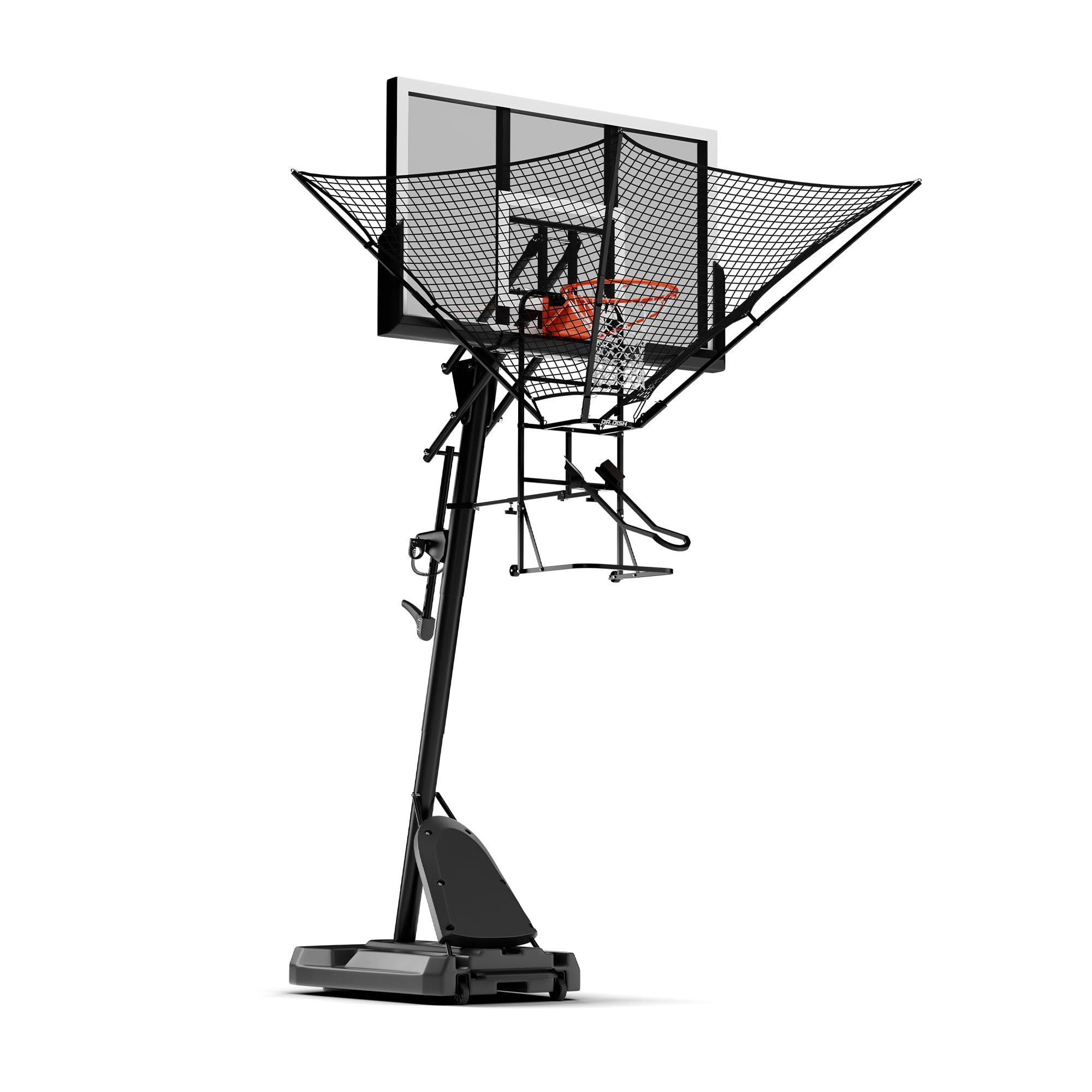
Dr. Dish IC3
Key Features
- Weight: 35 lb
- Return arc: 180° manual rotation
- Shot capacity: Up to 800 shots per hour
- Return coverage: Made and missed shots
- Price: Premium
Two balls and a rotating ramp are the whole idea here. The IC3 is built to keep a shooting workout moving at a pace a rim chute cannot match, because the net catches makes and misses and sends the ball back through a 180-degree ramp. That is the reason it is our top pick: the next shot arrives without a retrieval trip.
The net sits 17 inches above the rim, which we like because it makes flat shots come up short and teaches arc. The trade-off is real: a ball can lodge between net and rim. Loosening the front net slightly and letting it settle before a session helps, and the return ramp is manual, so you rotate it by hand to change the angle.
At 35 pounds with wheels, it moves around a driveway or gym without a second person, though getting it onto the rim is still a two-step job. The 800-shots-per-hour claim with two balls is the number that matters: it changes a shooting session from stop-start rebounding into a rhythm.
Pros
- Returns both made and missed shots
- Up to 800 shots per hour with two balls
- 180-degree manual return ramp
- 35-pound frame rolls on wheels
Cons
- Assembly instructions can be unclear
If you want made and missed shots coming back without a retrieval trip, the IC3 is the return system we recommend for serious solo or team shooting.
Best for Tool-Free Rim Return
ProSlam Return Attachment
Key Features
- Mount: Four-hook tool-free
- Warranty: 1 year
- Return adjustment: Adjustable chute angles
- Rim compatibility: Standard 18 in rim
- Price: Midrange
The ProSlam’s four hooks are the first thing we noticed, and they are the reason it earns a spot. A four-point mount spreads the load across the rim instead of hanging the chute from one or two clips, which is the difference between a return that stays put and one that twists after a hard make.
It is tool-free, which matters more than it sounds: you can move it from the driveway hoop to a gym without hunting for a wrench. The chute adjusts to wing, corner, or top-of-key spots, and the rust-resistant coating is aimed at outdoor use. The one-year warranty is a reasonable backstop for a mount that takes repeated hits.
The four-hook design is the right answer to the wobble that plagues plastic clips. It is a simple, purposeful mount, and the hardware is chosen for the job rather than added to hit a price.
Pros
- Four-hook mount resists twisting
- Tool-free installation
- Adjustable chute for different spots
- Rust-resistant coating for outdoor use
Cons
- Fits standard 18-inch rims only
For a standard 18-inch rim and a tool-free mount that resists twisting, the ProSlam is the rim return we point to first.
Best for Budget Metal Return
GADFISH Return Attachment
Key Features
- Mount: Three metal hooks with screws
- Material: Metal
- Warranty: Lifetime
- Rim compatibility: Standard 18 in rim
- Price: Budget
The GADFISH is a metal three-hook chute with screws at the mount instead of plastic clips. The hooks wrap around the rim, the frame is painted metal, and the chute is fixed unless you loosen the mount and reinstall it to change the return direction.
We like it as the budget metal pick because it addresses the two things that annoy us most about cheap returns: wobble and flex. The screws hold the hooks tighter than clips, and the metal frame does not bow the way plastic can. The trade-off is maintenance: the screws can work loose, so check them before a session and tighten as needed.
Assembly is straightforward, and the lifetime warranty is a strong claim for a product at this end of the market. If you want a simple metal return without plastic clips, this is the value pick.
Pros
- Metal frame is sturdier than plastic
- Three screw-mounted hooks hold tight
- Lifetime warranty
- Straightforward assembly
Cons
- Welds can fail under hard use
If you want metal hardware without a premium price, the GADFISH is our budget pick, provided you keep the screws snug.
Best for Pass-Back Drills
GoSports Pass-Back
Key Features
- Type: Standalone pass-back rebounder
- Storage: Folds for storage
- Stability: Rubber grip feet and two sandbags
- Adjustment: Telescoping legs
- Price: Midrange
Not every return system needs a rim. The GoSports rebounder is a standalone pass-back target, the kind of tool you set up when you want to work on catch-and-shoot footwork, passing accuracy, or quick hands without a partner.
We like it for that job because the telescoping legs let you change the return angle and height, and the rubber grip feet plus two sandbags keep the frame from walking across the driveway. The frame folds for storage, which makes it easier to live with than a permanently set-up net. Sand is not included, so plan to fill the bags yourself.
The boundary is important: it returns passes, not made baskets. If your workout is built around a hoop, this is not the rebounder that feeds you after a make. For solo passing and close-range shooting drills, though, it is the most flexible pick here.
Pros
- Returns passes without a partner
- Telescoping legs adjust angle and height
- Folds for storage
- Rubber feet and sandbags add stability
Cons
- Net is tight to install
- Straps can break
For solo passing and catch-and-shoot drills away from the hoop, the GoSports is the rebounder we reach for.
Best for Driveway Containment
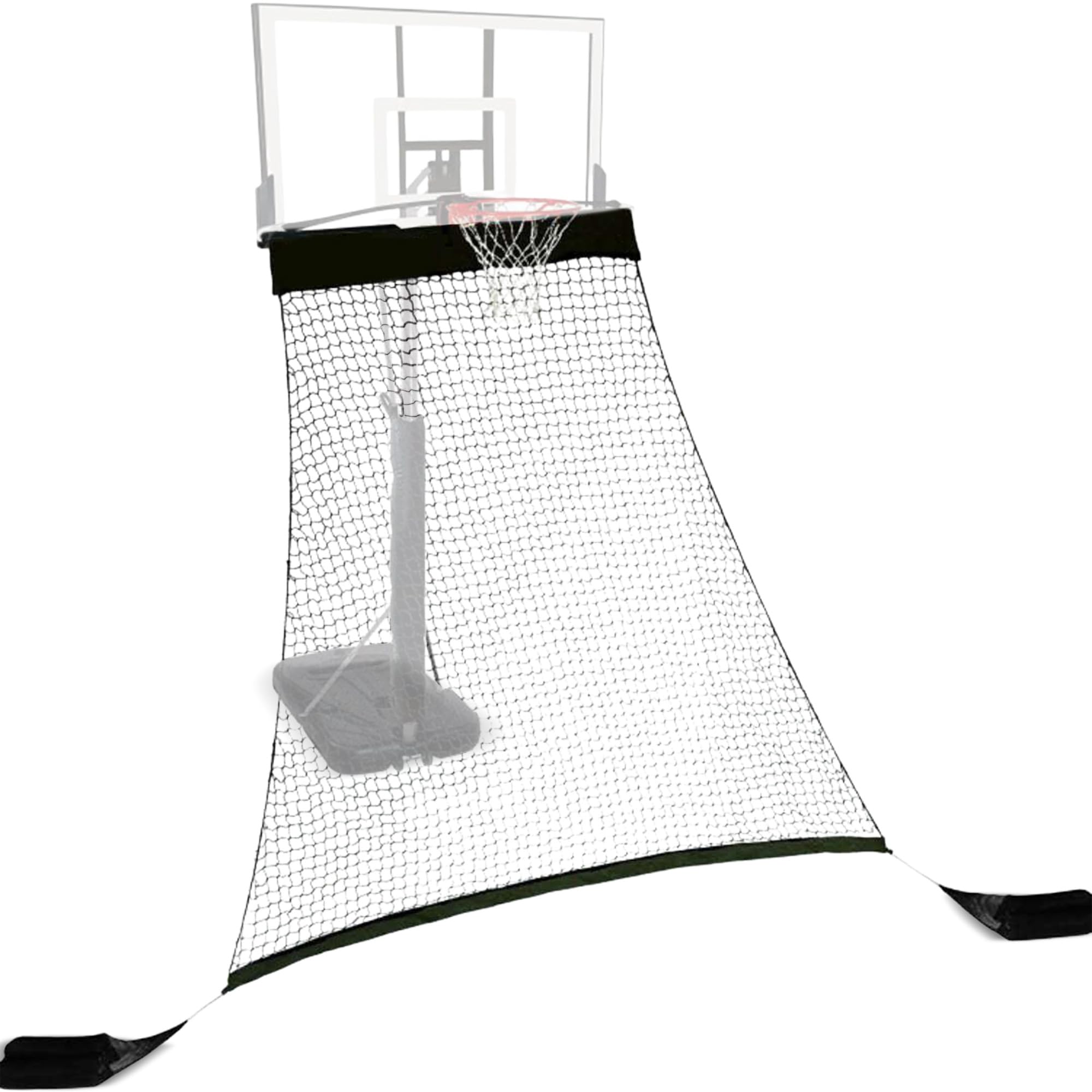
Hathaway Rebounder
Key Features
- Anchors: Four 1.5 gal water bags
- Storage: Nylon carry bag
- Coverage: 10 ft x 9 ft x 5 ft
- Hoop compatibility: 48 to 60 in hoops
- Price: Midrange
The Hathaway is not a return chute, and that distinction is the whole review. It is a large containment net: 10 feet wide, 9 feet tall, and 5 feet deep, with four 1.5-gallon water bags and a webbing harness that fits 48- to 60-inch hoops.
We include it because a lot of shoppers search for a return system when the real problem is balls leaving the driveway. In that job, it is the strongest containment pick here: it catches misses, drops them near the baseline, and keeps the ball out of the street. It does not feed the next shot back to your hands, so do not buy it expecting a chute.
The webbing harness is tool-free, though the strap length can be fussy on some hoops. The nylon storage bag is a practical touch if the net comes down for winter. For containment, it is a sensible buy; for a true return, look at the chutes or the IC3.
Pros
- Large 10 x 9 x 5 foot coverage
- Fits 48- to 60-inch hoops
- Four refillable water bags anchor it
- Nylon storage bag included
Cons
- Water bags can split
If your real problem is keeping misses out of the street, the Hathaway is our containment pick, just do not expect it to return the ball to you.
How We Picked and Tested Basketball Return Systems
We started by rounding up every return system we could find that was in stock and built for a home hoop — backboard-mounted nets, freestanding ramps, and roller-style units — then cut anything whose listed backboard range wouldn’t cover a standard 44- to 54-inch board. That left 10 systems, which we ran for six months. Assembly was timed rather than estimated: I started a stopwatch at the box and stopped it at the first shot, noting which builds needed a second person to lift the frame or a ladder to hang the net, and which ones went up solo with a wrench and ten minutes.
Most of the testing looked like your actual routine: an hour of shooting after work in the driveway, weekend free-throw drills with my kid, and a portable unit hauled to a gym for high-volume sessions. In each setting we shot sets of 50 from five spots and counted two things — how many balls came back to chest height within a step of the shooter, and how many never came back at all because they wedged in the net or skidded sideways off a support bar. The wedged-ball problem was the single biggest divider between systems, and it showed up far more on units with a tight throat under the net.
Stability got its own abuse test: I backed into each unit like I was chasing a loose ball, bumped the base with a hip, and left the freestanding ones out on a windy afternoon to see if they crept across the pavement. Durability meant six months of sun, sprinkler overspray, and one accidental hose-down, after which I checked welds, net seams, and whether the frame still locked tight. Versatility came down to hoop fit and whether a unit broke down small enough to live in a trunk, and we weighed all of it against price — including the ones the kids asked for by name, because a system nobody wants to shoot on isn’t worth the money.
How to Choose a Basketball Return System
The first decision is whether you want the ball fed back to your shooting spot or simply stopped from rolling into the street.
Made shots or missed shots?
A rim chute returns only made baskets; a miss still bounces away, so you chase it. That is fine for free-throw rhythm and catch-and-shoot work, where makes are the point. If you want a session with almost no retrieval, a full rebounder like the Dr. Dish IC3 catches makes and misses and sends them back. A large containment net like the Hathaway keeps misses close but does not pass the ball to you. We treat that as the first fork in the decision: decide which kind of dead time you are trying to remove before you shop.
Mount stability and rim fit
Plastic clips are the weak link on many budget chutes: they can pop off, rotate, or crack. Metal hooks with screws, as on the GADFISH, or a four-hook mount like the ProSlam, spread the load and stay put longer. Fit matters just as much. Most rim attachments are built for a standard 18-inch rim, and some struggle with breakaway or thicker rims. Check your rim style before ordering, and tighten the mount before every session. A return that twists after a make is worse than no return at all.
Return angle and practice flow
Fixed chutes send the ball to one spot, which is fine for free throws but annoying when you move to the wing. Adjustable chutes let you set the return for the corner, wing, or top of the key. The IC3 goes further with a 180-degree manual ramp, so you can rotate the return around the court. The GoSports pass-back rebounder uses telescoping legs to change the angle and height of the return. If you shoot from one spot, save the adjustment; if you move, it is worth having.
Durability, anchors, and setup
Outdoor gear takes sun, rain, and hard misses, so we look at the parts that fail: plastic hooks, welds, net seams, and water bags. Metal hardware is a better bet for a permanent hoop, but check the welds and keep screws snug. Large nets need anchoring; the Hathaway uses four 1.5-gallon water bags, and those bags are the part to inspect. Assembly is another ownership cost: full rebounders take more time than a chute, and tight nets can fight you. Buy for the setup you will actually leave out.
Frequently Asked Questions
Can I use a basketball return system indoors?
A rim chute can work in a garage or gym if you have enough clearance above the rim and a stable hoop. The Dr. Dish IC3 is the one here explicitly built for indoor or outdoor practice, but its 35-pound frame and net that sits 17 inches above the rim need space. Measure ceiling height before you set up, and keep the landing area clear.
What do I do when the ball keeps getting stuck in the net?
On a full rebounder, a tight front net can trap balls between the net and rim. Loosen the front net slightly and let it settle for a day, then check that the rim rest sits square. On a chute, make sure the chute is fully seated and the rim is clear. A small adjustment usually fixes it before you tighten anything else.
Is a return system worth it for a young player?
Yes, if the player can reach the mount and the hoop is at the right height. A rim chute is simpler and lighter for a kid to manage; a 35-pound full rebounder is a two-person setup and better for a parent or coach. Start with a chute on a standard rim, and move up if the player is doing high-volume sessions.
Final Verdict
The Dr. Dish IC3 is the system we recommend for anyone who wants the most complete practice loop: made and missed shots come back, the return rotates around the court, and a two-ball session keeps moving. It asks for patient assembly and a little net tuning, but it is the one that changes how much you get out of a workout.
If you shoot on a standard 18-inch rim and want a simple made-shot return, the ProSlam is the tool-free alternative. On a tighter budget, the GADFISH gets you metal hardware for less. And if your real problem is containment, the Hathaway is the right tool for that different job.