
This post contains affiliate links. We may earn a small commission when you buy through our links — at no extra cost to you.
Basketball puts more pounding on your feet than almost any other court sport. Every jump, cut, and landing sends shock through your arches—and stock insoles rarely provide enough support to handle it.
The market is full of insoles promising vertical jump boosts and energy return. But the real test is whether they keep your feet comfortable through a full season. The best choices balance arch support, cushioning, and durability—and the trade-off often comes down to extra stability versus cushioning longevity.
This guide focuses on insoles that actually reduce foot fatigue and pain, backed by thousands of real-world experiences. No gimmicks, just the ones that work for the players who need them most.

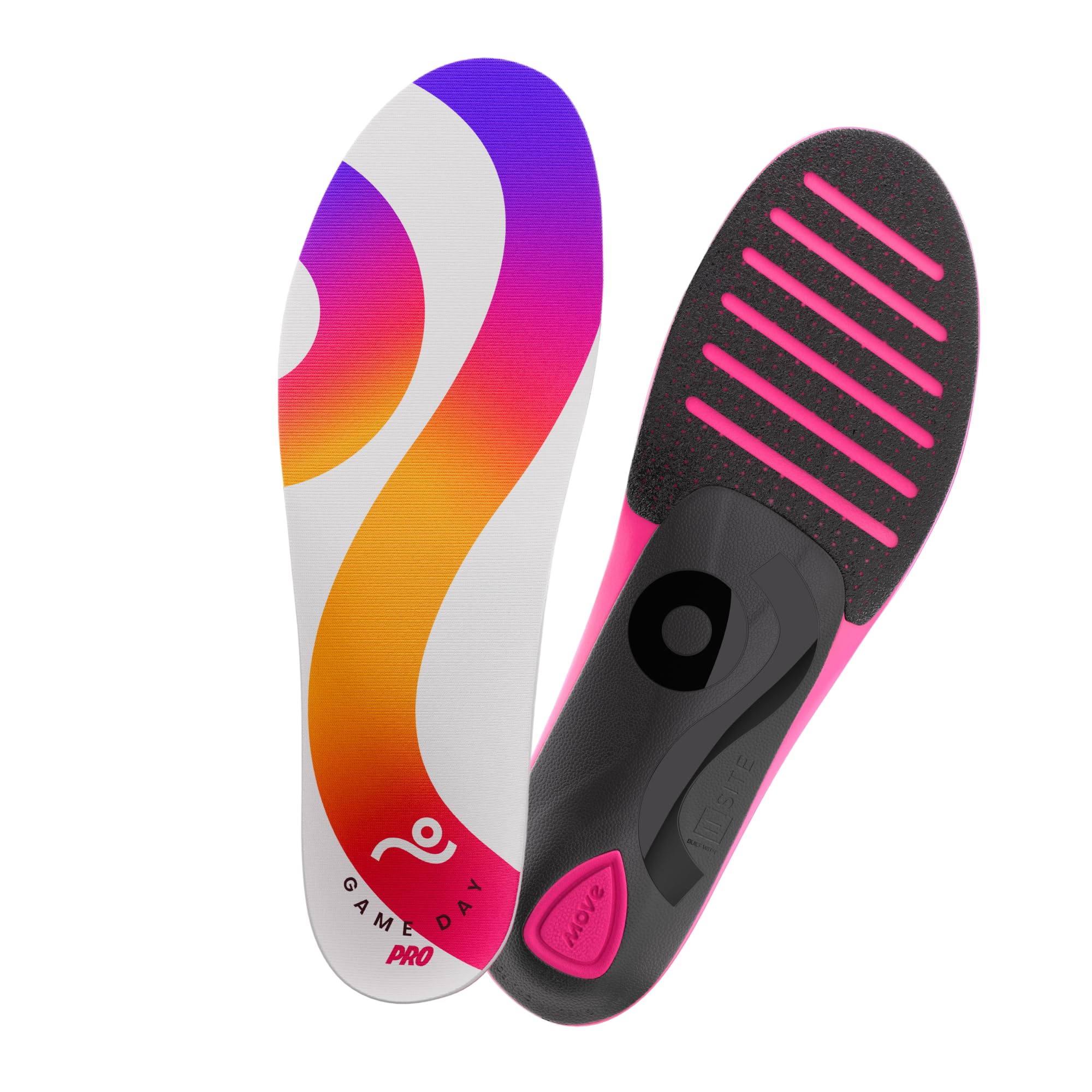

Best for Flat Feet & Pf
Move Game Day
Key Features
- Arch Support & Height: Patented arch, custom fit
- Cushioning Material & Thickness: Composite heel pad
- Heel Cup & Stability: Molded heel support
- Durability (3–6 Months): Occasional fabric peeling
- Price: Mid-Range
The Move Game Day insoles deliver targeted arch support that relieves pressure on flat arches and reduces knee strain during cutting and jumping. The composite heel and molded forefoot keep your foot stable inside the shoe without any trimming required.
Ideal for athletes who want all-day comfort and effective plantar fasciitis relief without overspending. The tradeoff: the fabric cover may peel away at the toe after months of heavy use, so players logging intense court time year-round should monitor that area. These suit players with flat feet or mild plantar fasciitis, not those needing extremely rigid arch support or minimal thickness for low-volume shoes.
Pros
- All-day comfort for sports and daily wear – feet stay comfortable even after lengthy games
- Effective arch support that reduces arch and knee pain for flat feet and plantar fasciitis
- Quality materials hold up well – no negative reports on build quality
Cons
- Fabric cover may peel away at the toe after months of heavy use
A smart investment for basketball players with flat feet or plantar fasciitis who want effective support and comfort at a mid-range price.
Best for Explosive Players
Move Game Day Pro
Key Features
- Arch Support & Height: High arch support
- Cushioning Material & Thickness: Extra shock absorption pads
- Heel Cup & Stability: Lateral stability support
- Durability (3–6 Months): Forefoot compresses, fabric peels
- Price: Mid-Range
Move’s Game Day Pro uses X-Frame torsional support and extra shock absorption to give explosive basketball players the lateral stability and landing protection they need for high-intensity play. The tradeoff is a forefoot cushion that may compress within three months and a fabric top that can peel at the toe. This insole suits heavy jumpers and power athletes who want maximum stability and are willing to replace insoles each season – not the best fit for players who prioritize all-day comfort or flat-footed relief.
Pros
- Arch support and lateral stability for confident cuts and jumps
- Reduces knee pain and leg fatigue during high-impact play
Cons
- Fabric surface may separate at the toe after months of use
- Forefoot padding can compress within three months of heavy use
For explosive basketball players who need torsional stability and are prepared to replace insoles every season, the Game Day Pro delivers focused support that outperforms the standard Game Day on lateral stability and shock absorption.
Best for Casual Players
EASYFEET Flame Boost
Key Features
- Arch Support & Height: Medium-low flexible arch
- Cushioning Material & Thickness: Forefoot & heel shock pads
- Heel Cup & Stability: Standard heel depth
- Durability (3–6 Months): Plastic arch may snap
- Price: Budget
EASYFEET Flame Boost delivers noticeable cushioning and arch support at a price that suits casual basketball and cross-training budgets. The medium-low flexible arch relieves mild discomfort during regular activity, while the heel and forefoot pads absorb impact from casual runs or pickup games. They trim easily to fit most sneakers, offering a custom fit. However, the plastic arch support can snap after months of intense use, making these insoles a better fit for light-to-moderate activity rather than explosive basketball or heavy training.
Pros
- Comfortable cushioning for extended wear during casual sports.
- Effective arch support for mild to moderate needs, reducing arch and knee strain.
- Good shock absorption under heel and forefoot for impact protection.
Cons
- Plastic arch support may break after a few months of intense basketball or explosive movements.
For casual players who prioritize cushioning and affordability over long-term durability, these insoles deliver solid comfort and support.
Best for Power-Focused Athletes
VKTRY Gold

Key Features
- Arch Support & Height: Weight & sport-specific plate
- Cushioning Material & Thickness: Aerospace-grade carbon fiber
- Heel Cup & Stability: Firm heel platform
- Durability (3–6 Months): Carbon fiber delamination risk
- Price: Premium
The VKTRY Gold uses aerospace-grade carbon fiber to create a rigid plate aimed at boosting explosiveness for power-focused athletes. However, its extreme firmness may cause foot pain or tendonitis over time, and the plate can separate from the foam layer within months. This makes it a narrow fit for players who prioritize a stiff, responsive platform and are willing to accept limited cushioning and longevity.
Pros
- Aerospace-grade carbon fiber construction feels premium and durable.
- Firm arch support provides stability for players with strong feet.
Cons
- Extreme firmness may cause foot pain or tendonitis in some users.
Best for explosive basketball players who want a stiff, responsive platform and are comfortable with the premium price and limited cushioning.
Best for Budget Casual
CRUVHEAL Sport

Key Features
- Arch Support & Height: Neutral arch, low to medium
- Cushioning Material & Thickness: Gel pads in heel & forefoot
- Heel Cup & Stability: Deep, non-slip heel cup
- Durability (3–6 Months): Break-in pain possible
- Price: Budget
The CRUVHEAL Sport delivers a deep heel cup and gel cushioning that soften landings on the court, making it a cost-effective pick for occasional basketball or walking. The neutral arch suits low arches, but high-arch players will find support lacking. Some users note temporary foot pain during the break-in period that may not resolve for everyone, and the dense foam traps heat – active players with temperature-sensitive feet should consider other options.
Pros
- Comfortable cushioning straight out of the box
- Effective shock absorption for running and court sports
Cons
- Poor breathability – feet can get uncomfortably hot during activity
Best suited for casual basketball or daily walking where cushioning matters more than breathability or high arch support.
How to Choose
The most important factor for basketball insoles is not fancy tech—it’s whether the arch support matches your foot type and the cushioning lasts beyond a few months of hard play.
Arch Support & Height
Arch support is the backbone of any basketball insole. Flat feet need a supportive cradle that prevents the arch from collapsing during jumps and cuts. High arches, on the other hand, require a deeper, more rigid structure to avoid strain on the plantar fascia.
The trade-off: aggressive arch support can feel uncomfortable for neutral or low-arched feet, causing pressure points. A medium-low flexible arch works best for casual players, while a high, firm platform suits stronger feet. Always match the support level to your foot type—not to marketing claims.
Cushioning Material & Thickness
Cushioning absorbs impact but also affects shoe fit. Thick gel pads provide immediate softness but can compress over time, reducing their shock absorption. Carbon fiber plates offer firm support and energy return but sacrifice cushioning for responsiveness.
The consequence: insoles that feel plush out of the box may bottom out within three months of regular play. Look for materials that balance initial comfort with sustained resilience—composite heel pads and layered foam typically hold up longer than single-density gel.
Heel Cup & Stability
A deep heel cup locks the heel in place, reducing lateral sliding during quick direction changes. It also centers the foot over the cushioning, improving force distribution on landings.
Insoles with a shallow heel cup allow the foot to shift, increasing the risk of ankle rolls. For explosive players, a rigid heel cup combined with torsional support (like an X‑Frame) provides the stability needed for hard cuts. For casual play, a standard depth is sufficient.
Durability (3–6 Months)
The most common durability failure in basketball insoles is delamination—the fabric or foam separating from the structural base. This happens most often under the toes and heels, where repetitive flexing stresses the adhesive.
Insoles with a full-coverage fabric wrap or reinforced edges resist peeling longer. Plastic arch supports can also snap under heavy use. Mid-range options often outlast budget ones because they use more robust materials. If you play multiple times per week, expect to replace insoles every season.
FAQ
Do Move Game Day insoles help with shin splints in basketball?
Yes. Many users report reduced shin splint pain after switching to Move Game Day insoles. The arch support and heel cushioning help absorb impact that otherwise travels up the leg. For best results, combine them with supportive basketball shoes and proper warm-up.
How long do basketball insoles typically last before needing replacement?
Most basketball insoles last 3 to 6 months of regular play, depending on usage intensity and body weight. Signs of replacement include compressed forefoot cushioning, peeled fabric, or cracked arch supports. Mid-range options like the Move Game Day tend to hold up better than budget insoles over a full season.
Are expensive carbon fiber insoles like VKTRY worth it for casual basketball players?
Not usually. The VKTRY Gold’s firm carbon fiber plate lacks the cushioning most casual players need for comfort. It is designed for athletes who want a stiff platform for explosive power, but many find it causes foot pain after extended wear. Stick to a cushioned insole with good arch support if you play casually.
Why do my insoles make my feet feel hot and sweaty during games?
Some insoles, especially budget models with thick foam or gel layers, trap heat because they lack breathable fabric or ventilation channels. The CRUVHEAL Sport is a common example. To reduce sweat, choose insoles with a moisture-wicking top layer or perforated design, or consider swapping them out for a drier pair mid-game.