
This post contains affiliate links. We may earn a small commission when you buy through our links — at no extra cost to you.
Flat feet and basketball can be a painful combination, but the wrong insoles turn every jump into a gamble. Most insoles marketed for flat feet prioritize plantar fasciitis relief for walking—not the lateral cuts, landings, and quick stops that define a game.
The real challenge isn’t arch support alone. It’s finding an insole that fits inside a low-cut basketball shoe without making it too tight, and that absorbs impact while controlling overpronation when you change direction. Too many players grab a cheap ‘flat feet’ insole only to find it slips or hurts.
This guide focuses on insoles that actually survive a season of hoops. We’ve sorted through the options to identify the ones that balance stability, cushioning, and the right fit for basketball shoes—so you can focus on your game, not your feet.


Best for Maximum Stability
PowerStep Pinnacle Maxx
Key Features
- Arch Support: Firm, angled
- Heel Cup Depth: Deep, stabilizing
- Shock Absorption: EVA cushioning
- Durability: High durability
- Price: $$$
The PowerStep Pinnacle Maxx uses a rigid polypropylene shell and angled heel design to lock the foot in place during lateral cuts and jumps. The firm arch support targets overpronation directly, and the deep heel cup keeps the rearfoot stable on impact. For players with flat feet who struggle with shin splints or plantar fasciitis, this insole provides immediate relief that lasts through full-court games.
This premium-priced insole suits basketball players who need heavy-duty support for high-mileage play and are willing to accept a firm, non-plush feel. The top fabric can peel or wrinkle after several months of intense use, but this is a cosmetic issue — the structural support remains intact. It is not designed for those who prefer soft cushioning or have a tight budget.
Pros
- Deep arch support and angled heel correct overpronation during high-impact cuts and jumps.
- Immediate pain relief for plantar fasciitis on landing and push-off.
- Rigid polypropylene shell outlasts many competitors and custom orthotics.
Cons
- Premium price point may exceed budgets of casual or occasional players.
- Top fabric can peel or wrinkle after several months of heavy use.
For flat-footed players who need maximum lateral stability and don’t mind a firm feel, this is the insole to beat.
Best for Budget Flat Feet
WalkHero PF Insoles
Key Features
- Arch Support: Moderate, firm
- Heel Cup Depth: Deep
- Shock Absorption: EVA foam + heel pad
- Fit Profile: Good athletic shoe fit
- Price: $
This ultra-affordable flat-foot insole delivers plantar fasciitis relief at a fraction of custom orthotic cost. Its deep heel cup provides a secure fit in most athletic shoes, while the firm arch controls overpronation. Unlike the heavier-duty variant for larger athletes, this model stays slim and budget-friendly for everyday and light sports use. Flat-footed basketball players can use it as a low-risk trial for arch support before investing in premium insoles, or for moderate-intensity play where budget matters. The arch can feel rigid out of the box; a break-in period of several days is typical, and some athletes find the firmness unsuitable for frequent aggressive cuts and jumps.
Pros
- Effective plantar fasciitis and flat feet pain relief at a budget price
- Deep heel cup provides stable fit in most athletic shoes
- Exceptionally high value compared to custom orthotics
Cons
- Firm arch can feel stiff initially, requiring a break-in period; may not suit high-impact basketball play
A cost-effective trial run for arch support in basketball shoes — best for casual players or those testing the waters, provided you allow time for the arch to soften.
Best for Heavy Players
WalkHero Heavy Duty
Key Features
- Arch Support: Rigid, strong
- Heel Cup Depth: Deep
- Shock Absorption: Multi-layer EVA/PU
- Fit Profile: Thick – check volume
- Durability: 6+ month life
- Price: $
The WalkHero Heavy Duty delivers strong arch support and impact absorption for players who carry extra weight, using a rigid nylon base and stacked EVA, OrthoLite, and PU heel layers. That thickness, however, can eat up interior volume — in low-cut basketball shoes, heel lift becomes a possibility. It holds up well over months of hard court use, but players in snug-fitting kicks should check clearance before buying. For heavier athletes who don’t need the slimmer profile of the top pick’s low-arch variant, this is a cost-effective alternative that prioritizes cushioning over fit flexibility.
Pros
- Multi-layer cushioning absorbs hard landings and cuts for heavier players.
- Rigid nylon arch support holds up under sustained heavy use over six months.
Cons
- Thick build may cause heel lift in low-cut basketball shoes with low volume.
A solid, budget-friendly option for larger players who need maximum support and don’t mind a bulkier fit inside their shoes.
Best for Multi-Sport
TANSTC Sport Insoles
Key Features
- Arch Support: Medium, ergonomic
- Heel Cup Depth: Deep U-shaped
- Shock Absorption: Double PORON + PU
- Fit Profile: Trim-to-size
- Durability: Moderate
- Price: $
With PORON cushioning and a deep U-shaped heel cup, these insoles absorb impact well during jumps and cuts — a rare find at this price. The medium arch support provides solid stability for flat feet without feeling overly rigid. For budget-conscious basketball players and multi-sport athletes, this is a strong option. However, the padding may flatten faster than premium alternatives under heavy weekly use, making them better suited for those who replace insoles seasonally.
Pros
- Strong impact absorption for basketball jumps and lateral cuts.
- Medium arch support that stabilizes flat feet during athletic activity.
Cons
- Padding may lose shape after several months of frequent, high-impact use.
For athletes who prioritize immediate impact protection over multi-season durability, these insoles deliver strong performance at a budget price.
Best for Low Arches
PowerStep Pinnacle Low
Key Features
- Arch Support: Low arch, firm
- Heel Cup Depth: Deep
- Fit Profile: Low profile trim-to-size
- Durability: Top layer may peel
- Price: $$$
The Pinnacle Low shares the same rigid arch and deep heel cup as the Maxx, but its thinner build fits tighter basketball shoes and low-cut models without heel lift. This makes it a practical choice for players with very low or fallen arches who need motion control during cuts and jumps.
That said, the top fabric layer can separate over time under repeated lateral stress – a cosmetic tradeoff for the premium support. This works best for players who prioritize arch support and fit over long-term cosmetic durability.
Pros
- Specifically shaped for low arches with consistent support through cuts and landings
- Immediate pain relief for flat feet and plantar fasciitis during high-impact play
Cons
- In shoes with heavy lateral movement, the top layer can separate over time – a cosmetic issue that doesn’t affect structural support
For flat-footed basketball players who need a low-profile orthotic that fits snugly in tight shoes, the Pinnacle Low delivers the same targeted arch support as the Maxx without the bulk.
Spenco Total Support Max
Spenco Total Support Max
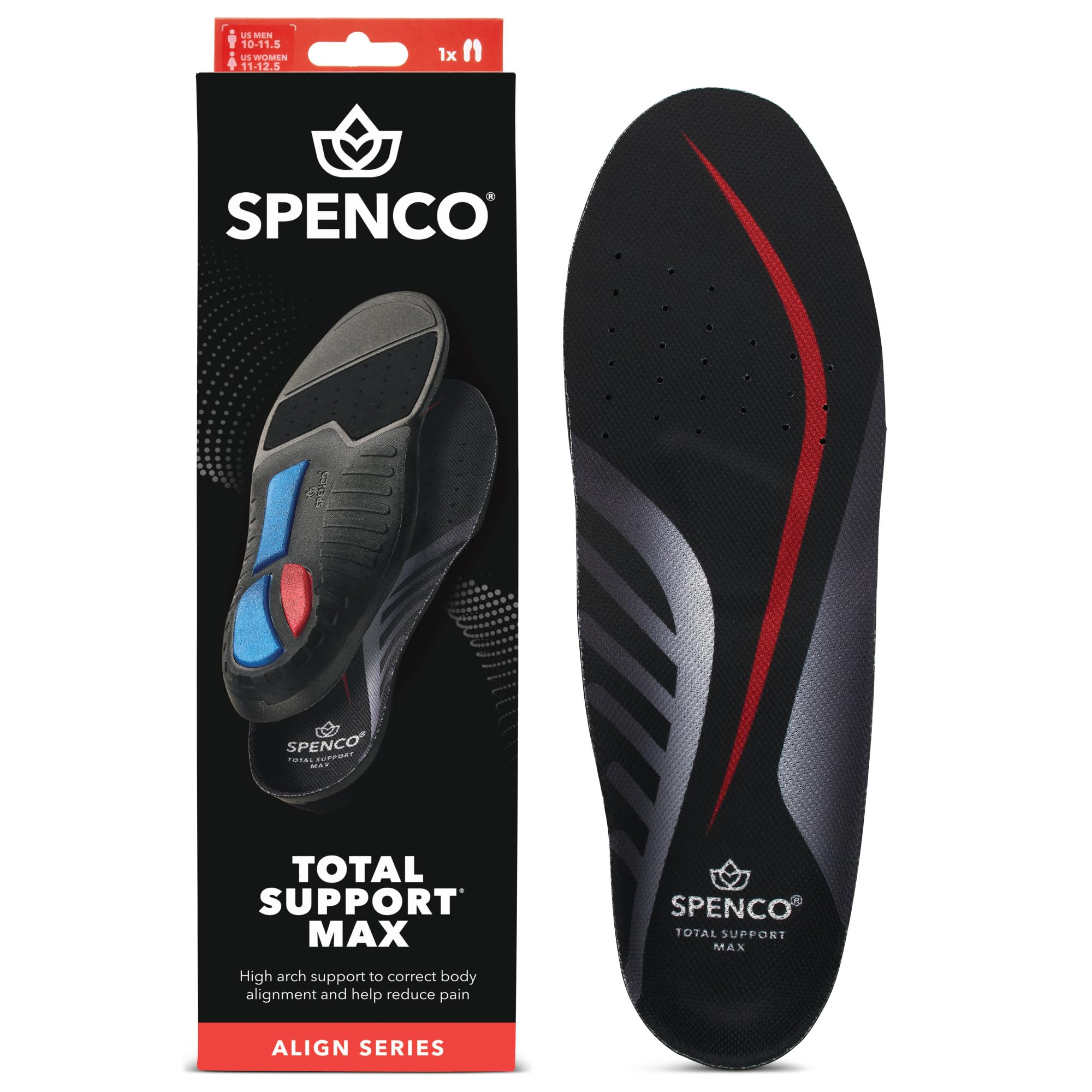
The Spenco Total Support Max uses high-quality materials and a rigid arch to control overpronation during walking and everyday wear. However, its rigidity lacks the lateral shock absorption needed for basketball’s cutting and jumping movements. Additionally, sizing can be inconsistent, making fit verification important before purchase.
Pros
- Rigid arch support controls overpronation effectively.
- High-quality construction and materials.
Cons
- Inconsistent sizing may make fit difficult – insoles can be too wide or long for some shoes.
A good option for casual walking and flat-foot relief, but not for basketball players needing lateral stability and impact protection.
Best for Low Arch Run
Superfeet Carbon Low

Key Features
- Arch Support: Low, carbon fiber
- Heel Cup Depth: Moderate
- Fit Profile: Low volume
- Durability: Heel cup break risk
- Price: $$
The Superfeet Carbon Low offers thin, carbon-fiber arch support that fits snugly in low-volume running shoes. However, its minimal cushioning and moderate heel cup lack the impact absorption and lateral stability needed for basketball’s jumping and cutting.
Pros
- Fits snugly in tight athletic shoes without adding bulk.
- Lightweight and breathable for running or low-impact activities.
Cons
- Thin cushioning may not absorb high-impact basketball landings and cuts.
This is a runner’s insole for low arches in tight shoes; skip it for basketball unless you only need minimal arch support for light shooting drills.
Best for Casual Use
Kelaide Arch Support

Key Features
- Arch Support: Moderate, spring-type
- Heel Cup Depth: Shallow-moderate
- Shock Absorption: TPU/EVA
- Fit Profile: No trimming needed
- Price: $$
Provides decent everyday arch support for flat feet and a slim profile that fits most shoes without trimming. However, the shallow heel cup and soft material lack the lateral stability and impact protection needed for basketball or high-impact sports.
Pros
- Good everyday arch support for flat feet at a fair price
- Slim profile fits many shoe types without trimming
Cons
- Heel cup is too shallow for lateral stability in basketball; cushioning insufficient for jump impact
A decent option for casual flat-foot relief and daily wear, but not recommended for basketball or sports requiring lateral stability and impact cushioning.
Best for Budget Casual
PCSsole Orthotic

Key Features
- Arch Support: Firm, rigid plastic
- Heel Cup Depth: Moderate
- Shock Absorption: Minimal EVA
- Fit Profile: Too narrow or wide
- Price: $
For the price, the PCSsole delivers firm rigid arch support that can relieve plantar fasciitis pain during daily standing. However, the hard plastic base provides minimal shock absorption — a limitation for basketball’s jumping and lateral cuts. Fit inconsistencies (some find it too narrow, others too wide) add to the risk of shifting inside the shoe during play.
Pros
- Affordable arch support that reduces standing-related foot pain.
- Significant relief for plantar fasciitis symptoms during everyday wear.
Cons
- Hard plastic arch lacks the cushioning needed for high-impact movements like jumping and cutting in basketball.
A budget stopgap for flat-foot relief in casual settings, but not built to handle the dynamic demands of basketball court time.
Dr. Scholl’s Flat Feet
Dr. Scholl’s Flat Feet

Provides immediate arch support and relief for flat feet at a budget price, making it suitable for casual walking and standing. However, its durability and cushioning are insufficient for basketball or high-impact sports, and the thick heel may cause fit issues in athletic shoes. This insole is best left for everyday low-impact use, not for the court.
Pros
- Affordable immediate relief for flat feet
- Good for casual walking and standing
Cons
- Not durable or supportive enough for high-impact sports like basketball
A budget-friendly option for low-impact daily wear, but not a solution for basketball or high-impact activities.
How to Choose
Most flat-foot insoles are designed for walking, not basketball—finding one that fits your shoe and handles lateral cuts is the real challenge.
Arch Support Type and Rigidity
Arch support for flat feet isn’t one-size-fits-all. Low arches need a profile that doesn’t press too high, while fully fallen arches require a rigid shell to prevent overpronation. A stiffer support provides better motion control during cuts, but it demands a break-in period of several days—expect some initial discomfort.
Heel Cup Depth
A deep heel cup locks the calcaneus in place, reducing side-to-side movement that leads to ankle rolls and plantar fasciitis. For basketball, a shallow cup allows the heel to shift during lateral stops and jumps, increasing injury risk. Look for a cup that fully cradles the heel without pressing into the Achilles.
Shock Absorption
Basketball involves repetitive landings from jumps and hard stops. Materials like EVA foam, PORON, or gel layers dissipate impact energy, reducing stress on knees and lower back. Thin insoles or those with only rigid plastic lack the cushioning needed for high-impact play—they transfer shock directly to joints.
Fit Profile
Basketball shoes already have tight toe boxes and low internal volume. Adding thick insoles can cause the heel to slip or the forefoot to pinch. Trim-to-size insoles offer flexibility, but some are too wide for narrow shoes. The best approach: remove the factory insole and compare thickness—anything over 6mm may cause fit issues.
Durability
High-impact lateral movements wear down materials faster than walking or running. Foam can bottom out, plastic shells can crack, and fabric tops can peel. Look for multi-layer construction and reinforced heel cups. Premium brands often outlast budget options by several months, even with daily practice.
FAQ
Will thick insoles make my basketball shoes too tight?
Yes, if the insole is thicker than 5-6mm it can compress the foot and cause heel lift. Always remove the original insole and test the new one before playing. If the shoe feels too tight after insertion, look for low-profile options like the PowerStep Pinnacle Low or Superfeet Carbon.
Can I use running insoles like Superfeet Carbon for basketball?
Running insoles are optimized for forward motion and often lack the lateral support and impact cushioning needed for basketball. The Superfeet Carbon, for instance, is too thin for jumping and cutting, and its heel cup is not deep enough to handle side-to-side stability.
How long do PowerStep Pinnacle Maxx insoles last for basketball?
Most users report 6-12 months of regular play before the top layer peels or the arch support loses rigidity. The shell stays intact longer, but the fabric can separate on high-friction areas. For heavy players, replacing annually is a reasonable expectation.
Are cheap insoles under $20 good enough for flat feet in basketball?
Some, like the TANSTC Sport and WalkHero PF, offer decent arch support and cushioning for casual play—they’re better than stock insoles. However, they won’t match the long-term durability and motion control of premium models. For frequent or competitive play, investing $30-$55 is worthwhile.