
This post contains affiliate links. We may earn a small commission when you buy through our links — at no extra cost to you.
Basketball puts a unique load on your feet: lateral cuts, repeated jumps, and hard stops. Many insoles marketed as ‘sport’ focus on heel cushioning for running, but that alone won’t keep your foot stable during a quick crossover. The result can be foot fatigue, arch strain, or worse – knee pain that sidelines you for weeks.
The fix isn’t a one-size-fits-all orthotic. It’s matching the insole’s arch height, heel cup depth, and impact absorption to your foot type and playing intensity. A flat-footed player needs a deep heel cup and firm arch support to control overpronation. A high-arched player needs rigid support without sacrificing forefoot flexibility. And everyone needs an insole that doesn’t shift inside the shoe during aggressive moves.
This guide breaks down the trade-offs – immediate comfort vs. long-term stability, budget cushioning vs. lateral control – so you can pick the insole that actually fits your game.


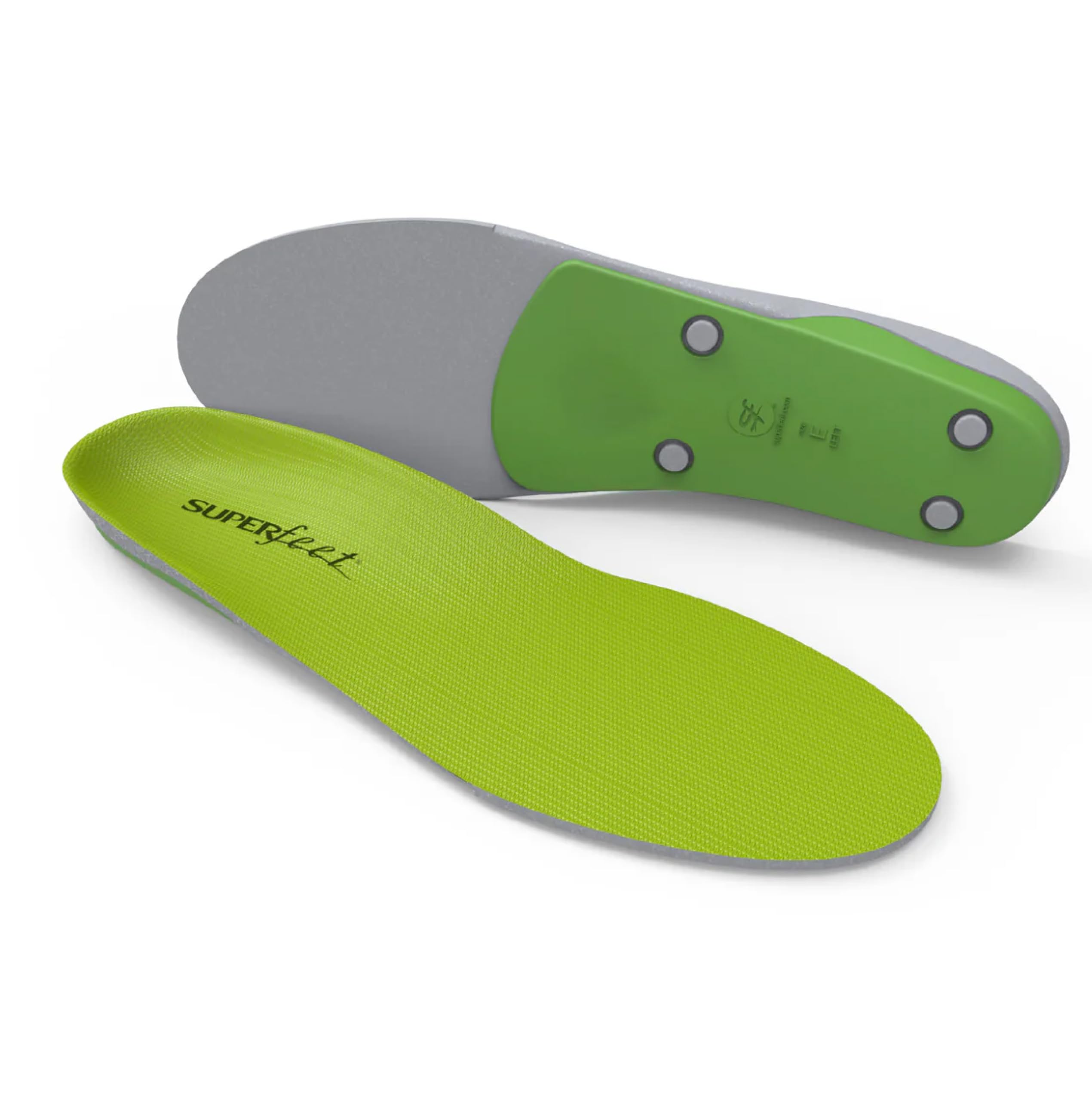


Best for Overpronation Control
PowerStep Pinnacle Maxx
Key Features
- Arch Type: Low
- Shock Absorption: Multi-density foam
- Trim-to-Fit: No
- Price: $$$
The PowerStep Pinnacle Maxx anchors the foot with an angled heel and deep heel cup — a combination that counteracts overpronation during lateral moves better than most over-the-counter insoles. The full-length firm arch support keeps the foot from rolling inward on hard cuts, and the multi-density foam provides a stable platform for jumping and landing.
Heavier players and those who log long hours on the court report reduced knee and back strain once they adapt to the firm feel. The break-in period is real — the rigid plastic base and dense foam can feel stiff for the first few sessions. Some units may also develop a squeaking noise during movement, especially in dry environments, which can be distracting in quiet gyms.
This insole is best suited for basketball players with flat feet or overpronation who need maximum lateral stability for cutting and jumping. If you have high arches, the firm support may be too aggressive. The premium price and possible durability variance — some units lose structural support after about six months — mean it’s an investment for those who play competitively multiple times per week. Lighter or occasional players may find a more forgiving option elsewhere.
Pros
- Angled heel and deep heel cup provide exceptional lateral stability for overpronators.
- Reduces knee and back pain associated with collapsed arches during high-impact activity.
- Firm full-length arch support holds up under heavy use and extended sessions.
Cons
- Under heavy basketball use, some units may lose structural support after about six months.
- In quiet gym settings, a squeaking sound may become noticeable from some units after extended wear.
For basketball players with flat feet or overpronation who prioritize lateral stability over pillowy comfort, the PowerStep Pinnacle Maxx delivers the control needed for aggressive cutting — worth the premium if you understand the tradeoffs in durability and potential noise.
Best for Plantar Fasciitis
PowerStep Pinnacle
Key Features
- Arch Type: Medium
- Shock Absorption: Dual-layer cushion
- Trim-to-Fit: No
- Price: $$
The PowerStep Pinnacle prioritizes out-of-box comfort over lateral control, making it a direct counterpoint to the Maxx’s angled heel for overpronation. Its dual-layer cushioning and deep heel cup deliver noticeable relief for plantar fasciitis from the first wear, with no break-in period. For players whose primary concern is arch support and shock absorption during straight-line movement, this insole provides a soft landing that the stiffer Maxx lacks.
This insole suits players dealing with plantar fasciitis or moderate pronation who value immediate comfort and plan to use it across multiple shoe types. However, the tradeoff for that plush feel is inconsistent durability under heavy use — some units show delamination after a few months of regular basketball play. If you prioritize long-term reliability in a high-impact sport, the Maxx’s firmer build may be a better match.
Pros
- Arch support that relieves plantar fasciitis discomfort quickly.
- Comfortable for all-day wear across different shoe styles.
- Immediate pain relief with no break-in period required.
Cons
- Durability can vary; some units separate from the base after months of heavy basketball use.
A strong first step for plantar fasciitis relief if you value instant comfort over long-term durability — but the Maxx is more reliable for sustained high-impact play.
Best for High Arches
Superfeet Green
Key Features
- Arch Type: High
- Shock Absorption: Closed-cell foam
- Trim-to-Fit: Yes
- Price: $$
Where the Superfeet Orange adds extra cushioning for high-impact activities, the Green focuses on rigid arch support and proven longevity. Its deep, sculpted heel cup locks the foot in place during lateral cuts, and the foam holds its shape well beyond six months of regular use. That firmness comes at a cost: the forefoot has little padding, so players who rely on explosive jumps or quick stops may feel the hard surface under the ball of the foot.
This insole suits high-arched basketball players who prioritize arch stability over plush cushioning and are willing to push through a 1–2 week break-in period. It provides consistent relief for plantar fasciitis and overuse pain, but the lack of forefoot padding means it’s better for controlled play than for constant jumping. If your shoes are snug in the toe box, the full-length design should fit without issues.
Pros
- Provides firm, targeted support for high arches, reducing overuse strain during games.
- Withstands 6+ months of regular use without losing shape or support.
- Delivers consistent relief for plantar fasciitis and arch pain over long sessions.
Cons
- During the first 1–2 weeks, the firm arch can cause discomfort — this subsides as the insole molds to your foot.
- Under the ball of the foot, the lack of padding can feel hard during jumping and quick stops.
Best for high-arched basketball players who value arch stability over plush cushioning and are willing to commit to a break-in period.
Best for Casual Play
Dr. Scholl’s Sport
Key Features
- Arch Type: Low
- Shock Absorption: Gel and foam pads
- Trim-to-Fit: Yes
- Price: $
For low-impact recreational basketball, the Dr. Scholl’s Sport insoles deliver noticeable shock absorption through gel pads at the heel and forefoot at a budget-friendly price. The trim-to-fit design makes them easy to install in most removable insole shoes, and the cushioning helps reduce muscle fatigue in the legs.
These insoles suit casual players who prioritize extra cushioning for jogging or light court play. However, the arch support is moderate at best — players with high arches may find it insufficient. Additionally, the heel gel pad can feel unstable during lateral cuts, making them less reliable for quick side movements. For competitive basketball requiring firm lateral stability, a more structured insole like the top pick is a better fit.
Pros
- Superior shock absorption for high-impact activities
- Affordable and easy to trim for a custom fit
- Helps reduce muscle fatigue in legs during play
Cons
- Arch support may feel too low for players with high arches
- Heel gel pad can feel unstable during lateral cuts
Best for recreational players on a budget who value cushioning over lateral control — not for competitive basketball.
Best for Heavy Players
WalkHero Heavy Duty
Key Features
- Arch Type: Low
- Shock Absorption: EVA, PU heel
- Trim-to-Fit: Yes
- Price: $
The WalkHero Heavy Duty uses a rigid nylon arch plate paired with EVA and PU heel cushioning to support heavy basketball players who need serious arch control. This setup prioritizes stability under load over the lateral agility that a top pick like the PowerStep Pinnacle Maxx offers. The stiffness is intentional – it holds flat feet firmly and reduces strain during jumps and landings, but it also limits quick side-to-side responsiveness.
This insole is best suited for players over 220 lbs with flat feet who value arch support and impact relief over nimble footwork. The thickness can crowd low-volume basketball shoes, and the rigid plate will feel uncomfortable for lighter players or those who rely on fast cuts. For heavy individuals dealing with plantar fasciitis who play at a controlled pace, the WalkHero provides a budget-friendly alternative that delivers on its core promise.
Pros
- Relieves arch pain effectively for heavy players
- Firm arch support stabilizes flat feet during play
- Budget-friendly option that holds up under heavy loads
Cons
- For players making quick cuts, the rigid plate can feel restrictive during lateral movements
- In low-volume shoes, the added thickness can compress toes and cause discomfort
A cost-effective solution for heavy basketball players with flat feet who prioritize arch support over lateral agility – but lighter players or those requiring quick footwork should look elsewhere.
Best for Supination
PowerStep High Arch

Key Features
- Arch Type: High
- Shock Absorption: Dual-layer cushion
- Trim-to-Fit: No
- Price: $$$
PowerStep’s Pinnacle High Arch insole delivers firm plastic support and dual-layer cushioning precisely for players with high arches and supination. The arch height is pronounced – effective for that foot type, but can feel excessive for medium or low arches. On the court, limited lateral stability (no deeper heel cup) compromises control during cuts and jumps. This is the only PowerStep model for high-arch needs; players requiring overpronation correction should look to the angled heel option instead.
Pros
- Firm arch support tailored for high arches and supination
- Reduces foot and knee pain for high-arch players
Cons
- Arch height may feel excessive for players with medium or low arches
- Lateral stability during aggressive cuts is limited by the lack of a deeper heel cup
Best for basketball players with diagnosed high arches and supination who prioritize targeted arch support over lateral stability – those needing heel shock absorption or overpronation control should consider the Maxx model.
Best for Cushioning
Sof Sole Athlete

Key Features
- Arch Type: Moderate
- Shock Absorption: PU foam and gel
- Trim-to-Fit: Yes
- Price: $
The Sof Sole Athlete uses heel-to-toe PU foam and gel to absorb impact effectively during running and walking. Cushioning is generous, and comfort holds up over long wear. For basketball, however, the neutral arch support lacks the rigidity needed for cuts and jumps, and the thickness can crowd shoes with limited toe room. This insole suits straight-line athletic activities but not high-lateral sports.
Pros
- Heel-to-toe PU foam and gel absorb impact well during runs and walks.
- Comfort holds up over extended wear without losing support.
Cons
- Thicker design can crowd shoes with limited toe room.
A budget-friendly cushioning option for runners and walkers who need heel shock absorption, but not for basketball players requiring arch rigidity for lateral moves.
Best for Overpronation Control
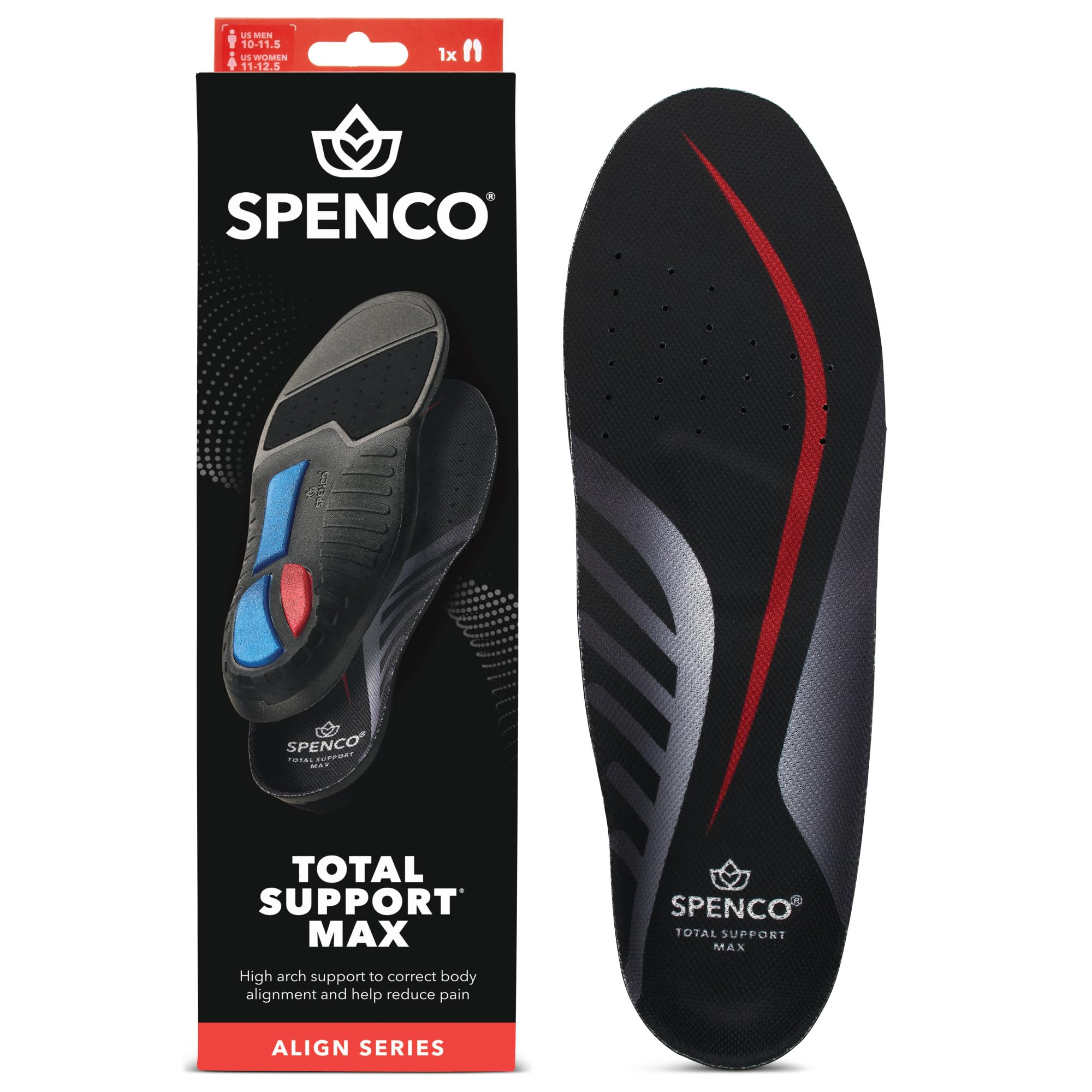
Spenco Total Support Max
Key Features
- Arch Type: Low
- Shock Absorption: Multi-density foam
- Trim-to-Fit: Yes
- Price: $$$
The Spenco Total Support Max uses a multi-density foam platform and deep heel cup to control severe overpronation, with a metatarsal pad adding extra support. For flat feet or plantar fasciitis, it delivers the stability needed in work boots or hiking shoes. On the basketball court, its rigid construction and thick profile work against lateral quickness — the angled heel and deep cup that lock the foot down also make transitions feel sluggish. Sizing runs large; trying before buying is wise. This insole fits best for heavy players whose priority is maximum stability over agility, not for those relying on fast cuts.
Pros
- Strong pronation control and stability for flat feet and overpronation
- Deep heel cup and metatarsal pad aid in plantar fasciitis relief
Cons
- Very rigid construction may cause discomfort during agility-focused movements
- Sizing runs large; some may need to exchange for a smaller size
Best for players with severe overpronation who value lateral stability over quickness, or for use in work boots and hiking rather than basketball.
Best for Flat Feet
WalkHero Plantar

Key Features
- Arch Type: Low
- Shock Absorption: EVA foam
- Trim-to-Fit: Yes
- Price: $
The WalkHero Plantar provides immediate relief from plantar fasciitis pain and fits comfortably in wide shoes and boots. Its deep heel cup and moderate arch support serve flat feet well for casual walking. However, the stiff EVA foam lacks the shock absorption needed for jumping and lateral cuts, making it unsuitable for competitive basketball. This insole is also not intended for high arches — the support is too low. Durability concerns further limit its appeal for regular on-court use.
Pros
- Immediate plantar fasciitis pain relief
- Fits comfortably in wide shoes and boots
Cons
- Stiff foam limits shock absorption, unsuitable for jumping and lateral cuts
- Arch support too low for players with high arches
Best for casual walking or as a budget backup insole, but not for basketball games requiring impact protection.
Best for Cross-Training
Spenco Cross Trainer

Key Features
- Arch Type: Moderate
- Shock Absorption: Spencore heel plug
- Trim-to-Fit: Yes
- Price: $$
The Spencore heel plug and EVA forefoot deliver solid shock absorption and durable cushioning for gym workouts and moderate arch support for neutral arches. However, the heel thickness can cause lift in basketball shoes with lower heel collars, and size inconsistencies (occasional extra length) make the fit less reliable for cutting and jumping. This works well for cross-training and general athletic use, but basketball players needing stable lateral support and consistent sizing should look elsewhere.
Pros
- Cushioning absorbs impact effectively for cross-training activities.
- Moderate arch support suits neutral arches well.
Cons
- Heel thickness can lift the heel in basketball shoes with low collars.
- Fit inconsistency may result in extra length in some sizes.
A good insole for gym and cross-training, but the heel height and fit variability make it a compromise for basketball — consider it only if your shoes have ample heel room and you can tolerate sizing variation.
How to Choose
The best insole for basketball depends on your arch type, playing intensity, and foot mechanics – prioritizing lateral stability over pure cushioning.
Arch Type
Your arch determines how weight distributes across your foot during explosive moves. Low arches (flat feet) often lead to overpronation – the foot rolls inward, stressing the knees. High arches do the opposite – the foot supinates, putting pressure on the outer edge. Both need correction: low arches require firm, full-length support; high arches need rigid support under the arch without adding bulk.
Most insoles are designed for one arch shape. Choose based on your wet footprint test or a gait analysis. Picking the wrong arch height can cause new pain – for example, a high-arch insole in a flat foot will feel like a rock under the midfoot.
Heel Cup Depth
A deep heel cup cradles the calcaneus, preventing the heel from sliding sideways during lateral cuts. This is critical for basketball – a shallow heel cup allows the foot to shift inside the shoe, reducing stability and increasing risk of ankle rolls. Look for a cup that wraps at least halfway up the heel and is reinforced with firm foam or plastic.
Many running insoles have shallow heel cups for flexibility, but that trade-off is unacceptable for basketball. If you cannot feel the heel cup hugging your heel, the insole lacks the containment needed for quick direction changes.
Shock Absorption
Basketball generates impact forces 3-5 times body weight during jumps and landings. Foam density determines how much force is absorbed versus transferred to the joints. Soft foam (EVA) provides immediate cushioning but compresses quickly reducing long-term protection. Gel pads under the heel and forefoot offer targeted shock absorption but can feel unstable if over-thick.
The ideal balance is a firm base layer for support with a softer top layer or inserts at impact zones. Avoid insoles that rely solely on a single gel pad – they tend to bottom out after a few games.
Trim-to-Fit vs. Exact Size
Trim-to-fit insoles are cost-effective and accommodate a range of shoe sizes, but the edges can curl or shift during aggressive movements. Exact-size insoles, while pricier, stay locked in place and do not bunch up under the ball of the foot. For basketball, a fixed-size insole with a non-slip back is preferable – especially for players who make frequent lateral moves.
If you must go with a trim-to-fit model, trim carefully along the marked line and ensure the edges sit flush inside the shoe. A loose insole can ruin responsiveness and even cause blisters.
FAQ
Which insole is best for basketball lateral movements?
The PowerStep Pinnacle Maxx is the top choice due to its angled heel and deep heel cup that control overpronation during side-to-side cuts. For high arches, the Superfeet Green provides rigid support but requires a break-in period. Avoid budget insoles with thin heel cups – they allow the foot to slide, increasing injury risk.
Do PowerStep insoles work for basketball?
Yes, but which PowerStep you choose matters. The Pinnacle Maxx (angled heel) is built for lateral stability and overpronation, ideal for competitive basketball. The standard Pinnacle is better for plantar fasciitis relief but lacks the same cut control. Both offer strong arch support, but the Maxx costs more and needs a short break-in.
How long do Superfeet insoles last for basketball?
Superfeet Green and Orange typically last 6-12 months under regular basketball use, thanks to their closed-cell foam and rigid arch. The foam layer may compress sooner if you play daily. After about 6 months, check for loss of support under the arch – a sign it is time to replace them.
Can I use plantar fasciitis insoles for basketball?
Yes, if they include firm arch support and a deep heel cup – like the PowerStep Pinnacle. However, many plantar fasciitis insoles are designed for walking and lack the lateral stability needed for basketball. For court use, look for a model that also controls side-to-side motion, not just vertical impact.