
This post contains affiliate links. We may earn a small commission when you buy through our links — at no extra cost to you.
Knee pain from basketball often leads players to grab cheap insoles, but those lose cushioning within a few months and don’t provide the stability needed for cutting and jumping. Soft foam alone won’t fix the problem.
The right insole for basketball focuses on arch support and heel lockdown — not just plushness. This guide breaks down which insoles actually hold up on the court and match your foot mechanics, so you get real relief that lasts.


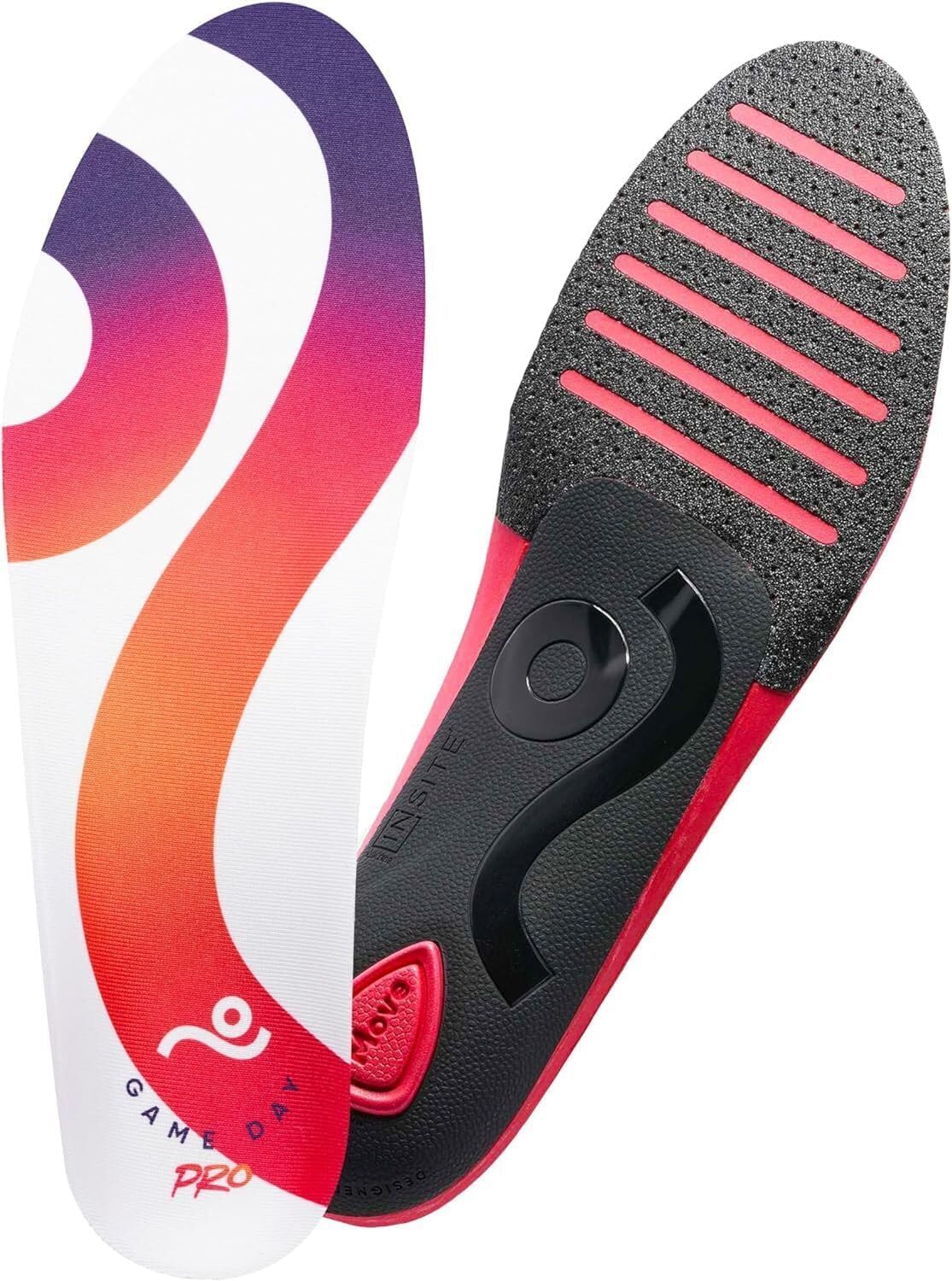
Best for Competitive Basketball
Move Game Day
Key Features
- Arch Support Profile: Custom orthotic-like arch
- Shock Absorption Material: Active Heel technology
- Trim-to-Fit vs Sized: No trimming needed
- Activity Specificity: Basketball-specific
- Price: $$$
Move Game Day insoles use a patented arch profile that mirrors custom orthotics, combined with an Active Heel to absorb shock during jumps and landings. The composite heel and reactive stability system keep the foot locked during lateral cuts — a design shaped by Damian Lillard’s court experience.
These are built for competitive basketball players and court athletes dealing with plantar fasciitis or shin splints. The forefoot padding is firm to maintain responsiveness, not plush — a tradeoff that suits players who prioritize stability over softness. The toe-area fabric can show wear after months of intense use, and the premium price reflects a purpose-built design rather than all-day walking comfort.
Pros
- Superior comfort for basketball and all-day wear
- Excellent arch support that helps with knee pain and shin splints
- High quality and effective design
Cons
- Toe-area fabric can wear down after months of intense court use
- Forefoot padding may feel insufficient for heavy heel strikers
If you’re a serious basketball player looking to reduce knee strain without sacrificing court feel, the Move Game Day insoles deliver on their promise — just plan for toe fabric replacement after a season of heavy play.
Best for Overpronation, Runners
CURREX RunPro
Key Features
- Arch Support Profile: 3D Dynamic, three heights
- Shock Absorption Material: PORON foam rebound
- Trim-to-Fit vs Sized: Easy trim-to-fit
- Activity Specificity: Running, high-impact sports
- Price: $$$
The CURREX RunPro delivers three distinct arch heights—low, medium, high—letting you match support to your foot mechanics. This design targets overpronation and reduces knee strain for runners and high-impact sports. That said, the forefoot cushioning is thin, so repeated jumping can feel firm. A squeaking noise from material friction has also been noted in some shoes. These insoles suit athletes who prioritize arch customization over plush comfort and are willing to work around the noise.
Pros
- Three arch height options allow a personalized fit for different foot shapes.
- Effective support that reduces knee and heel pain during running and court play.
- Durable construction with a deep heel cup that holds the foot securely.
Cons
- Forefoot padding is minimal, so high-impact landings may feel harsh.
- Squeaking noise can occur due to material friction with the shoe.
Best for runners and court athletes who need tailored arch support and are comfortable with a firmer forefoot and occasional noise.
Best for Overpronation Correction
PowerStep Pulse Maxx
Key Features
- Arch Support Profile: Neutral arch, rigid shell
- Shock Absorption Material: Dual-layer foam cushion
- Trim-to-Fit vs Sized: Sized, no trimming
- Activity Specificity: Running, overpronation
- Price: $$$
The PowerStep Pulse Maxx delivers firm motion control that stabilizes overpronation during cutting and landing movements. Its rigid arch shell and angled heel actively align the foot, reducing stress on the knees and shins. This is a support-driven insole, not a soft cushioning one — the dual-layer foam adds comfort but the structure remains stiff. That lateral stability is valuable for basketball players who overpronate, though the narrow profile means runners with wider feet or high-volume shoes will find the fit restrictive. The top fabric can also peel over time under heavy use, so inspecting periodically is wise.
Pros
- Reduces knee and ankle pain linked to overpronation during high-impact movement
- Rigid heel cup and angled wedge improve alignment without sacrificing mobility
- Full-length design fits most running and court shoes with minimal trimming
Cons
- May feel too narrow for feet that need extra width or volume
- Top fabric can peel and support may compress within a few months of frequent use
A strong choice for overpronating players who need structured correction and don’t mind a firmer ride — not for wide feet or those wanting plush cushioning.
Best for Plantar Fasciitis
TANSTC Pro Sport
Key Features
- Arch Support Profile: Three-point ergonomic arch
- Shock Absorption Material: Double PORON cushion
- Trim-to-Fit vs Sized: Trim-to-fit
- Activity Specificity: Plantar fasciitis, flat feet
- Price: $
The TANSTC Pro Sport uses a three-point arch support system and deep heel cup to stabilize flat feet at a price well below competitors. This design effectively reduces pain from plantar fasciitis during daily standing and walking. For basketball, however, the cushioning is too limited to absorb repeated jump landings, and the firm arch may feel uncomfortable for those unaccustomed to rigid support.
Pros
- Deep heel cup and three-point arch support stabilize flat feet effectively
- Provides noticeable plantar fasciitis pain relief during walking and standing
- Budget-friendly price undercuts most competitors
Cons
- Arch may feel too hard for users with sensitive feet or high arches
- Cushioning can fall short for high-impact sports like basketball jump landings
A solid budget choice for plantar fasciitis relief during daily activities, but basketball players needing knee pain relief should prioritize the court-tuned stability of the top pick.
Best for All-Day Comfort
Sof Sole Athlete
Key Features
- Arch Support Profile: Neutral low-profile arch
- Shock Absorption Material: PU foam + gel
- Trim-to-Fit vs Sized: Sized, no trimming
- Activity Specificity: All-day wear, athletic
- Price: $$
The Sof Sole Athlete delivers plush cushioning and a reliable fit across most athletic sneakers without trimming. It excels for all-day comfort and neutral-footed recreational use, but for basketball players seeking knee pain relief through arch support, the neutral profile falls short—those with overpronation or needing correction will want a stiffer motion control insole. Durability is a secondary concern: the top fabric can delaminate after extended heavy use, making this better suited for moderate-impact activities than daily high-intensity basketball.
Pros
- Cushioning feels soft and supportive for long wear.
- No-trim fit for men’s size 8-14 sneakers, right out of the box.
- Mid-range price with broad comfort appeal for daily use.
Cons
- Top fabric may delaminate with months of heavy use.
For neutral-footed athletes who prioritize cushioning and comfort over corrective support, this is a solid daily driver—but for basketball-specific knee pain relief, look to the top pick’s targeted arch support.
Best for Elite Performance
Move Game Day Pro
Key Features
- Arch Support Profile: High arch with X-Frame
- Shock Absorption Material: Active Heel plus extra
- Trim-to-Fit vs Sized: No trimming needed
- Activity Specificity: Court sports, extra shock
- Price: $$$
The Move Game Day Pro uses an X-Frame torsional support system and Active Heel technology to stabilize the foot during lateral cuts and landings, directly addressing knee pain from high-impact movements. Compared to the top-pick Game Day, it offers additional shock absorption but lacks the same tailored Damian Lillard input. Best suited for elite basketball and volleyball players who prioritize arch support and stability over plush cushioning. Be aware that forefoot cushioning may compress within three months under heavy use, and the price is premium.
Pros
- Arch support stabilizes the foot during intense lateral movements and landings.
- Construction uses high-quality materials that hold up to regular court use.
- Reduces knee pain and foot fatigue during high-impact sports.
Cons
- Top fabric may peel or crack over time, though this doesn’t affect performance initially.
- Under heavy weekly play, forefoot cushioning may compress within three months, reducing shock absorption.
A high-performance insole for serious athletes who need stability and shock absorption, but consider the potential for forefoot cushioning compression and the premium cost against the top-pick Game Day’s more targeted design.
Best for Casual Basketball
Dr. Scholl’s Sport

Key Features
- Arch Support Profile: Medium flexible arch support
- Shock Absorption Material: Gel heel & forefoot pads
- Trim-to-Fit vs Sized: Trim-to-fit
- Activity Specificity: Sports, walking
- Price: $
A widely available, affordable insole that provides soft cushioning for daily wear and mild knee stress from standing or walking. Its moderate arch support suits casual use, but the gel padding lacks the shock absorption needed for basketball’s high-impact movements — best as a budget trial option for general foot comfort, not for serious court play.
Pros
- Soft cushioning under heel and forefoot for everyday comfort
- Good arch support for moderate arches at a budget price
Cons
- Gel cushioning lacks the rebound needed for high-impact basketball jumps and cuts — fine for casual walking, not for aggressive court play
A reasonable budget trial for general foot comfort and mild knee stress from standing, but not the right choice for basketball-specific knee pain relief.
Best for Knee Pain Relief
Dr. Scholl’s Knee

Key Features
- Arch Support Profile: Moderate arch support
- Shock Absorption Material: Shock-absorbing design
- Trim-to-Fit vs Sized: Trim-to-fit
- Activity Specificity: Knee pain relief
- Price: $
This insole delivers noticeable cushioning and shock absorption for straight-ahead activities like jogging or walking, with trim-to-fit sizing that accommodates most sneakers. For basketball players, the absence of structured arch support and heel lockdown during cuts and landings limits its usefulness — the pain relief it provides is temporary and not a substitute for injury prevention. Best suited for casual runners with mild knee discomfort who want a budget-friendly option for low-impact use.
Pros
- Reduces knee pain from runner’s knee and mild osteoarthritis with good shock absorption.
- Affordable and easy to trim for a custom fit in most shoes.
Cons
- Lacks the lateral stability and arch support required for high-impact basketball movements.
Works for low-impact knee pain relief at a low price, but skip it if you need an insole for cutting and jumping on the court.
Best for Cross-Training & Gym
EASYFEET Flame Boost

Key Features
- Arch Support Profile: Medium-low flexible arch
- Shock Absorption Material: Forefoot/heel shock pads
- Activity Specificity: Cross-training, gym
- Price: $$
EASYFEET Flame Boost provides good shock absorption and arch support for moderate-impact activities like cross-training or casual gym workouts at a budget-friendly price. However, plastic components in the heel area can break under regular use, making it a short-term option rather than a durable long-term investment.
Pros
- Comfortable cushioning for high-impact activities
- Good arch support for moderate foot needs
Cons
- Plastic heel components can break under heavy use within weeks
Best for occasional cross-training on a budget, but not for regular basketball or long-term use.
Best for Recreational Sports
CRUVHEAL Sport

Key Features
- Arch Support Profile: Neutral arch
- Shock Absorption Material: Gel heel & forefoot pads
- Trim-to-Fit vs Sized: Trim-to-fit
- Activity Specificity: Recreational sports
- Price: $$
This insole delivers comfortable cushioning right out of the box, making it an easy choice for low-impact sports like recreational pickleball. The neutral arch offers basic support for low arches, and the price is fair for the initial feel. However, poor breathability leaves feet hot during activity, and fit or pain relief can be hit or miss — some find no benefit. For regular basketball or targeted knee pain, more specialized options will be more reliable.
Pros
- Comfortable cushioning from the first wear, no break-in needed.
- Good arch support for low arches at a fair price.
Cons
- Foot pain relief varies — some see no improvement or even increased discomfort.
A reasonable choice for casual, low-impact court play where initial comfort matters more than consistent knee support or breathability.
Best for Narrow-Foot Runners
Dr. Scholl’s Perf

Key Features
- Arch Support Profile: Size-specific arch profile
- Shock Absorption Material: Dual-layer, 40% shock reduction
- Trim-to-Fit vs Sized: Sized, no trimming
- Activity Specificity: Running, narrow feet
- Price: $$
These insoles provide targeted support and cushioning for plantar fasciitis and shin splints, with a no-trim design that fits some runners well. However, the narrow shape and inconsistent sizing mean they suit mainly narrow-footed athletes who have used this model before — not a guaranteed fit for first-time buyers or wide-footed players.
Pros
- Reduces pain from plantar fasciitis and shin splints
- Adds cushioning for comfortable running
Cons
- Fit may be too narrow and sizing may not match shoe size
A viable option for narrow-footed basketball players who know the insole’s fit and want targeted knee pain relief — others should opt for a more adaptable design.
How to Choose
The most important factor for knee pain relief in basketball insoles is shock absorption that doesn’t degrade quickly, combined with arch support that matches your foot’s natural alignment.
Arch Support Profile
Arch support is the backbone of knee alignment. Low arches (flat feet) often need firmer support to prevent the foot from rolling inward (overpronation), which stresses the knee. High arches need cushioning and a different support shape to absorb impact evenly.
Insoles with multiple height options let you dial in fit, but many basketball-specific models offer a fixed medium-high arch that works for most players. Choose based on your known arch type — if unsure, a neutral support insole is safer than one that pushes your foot into an uncomfortable position.
Shock Absorption Material
Gel pads, PU foam, and PORON are common materials. Gel provides immediate softness but compresses fastest. PU foam holds up longer but can feel stiff. PORON offers a balance of rebound and durability — often used in higher-end insoles.
For basketball, look for materials that maintain performance after repeated jumping. Cheap insoles often lose their bounce within 2-3 months, leading to return of knee pain. A dense foam with a dedicated heel pad will outlast all-gel designs.
Heel Cup Depth and Stability
A deep heel cup cradles the heel bone and limits side-to-side movement during cuts and landings. This reduces torque on the knee. Shallow heel cups allow the heel to shift, which can aggravate knee pain.
If your current insoles cause heel slippage or make your basketball shoes feel loose, a deeper cup can lock the foot in place. Some insoles combine a deep cup with a stiff arch shell for maximum stability.
Trim-to-Fit vs Sized Insoles
Trim-to-fit insoles require cutting along size lines. Done carefully, they can fit any shoe, but mis-cutting leads to sliding or bunching. Sized insoles (no trimming) offer a better fit out of the box — assuming the size chart matches your shoe.
For basketball, where lateral movement is constant, a snug fit matters. Sized insoles reduce the risk of shifting, but if your shoe is an uncommon size, trim-to-fit gives flexibility. Measure your current insole length against the replacement before buying.
Activity Specificity
Insoles designed for running are optimized for forward motion, while basketball insoles focus on lateral support, heel lockdown, and shock absorption from jumping. Using a running insole for basketball may leave you without enough side stability.
If you play multiple sports, choose a versatile insole like those labeled for ‘court sports’ or ‘high-impact’ that balance forward and lateral needs. Pure walking or casual insoles will not hold up to basketball’s demands.
FAQ
Do Move Game Day insoles actually reduce knee pain from basketball?
Yes, many basketball players report noticeable reduction in knee pain with Move Game Day insoles. The Active Heel technology and arch support are designed specifically for court movements — cutting, jumping, and landing — which directly reduces stress on the knees. The deep heel cup also helps prevent the foot from sliding, a common cause of knee strain.
How long do PowerStep insoles last for running and jumping?
PowerStep insoles generally last several months, but the top fabric can peel within 45 days for some users. The arch shell is guaranteed for life, so the structural support remains, but the cushioning layer may compress sooner. Expect to replace them every 3-6 months if you use them for high-impact sports.
Will cheap Dr. Scholl’s insoles help with runner’s knee?
Cheap Dr. Scholl’s insoles can provide temporary relief for mild runner’s knee due to their gel cushioning, but they lack the arch support and stability needed for basketball’s high-impact movements. They are a budget entry point but not a long-term solution for knee pain from jumping and cutting.
Why do my insoles make my basketball shoes feel too tight?
Insoles add volume inside the shoe. If your basketball shoes are already snug, a thick or high-arch insole can compress your foot and cause tightness. Check the original insole thickness — replace with one of similar thickness, or remove the original insole entirely. Some players size up half a shoe size when using premium insoles.