
This post contains affiliate links. We may earn a small commission when you buy through our links — at no extra cost to you.
Many basketball insoles promise ankle support and performance, but real-world feedback shows that cushioning can flatten and fabric covers can peel within months. That trade-off between comfort and longevity is the single biggest frustration for players, especially those who play several times a week.
The key is matching your playing frequency and foot shape to the right combination of arch support, heel cup depth, and material durability. Some insoles prioritize impact absorption but degrade faster; others use rigid carbon fiber for stability but feel firm. That’s why the best choice depends on how often you play and what you’re willing to trade off.
This guide focuses on insoles that deliver consistent ankle support without sacrificing durability for day-to-day use, so you can focus on the game. Whether you need plush cushioning or firm support, we’ve matched each to a specific playing style.



Best for Flat Feet, Pf
Move Game Day Performance
Key Features
- Arch Support: Custom arch support
- Cushioning: Medium
- Durability: Cover may peel
- Price: $$
The Move Game Day Performance insoles deliver consistent arch support and cushioning that lasts through full practices and pickup games. The molded forefoot and composite heel provide a stable base without the need for trimming, and the patented arch contour helps reduce strain on the feet and knees during lateral movements and jumps.
In actual use, the insoles stay in place and maintain their shape after months of wear. The cushioning is firm enough for responsive court feel but forgiving enough for wear off the court. While the cloth cover can peel over time — a known tradeoff with many fabric-topped insoles — the underlying structure holds up well, making this a durable option for regular use.
These are best suited for basketball players who need reliable arch support for flat feet or plantar fasciitis and want an insole they can wear all day without discomfort. If you prefer a firmer, less cushioned feel, a more rigid alternative may be a better fit. The potential for the fabric cover to peel after extended use is worth factoring in if you plan to wear them daily for more than a season.
Pros
- Comfort that holds up during full days on and off the court
- Effective arch support that reduces foot and knee pain
- Durable construction with no trimming needed out of the box
Cons
- Cloth cover may peel after extended use in high-friction conditions
For basketball players seeking dependable arch support and all-day comfort without overspending, the Move Game Day Performance insoles are a straightforward buy — just keep the fabric cover in mind if you intend to wear them through a heavy season.
Best for Competitive Players
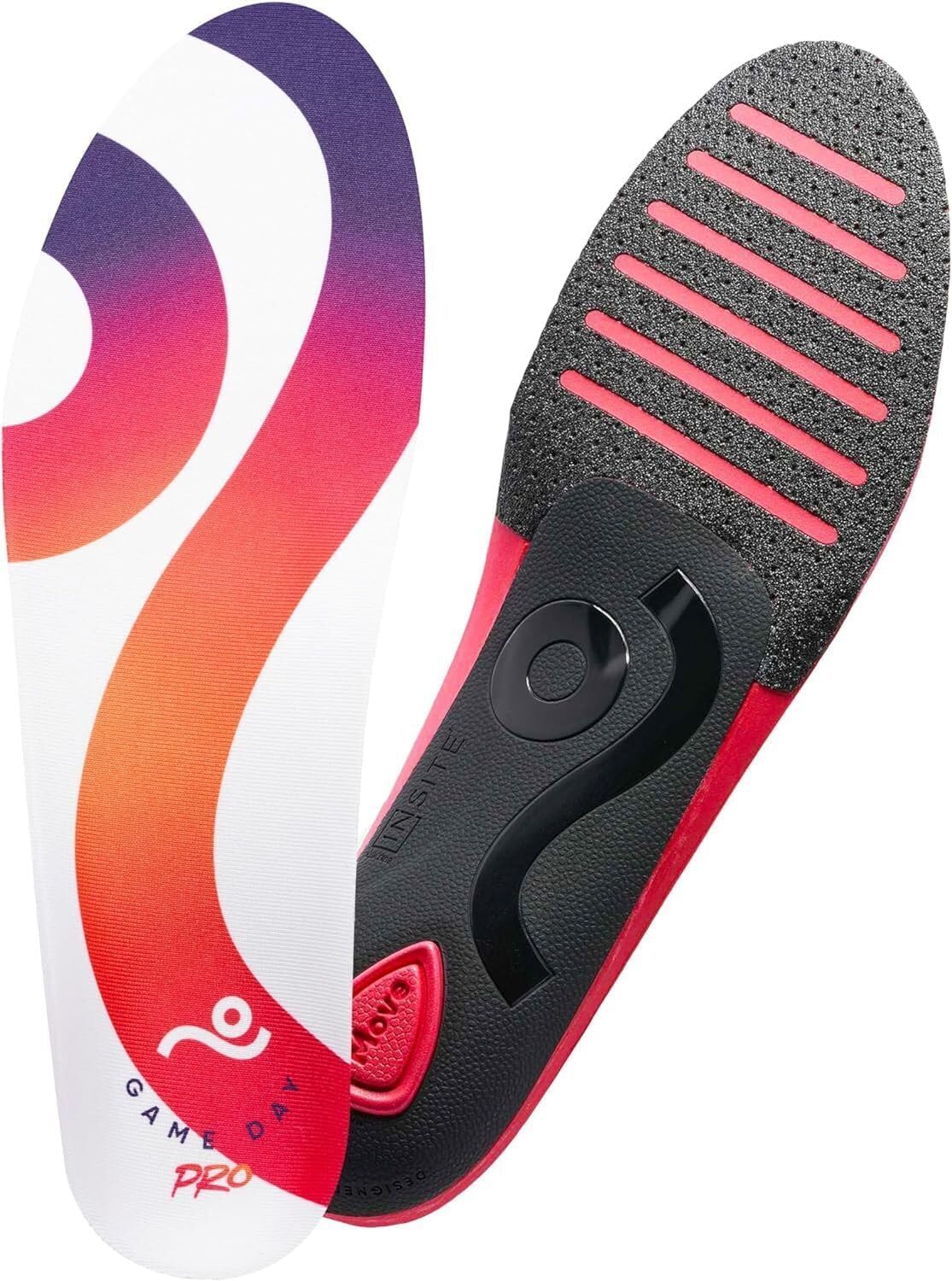
Move Game Day Pro
Key Features
- Arch Support: High arch support
- Cushioning: Plush
- Durability: Cover may peel
- Price: $$$
The Move Game Day Pro delivers extra shock absorption and X-frame torsional support for high-intensity play — a step up from the Game Day Performance in impact protection. Active heel technology and high arch support provide stability during lateral cuts and landings, making it suitable for basketball and volleyball athletes who need injury prevention.
This insole is best for competitive players who prioritize maximum cushioning each game over long-term durability. The forefoot cushioning can compress within months, and the fabric cover may peel — tradeoffs acceptable for those who replace insoles between seasons. For players wanting an all-rounder that lasts longer, the Game Day Performance is the better choice.
Pros
- Strong shock absorption and impact protection for landing and cutting.
- High arch support helps reduce overpronation and shin splint discomfort.
- Solid build with X-frame stability and active heel technology.
Cons
- Forefoot cushioning can compress within months, reducing impact protection.
- Fabric covering may peel after limited use.
For competitive athletes who demand maximum shock absorption and arch support each game, the Move Game Day Pro delivers — with the understanding that its cushioning degrades faster than typical all-purpose insoles.
Best for Flat Feet, Firm
XEPXEP Carbon Fiber Insoles
Aerospace-grade carbon fiber construction gives the XEPXEP insoles a level of stiffness that translates into steady arch support and noticeable rebound during jumps and sprints. The carbon fiber plate absorbs and releases energy with each step, which may contribute to reported improvements in jump height and running speed.
These insoles suit players with flat feet who want a firm, supportive platform to reduce overpronation and knee stress. The honeycomb mesh cover manages moisture well during intense play, but the minimal cushioning means they won’t work for anyone with sensitive feet or a preference for plush step-in feel.
Pros
- Strong support and stability for flat feet and overpronation
- Lightweight yet firm construction holds shape well
- Noticeable performance boost in running and jumping
Cons
- Very firm feel can cause discomfort for those accustomed to cushioned insoles
Best suited for flat-footed basketball players who prioritize stability and energy return over plush comfort – a specialized insole, not an everyday cushion.
Best for Casual Players
CRUVHEAL Sport Insoles
Key Features
- Arch Support: Neutral arch
- Heel Cup: Deep cup
- Cushioning: Medium
- Price: $
The CRUVHEAL Sport Insoles offer solid impact absorption and a deep heel cup at a low price — enough to make occasional pickup games feel more comfortable. For casual outings, the cushioning is responsive and the fit works across most athletic shoes without slipping.
This insole fits recreational players who hit the court a few times a month and want an affordable cushion upgrade without fuss. Those playing weekly or dealing with chronic foot issues, however, may find the pain relief fades after a few weeks and the lack of ventilation makes feet feel hot during extended action.
Pros
- Cushioning absorbs shock well for the price
- Deep heel cup adds lateral stability during cuts
- Build quality feels solid for a budget insole
Cons
- Feet may feel hot during longer runs or games
- Pain relief can diminish after a few weeks for some users
A cost-effective pick for casual play, but not the one to count on for consistent relief or breathable comfort.
Best for Budget Flat Feet
DWLCWY Arch Support Insoles

Key Features
- Arch Support: Golden Triangle high-arch
- Heel Cup: Deep U-shaped
- Cushioning: Medium
- Price: $
The DWLCWY Arch Support Insoles deliver strong arch support and a deep heel cup at a budget price, making them a solid value for flat feet. However, the sizing can run slightly small, and with relatively few reviews available, long-term performance for high-intensity basketball remains unclear. This insole suits light, casual use rather than competitive play.
Pros
- Excellent arch support and pain relief for flat feet
- Great value at a low price
Cons
- Sizing may run slightly small, so confirm fit before use
Pick these if you need budget-friendly arch support for casual walking or light basketball and can verify the fit matches your shoe size.
Best for Custom Arch Fit
CURREX ActivePro

Key Features
- Arch Support: Multiprofile arch support
- Heel Cup: Deep decoupled
- Cushioning: Medium
- Durability: Foam may break
- Price: $$$
The CURREX ActivePro’s key strength is its three-profile arch support system, allowing precise matching to your arch type. This can help reduce knee pain and overpronation during basketball or dance. However, the premium price clashes with reports that the inserts may degrade over time, potentially causing discomfort. This insole suits athletes who know their arch profile and prioritize fit over long-term durability or cost.
Pros
- Custom-like fit with three arch height options for tailored support
- Comfortable for long periods on hard courts or gym floors
Cons
- Premium price may not feel justified for the performance delivered
- Insoles may degrade over time, leading to discomfort
Best for athletes who know their arch type and want a precise fit, provided they accept the possibility of durability issues and the higher cost.
Best for High Arch, Budget
LUX Sports High Arch Insoles

The LUX Sports High Arch Insoles offer a grippy DualGrip surface and firm arch support for under $20, making them an appealing budget choice for players with high arches. However, the thick heel pad can lift the foot in low-profile shoes, and limited user feedback means the long-term durability is uncertain. This insole works best for those who prioritize arch support in cleats or narrow basketball shoes and don’t mind a thicker heel and higher weight.
Pros
- High arch support with a grippy surface that stays put in cleats and narrow basketball shoes.
- Budget-friendly price for a high-arch insole.
Cons
- In low-profile basketball shoes, the heel pad may lift the foot, reducing stability.
- The insoles add noticeable weight, which can affect agility.
If you have high arches and wear cleats or narrow basketball shoes, this budget insole delivers the support you need—just be prepared for a thicker heel and extra weight.
How to Choose
A deep heel cup is the most critical feature for ankle stability during lateral cuts and jumps.
Arch Support: Matching Your Foot Type
Arch support is not one-size-fits-all. High arches need firm support to distribute impact, while flat feet require structured orthotic-level support to prevent overpronation and knee pain.
A mismatch can lead to instability or discomfort. Most brands offer low, medium, or high arch profiles—know your foot type before buying.
Heel Cup Depth: Stability Starts Here
A deep heel cup locks your heel in place, reducing lateral roll that causes ankle sprains. Many budget insoles skimp on cup depth, leaving your foot unsupported during quick changes of direction.
For basketball, a cup that fully wraps the heel is non-negotiable. If the insole feels loose, it won’t provide the lateral support you need.
Cushioning vs. Support: Finding the Balance
Firm cushioning provides better energy return and stability for explosive movements but can be uncomfortable for casual players. Plush cushioning absorbs more impact but often compresses quickly, reducing support over time.
Your playing frequency dictates the right firmness: high-intensity players benefit from medium-firm foam, while occasional players can use softer, more forgiving materials.
Durability: Materials That Last
The top cover and foam are the first to fail. Fabric covers can peel within months from sweat and friction, and cheap foam loses shock absorption after 50–100 hours of play.
Look for reinforced top cloth and high-density foam if you play multiple times a week. Replacing insoles annually is normal for regular players.
FAQ
Do carbon fiber insoles actually help you jump higher in basketball?
Carbon fiber insoles provide a stiff platform that can improve energy return, but the effect on jump height is marginal. They primarily reduce fatigue and improve stability for players with flat feet. If you’re looking for a vertical boost, focus on plyometric training rather than insoles.
How long do Move Game Day insoles last before the cushioning flattens?
The Move Game Day insoles generally maintain their cushioning for 6–12 months of regular play. Users report that the cloth cover may peel after 3–6 months, but the foam holds up longer. If you play multiple times per week, expect to replace them annually.
Can I use high arch insoles in low-top basketball shoes?
High arch insoles can be used in low-top basketball shoes, but they may raise your foot too high and cause heel slippage. If your shoe has a shallow heel counter, opt for a medium arch insole instead to maintain a secure fit.
Why do my insoles make my feet hurt after a few months?
If insoles cause foot pain after a few months, it’s usually because the foam has compressed and lost support. This is common with budget insoles that use low-density foam. Replace them once you feel the cushioning has flattened—typically after 3–6 months of frequent use.