
This post contains affiliate links. We may earn a small commission when you buy through our links — at no extra cost to you.
Most insoles marketed for plantar fasciitis focus on arch support, but on the court the real test is repeated jumping, hard stops, and lateral cuts. A thick insole can lift your heel and reduce court feel, while a too-soft one compresses after a few games. The best basketball insoles balance cushioning for impact with a secure fit that doesn’t shift during explosive moves — and they need to hold up to weekly use without peeling or squeaking.
Common complaints like top-layer delamination, squeaking, or inconsistent sizing are avoidable if you prioritize the right construction and materials. This guide breaks down four key specs — arch support height, heel cushioning, fit width, and durability — so you can match an insole to your foot type and playing frequency. Whether you have flat feet, high arches, or just want a softer landing, the picks here address real trade-offs without hype.



Best for Plantar Fasciitis Relief
PowerStep Pinnacle
Key Features
- Arch Support: Moderate pronation control
- Heel Cushioning: Dual-layer heel cushioning
- Fit Width: Medium to wide
- Durability: Moderate (delam risk)
- Price: $$
PowerStep Pinnacle insoles provide immediate relief for plantar fasciitis and heel pain, a direct benefit for basketball players who land hard on their heels. The moderate pronation control keeps the foot aligned during cuts and jumps, and the full-length arch support distributes impact across the foot.
The insoles require no trimming, sized by shoe size, and the dual-layer cushioning holds up during extended court sessions. In some cases, the top fabric can delaminate from the foam base after several months of heavy play—worth factoring into a replacement schedule. These are best suited for players with flat to moderate arches who need structured support rather than plush cushioning; those with very high arches or a preference for soft foam should look elsewhere.
Pros
- Arch support and stability control moderate pronation during lateral movements
- Immediate relief for plantar fasciitis and heel pain without break-in
- Comfortable enough for all-day wear on and off the court
Cons
- Width may be too generous for standard or narrow shoe sizes
- Top fabric can separate from the foam base after several months of heavy use
For basketball players who need immediate heel pain relief and moderate pronation control without a break-in period, the PowerStep Pinnacle is the most straightforward option — just plan for eventual replacement if you play heavily.
Best for Overpronation Correction
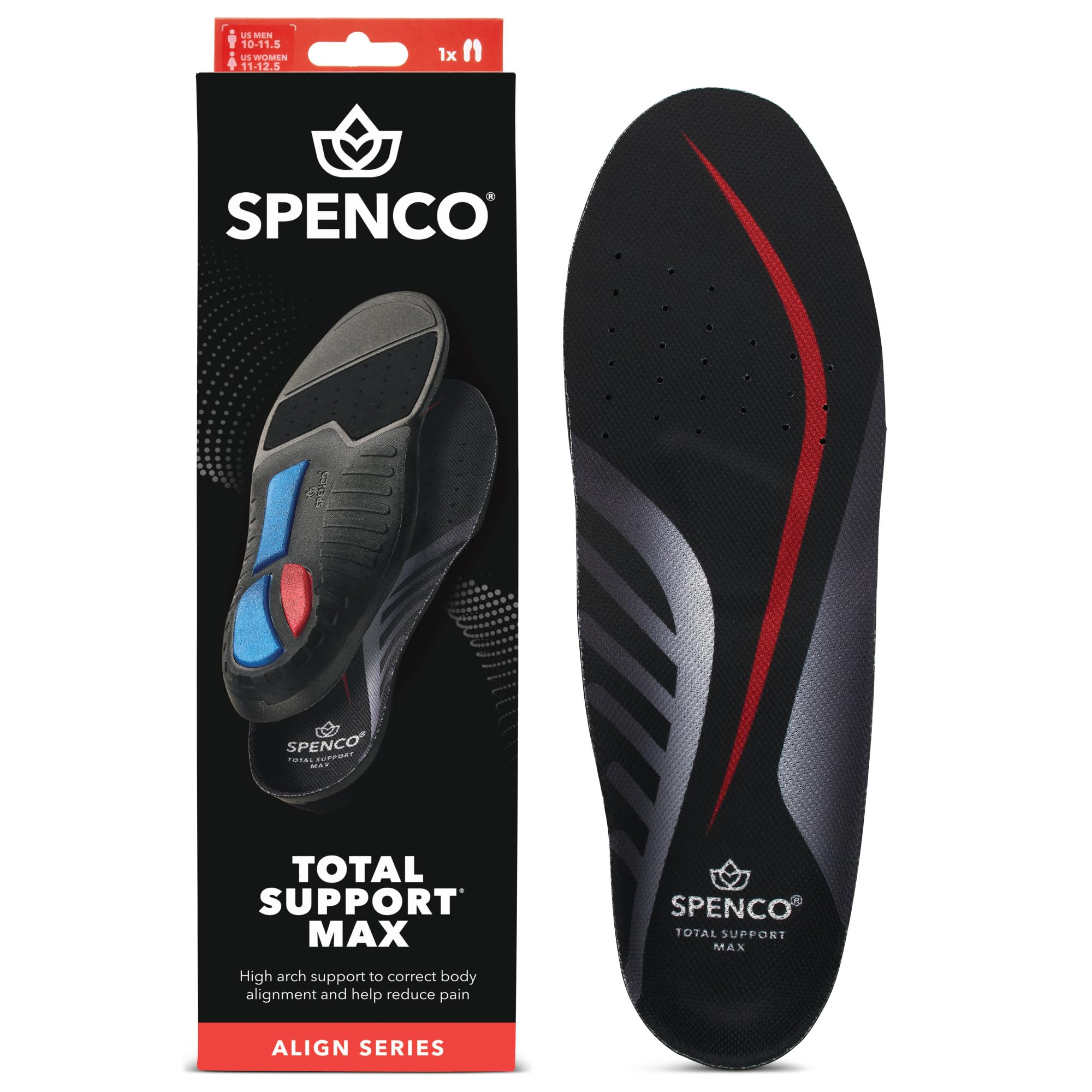
Spenco Total Support Max
Key Features
- Arch Support: High firm arch
- Heel Cushioning: Multi-density metatarsal
- Fit Width: Narrow to medium
- Durability: High
- Price: $$$
The Spenco Total Support Max delivers the most rigid arch support and stabilizing heel cup in this category, making it a strong option for basketball players who overpronate or have flat feet. Unlike cushion-first insoles, this twin-layer orthotic prioritizes motion control over plush feel — the deep heel cupping and metatarsal pad lock the foot in place during lateral cuts and jumps. The tradeoff is a very firm underfoot feel that demands a break-in period, and the sizing can run large, so checking fit before full use is advisable.
These insoles are best suited for players who need rigid correction for overpronation, chronic plantar fasciitis, or flat arches. If you prefer soft cushioning or have neutral gait, the firmness and break-in requirement will be a mismatch. The premium build quality and durable materials justify the price for those whose foot mechanics demand motion control on the court.
Pros
- Superior arch support helps correct overpronation during high-impact play.
- Provides significant relief for plantar fasciitis and general foot pain from basketball landings.
- Multi-density construction holds up well under repeated court use.
Cons
- Extremely firm feel may be too hard for players accustomed to soft cushioning; requires a break-in period.
- Sizing can run large, so the insoles may not fit standard shoe sizes without trimming or return.
A high-performance orthotic for basketball players with overpronation or flat feet who need rigid motion control — worth the premium if you accept the firm feel and verify fit.
Best for Flat Feet Budget
TANSTC Sport
Key Features
- Arch Support: Medium firm arch
- Heel Cushioning: Double PORON foam
- Fit Width: Medium width
- Durability: Moderate
- Price: $
The TANSTC Sport delivers a firm, supportive base rare at this price point, targeting flat feet and plantar fasciitis pain effectively. However, the arch support can feel too rigid for those used to softer insoles, and occasional squeaking has been reported during court movements. Best for budget-conscious players who need stable arch support and can tolerate a firmer feel underfoot — the tradeoff for affordability in a high-impact setting.
Pros
- Strong arch support at a budget price – relieves pain for flat feet without straining wallet.
- Comfortable for extended wear – holds up during long games or practice sessions.
Cons
- Arch support may feel too firm initially, causing discomfort for those sensitive to hard surfaces.
- Some units produce a squeaking noise during lateral movements on court.
A no-nonsense option for flat-footed players on a budget who want firm support — just be prepared for a firmer feel and possible noise.
Best for Plush Cushioning
Sof Sole Athlete
Key Features
- Arch Support: Neutral arch
- Heel Cushioning: PU foam and gel
- Fit Width: Medium width
- Durability: Moderate
- Price: $$
The Sof Sole Athlete uses a thick layer of PU foam and gel from heel to toe, delivering the plushest cushioning among the insoles tested. This makes it ideal for players who absorb a lot of impact from jumping and running, but its moderate arch support means it’s not for those needing pronation control.
Pros
- Plush PU foam and gel cushioning absorbs impact from heel to toe.
- Sturdy construction holds its shape and cushioning over time.
- Effective shock dampening under both heel and forefoot.
Cons
- Arch support is moderate – insufficient for those needing firm pronation control.
- Top layer may separate from the foam after months of heavy use.
For players who want a cloud-like landing on the court and can trade firm arch support for plush comfort, the Athlete is a good fit.
Best for High Arches
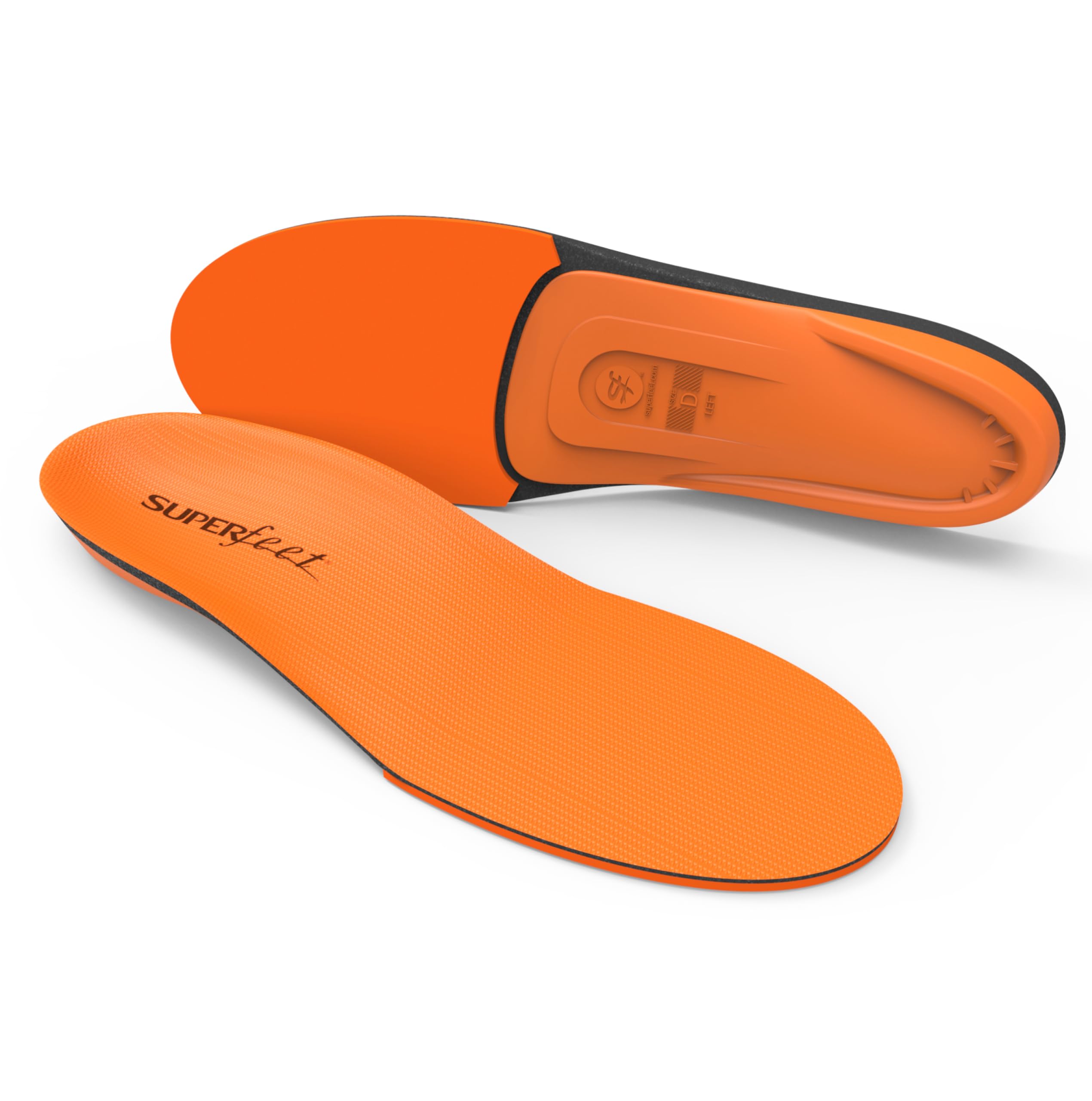
Superfeet Orange
Key Features
- Arch Support: High rigid arch
- Heel Cushioning: High-impact support
- Fit Width: Narrow
- Durability: Moderate
- Price: $$$
The Superfeet Orange’s deep heel cup and stabilizer cap lock the foot in place during lateral cuts, giving high-arched players the structural control that stock insoles often lack. The trim-to-fit design works in slim performance shoes, but the narrow shape presses against the sides—making this a fit for medium to narrow feet, not wider builds.
Pros
- Rigid arch support stabilizes the foot during lateral movements and quick direction changes.
- Provides effective relief for heel and arch pain, including plantar fasciitis symptoms.
- Consistent build quality encourages repeat purchases over extended use.
Cons
- Some units may develop a crackling sensation or structural degradation under regular court use.
For high-arched players with narrow to medium feet who prioritize rigid support, the Superfeet Orange delivers targeted stability on the basketball court.
Best for Budget Casual
Dr. Scholl’s Sport

Key Features
- Arch Support: Flexible side support
- Heel Cushioning: Gel pads heel/forefoot
- Fit Width: Trim-to-fit
- Durability: Low
- Price: $
Dr. Scholl’s Sport cushioning reduces muscle fatigue for casual basketball sessions, and the arch support works well for medium arches. But the gel pads can compress within months of regular use, and squeaking may pop up in certain shoes. This is a short-term upgrade rather than a durable solution for frequent play.
Pros
- Cushioning eases muscle fatigue during casual games
- Arch support suits medium arches without overcorrecting
Cons
- Gel pads may compress after a few months of regular activity
Best suited for casual court sessions where budget matters more than long-term durability.
Best for Wide Feet
Spenco Cross Trainer

Key Features
- Arch Support: Medium contoured
- Heel Cushioning: Spencore + EVA
- Fit Width: Wide
- Durability: High
- Price: $$
The Spenco Cross Trainer offers generous cushioning and a wide fit, ideal for basketball players needing extra room and impact protection. However, its cushioning-focused design prioritizes comfort over ground feel, making it best suited for players who value shock absorption over court connection.
Pros
- Strong cushioning absorbs high-impact landings.
- Comfort holds up during long games.
Cons
- In low-cut basketball shoes, the thick heel stack can lift the foot too high, reducing court feel.
Best for players with wide feet who prioritize cushioning over court feel, especially in high-top shoes.
Best for Air Cushioning
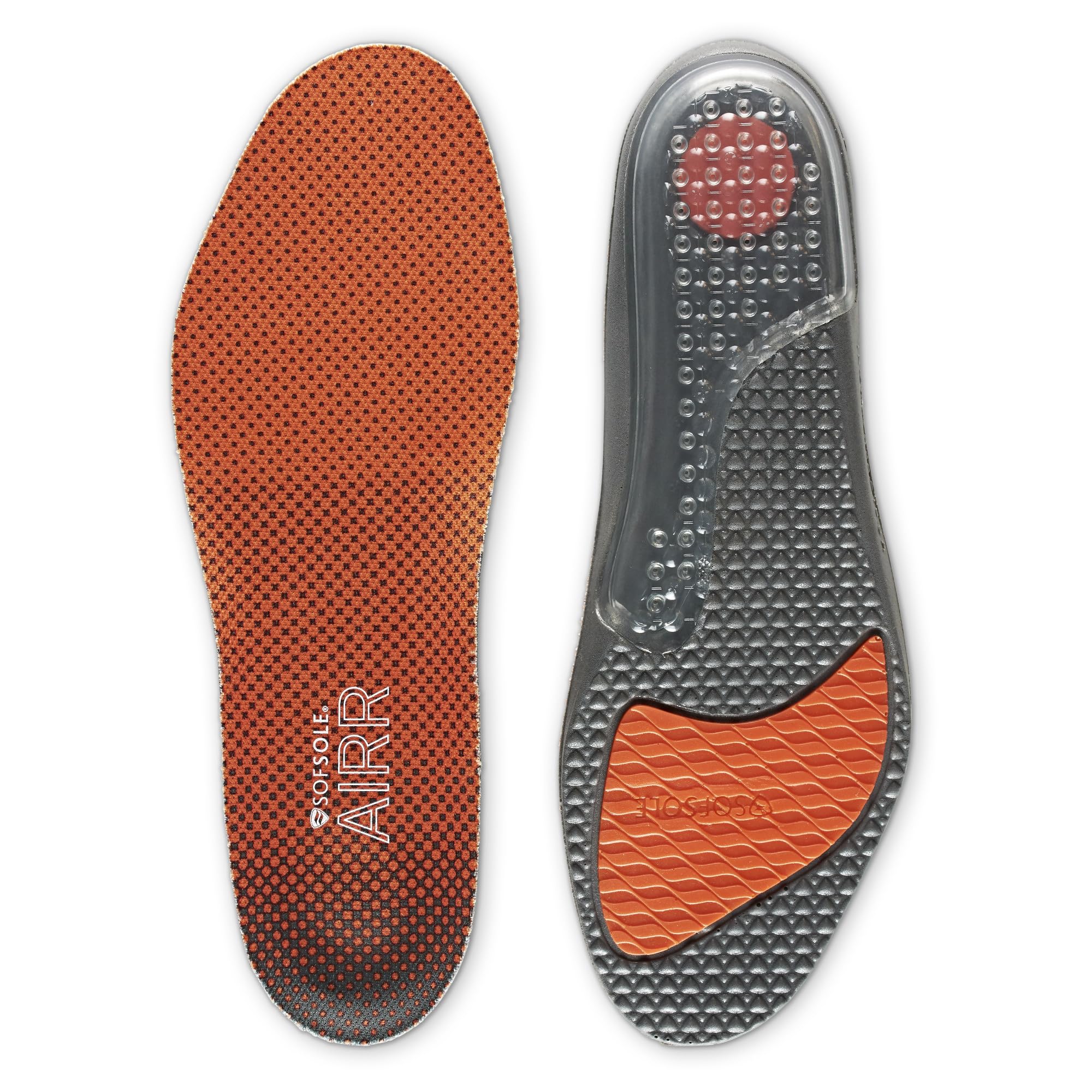
Sof Sole Airr
Key Features
- Arch Support: Moderate arch
- Heel Cushioning: Skydex air bubbles
- Fit Width: Narrow
- Durability: Low
- Price: $$
Skydex air bubbles provide a springy, responsive heel cushion ideal for basketball’s high-impact landings. The narrow fit, however, means it won’t suit players with wide feet, and durability may be inconsistent under frequent play. This is a niche choice for slim-footed players who prioritize immediate air-cushion feel over long-term longevity.
Pros
- Air-bubble heel and forefoot cushioning absorbs impact on landings.
- Comfortable support for running and jumping activities.
Cons
- Narrow fit may not accommodate players with wide feet or larger sizes.
Best for players with narrow feet who want a bouncy heel feel and don’t mind replacing insoles more frequently.
Best for Heel Pain Relief
FEELLIFE Relief

Key Features
- Arch Support: Plantar fasciitis support
- Heel Cushioning: TPU gel PU
- Fit Width: Medium width
- Durability: Moderate
- Price: $$
These insoles provide noticeable relief for heel pain and flat feet, with decent arch support for moderate pronation. However, the insole can produce squeaking noises during play and may cause heel slippage in tighter basketball shoes — a tradeoff worth considering for players with low arch support needs.
Pros
- Effective relief for plantar fasciitis and heel pain during basketball activity
- Good arch support for flat feet and moderate pronation on the court
Cons
- Squeaking noise can occur during play, which may be distracting in a quiet gym
Best for basketball players with heel pain who can tolerate occasional squeaking and have shoes with enough volume to accommodate the added thickness.
Best for Casual Wear
VoMii Memory Foam

Key Features
- Arch Support: Neutral arch
- Heel Cushioning: Memory foam
- Fit Width: Trim-to-fit
- Durability: Low
- Price: $
VoMii insoles deliver a plush, cloud-like feel at a budget-friendly price, making them a comfortable upgrade for everyday shoes. However, the 0.9-inch heel stack is too thick for most basketball shoes, causing heel lift and instability during lateral movements, and the memory foam lacks the structured arch support needed for high-impact play.
Pros
- Very affordable memory foam comfort for casual walking.
- Soft, cushiony feel that many find pleasant for light use.
Cons
- Too thick for basketball shoes – can cause heel lift and poor fit during play.
Works well as a walking insole or for fashion sneakers, but not a viable option for basketball – use the shoe’s stock insole or a dedicated sports insert instead.
Best for Ultra Budget
Risctrre Sports

Key Features
- Arch Support: Medium arch
- Heel Cushioning: Elastic rubber gel
- Fit Width: Trim-to-fit
- Durability: Moderate
- Price: $
The Risctrre Sports insoles deliver decent support and comfort for daily walking at a budget-friendly price. However, the thin cushioning is insufficient for high-impact basketball movements — these work best as a backup pair or for light activity.
Pros
- Budget-friendly with decent support for daily walking
- Provides relief for knee and back pain during walking
Cons
- Thin cushioning lacks the impact protection expected for high-intensity court sports
A spare for casual walking or temporary shoe replacement, not for basketball.
Best for Short-Term Use
EASYFEET Flame Boost

Key Features
- Arch Support: Medium flexible
- Heel Cushioning: 62% shock absorption
- Fit Width: Narrow
- Durability: Low
- Price: $$
The Flame Boost delivers a noticeable bounce and 62% shock absorption that feels great during pickup games and cross-training sessions. However, the plastic arch support can crack within weeks of regular use, and the insole may shift inside shoes due to limited bottom grip. This works well for players who rotate pairs and play casually a few times a week—not for anyone relying on a single pair for frequent high-intensity court play.
Pros
- High energy return (47%) adds spring to jumps and cuts.
- Good arch support for medium arches, helping lateral stability during court movements.
Cons
- Plastic arch support can crack after a couple weeks of regular use, reducing usable life.
A decent short-term boost for occasional players who rotate shoes, but not built for frequent court use.
How to Choose
The best basketball insole balances impact absorption for jumps with a secure fit that doesn’t lift your heel during cuts.
Arch Support Height and Firmness
Arch support controls how your foot rolls during lateral cuts and landings. A low, flexible arch works for neutral feet but offers little pronation control. A high, rigid arch corrects overpronation but may feel too hard for players with normal arches. The right height depends on your foot type – flat feet need firm, high support; high arches need a contoured fit that doesn’t add pressure.
Heel Cushioning and Shock Absorption
Heel cushioning absorbs the force of landings. Gel pads feel soft initially but compress quickly under frequent use. High-rebound PU or EVA foams maintain their bounce over more games. For players who jump often, a denser foam provides more consistent impact protection.
Fit and Width Compatibility
An insole that’s too thick lifts your heel, reducing court feel and increasing risk of ankle roll. Width matters too – a narrow insole in a wide shoe slides, while a wide insole in a narrow shoe bunches. Measure your shoe’s current insole thickness and width before choosing.
Durability Under Lateral Impact
High-impact lateral movements shear the top cover from the foam base – the most common failure mode. Look for bonded construction rather than glued layers. Squeaking is another sign of poor integration between materials. Insoles with a single-piece or stitched construction tend to last longer.
FAQ
Why do my new insoles squeak when I play basketball?
Squeaking often results from friction between the insole and shoe materials. Remove the insole and apply a thin layer of baby powder or chalk on the bottom. If it persists, the insole may be too small and shifting inside the shoe.
Can I use running insoles for basketball?
Running insoles are designed for forward motion, not lateral cuts. They lack the stability needed for side-to-side movements and can cause your foot to slide inside the shoe, increasing injury risk. Stick with insoles marketed for multi-directional sports.
How often should I replace insoles if I play basketball 3 times a week?
For three-times-a-week play, replace insoles every 4-6 months if they show signs of compression or delamination. Once the cushioning loses its rebound or the top layer starts peeling, it’s time for a new pair.
Do basketball insoles need more arch support than running insoles?
Yes. Basketball requires more lateral stability and heel lock than running. Running insoles emphasize forward cushioning and softer arches; basketball insoles need a deeper heel cup and firmer arch to prevent rolling during cuts.