
This post contains affiliate links. We may earn a small commission when you buy through our links — at no extra cost to you.
Carbon fiber insoles promise extra inches on your vertical, but the reality is often stiff foam and sore feet. Jumping in basketball already pounds your arches and knees—adding a rigid, unforgiving insole can do more harm than good.
The real gains come from insoles that balance shock absorption, arch support, and a fit that doesn’t fight your foot. After looking at what actually works on the court, the most consistently praised options aren’t the most expensive ones. They’re the ones players can wear all game without thinking about their feet.
This guide cuts through the marketing and focuses on the insoles that deliver where it matters: comfort during play, support for hard landings, and durability that lasts a season.



Best for All-Day Comfort & Support
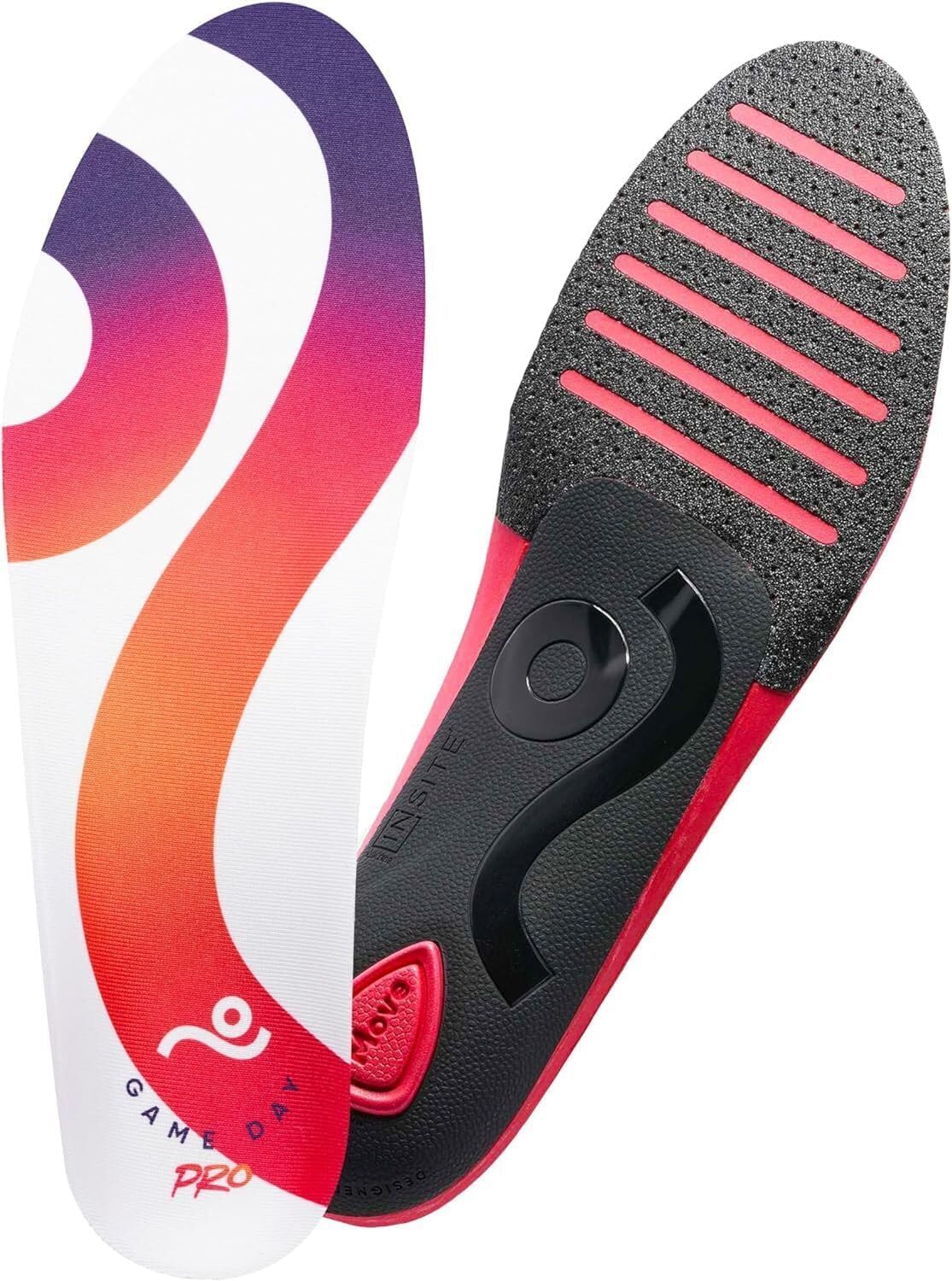
Move Game Day Insoles
Key Features
- Arch Support: Patented PF & flat feet support
- Shock Absorption: Composite heel for shock reduction
- Heel Cup: Deep, stable heel cradle
- Material Durability: Excellent – lasts full seasons
- Price: Mid-Range
The Move Game Day Insoles provide consistent comfort and arch support that ease foot and knee strain during long basketball sessions. The cushioning strikes a balanced feel, adding energy for landings without sacrificing stability. The molded forefoot adapts to individual foot shape, enhancing fit and support.
These insoles fit true to size with no trimming, making them easy to swap between shoes. The composite heel absorbs shock well, and the build resists compression over full seasons of daily use. Unlike carbon fiber designs, they don’t promise a specific vertical leap increase — this is a grounded option that prioritizes durability and comfort.
Best for basketball players with plantar fasciitis or flat feet who need all-day support without fatigue. If you’re chasing a measurable jump boost from carbon fiber, the plush feel will be less bouncy. They’re a dependable choice for athletes who value proven comfort and durable construction over extreme energy return.
Pros
- All-day comfort that reduces foot pain during extended games and practices.
- Excellent arch support that alleviates plantar fasciitis and knee discomfort.
- High build quality that withstands daily use through full seasons of volleyball and basketball.
Cons
- Athletes expecting a noticeable vertical leap increase from carbon fiber may find the energy return less pronounced.
- Players accustomed to very firm, minimal cushioning may find the plush feel too soft for their preference.
For basketball players who prioritize all-day comfort and durable arch support over a promise of extra inches, these insoles deliver consistent performance without compromise.
Best for Max Shock Absorption
Move Game Day Pro
Key Features
- Arch Support: High arch support
- Shock Absorption: X-Frame torsional + extra foam
- Heel Cup: Active Heel Technology
- Material Durability: Mixed – forefoot can compress
- Price: Mid-Range
The Move Game Day Pro builds on the standard Game Day foundation with Active Heel Technology to target pressure points and an X-Frame design for torsional support — both aimed at reducing impact on hard landings. The high arch profile provides alignment support that can help with knee and shin pain during intense play. This is the better option for basketball players who need extra shock absorption and are willing to accept that the forefoot cushioning may compress faster than in the standard model, leading to a firmer feel over time.
Best suited for serious hoopers who prioritize landing protection and joint comfort over long-term foam resilience. Players with a history of shin splints or knee soreness will appreciate the supportive chassis and heel cushioning, while those who prefer a softer, pillowy insole or expect the same durability as the standard Game Day should look to that model instead.
Pros
- Strong arch support stabilizes the foot during cuts and jumps
- Reduces impact-related pain in knees, shins, and heels during play
- Premium materials with a sturdy, well-constructed feel
Cons
- Forefoot cushioning may compress and feel firmer after a few months of regular use
- Some buyers find the price high given potential for reduced longevity
If you need extra shock absorption for hard landings and joint relief, the Game Day Pro delivers — just keep in mind the forefoot padding may not keep its plushness as long as the standard Game Day.
Best for Budget Carbon Fiber
XEPXEP Carbon Insoles
Key Features
- Arch Support: Firm – corrects walking patterns
- Shock Absorption: PU foam + carbon fiber plate
- Heel Cup: Deep heel cradle
- Material Durability: High – 3-year warranty
- Price: Budget
The XEPXEP Carbon Insoles use an aerospace carbon fiber plate and PU foam to create a firm, supportive base that provides noticeable energy return on jumps and stability during lateral cuts. At a budget-friendly price and backed by a 3-year warranty, they offer carbon fiber performance typical of much pricier options. The firm feel is deliberate – players who prefer plush cushioning will find it too hard. This makes them ideal for budget-conscious basketball players looking to test carbon fiber’s benefits, and for athletes with flat feet who need rigid arch support.
Pros
- Strong arch support that stabilizes the foot during cuts and jumps
- Durable build with 3-year warranty – feels well-constructed for the price
- Strong value: carbon fiber performance at a fraction of the cost of top-tier brands
Cons
- Firm cushioning may be uncomfortable for those used to soft insoles
For budget-conscious basketball players and flat-footed athletes, these carbon fiber insoles offer strong value with firm support – just not for those who want plush cushioning.
Best for Casual Play, Budget
CRUVHEAL Sport Insoles
Key Features
- Arch Support: Neutral – low to medium arches
- Shock Absorption: Gel pads in key areas
- Heel Cup: Deep heel cup
- Price: Budget
The CRUVHEAL Sport Insoles deliver soft cushioning and a deep heel cup at the lowest price in this set, making them a reasonable option for recreational basketball or daily walking. But where the top pick (Move Game Day) balances comfort and support for all play levels, these insoles are best reserved for low-impact use: inconsistent arch comfort has been reported, and the material traps heat during extended activity. They fit neutral arches best — players with specific foot needs or those expecting performance gains from intense jumping should look elsewhere.
Pros
- Comfortable cushioning reduces foot fatigue during running and sports
- Good quality and value for the price, especially for casual use
Cons
- Breathability is limited, causing feet to feel hot during longer activity
- Foot pain relief can be inconsistent — some users note sharp discomfort depending on foot shape
A decent value for casual shootaround use, but athletes needing reliable support for jumping should invest in the top pick.
Best for Lightweight Carbon Fiber
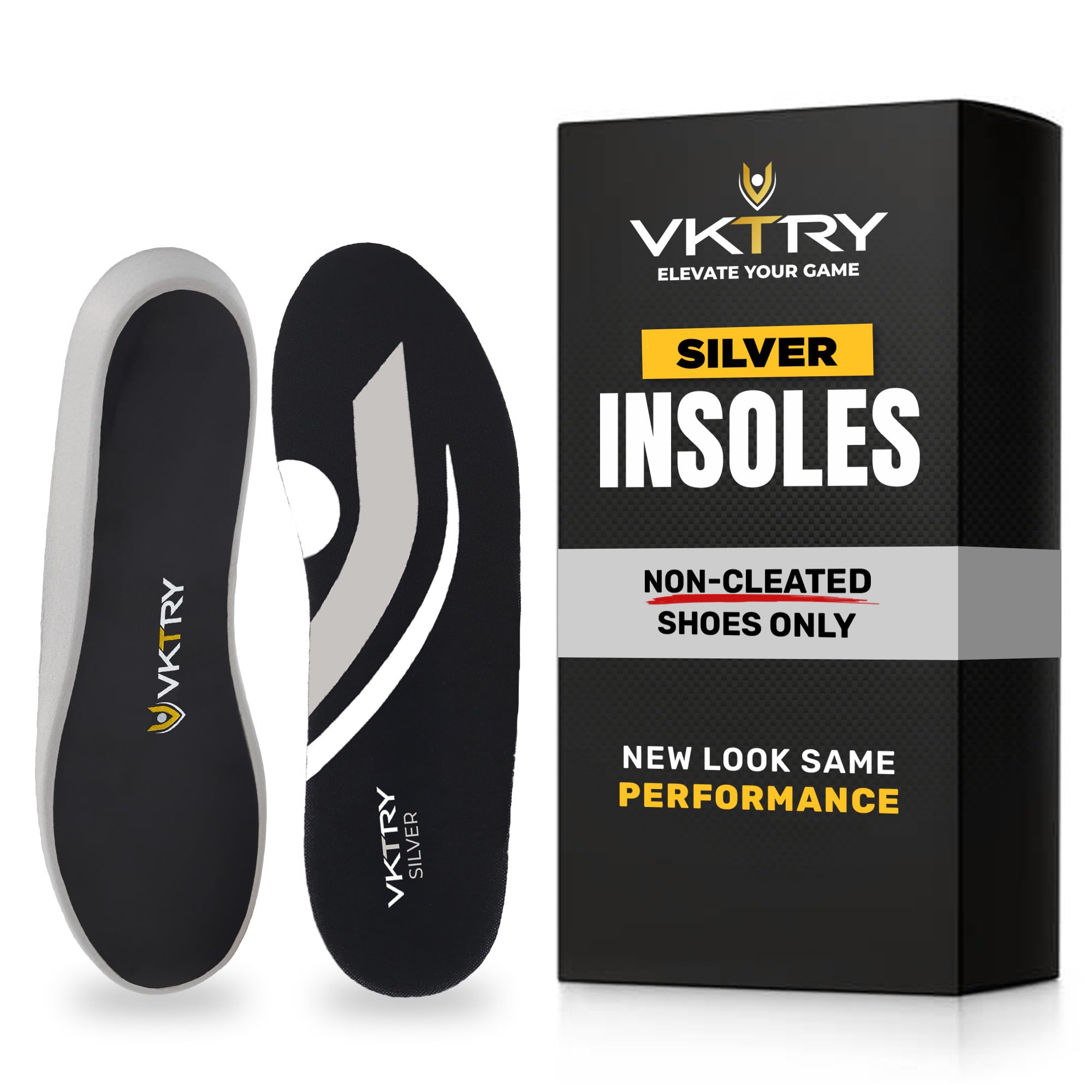
VKTRY Silver
Key Features
- Arch Support: Ergonomic arch structure
- Shock Absorption: Multi-layer carbon fiber composite
- Heel Cup: Deep heel cradle
- Material Durability: Poor – toe area wears through
- Price: Mid-Range
The VKTRY Silver uses a multi-layer carbon fiber composite with ergonomic arch support, making it lighter and more affordable than the premium Gold version. However, comfort varies significantly – some users experience foot pain or shin splints from the firm material, and the toe area can wear through within months. This limits its appeal to only those with narrow feet who prioritize the carbon fiber feel over long-term comfort and durability.
Pros
- Provides stable arch support during dynamic movements.
- Lightweight design fits easily into most athletic shoes.
Cons
- Firm feel may cause foot pain or shin splints for some users.
Best for athletes with narrow feet who want carbon fiber at a lower cost and can accept inconsistent comfort and potential toe wear.
Best for Competitive Jump Gains
VKTRY Gold

Key Features
- Arch Support: Excellent for flat feet
- Shock Absorption: Aerospace carbon fiber plate
- Heel Cup: Sport-specific baseplate
- Material Durability: Poor – delamination risk
- Price: Premium
The VKTRY Gold uses a weight-specific carbon fiber baseplate and claims a 1.1-inch vertical increase. Its stiffness delivers energy return but requires a break-in. Durability concerns include delamination and foam wear. It’s overpriced relative to comfort and longevity, but for athletes prioritizing jump gains who can tolerate the firmness, it may deliver.
Pros
- Noticeable energy return and potential jump height improvement after break-in
- Effective arch support for flat feet
Cons
- Initial firmness may cause foot discomfort during break-in; some users have noted tendonitis risk
Best for competitive athletes who prioritize marginal jump gains and are willing to tolerate a firm break-in period and potential durability tradeoffs.
How to Choose
The best insole for jumping doesn’t just add spring—it must also support your arch, absorb landing shock, and hold up to a full season of hard cuts.
Arch Support Type and Height
Arch support prevents foot collapse during jumps and landings. High arches need a more aggressive contour, while flat feet benefit from firm, structured support that keeps the foot aligned. Neutral arches can get away with moderate support. Ignoring your arch type can lead to heel pain, shin splints, or plantar fasciitis over a season.
Shock Absorption Technology
Materials like gel pads, EVA foam, and carbon fiber plates each handle impact differently. Gel and foam absorb shock by compressing, which feels softer but can bottom out over time. Carbon fiber rebounds energy but transfers more force to the foot if the foam layer beneath is thin.
For basketball, you want enough cushion to handle repeated landings without the insole losing its shape. Look for a combination of a firm plate (for energy return) and a thick enough foam layer (for comfort).
Heel Cup Depth and Stability
A deep heel cup locks the calcaneus in place, reducing lateral wobble during cuts and jumps. Shallow cups allow heel slippage, which can cause blisters or ankle instability. Try to find a heel cup that wraps firmly around your heel without digging into the Achilles.
Fit Adjustability
Some insoles are size-specific and ready to wear out of the box, while others are trim-to-fit. Trim-to-fit insoles let you customize length but the material at the trimmed edge can fray if not cut cleanly. Size-specific models often have better edge finishing and a more precise fit, especially in the heel and arch area.
Material Durability
Foam denseness and carbon fiber layering determine how long an insole stays supportive. Low-density foam compresses within a few months, turning the insole into a flat pad. Carbon fiber can delaminate if the bonding is weak. A good rule: if the insole costs under $30 and uses generic foam, plan to replace it twice a season.
FAQ
Do carbon fiber insoles really help you jump higher in basketball?
They can provide a marginal gain of 0.5 to 1.5 inches in controlled studies, but the effect varies by individual. The stiffness of carbon fiber stores and releases energy during push-off, but that only helps if your foot can tolerate the firm feel. For most players, improving foot comfort and reducing pain is more impactful than chasing a small bump in vertical.
Why do my new performance insoles make my feet hurt?
It’s usually because the arch support is too high or the insole is too rigid for your foot type. Carbon fiber insoles in particular require a break-in period of 10–20 hours. If pain persists after that, the insole may not match your arch height or foot shape—switch to a model with a lower, more forgiving profile.
How long should basketball insoles last before needing replacement?
Foam-based insoles typically last 3–6 months of regular play before cushioning compresses. Carbon fiber insoles can last longer if the foam layer holds up, but delamination or toe wear can cut life short. Replace when you feel the landing impact more directly or notice visible flattening in the heel area.
Can I use running insoles for basketball jumping?
Running insoles are designed for forward motion and repetitive heel-to-toe transitions. Basketball involves lateral cuts, jumps, and sudden stops. Running insoles often lack the lateral stability and heel lockdown needed for court sports, which can increase the risk of ankle rolls. Stick to insoles specifically built for multi-directional sports.