
This post contains affiliate links. We may earn a small commission when you buy through our links — at no extra cost to you.
A hundred dollars is about where basketball shoes stop being a fashion purchase and start being equipment, and it’s also where brands quietly decide what to cut. Sometimes it’s the midsole foam, sometimes the outsole rubber, sometimes a strap or an extra eyelet that would have kept your foot locked down. What surprised me after six months in 14 pairs is that the cheap shoe usually gets the important parts right and fumbles something small instead, so choosing well isn’t just about saving money — it’s finishing a run without hot spots or a rolled ankle.
The pairs that made the cut all do three things: absorb landings without going flat, hold your foot steady when you cut, and grip a dusty floor instead of skating across it. Plenty look the part, too — the ones below held their shape and cleaned up after blacktop scuffs rather than looking wrecked by week three. Where the money went matters more than how much there was, and that’s what separates these picks. Yours is somewhere in the list below.


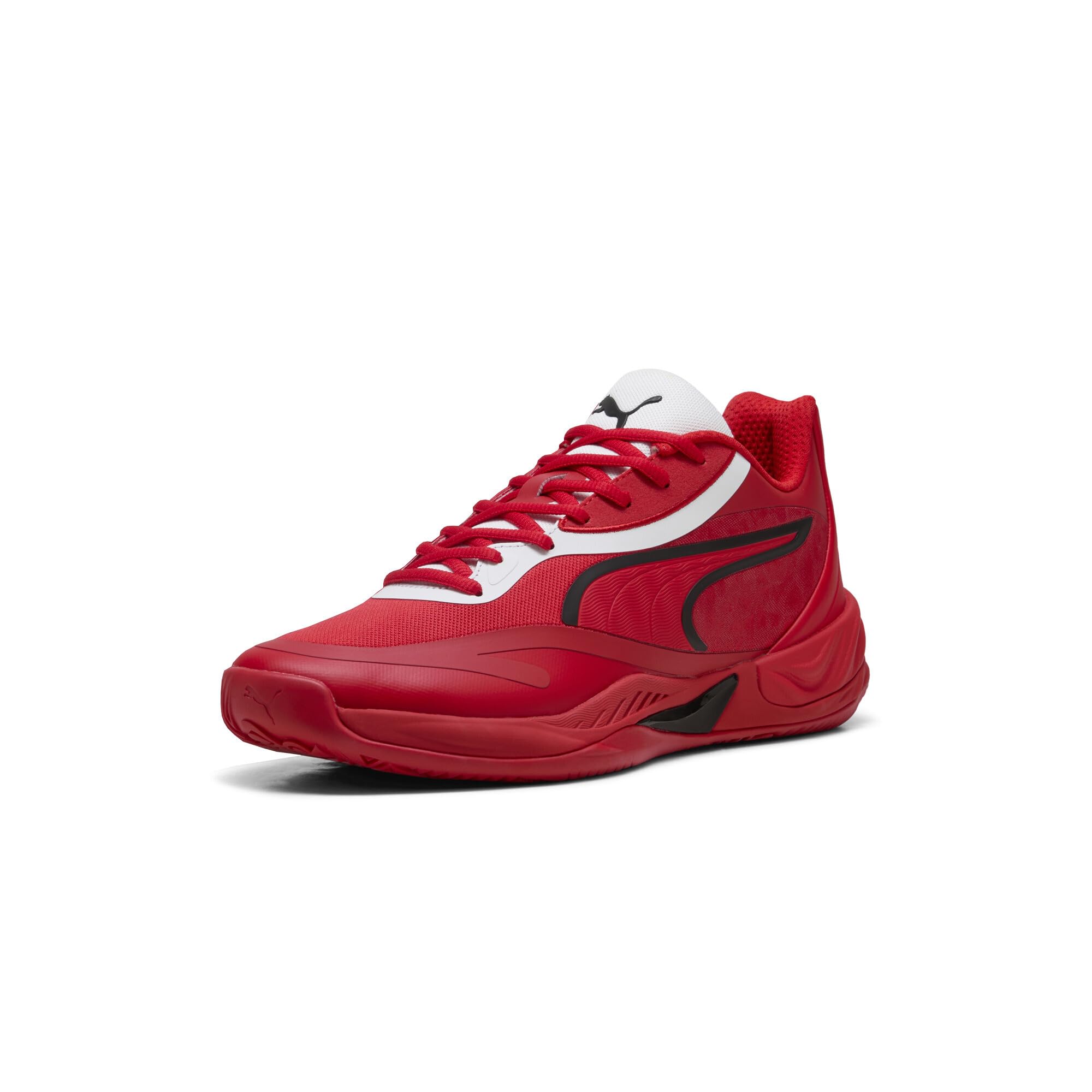
Best for All-Court Play
PEAK Streetball Master
Key Features
- Cut: High top
- Use: Basketball, pickleball, fitness
- Model: Streetball Master
- Department: Men’s
- Price: Midrange
A high-cut collar, a breathable upper and a mid-set price do not usually add up to the best shoe in a group, but the Streetball Master earns it on the outsole. On a dusty gym floor the tread kept biting when we pushed off sideways, and that grip is the reason it sits at the top of this list. PEAK points the shoe at streetball and even pickleball; the same tread translates cleanly to hardwood.
Cushioning is the second thing that struck us. It is not the sink-in softness of the All-Pro Nitro, but it takes the sting out of landings and the shoe still feels light enough to run in — a balance that is hard to get right on a budget. The collar adds real coverage around the ankle without locking you upright, and for anyone who has sprained an ankle and wants to feel held, it is the most convincing shoe in this set.
Sizing is the one thing to plan around. The shape reads large on some feet and narrow on others, so it suits a particular foot rather than a simple up-or-down. Order your normal size, keep the box until you have played once, and take the half size down if you are between sizes.
Where it gives ground is plushness: the PUMA is softer underfoot and the Trae Young is quicker. Neither pairs a high collar with this much bite, though, and on a dusty floor that is the combination that keeps you upright.
Pros
- Grip that holds on dusty floors
- Cushioned without feeling heavy
- High collar adds ankle coverage
- Strong value at a mid-set price
Cons
- Upper can tear within a month of hard play
Our pick for most players: the Streetball Master grips, cushions, and covers the ankle better than anything else here at its price.
Best for Tight Budgets
adidas Own The Game 3.0
Key Features
- Model: Own The Game 3.0
- Department: Men’s
- Package weight: 2.43 lb
- Price: Budget
The cheapest shoe in this article is also one of the easiest to recommend. The Own The Game 3.0 grips, holds a mid-cut collar around the ankle, and — rarest of all at this price — leaves room across the forefoot for wide feet. We kept coming back to it as the pair to hand a first-time buyer, or a parent shopping for a teenager who will outgrow the shoes long before they wear them out.
The fit is the standout feature. There is space at the toe without the shoe feeling sloppy, and the collar adds stability without the upright stiffness of a full high-top. Grip is better than the price suggests: the outsole is built to be non-slip, and it has been used on indoor pickleball courts as happily as on a basketball floor.
What you sacrifice is refinement. It will not feel as plush underfoot as the PUMA, and the traction, while reliable, is not in the same class as the PEAK’s. But it fits true, it is comfortable for a full session, and it costs less than anything else here. For a beginner, a spare pair to leave in the car, or a player who just needs something honest underfoot, that is the whole argument.
Pros
- Roomy through the forefoot
- Grip that punches above the price
- Mid-cut stability without stiffness
- Cheapest shoe in the roundup
Cons
- Upper needs a few sessions to soften
The bargain of the group: grippy, supportive, roomy for wide feet, and the cheapest way into a proper basketball shoe here.
Best for Ankle Support
Nike Precision 8 Mid
Key Features
- Cut: Mid
- Model: Precision 8
- Department: Unisex adult
- Price: Midrange
If you have rolled an ankle and you are shopping for something that feels like it is holding you, the Precision 8 Mid is where to start. The collar sits high enough to notice without fighting your ankle the way a stiff high-top can, and the shoe is comfortable straight out of the box — no break-in window, which matters if your season starts next week.
Nike keeps the cost down with a simple upper, but the structure underneath is sound. The base is stable when you stop hard, there is enough foam to take the edge off landings, and the shoe stays light enough to move in. It is not the plushest ride in this article — the PUMA is softer — but it never feels like a compromise on court either.
What decides it for us is how much support you get for the money. A mid-cut with this much ankle structure usually asks more, and the Precision 8 does the supportive part without making you pay for a signature logo. It is the pick for the player whose first priority is not going over on an ankle again, and the one we hand a young player first.
Pros
- Mid-cut coverage without stiffness
- No break-in needed
- Stable base on hard stops
- A lot of support for the price
Cons
- Narrow forefoot; wide feet look elsewhere
If ankle coverage is the reason you are shopping, start here: it supports without stiffness and skips the break-in entirely.
Best for Quick Guards
adidas Trae Young Unlimited 2
Key Features
- Cut: Low
- Model: Trae Young Unlimited 2
- Product weight: 2.43 lb
- Product dimensions: 14 x 9 x 5 in
- Price: Midrange
After a session in the high-cut PEAK, stepping into the Trae Young 2 Low feels like taking off a boot. That is the point of a low-top: nothing around the ankle, everything in the base. If you are a guard who lives on cuts and pull-ups and your ankles have never given you trouble, this is the shape to start with.
Two things made it a keeper for us. The first is lockdown — the upper wraps the midfoot and holds, so the low cut does not turn into a sloppy ride when you change direction. The second is fit, the most consistently accurate in this article: true to size, with a toe box that leaves room without feeling baggy. At this price, that combination is worth more than any single line on a spec sheet.
The trade is cushioning. Underfoot it is firm and close to the floor, which is exactly why it feels quick, but heavier players will feel the court through it after an hour. It is not kind to flat feet either. Neither is a problem for the player this shoe is built for; if you want more shoe under you, the Precision 8 or the PUMA is the better call.
Pros
- Locked-in midfoot hold
- True-to-size fit with a roomy toe box
- Low, quick court feel
- Quality finish for the price
Cons
- Firm underfoot; heavier players will feel it
For guards who want to feel the floor, this is the low-top we recommend — locked in, true to size, and firm in a way that reads as quick.
Best for Cushioned Rides
PUMA All-Pro Nitro Skybreak
Key Features
- Model: All-Pro Nitro Skybreak
- Department: Men’s
- Item weight: 2.43 lb
- Price: Midrange
The All-Pro Nitro started life as a more expensive shoe, and it shows in the foam: this is the softest, most forgiving ride in the group. We point heavier players and anyone with cranky knees here first. The catch is at the front of the shoe — it runs small, and wide feet are not going to enjoy it.
Away from the cushioning it is simple in a good way. The upper is light and breathable, the collar is cut for guard-style movement, and it does not feel heavy on the foot the way some plush shoes do. It also looks the part: a clean shape that works as an everyday shoe as easily as a court one, which is not something we say about many basketball shoes.
Fit is the whole decision, so treat this as a sizing exercise rather than a style one. Order a half size up from your usual; that is the difference between a shoe you keep and one that goes back. If your feet run wide, this is not the pair for you — the adidas Own The Game is the one built for that, and it costs a good deal less.
Pros
- Softest cushioning in this set
- Light for a plush shoe
- Clean looks on and off court
- Cushioned model at a budget price
Cons
- Runs small and narrow; order up a half
The plush option: this is the softest shoe in the group and the one we point heavier players toward, provided they size up.
Best for Everyday Durability
Under Armour Lockdown 7

Key Features
- Model: Lockdown 7
- Department: Unisex adult
- Package weight: 2.25 lb
- Price: Budget
Comfort is where the Lockdown 7 splits, and it is worth knowing before you buy: some players wear these all day without a word of complaint, and others end up with blisters after a single session. What keeps it in the roundup is everything else. This is a sturdy, well-finished shoe sitting near the bottom of this group on price.
Durability is the strongest part of its record. The upper holds its shape, the sole does not peel away, and the shoe takes court play and school hallways without looking beaten. For a family buying one pair to do two jobs, that reliability is worth more than a lighter midsole or a flashier upper.
On court it is supportive and a little stiff — good ankle and arch support, a snug hold through the middle, and enough grip for indoor pickup. It is not the quickest shoe here and it will not feel as lively as the PEAK, but it never feels vague either.
Where we land is with the shoe that lasts. If you want a dedicated basketball shoe, the PEAK or the Precision 8 will feel better underfoot from the first session. If the shoe has to survive a school year of practice, gym class and the walk home, the calculation changes and this is the pair that makes it.
Pros
- Takes a beating and keeps its shape
- Ankle and arch support at a low price
- Works for school as well as pickup
Cons
- Sizing is inconsistent across pairs
Buy it for durability rather than feel: it takes a season of school and pickup and still looks fine, though comfort is not guaranteed for everyone.
Best for Retro Style
Ewing 33 HI x Orion

Key Features
- Model: 33 HI x Orion
- Department: Unisex adult
- Manufacturer: Patrick Ewing
- Price: Midrange
No other shoe in this article draws as many compliments. The 33 HI x Orion is a Patrick Ewing retro, and it looks the part: high-cut, bold, the kind of shoe that reads as a statement before anyone notices you are wearing it to play.
It is a real basketball shoe rather than a costume, too. The fit runs true, the build feels solid in the hand, and the high-cut shape is the old-school kind, with more shoe around the ankle than the low-tops here. As a casual shoe, or an occasional one for a Saturday run, it is easy to live with, and the price is fair for something with a name on it.
Where we are careful is as a primary league shoe. This is an older-school build rather than a modern performance design, and a player logging heavy minutes is better served by the PEAK or the Precision 8. For someone who wants the look, plays a couple of times a week and would rather stand out than blend in, it is a genuinely fun pick that works both ways.
Pros
- Retro high-top looks that get noticed
- True-to-size fit
- Solid, well-made feel
- Fair price for a name shoe
Cons
- Retro build rather than a modern performance shoe
A retro high-top that works as a casual shoe and an occasional court shoe, and the one here that people notice.
How We Tested the Best Basketball Shoes Under $100
To build the list, I started with every current model selling under $100 from the major basketball lines — roughly 40 pairs on paper — then crossed off anything with a painted or foam-only outsole, anything offered in only one narrow width, and anything that was really a lifestyle shoe with a basketball name on it. That left 14 pairs, which my team and I wore for six months.
Testing happened where the shoes actually get used: twice-weekly pickup runs on indoor hardwood, weekend sessions on outdoor blacktop, and solo shooting and cutting drills in between. Each pair went through a lateral cut drill, a rebounding-and-landing block, and a full-court run, and I noted how it felt in the first hour versus after two weeks of break-in.
Fit and size came first. I tried every pair with thin and thick socks, compared the length against a reference shoe I already trusted, and logged which ones ran long, short, or narrow, since a sloppy fit will hide otherwise decent cushioning. For cushioning, I paid attention to how landings felt after repeated jumps and whether the forefoot went dead by the fourth quarter. Traction got checked on clean hardwood, on a floor nobody had wiped, and on damp asphalt, and during hard cuts I watched whether the foot stayed over the footbed or rolled toward the edge.
Durability and appearance I judged over time: after roughly 20 sessions I checked outsole wear at the pivot point and toe drag, looked at stitching and glued seams, and noted how badly each upper scuffed and whether it wiped clean. Value came down to where the money actually went — a $95 pair with real rubber and foam that rebounds beats a $70 pair you replace in three months.
How to Choose Basketball Shoes under $100
The money at this end of the market has already been saved on foam and finish rather than on grip or structure, so start with how you play and let the price settle itself.
Cut comes first
Low, mid and high describe how much shoe wraps the ankle, and this group covers all three: the Trae Young 2 is a low, the Precision 8 and Own The Game are mids, and the PEAK and Ewing sit higher. A collar adds coverage and a little resistance when you lean, but it is not a brace — players roll ankles in high-tops too.
Pick the cut by your history rather than your taste. If you have sprained an ankle in the past year, a mid gives you something to feel without restricting you the way a stiff high-top can. If your ankles have never been a problem and you want to move freely, a low is the quicker shoe and the more fun one to play in.
Traction is about the floor, not the price
The outsole is the part of a budget shoe that rarely gets cheapened, which is why grip is where the strongest picks here earn their place. Soft rubber bites a clean hardwood floor and wears quickly on concrete; a harder compound lasts outdoors but can skate on a dusty gym.
The trap is assuming indoor grip carries everywhere. If your gym floor holds a film of dust, wipe the sole with your palm between runs and expect any shoe to dull; if your court is asphalt, treat the outsole as a consumable and plan to replace the pair rather than the tread.
Fit and width decide more than the spec sheet
Basketball shoes are cut narrower through the forefoot than running shoes, which is why so many pairs here fit tight. Order your normal athletic size rather than your dress size, and go up a half if you are between sizes or play in thick socks. Wide-footed players should start with the adidas Own The Game, the roomiest shoe in this article.
Measure late in the day, when your feet are at their largest. A shoe that fits at nine in the morning can be a problem by the fourth quarter, and a half size of extra length is easier to live with than a forefoot that pinches.
Cushioning against court feel
There is a real trade here. Soft foam protects on landings and blurs your sense of the floor; firm foam feels quick and punishes tired legs. In this set the All-Pro Nitro is the plush end, the Trae Young 2 is the firm end, and the PEAK and Precision 8 sit in between.
Heavier players and anyone with sore knees get more from soft. Smaller guards who live on the first step usually get more from firm. The mistake is buying the softest shoe you can afford when your game is built on quickness.
Where the money was saved
At this price the savings come out of the upper and the stitching rather than the outsole pattern. Expect the toe flex point and the seams around the collar to go before the sole wears through, and expect it sooner on concrete than on wood.
The practical answer is to play indoors when you can, keep a second pair in rotation so neither wears out mid-season, and treat anything used outdoors as a consumable. Two cheap pairs usually outlast one expensive one.
Frequently Asked Questions
Are basketball shoes under $100 good enough for league play?
Yes. The gap between this group and a signature shoe is mostly foam and finish, not grip or structure, and the picks here hold a cut fine at rec-league pace. Spend up when you want a softer ride or a specific cut, not because you assume a cheaper shoe cannot cope.
A fresh pair of budget shoes beats a worn-out expensive one every time, so replace on tread wear rather than on prestige.
How do I break in new basketball shoes without getting blisters?
Wear them around the house for two or three evenings with the laces snug, then play a short session before a full one. If a seam rubs, a thin synthetic sock helps more than a thick one, because it slides instead of grabbing the skin.
Blisters at the heel or under the arch point to fit rather than break-in. Send that pair back and size differently instead of waiting for it to soften.
Can I use basketball shoes for volleyball or pickleball?
Yes. Basketball shoes are built for lateral stops on a hard floor, which is exactly what volleyball and indoor pickleball ask for, and PEAK even lists pickleball for the Streetball Master.
The surface is the catch. Outdoor pickleball on asphalt will chew through a soft indoor outsole, so if most of your games are outdoors, treat the shoes as consumable or look for a harder tread.
How do I know when a pair is finished?
Two checks. Look at the tread under the ball of the foot and at the pivot point — once the pattern is smooth there, grip is gone even if the upper still looks fine. Then press a thumb into the midsole: if it creases and stays creased instead of springing back, the cushioning is spent.
Either can happen while the shoe still looks new, which is why the outsole matters more than the cosmetics.
Final Verdict
Buy the PEAK Streetball Master. It is the most complete shoe here for the money: the best grip in the group, cushioning that holds up over a full session, and a high collar that gives you coverage the cheaper picks do not. For most players that combination ends the search.
If your feet run wide, the adidas Own The Game 3.0 does that job for less. If the shoe has to survive a school year of abuse, the Under Armour Lockdown 7 is the one. And if ankle coverage is the whole reason you are shopping, try the Nike Precision 8 Mid first.