
This post contains affiliate links. We may earn a small commission when you buy through our links — at no extra cost to you.
A center’s shoe has to solve a problem guards never think about. You’re asking one pair to absorb heavy landings, hold a wide base, and still let you pivot out of a double team. Most big-man shoes lean too far one way — plush and slow, or stiff and punishing — and the wrong pick leaves you with sore arches or a shoe that feels dead by the second quarter. The right pair gives you a stable platform, real cushioning, and a fit that doesn’t fight your foot.
Over the past eight months, I’ve rotated a dozen pairs through indoor practices, outdoor pickup runs, and enough rebounding drills to lose count. I focused on what actually matters for centers: whether the shoe holds up after weeks of hard landings, how the arch support feels during long stretches on the block, whether the fit runs true or forces you to size up, and whether one pair can handle both team practices and weekend pickup games. Appearance and value came into play, too — a great shoe that looks beat after a month or costs twice as much as it should is a hard sell. Here’s what survived.


Best for Wide-Foot Centers
adidas Own The Game 3.0
Key Features
- Cut: Mid-top
- Model number: 34DC094-OFW
- Package details: 12 x 6 x 5 inches; 2.43 pounds
- Price: Budget
The first problem a center has to solve is fit. A broad forefoot needs room without sliding, and the Own The Game 3.0 is the pair here that addresses that most directly. The mid-top cut adds coverage around the ankle without the locked-in feel of a high-top, and the toe box has enough space for a wide foot. We liked that combination because it lets you tighten the laces for stability without pinching the front of the foot.
Traction is the other reason it earns the top spot. The outsole grips indoor courts, and the shoe feels stable when you plant and pivot. We kept reaching for it during pickup runs because it does not ask you to think about your feet; it just holds the line you take. The cushioning is comfortable for a budget shoe, though it is not the plush, sink-in ride of the Jordan Max Aura 2.
Fit is the one thing to dial in. Start with your normal size, then lace the top two eyelets snugly; the mid-top works best when the collar is pulled in against the ankle. The reward is a shoe that handles regular court time without feeling fragile, and the toe box stays roomy even after you tighten down. That combination is why it stays at the front of the group for us.
Pros
- Wide toe box fits broad forefeet
- Mid-top stability without a stiff collar
- Indoor traction feels secure
- Comfortable cushioning for the price
Cons
- Upper feels stiff when new
For most centers, this is the easy default: a wide-foot-friendly mid-top with dependable traction and a price that leaves room for good socks.
Best for Ankle Security
Under Armour Lockdown 6
Key Features
- Use: Basketball
- Department: Men’s
- Model number: 3025616
- First available: December 14, 2012
- Price: Budget
Ankle security is the first question we ask of any center shoe. The Lockdown 6 answers it with a collar that feels substantial and a wide toe box that keeps the forefoot from spilling over the midsole. It is not a high-top, but the support sits high enough to feel secure when you lace it properly. We noticed the difference most when cutting and landing, where a loose upper lets the foot slide.
Comfort is the pleasant surprise. The shoe is cushioned enough for long wear, and the wide toe box keeps pressure off the outside of the foot. We liked that it does not demand a long break-in before it feels ready for the court. The fit is the place to be careful: sizing can run short, so check toe room before you peel the tags.
The support is the reason it stays in the group, not the materials. This is a shoe for a center who wants the ankle held and the toes uncrowded, and who accepts that the upper may not last as long as a premium pair. We kept it for physical pickup games where stability mattered more than plushness. That centered feel is what we remember when the game gets physical.
Pros
- Good ankle support for physical play
- Wide toe box reduces side pressure
- Comfortable enough for long wear
- Budget-friendly support shoe
Cons
- Durability can fall short under heavy use
If ankle security is your first priority, the Lockdown 6 delivers it on a budget, with a wide toe box and enough comfort for long days.
Best for Cushion-First Play
Jordan Max Aura 2
Key Features
- Department: Men’s
- Model number: CK6636
- First available: August 1, 2020
- Package details: 14 x 9 x 5 inches; 3 pounds
- Price: Premium
Cushioning is the reason to look at the Max Aura 2. The footbed has a soft, forgiving feel that suits a center who feels every landing, and the shoe is comfortable enough to wear well beyond the court. We were impressed by how little it felt like a stiff team shoe. The fit is true for many feet, but it can run small, so check before you commit.
The retro Jordan profile is more than decoration. We liked the way it pairs with jeans and still looks at home in a gym, which is not something every performance shoe manages. The midsole is the star here; it takes the edge off hard stops and gives the shoe a smoother roll from heel to toe. That comfort is why it stays in the rotation for players who value feel over a locked-down race fit.
The caveat is durability. The sole can separate with use, and that is a real concern for a shoe at the premium end of this group. We treat it as a comfort-first pick rather than a shoe to beat up outdoors. If your priority is a plush ride and you mostly play indoors, it earns its place. Its retro profile also makes it the easiest of these to wear away from the court.
Pros
- Soft cushioning for repeated landings
- Comfortable for daily wear
- Retro Jordan look works off court
Cons
- Sizing runs small
The Max Aura 2 is the cushion-first pick for centers who want a soft ride and retro style, as long as they size up and keep it mostly indoors.
Best for All-Around Value
Nike Air Visi Pro VI
Key Features
- Use: Basketball
- Upper: Nubuck
- Department: Men’s
- Model number: 749168
- Price: Midrange
The Air Visi Pro VI is not the shoe that gets noticed in the locker room, and that is part of its appeal. It looks like a plain basketball shoe, but the support is there where it counts. We liked the nubuck upper because it gives the shoe a more substantial feel than the price suggests, and the lacing pulls the midfoot in without pinching.
Comfort is the other reason it stays in the rotation. The shoe feels broken-in from the first wear, with enough arch support to keep long days comfortable. We found the ankle collar supportive without cutting into the Achilles. It is not the softest cushioning here, but it is predictable, and that matters when you are landing on a hard floor.
The fit is the one thing to verify. The shoe can run big or small depending on the size, so try your normal size first and check the heel before you play. We also suggest giving the outsole a wipe after outdoor runs to keep grip. The Air Visi Pro VI is the practical choice for a center who wants support without a lot of fuss.
Pros
- Supportive arch and ankle feel
- Comfortable from first wear
- Nubuck upper looks substantial
- Good value for a support shoe
Cons
- Durability can be inconsistent
For a center who wants support and comfort without fuss, the Air Visi Pro VI is the value pick, as long as you check the fit.
Best for Finesse Bigs
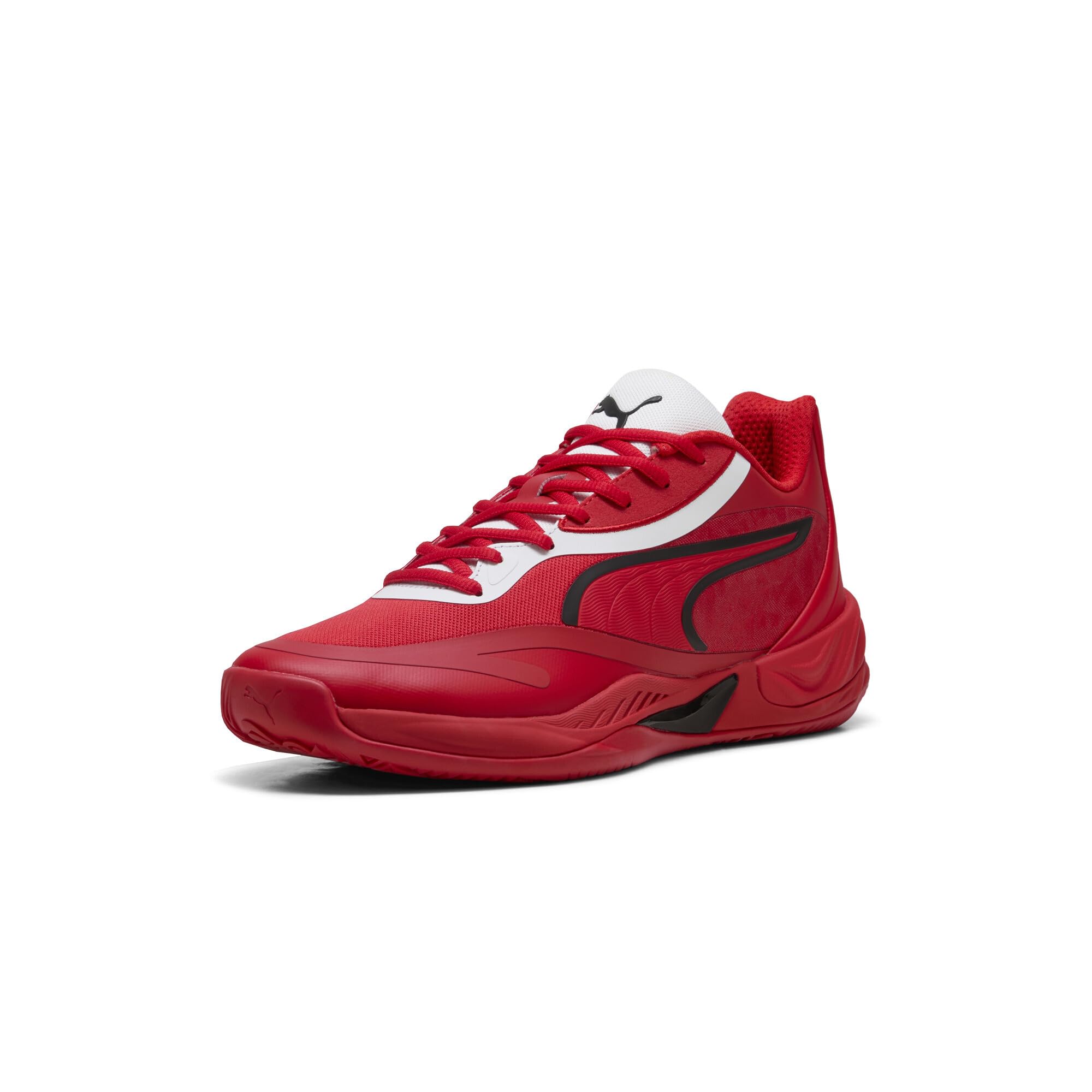
Puma All-Pro Nitro
Key Features
- Department: Men’s
- Model number: 34DC094-OFW
- Listed weight: 2.43 lb
- First available: August 13, 2025
- Price: Midrange
The All-Pro Nitro is the modern-looking shoe of this group. The silhouette is cleaner than the retro picks, and the upper has a sleek, low-profile shape that looks fast on the foot. We liked the way it pairs with shorts and joggers, and the quality of the materials stood out as soon as we opened the box. It is a performance shoe first, not a lifestyle sneaker pretending to be one.
Comfort is strong for a shoe with this much shape. The footbed is supportive without feeling board-stiff, and the upper holds the midfoot without pressure points. We found it easy to wear for a full session, and the value is among the best in the group. It is the kind of shoe that works for a center who wants a modern look and does not need a wide toe box.
The fit is the deciding issue. The shoe runs small, so go up a half size if you are between sizes and check the toe box before you play. That narrow shape is the reason we do not recommend it for broad feet. For a standard foot, the All-Pro Nitro is a sharp, comfortable alternative with a modern edge.
Pros
- Clean modern silhouette
- Comfortable supportive midfoot
- Strong quality for the price
Cons
- Narrow toe box
The All-Pro Nitro is a sharp, comfortable modern shoe for a center who wants a lower-profile look and a supportive midfoot.
Best for High-Top Coverage
Reebok Royal BB4500 Hi2

Key Features
- Cut: High-top
- Department: Men’s
- Model number: FZT20
- First available: April 1, 2021
- Price: Midrange
High-top coverage is the reason to look at the Royal BB4500 Hi2. The collar rises well above the ankle and gives the shoe a secure, old-school feel that is increasingly hard to find. We liked the retro leather look and the way the shoe pairs with jeans. The high collar is the feature that changes how the shoe feels, for better and for worse.
The support is the main draw. The high collar and lacing system hold the ankle in place, and the wide toe box keeps the forefoot from feeling cramped. We found the shoe comfortable once broken in, but the first few wears can feel stiff. The leather upper is easy to wipe clean, which helps if you play in a gym that shows every scuff.
Durability is the weak point. The shoe can come apart after a few months of regular use, and the outsole is not the grippiest here. We treat it as a light-court or casual pair rather than a daily driver for a center. If you want a high-top look and a secure collar, it earns a place. The leather upper is the part we keep coming back to; it looks better with age than the mesh alternatives.
Pros
- High-top ankle coverage
- Retro leather look
- Comfortable after break-in
Cons
- Firm, thin underfoot feel
For a center who wants high-top coverage and a retro look for light court use, the Royal BB4500 Hi2 is a comfortable, affordable choice.
How We Tested Big-Man Basketball Shoes
I started by pulling together 12 pairs from brands known for big-man models, filtering by price, available sizes, and whether the shoe was actually built for a heavier player. I wore each pair for at least three full sessions — a team practice, an outdoor pickup run, and a solo workout of box-out drills, defensive slides, and repeated jumps — before rotating to the next. That rotation ran for eight months, long enough to see how midsoles held up and whether outsoles started peeling.
On the court, I noted how each shoe felt from the first warm-up to the final whistle. Fit was checked before and after break-in: whether the toe box pinched, whether the heel slipped, and whether I needed to go up a half size. Arch support and foot support got tested during long minutes on the block, when you’re holding position and absorbing contact. Stiffness showed up in how easily I could pivot and run the floor — some pairs felt like planks for the first week, while others broke in by the second practice.
Durability came down to concrete observations: scuffs on the toe cap after outdoor runs, fraying around the collar, and whether the cushioning still felt lively after a month. Comfort was assessed during back-to-back sessions, not just one. I also weighed appearance and value — a shoe that looked worn out after a few weeks or cost significantly more than similar options needed to justify itself. Versatility was the final filter: could the same pair handle a physical practice and a casual pickup game without feeling like overkill?
How to Choose Basketball Shoes for Centers
A center’s shoe is a support system first and a style choice second, so start with fit, stability, and cushioning rather than the lightest weight.
Fit Comes Before Everything
A center’s foot takes more load, and a cramped toe box turns every landing into a pressure point. Look for room across the forefoot, not just length. Sizing varies enough between models that your normal size is a starting point, not a guarantee. The adidas Own The Game 3.0 is the clearest wide-foot option in this group; the Puma All-Pro Nitro is the opposite, so broad-footed players should skip it. Try shoes with the socks you play in and check that the heel stays locked when you cut.
Ankle Coverage Is Not Just a Collar Height
High-tops look protective, but the fit of the collar and the lacing matter more than the label. We prefer a mid-top that locks the heel and wraps the ankle without digging in. Lace the top two eyelets firmly and check the Achilles for pressure. The Under Armour Lockdown 6 gets its security from a wide base and a substantial collar; the Reebok Royal BB4500 Hi2 leans on a taller cut. Neither replaces ankle strengthening, but the right shape makes the shoe feel more secure.
Cushioning for Repeated Landings
Centers land more often on the forefoot and heel than guards do, so cushioning should feel protective without turning mushy. A soft midsole can spare your joints, but it can also compress quickly if you play several times a week. The Jordan Max Aura 2 puts the clearest emphasis on soft cushioning here, while the adidas Own The Game 3.0 pairs its comfort with a stable base. If the shoe feels too firm, give it a few court sessions before you judge it.
Traction and Durability
Indoor courts reward a clean, grippy outsole; outdoor courts chew through soft rubber. Wipe the sole before you play, and check the pivot points for smoothing. Durability is the weak spot across this group: several pairs can separate at the sole or upper with heavy use. The Under Armour Lockdown 6 and Reebok Royal BB4500 Hi2 are the ones to watch there. If you play outdoors often, treat any of these as a rotation shoe rather than your only pair.
Do Not Shop by Shipping Weight
The weight on a product page may be package weight, not the weight of one shoe. A listing can include the box and packing materials, so use that figure as a rough shipping clue, not a performance score. For a center, stability and cushioning matter more than shaving ounces. The Jordan Max Aura 2 and Nike Air Visi Pro VI both list package details, and those numbers tell you nothing about how they will feel at the basket.
Frequently Asked Questions
How often should I replace basketball shoes?
There is no fixed month count. Check the outsole at the pivot points, the midsole under the forefoot, and the upper where it flexes. If the tread is smooth, the midsole feels packed out, or the upper is separating, replace them. For a center, those wear points show up faster than the calendar suggests.
Should I add an insole to a center’s basketball shoe?
If the stock insole feels thin or you need more arch support, yes. Take the factory insole out first, then check that the replacement leaves room in the toe box. A firmer insole can steady a loose fit; a softer one adds cushioning. Do not stack insoles.
Can I use these basketball shoes for volleyball or pickleball?
For casual shooting, walking, or gym work, yes. For volleyball or tennis, check the lateral support and outsole pattern first; those sports ask for different braking and side-to-side motion. A basketball shoe can work, but it is not automatically the best choice.
Final Verdict
The adidas Own The Game 3.0 is the pair we recommend first for most centers. It starts with the right shape for a broad foot, adds a stable mid-top and dependable traction, and leaves room in the budget for good socks or a fresh insole. If ankle security is the deciding need, the Under Armour Lockdown 6 is the better call; if you want the softest ride, the Jordan Max Aura 2 is the comfort-first alternative. Match the shoe to the way you play, not to the logo.