
This post contains affiliate links. We may earn a small commission when you buy through our links — at no extra cost to you.
A basketball return system promises more practice time, but the wrong one becomes another project on your to-do list. Plastic chutes snap, welds fail, and some simply don’t fit your rim. Meanwhile, net systems catch wild misses but demand pole mounting and patience during assembly.
From one-piece rim attachments to steel-framed trainers, the category spans a wide price range and comes with sharp differences in durability and shot-return type. The key is matching the system to your hoop, your practice habits, and your tolerance for maintenance.
For competitive shooters, the right returner can triple daily reps while forcing better arc. For families on a sloped driveway, it can save hours of ball chasing. This guide breaks down what each type actually delivers on the court — and which trade-offs are worth making.



Best for Serious Training
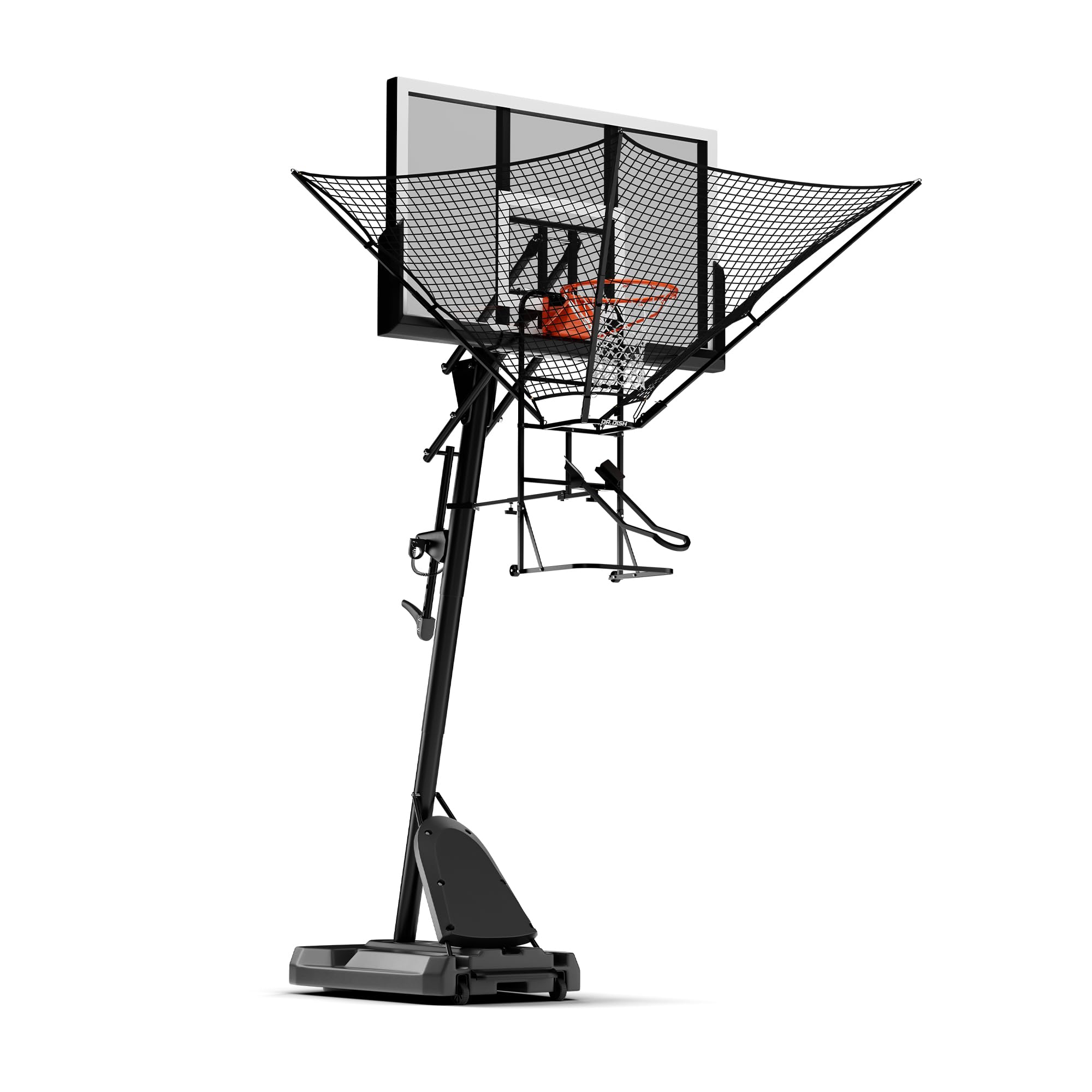
Dr. Dish IC3 Rebounder
Key Features
- Mount Type: Standalone net system
- Material: Alloy steel
- Durability & Maintenance: Steel, 1-yr warranty
- Price: Premium
The Dr. Dish IC3 uses a steel frame and a net suspended 17 inches above the rim to return both makes and misses while training a higher, more consistent shot arc. With two basketballs in rotation, a single player can fire 800 shots an hour without chasing down a single loose ball. That volume adds up fast for competitive high-school or college-bound athletes who need efficient reps.
This rebounder suits players and coaches who treat practice as a numbers game – youth teams running drills, families with multiple shooters, or anyone logging 500+ shots per session. The tradeoff is occasional ball-sticking between net and rim, which requires minor tension adjustments at the velcro straps. The folded footprint (22x22x59 inches) means a garage or storage room works better than a cramped closet.
Pros
- Welded steel frame withstands years of high-volume use.
- Shooting volume jumps to 800 shots per hour with two balls.
- Net height forces proper arc, improving form over time.
Cons
- Ball can wedge between net and rim when tension is loose – needs periodic velcro adjustment.
- When folded, it still needs a garage or shed – not a closet-sized storage item.
For players logging hundreds of shots a week, the Dr. Dish IC3 eliminates shagging and builds muscle memory faster than any other home rebounder.
Best for Budget Shooters
SKLZ Kick-Out Return
Key Features
- Mount Type: Rim clip
- Material: Plastic
- Rim/Pole Compatibility: Standard rims
- Adjustability: 360° rotating chute
- Durability & Maintenance: Zip-tie reinforcement recommended
- Price: Budget
The 360-degree rotating chute lets you vary shot angles without repositioning the return. It returns made shots directly, cutting chase time and allowing solo shooters to rack up 400 attempts in under an hour. Unlike pricier net systems that require permanent mounting or metal rim attachments with potential weld issues, this clip-on attachment keeps the setup simple and portable.
For budget-conscious solo shooters and parents outfitting a driveway hoop, the plastic straps may need occasional zip-tie reinforcement — a small maintenance task that preserves the return’s functionality without heavy investment. The chute can self-rotate during extended sessions, but locking its angle with a zip tie keeps it in place.
Pros
- Effectively returns made shots to the shooter.
- Enables high shot volume—up to 400 shots per hour for efficient solo drills.
- 360-degree rotating chute allows practice from all angles without repositioning.
Cons
- Chute can rotate out of position, requiring manual readjustment or a zip-tie lock.
- Plastic straps and clips may degrade, making zip-tie reinforcement necessary over time.
At its budget-friendly price, the SKLZ Kick-Out Return delivers high-volume solo practice with its 360-degree chute, but the plastic build means occasional DIY maintenance — a reasonable trade-off for shooters who value cost over set-and-forget convenience.
Best for Standard Rim Owners
Spalding Back Atcha
Key Features
- Mount Type: Rim snap
- Material: Plastic
- Rim/Pole Compatibility: Standard thin rims
- Adjustability: Fixed 90°
- Durability & Maintenance: Outdoor lifespan limited
- Price: Budget
While rotating chute attachments add moving parts and need zip-tie reinforcement, the Spalding Back Atcha’s fixed 90-degree design snaps on in seconds and drops the ball right back to you with no assembly fuss.
The catch: it only fits older, thin metal rims — it won’t work on Goalrilla, Goaliath, or breakaway rims. Outdoor UV exposure can make the plastic brittle, so it may need replacement after a season or two.
Pros
- Tool-free snap-on attachment takes seconds — no hardware required.
- Returns made shots directly to the shooter, eliminating ball chasing.
Cons
For youth players on a standard driveway hoop, the simplicity is worth the trade-off — just confirm your rim isn’t a breakaway and accept that outdoor life may be short.
Best for Diy Metal Users
GADFISH Metal Return
Key Features
- Mount Type: Rim hooks
- Material: Metal (iron)
- Rim/Pole Compatibility: Standard rims
- Adjustability: Manual re-direct
- Durability & Maintenance: Threadlocker recommended
- Price: Budget
The all-metal build and three rubber-wrapped folding hooks give this return attachment a more substantial feel than plastic alternatives, appealing to anyone who distrusts polymer components at a budget price.
The trade-off: weld joints can weaken under repetitive impact, and some units develop surface rust within weeks. Screws and wing nuts may loosen without threadlocker, so routine tightening is part of the deal. This suits DIYers willing to inspect welds and apply threadlocker; those wanting a set-and-forget outdoor return should consider the plastic chute alternative.
Pros
- Assembly and installation are quick and straightforward.
- Ball returns reliably to the shooter when the unit is tightly secured.
Cons
- Screws and wing nuts can loosen during shooting; threadlocker is recommended for a secure fit.
- Weld joints may weaken under repetitive impact, and surface rust can appear quickly.
For DIYers who want metal at a plastic price and don’t mind occasional inspections and a dab of threadlocker, the GADFISH is a viable, no-frills ball return. Shoppers who’d rather set and forget will find fewer headaches with the plastic chute alternative.
Best for Family Containment
Hathaway Net Rebounder
Key Features
- Mount Type: Pole-mounted net
- Material: Polyester, PVC
- Rim/Pole Compatibility: Pole mount (48-60" hoops)
- Durability & Maintenance: Water bags may leak
- Price: Mid-Range
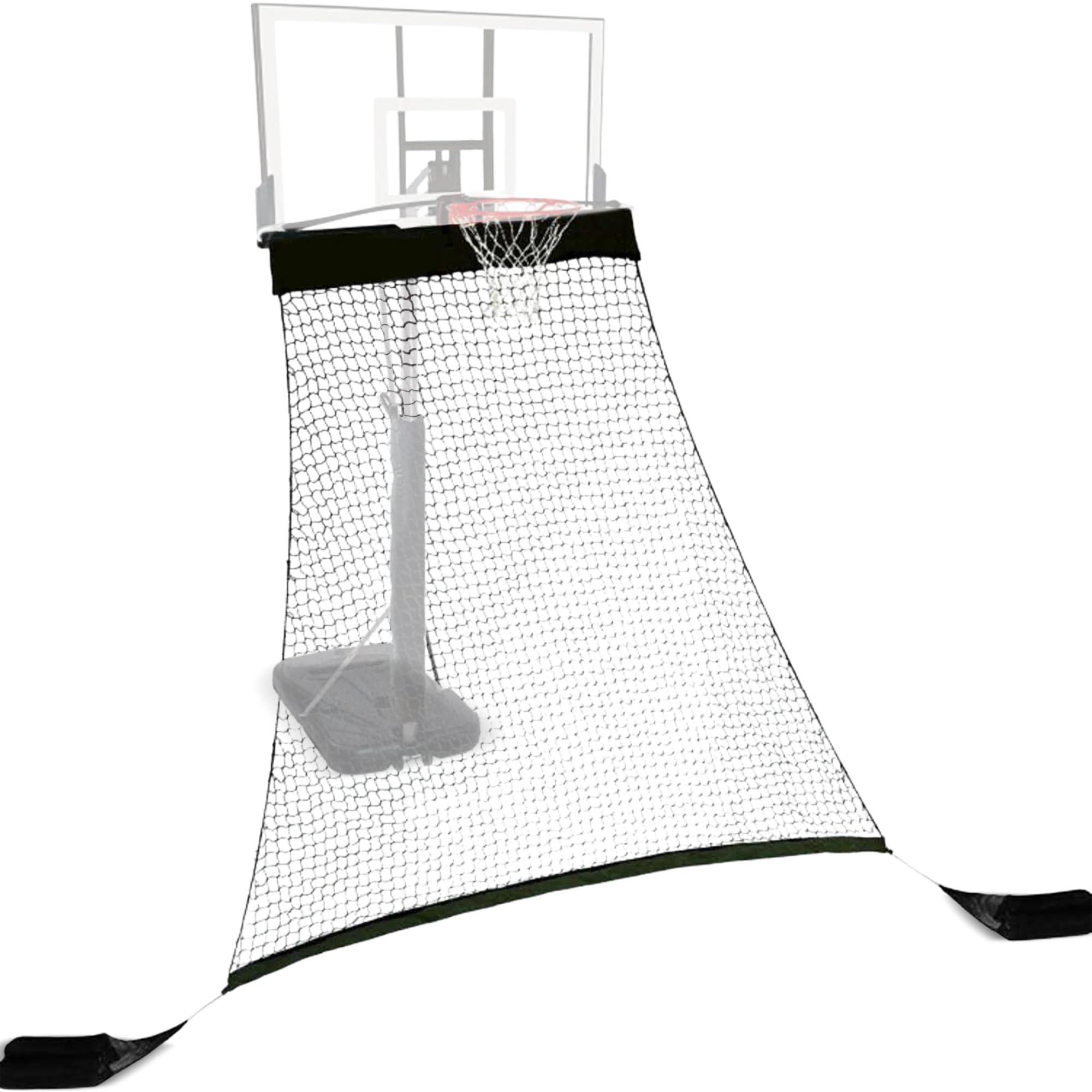
Unlike net guards built around tricky fiberglass frames, the Hathaway hangs from a simple webbing harness that attaches to your existing pole, making installation straightforward. The large net catches most wild misses and keeps balls from scattering into landscaping or the street—useful for families who want to protect plants as much as improve practice flow. Water bag anchors can occasionally leak at the seams, and the net’s width means very young or inaccurate shooters may still send balls wide, but for casual driveway games and containment, those are minor tradeoffs.
Pros
- Cost-effective way to contain missed shots and protect plants behind the hoop.
- Quick setup using a webbing harness that fits most 48-60 inch poles.
Cons
- Water bag anchors can leak at the seams, requiring careful filling and occasional replacement.
- Net coverage may allow shots from very young or inaccurate shooters to miss the net entirely.
The Hathaway Net Rebounder is a sensible pick for casual family shooters and anyone who wants to protect plants behind the hoop—just plan to monitor the water bags for leaks.
Best for Sloped Driveway Owners
Franklin Defender Pro Net
Key Features
- Mount Type: Pole-mounted net
- Material: Fiberglass, polyester
- Rim/Pole Compatibility: Pole mount (round poles)
- Durability & Maintenance: Net may tear
- Price: Mid-Range
Unlike freestanding catch nets that need water-bag anchors, this folds-flat fiberglass frame clamps to the pole of a portable basketball hoop, extending 10×8 ft to catch shots that sail wide on sloped driveways. It folds away quickly when not in use. Assembly can be frustrating, and the pole clamp may not fit square poles exactly — but for homeowners with a standard round pole who want to stop chasing balls down a hill, that installation effort pays off in containment.
Pros
- Catches wild misses and returns the ball, cutting down on ball-chasing.
- Folds flat in seconds for storage against a garage wall.
Cons
- Pole clamp may not mate well with square poles, limiting compatibility.
- Assembly instructions can be unclear, making initial setup more time-consuming than expected.
For homes with sloped driveways where chasing a basketball is a pain, the Franklin Defender Pro Net covers the wide-out shots that rim attachments miss — just be prepared for a somewhat fiddly install.
Best for Tool-Free Users
ProSlam 4-Hook Return

Key Features
- Mount Type: Rim hooks
- Material: Alloy steel
- Rim/Pole Compatibility: Standard rims
- Adjustability: Adjustable chute angles
- Durability & Maintenance: Early weld breakage risk
- Price: Premium
The snap-on hooks make attachment quick, and the adjustable chute directs the ball back to your shooting spot reliably. That immediate ease-of-use is the main draw. However, weld points can fail early in some units, introducing a durability question that gives pause at this premium price tier. It’s a solid choice for players who prioritize effortless setup but can tolerate a gamble on long-term weld integrity.
Pros
- Tool-free hooks secure the return in seconds with no hardware needed.
- Adjustable chute lets you angle the return to your preferred practice spot.
Cons
- Welds may fail prematurely, leaving the return unusable after limited use.
The ProSlam 4-Hook Return fits players who want a heavy-duty, tool-free setup immediately and are comfortable with the possibility of inspecting and reinforcing welds to extend its useful life.
Best for Passing Drills
GoSports Pass-Back Rebounder

Key Features
- Mount Type: Freestanding
- Material: Aluminum, net
- Adjustability: Adjustable frame angle
- Price: Mid-Range
This rebounder helps players practice passing and receiving without a partner, with a sturdy aluminum frame that folds flat for storage. It does not attach to a basketball hoop and will not return made shots — it’s a pass-back training aid, not a shot return system for hoop practice.
Pros
- Multi-sport design works for basketball passing, soccer, and water polo drills
- Adjustable aluminum frame folds flat for portability and easy storage
Cons
- Does not attach to a hoop; only returns passes, not made shots from a basket
For solo passing drills and multi-sport bounce-back training, this portable unit fits the bill — just understand it won’t catch made shots from a hoop.
How to Choose
The biggest difference between basketball return systems isn’t price—it’s what you’re trying to prevent: chasing balls after makes, after misses, or both.
Mount Type
Rim attachments clip, snap, or hook onto the hoop and only redirect the ball after a made shot. If your shot is off, the ball still ends up in the driveway. Net systems mount to the pole or stand alone and catch both makes and misses, keeping balls in play even when your aim is off.
For young players or anyone working on new shots, a net system drastically reduces chasing. A rim-mounted returner is lighter, cheaper, and quicker to set up, but it’s only as useful as your shooting percentage.
Material
Plastic chutes and straps degrade under UV exposure and repeated impact, often within a season or two. Metal hooks eliminate plastic failure points, but weld quality matters—poor welds snap under ball impact. Fiberglass poles on net systems resist bending but can crack under high wind loads if not anchored properly.
The real-world lesson: budget plastic works if you’re willing to replace parts, while quality metal (like alloy steel) can last years but costs more upfront.
Rim and Pole Compatibility
Rim attachments depend on the rim’s thickness and whether it flexes. Breakaway rims with spring mechanisms often can’t accept clip-on returners, and snap-on designs may not grip tightly. For net guards, pole shape matters: clamp systems designed for round poles may slip on square ones, causing the net to sag.
Always measure your rim type and pole diameter before choosing. ‘Universal fit’ claims are often overly optimistic for non-standard setups.
Adjustability
A fixed-90° return sends the ball straight back, suitable if you always shoot from the same spot. A 360° rotating chute lets you adjust the return to your next shot location, so you can move around the arc without resetting the device. Net systems typically lack directional control, spreading balls randomly toward you.
If you practice from multiple angles, a rotating chute saves time and keeps your rhythm. With net systems, you accept less precision in exchange for catching every missed attempt.
Durability and Expected Maintenance
Budget attachments often require reinforcement—zip ties to stop chute rotation, threadlocker to keep screws tight. Without these quick fixes, performance degrades within weeks. Higher-end systems with steel frames and welded nets eliminate most user maintenance but demand storage space and a higher upfront cost.
Hidden trade-off: many low-cost products ship with weak hardware. Spending five minutes on DIY reinforcement can extend usable life dramatically, while ignoring it leads to frustration.
FAQ
Why does my basketball return keep rotating to the side?
The chute is probably loose; plastic clips or wing nuts may not hold the angle under ball impact. Lock the chute in place with zip ties or apply threadlocker to metal hardware. On models like the SKLZ Kick-Out, this fix is almost mandatory for long-term use.
How do I stop the basketball from getting stuck in the net return?
On net trainers like the Dr. Dish IC3, balls can wedge between the net and rim if the tension is off. Adjust the bottom net knot or Velcro straps to create a small gap, and make sure the net sits at the correct height above the rim. Some users slightly trim the knot to permanently prevent sticking.
Will a basketball return attachment work on a breakaway rim?
Most rim attachments are incompatible because breakaway rims flex and have thicker profiles that prevent a secure fit. Snap-on designs like the Spalding Back Atcha explicitly won’t work. If you have a breakaway rim, opt for a pole-mounted net system or a standalone floor rebounder.
Is a metal basketball return better than plastic?
Metal eliminates the UV and impact degradation that cracks plastic over time, but cheap metal attachments often fail at weld points. Plastic can survive multiple seasons if reinforced with zip ties. For consistent outdoor use, well-welded steel offers the longest lifespan, but mid-range net systems with fiberglass and polyester also hold up well.