
This post contains affiliate links. We may earn a small commission when you buy through our links — at no extra cost to you.
A ball return that doesn’t return the ball is just a plastic decoration. The problem is most under-$50 returns use thin plastic that cracks within months, and many don’t fit breakaway rims or portable hoops at all. This guide sorts through the options to find returns that actually work for your specific hoop and practice style.
Whether you’re a serious player wanting high shot volume or a parent wanting to keep the ball in the driveway, the right return depends on understanding the materials and attachment method. Metal hooks, UV-resistant plastics, and adjustable chutes each come with trade-offs.


Best for Serious Players
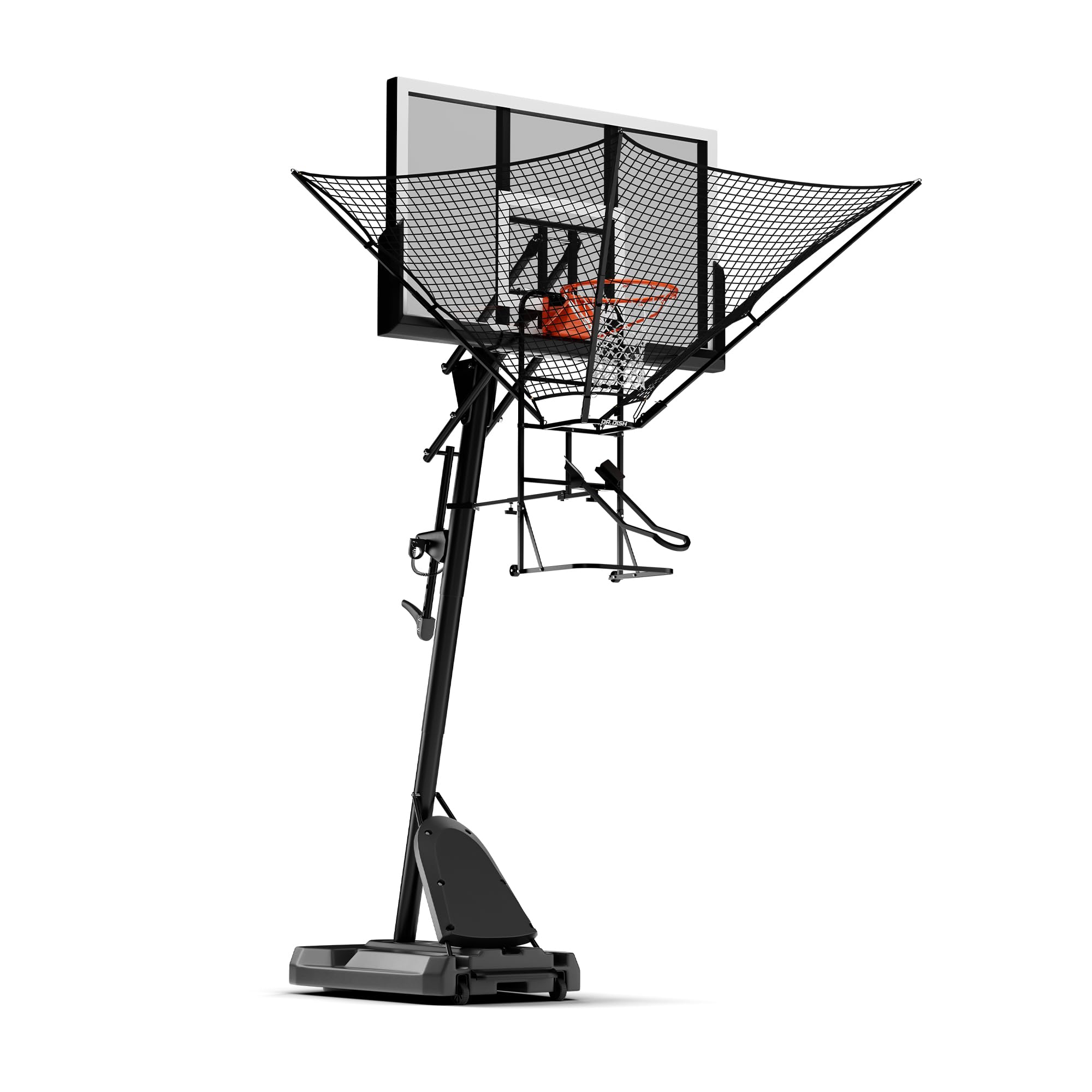
Dr. Dish IC3
Key Features
- Attachment Type: Rim-mounted steel frame
- Return Consistency: High shot volume
- Build Material: Steel, polyester net
- Ease of Install: Requires assembly
- Portability: Folds with wheels
- Price: Premium
The IC3 uses a welded steel frame that does not flex or rust under repeated outdoor use — far beyond what plastic returns offer. The elevated net returns shots consistently, feeding up to 800 attempts per hour when used with two balls. It folds to 22x22x59 inches and rolls on wheels for storage. One behavior to note: the ball can occasionally get stuck between the net and rim, resolved by tightening the net tension slightly.
This return suits players and coaches who log hundreds of shots per session and need a durable outdoor setup. The occasional ball jam is a manageable tradeoff — not a deal breaker for high-volume training. It is less ideal for casual players or those with limited storage space. The premium price is appropriate given the steel build and expected lifespan; plastic alternatives typically fail within a season.
Pros
- Steel frame withstands heavy outdoor use without bending or rusting.
- Consistent ball return enables high shot volume with minimal downtime.
- Elevated net encourages proper shooting arc during practice.
Cons
- Assembly instructions can be unclear, requiring a moderate time investment.
- Ball can lodge between net and rim, needing occasional net tension adjustment.
For players ready to move past disposable returns, the IC3 delivers the durable, high-volume training tool that the category promises.
Best for Casual Players
Spalding Back Atcha
Key Features
- Attachment Type: Snap-on plastic chute
- Return Consistency: 90° arc chute
- Build Material: Plastic
- Ease of Install: Tool-free snap-on
- Portability: Lightweight
- Price: Budget
The Spalding Back Atcha attaches with a simple snap-on mechanism – no tools required – making it the least complicated ball return to set up. Unlike steel-frame returns built for high-volume practice, this is a lightweight plastic chute best suited for casual shoot-around on standard residential hoops. The design does not fit breakaway rims or many portable hoop models, and prolonged outdoor use in sun or cold can cause the plastic to become brittle. For players with a compatible rim who want occasional ball return without a major investment, it serves its purpose.
Pros
- Snap-on design installs and removes without tools.
- Adds ball return functionality at a low cost.
Cons
- Fit is limited to standard rims – breakaway and portable hoop owners may find the chute doesn’t attach securely.
- Outdoor exposure to sun and cold can make the plastic brittle within one season.
A no-fuss, low-cost option for light use on a standard hoop, but plan to replace it annually if used outdoors.
Best for Adjustable-Angle Users
SKLZ Kick-Out
Key Features
- Attachment Type: Twist-adjust plastic chute
- Return Consistency: Rotating chute
- Build Material: Plastic frame, alloy hooks
- Ease of Install: Tool-free twist
- Portability: Lightweight
- Price: Mid-Range
The SKLZ Kick-Out returns made shots to specific positions through its rotating chute, supporting targeted shooting drills. The tool-free twist adjustment lets you change the angle without tools, but the plastic construction introduces tradeoffs.
This attachment suits players who prioritize directional returns over long-term durability. The plastic clips and straps can break after weeks of use, and the chute may rotate during practice, requiring occasional readjustment with a ladder. Best kept for indoor or light outdoor use where stress is lower.
Pros
- Adjustable chute lets you direct returns to different shooting spots.
- Tool-free installation and 360° rotation make setup quick.
Cons
- Plastic hooks and clips may break after weeks of normal use.
- Chute angle drifts during practice, requiring a ladder to adjust.
Best for indoor or light outdoor practice where you want directional returns and can accept possible plastic wear. Consider a metal return for heavy use.
Best for Family Containment
Franklin Pass Back Net
Key Features
- Attachment Type: Pole-mounted net
- Return Consistency: Contains misses
- Build Material: Fiberglass poles, polyester net
- Ease of Install: Bracket attachment
- Portability: Large net
- Price: Mid-Range
The large 10′ x 8′ net catches and contains missed shots effectively, reducing the need to chase the ball down the street. This works well for families with standard round-pole portable hoops who want to keep practice flowing without constant ball retrieval. However, the net and frame may show wear after several months of outdoor use, and the fit is limited to round poles — square or unusual shapes won’t work. It also does not return the ball to the shooter, so it’s more about containment than training precision.
Pros
- Large net catches and contains missed shots, minimizing ball chasing.
- Attaches securely to standard round-pole portable hoops.
Cons
- Netting and frame welds may degrade after several months of outdoor use.
Best suited for families with round-pole hoops who prioritize minimizing ball chasing over precise return or long-term outdoor durability.
Best for Skill Drills
GoSports Passback
Key Features
- Attachment Type: Freestanding frame
- Return Consistency: Passback rebound
- Build Material: Aluminum frame, nylon net
- Ease of Install: Assembly required
- Portability: Folds, sandbags
- Price: Mid-Range
Unlike dedicated ball-return systems that attach to the rim, this freestanding rebounder uses a tightly tensioned net to return passes and shots up to a short distance. The adjustable angle lets you vary the rebound trajectory for basketball, soccer, or water polo drills. It works well as a stand-alone trainer for catch-and-shoot practice but will not return made shots from the hoop – that distinction matters if you need a full shot-return system.
Pros
- Angle adjustment makes it usable for basketball, soccer, and water polo passback drills.
- Aluminum frame and sandbag anchors provide stable base for controlled practice.
Cons
- Assembly requires significant force to attach the net due to high tension.
- Bungee cords can pop off during forceful shots or passes, interrupting practice.
A capable training aid for solo skill work and multi-sport drills, but not a substitute for a dedicated made-shot return.
Best for Budget Metal
GADFISH Metal Return
Key Features
- Attachment Type: 3 large hooks
- Return Consistency: Adjustable chute
- Build Material: Alloy steel
- Ease of Install: Tool-free
- Portability: Lightweight
- Price: Budget
The GADFISH Metal Return offers a metal frame at a budget price, a step up from the cheapest snap-on plastic returns. For light indoor or covered outdoor sessions, the initial build quality feels good and setup is quick. However, the welds and paint may not hold up to full sun or heavy repetition – rust and structural weakness have been noted within a month of outdoor use. This return suits casual practice where durability demands are low.
Pros
- Easy to assemble and install in minutes
- Feels well-made out of the box for its price
Cons
- Weld joints and paint may deteriorate in outdoor conditions – rust and weakness possible within a month
- Hooks can shift during play, causing wobble; periodic retightening helps maintain position
Best for occasional indoor practice on a budget, not for prolonged outdoor training.
Best for Net Containment
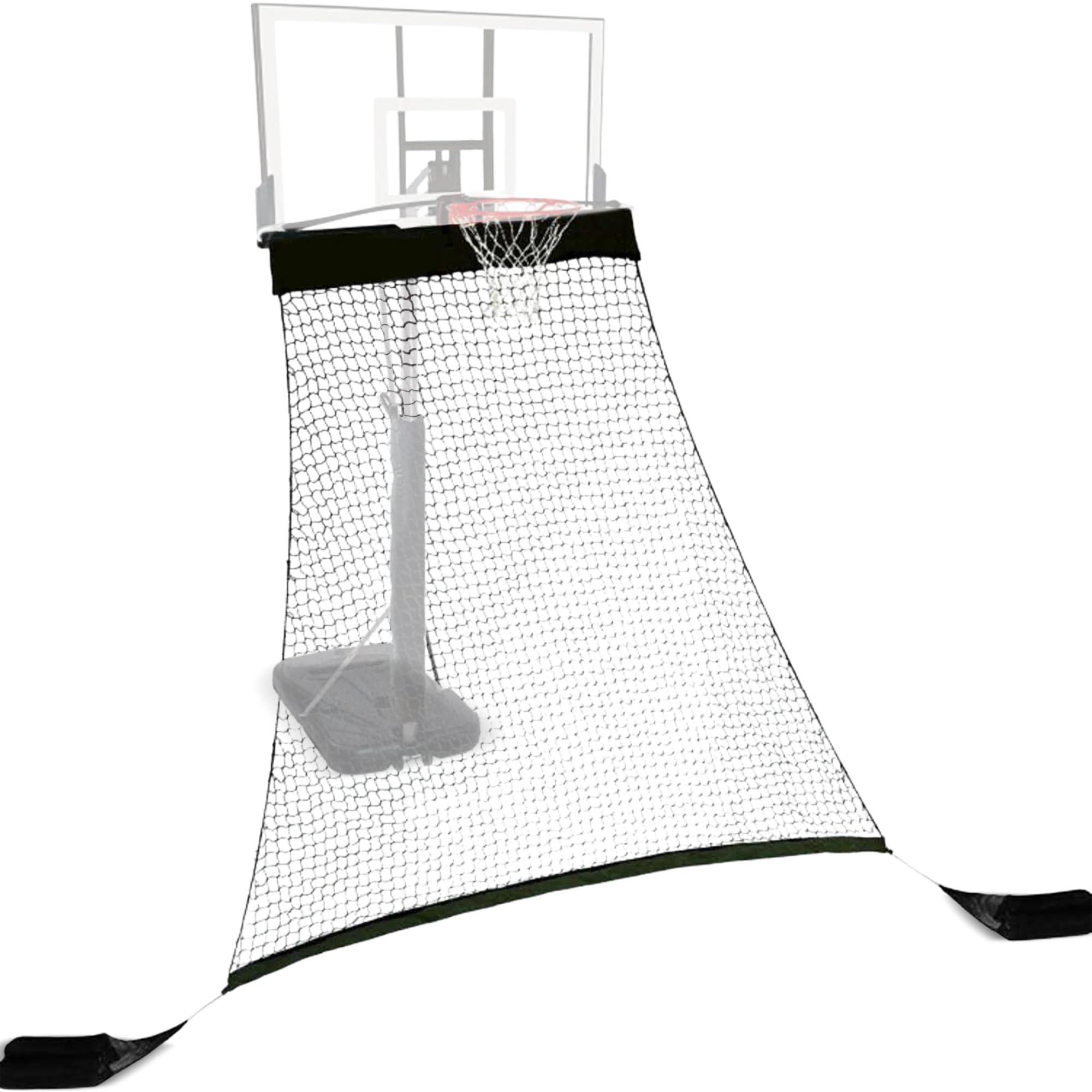
Hathaway Rebound Net
Key Features
- Attachment Type: Webbing harness to hoop
- Return Consistency: Contains ball
- Build Material: Polyester net, PVC bags
- Ease of Install: Tool-free
- Portability: Large net, sandbag anchors
- Price: Mid-Range
This net catches and holds basketballs after misses, reducing retrieval time in the driveway. It does not return the ball to the shooter—that’s not its job. The large polyester net covers a 10’ x 9’ area and attaches to most 48-60 inch hoops without tools. For families who just want to stop chasing balls, it does the job. The tradeoff comes with the anchor bags: they can leak or tear, and the net may rip over time, especially if left in direct sun or rain. If your priority is keeping practice sessions flowing without chasing errant shots, this is a budget-friendly option—just plan to replace it sooner than a heavy-duty return system.
Pros
- Catches and contains the ball effectively, reducing chasing and protecting nearby objects.
- Large coverage area at a low price for a containment net.
Cons
- Anchor bags can leak or tear, and net may rip over time with outdoor exposure.
Works well as a containment net for casual backyard play, but skip it if you need a ball return or long-term durability.
Best for Early Adopters
ProSlam 4-Hook Return

Key Features
- Attachment Type: 4 stainless hooks
- Return Consistency: Adjustable chute
- Build Material: Alloy steel
- Ease of Install: Tool-free clip-on
- Portability: Lightweight
- Price: Mid-Range
The ProSlam 4-Hook Return offers a solid all-steel chute that clips onto most rims without tools — a rare combination at this price. However, its limited user history includes reports of metal sections separating during regular training, so it best suits light, occasional solo practice where the consequence of a break is minimal.
Pros
- Tool-free attachment lets you clip the chute onto the rim in seconds.
- Steel construction with rust-resistant coating feels rigid on first setup.
Cons
- Metal chute sections can separate within a few weeks of regular use.
Best for occasional shooters who prioritize easy setup over long-term durability.
How to Choose
The most common mistake is buying a return without checking if it fits your rim type – breakaway rims and square poles often reject cheap clips.
Attachment Compatibility
A return that clips onto the rim must match the rim’s shape and material. Breakaway rims have a spring-loaded hinge that throws off clip-on chutes, causing them to pop off during play. Some returns use hooks that grip the rim’s front edge, which works on standard rims but fails on rims with thick padding or square poles.
Returns that attach to the pole (like net systems) bypass rim compatibility issues but require a round pole of specific diameter. Always measure your pole and check the product’s stated hoop compatibility before buying.
Return Reliability
A return that fails to send the ball back defeats its purpose. Plastic chutes often have a 90° arc that guides the ball, but cheap plastic bends or cracks, causing the ball to stick or roll weakly. Steel chutes maintain their shape but may still jam if the net is positioned too close to the rim.
Rotating chutes add directional control but introduce a weak point – the friction collar loosens over practice sessions, causing the chute to drift. Look for locking mechanisms or be prepared to make adjustments.
Build Material & Durability
Plastic returns are lightweight and cheap, but UV exposure and temperature swings make them brittle. A return left in direct sun can crack within weeks. Steel returns resist UV but rust quickly if the coating is thin – especially around hooks and welds. Powder-coated alloy steel offers the best outdoor longevity.
Net-based systems use polyester or nylon, which fades and tears after a season. Fiberglass poles can snap if struck. Water-bag anchors often develop leaks after repeated freezing and thawing.
Ease of Installation
Most rim-attached returns claim tool-free installation, but some require ladder access for tightening or rotation adjustments. Snap-on designs are the quickest but may pop off during hard play. Twist-adjust collars are convenient but can loosen mid-session.
Freestanding passback trainers require assembly of a frame and net tensioning, which can be frustrating without clear instructions. Weigh the time investment against how often you plan to set it up.
Portability & Storage
Rim-attached returns are small and easy to remove, but they are not designed for constant take-down – repeated snap-on/off can crack plastic. Foldable steel returns with wheels are ideal for serious players who move between indoor and outdoor courts.
Net systems are large and not truly portable; they are meant to stay attached to the pole. Sandbag anchors make relocation difficult. If you need to store the return after each session, choose a lightweight chute that can be stored indoors.
FAQ
Will a basketball return attachment work on a breakaway rim?
Most clip-on returns are not designed for breakaway rims. The spring action dislodges the hooks or clips. Only returns with a secure tightening mechanism or those that attach to the pole (like net systems) may stay put. Check the product’s stated compatibility – if it doesn’t mention breakaway, it likely won’t work.
Why does my basketball return chute keep turning sideways?
The rotating chute on models like the SKLZ Kick-Out relies on friction from a twist-adjustable collar. Over time, the plastic collar loosens, allowing the chute to drift. Some users add a zip tie to lock it in place. If it turns immediately, the collar may be defective.
How to stop the ball from getting stuck in a basketball return net?
Ball jams often occur when the netting is too tight or the return chute is positioned too close to the rim. Adjust the net tension or move the chute slightly forward. On the Dr. Dish IC3, trimming or repositioning the net can solve this.
Is a ground rebounder or a rim-attached return better for solo practice?
A rim-attached return is best for practicing made shots from the same spot, as it returns the ball after a made basket. A ground rebounder like the GoSports is better for passing and catch-and-shoot drills from various positions. Choose based on your primary drill type.