
This post contains affiliate links. We may earn a small commission when you buy through our links — at no extra cost to you.
A lace-up ankle brace can mean the difference between playing through a sprain and sitting on the bench. But the wrong one — too loose, too bulky, or too time-consuming to put on — becomes more of a hassle than a help. Many braces promise ‘trainer recommended’ without specifying how their strapping system actually works.
The real difference comes down to strap geometry. Figure-8 designs resist inversion and eversion far better than simple lace-ups, but they also add layers that may not fit inside low-top shoes. You don’t need to live with pressure points or unreliable velcro to get solid support.
This guide focuses on lace-up braces that balance stability with real-world basketball use — measuring ankle circumference rather than guessing shoe size, prioritizing strap design over marketing claims, and accounting for the shoes you actually play in.


Best for Recurrent Ankle Sprains
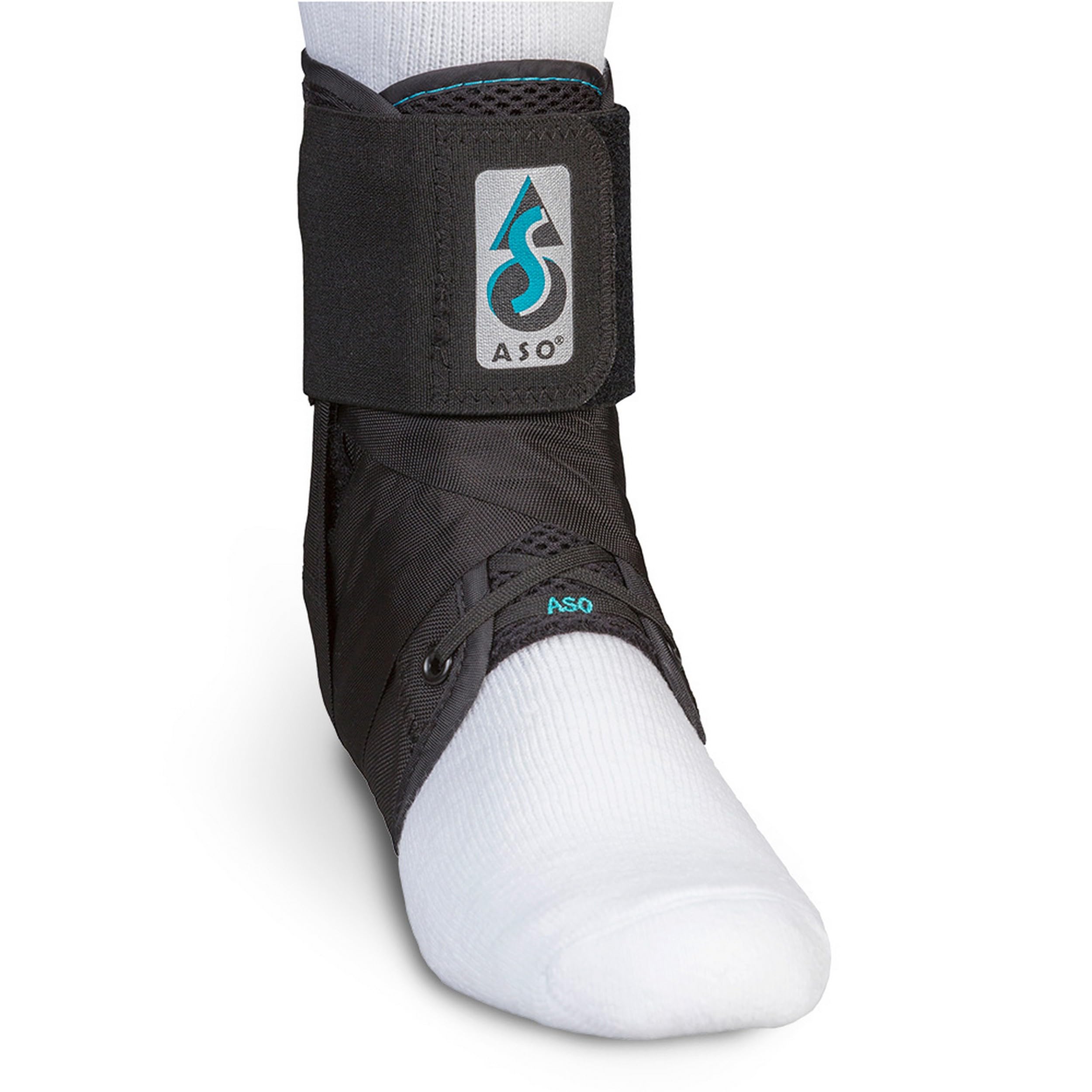
Med Spec ASO Stabilizer
Key Features
- Closure: Lace-up + Figure-8 straps
- Stabilizers: None (straps only)
- Shoe Compatibility: Fits inside most shoes
- Material: Nylon
- Price: $$
The ASO’s figure-8 strap design resists ankle rolling during quick cuts and jumps without the bulk of rigid stabilizers. The nylon material breathes well over a full game, and the lacing system allows custom tension across the midfoot and heel. Build quality holds up through months of regular practice — the straps maintain tension and the lace eyelets don’t fray.
Sizing requires careful measurement of ankle circumference; some players find the brace runs large or small, leading to returns if not measured correctly. The lace-and-strap setup takes a few tries to master, especially when the ankle is swollen. Once dialed in, the brace stays secure and doesn’t shift inside the shoe.
This is the right choice for basketball players with a history of recurrent sprains who need high stability and are comfortable with a lacing ritual. It’s not ideal for those with very narrow or wide ankles (the one-size-fits-most sizing can misfit), or for anyone wanting a quick slip-on brace for casual wear. The tradeoff for that class-leading support is a few minutes of setup time.
Pros
- Figure-8 straps provide strong resistance against ankle rolling during lateral movements.
- Build quality holds up through months of regular use in basketball and other sports.
- Breathable nylon material stays comfortable for extended wear inside basketball shoes.
Cons
- Sizing can be inconsistent; careful measurement of ankle circumference is necessary to avoid misfit.
- Lacing and figure-8 straps require practice to apply correctly, especially on a swollen ankle.
For basketball players willing to measure carefully and invest a few minutes in lacing, the ASO delivers durable, reliable ankle support at a mid-range price.
Best for Mild-Moderate Instability
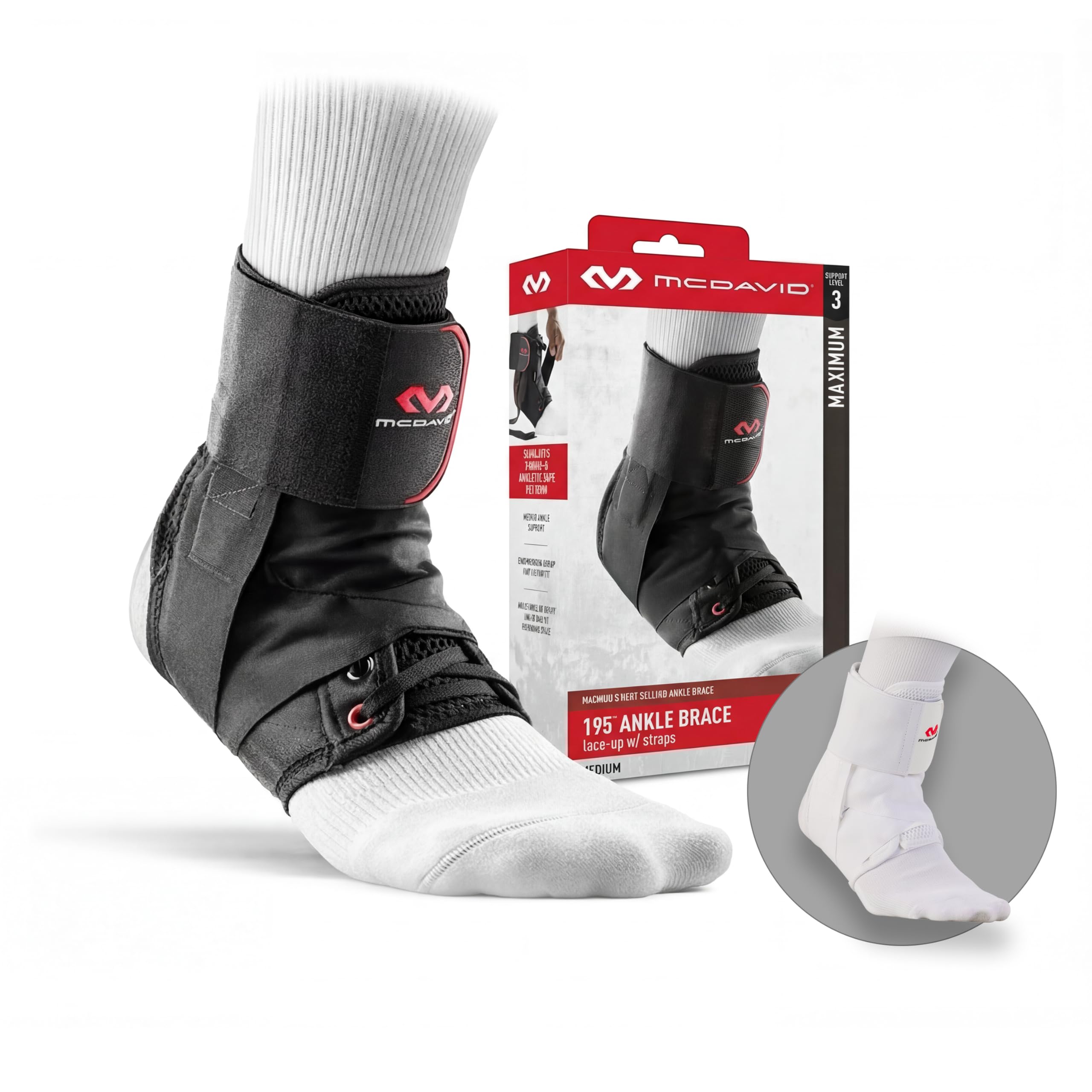
McDavid 195R Ultralight
Key Features
- Closure: Lace-up + Figure-6 cross straps
- Shoe Compatibility: Fits most athletic shoes
- Material: Polyester
- Price: $$
McDavid 195R Ultralight delivers a tape-like feel without the bulk, making it ideal for guards and players who need to fit inside low-top basketball shoes. The figure-6 strap pattern provides inversion resistance comparable to taping, while the breathable fabric keeps feet cool during play. Where the top pick relies on a thicker nylon build for strap longevity, the McDavid trades that durability for a barely-there fit that disappears inside your shoe.
Best for athletes with mild to moderate ankle instability who prioritize low profile over long-term durability. Those with wide feet should size up, as the fit can be snug, and the cross straps may fray or break after months of frequent use — a tradeoff worth checking before committing to daily wear.
Pros
- Lightweight and breathable construction simulates athletic taping without added bulk.
- Figure-6 cross straps deliver targeted inversion resistance for basketball cuts and jumps.
- Low-profile design fits comfortably inside most court shoes, including low-tops.
Cons
- Cross straps may fray or break after months of frequent use, requiring replacement.
- Sizing runs snug; buyers with wider feet or high arches may need to go up one size.
A smart option for basketball players who want the lightest brace possible, but those expecting a full season of heavy practice should consider the top pick’s longer-lasting straps instead.
Best for Adjustable Support
Fitomo Quick Lace
Key Features
- Closure: Hook-and-loop quick lace
- Stabilizers: Removable side splints (plastic)
- Shoe Compatibility: Low-profile, fits most shoes
- Material: Polyester/nylon
- Price: $$$
The Fitomo Quick Lace stands out among lace-up ankle braces by offering removable side splints that let athletes dial in support from rigid stabilization during recovery to a more flexible feel for active play. Its quick-lace system cuts down on fumbling compared to traditional laces, a convenience that matters when you’re suiting up for practice.
This brace suits players who want to transition between sport and recovery without owning multiple braces. However, sizing can run small for some, so measure ankle circumference carefully. The Velcro top strap may also lose grip over time — a tradeoff worth noting if you plan heavy weekly use.
Pros
- Removable side splints provide rigid support when needed, adjustable per activity.
- Quick-lace closure saves time with a simple pull-tight mechanism.
- Effective support for tendonitis and sprain recovery, reducing pain during movement.
Cons
- Velcro adhesion on the top strap can loosen after extended use, requiring re-tightening.
- Sizing may be off for some; the brace can feel too tight or too loose despite following the chart.
If you need one brace that shifts from rehab-level rigidity to game-day mobility, the Fitomo delivers that flexibility — just be ready to monitor strap grip and check your measurements first.
Best for Budget Basketball
Z Athletics Lace-Up
Key Features
- Closure: Lace-up + Figure-8 lacing system
- Stabilizers: Side straps (no rigid stays)
- Shoe Compatibility: Low-profile, fits most shoes
- Material: Neoprene
- Price: $$
The Z Athletics brace offers a similar figure-8 lacing system as the top pick but at a lower price, making it a compelling alternative for players who want reliable lateral support without a premium cost. The side stabilizers and adjustable lacing provide solid resistance against ankle rolls during quick cuts and jumps.
This brace suits basketball players who value support and value over plush comfort. The neoprene material can create pressure on the top of the foot after extended wear, so it’s best for those who can adjust the lacing to find a tolerable fit. The lace-up system also takes more time to put on compared to velcro options, which may be a consideration if your ankle is swollen or you’re in a hurry.
Pros
- Strong inversion resistance helps prevent ankle rolls during basketball.
- Good value for the price with effective support.
- Breathable neoprene material feels comfortable once properly adjusted.
Cons
- Some users experience discomfort on the top of the foot after extended wear.
- Lace-up system can be difficult to put on, especially with a swollen ankle.
For basketball players on a budget who need dependable ankle support and are willing to spend a few minutes dialing in the lacing, the Z Athletics brace delivers strong inversion resistance at a fair price.
Best for Weak Ankle Prevention
WHCOOL Slim-Fit
Key Features
- Closure: Hook-and-loop quick lace
- Stabilizers: 2 auto-shaped soft pads (side)
- Shoe Compatibility: Fits easily inside shoes
- Material: Nylon/polyester blend
- Price: $$
The WHCOOL Slim-Fit offers an ultra-low profile that fits easily into low-top basketball shoes without sizing up. Its quick-lace closure and soft side pads provide convenient ankle stabilization for players who want light support during practice or pickup games.
This brace suits basketball players with a history of weak ankles who need preventive support or are recovering from a minor sprain. However, the brace is not designed for severe sprains or high-intensity play, and some owners have noted the construction can give out after a few weeks of frequent use. For those who accept these boundaries, the WHCOOL delivers a comfortable, low-bulk fit.
Pros
- Fits easily inside low-top basketball shoes without sizing up
- Quick-lace closure makes putting on and taking off the brace fast and convenient
- Provides adequate stabilization for minor sprains and preventive wear
Cons
- Support level is too limited for grade 2+ sprains or recovery from serious injury
- Construction can deteriorate after several weeks of heavy use, with stitching coming undone or strap attachments weakening
A practical choice for players seeking a low-profile brace for mild ankle support during basketball, but durability concerns make it better suited for occasional use than a full-season workhorse.
Best for Budget Rigid Support
SNEINO Lace-Up

Key Features
- Closure: Lace-up + stabilizing straps
- Stabilizers: Spring steel stays on both sides
- Shoe Compatibility: May be bulky in tight shoes
- Material: Neoprene
- Price: $
The SNEINO ankle brace delivers rigid support through its spring steel stabilizers at a price that’s hard to match. However, the lace-up system is time-consuming to adjust, and the fit can be too restrictive for wider feet or prolonged wear. This makes it a good fit for budget-conscious athletes recovering from moderate sprains who are patient with application and have average-width feet.
Pros
- Spring steel stays provide rigid lateral support for moderate sprains.
- Good quality construction at a budget-friendly price.
Cons
- Lace-up design takes considerable time to put on and adjust.
- Fit may be overly tight for some, leading to discomfort during extended wear.
Ideal for budget-minded players with moderate sprains who prioritize support and don’t mind a slower application process.
Best for Rigid Ankle Support
McDavid MD199

Key Features
- Closure: Lace-up
- Stabilizers: Spring steel medical stays (removable?)
- Shoe Compatibility: Fits inside shoes, may be bulky
- Material: Polyester
- Price: $$
The McDavid MD199 delivers strong medial/lateral stabilization thanks to its spring steel stays, and its construction holds up well over time. However, the tradeoff is that the brace can create pressure points during extended wear, and the lace-up system takes more effort to adjust than velcro alternatives. This makes it best suited for athletes who prioritize long-term durability and rigid support over convenience or all-day comfort.
Pros
- Spring steel stays provide rigid inversion/eversion resistance for ankle stability.
- Durable build withstands repeated use and outlasts many competitors.
Cons
- Extended wear may cause pressure points or chafing on bony areas.
- Lacing system requires patience to adjust properly compared to velcro closures.
Best for players recovering from ankle sprains who need rigid support and don’t mind taking extra time to lace up.
Best for Mild Sprains
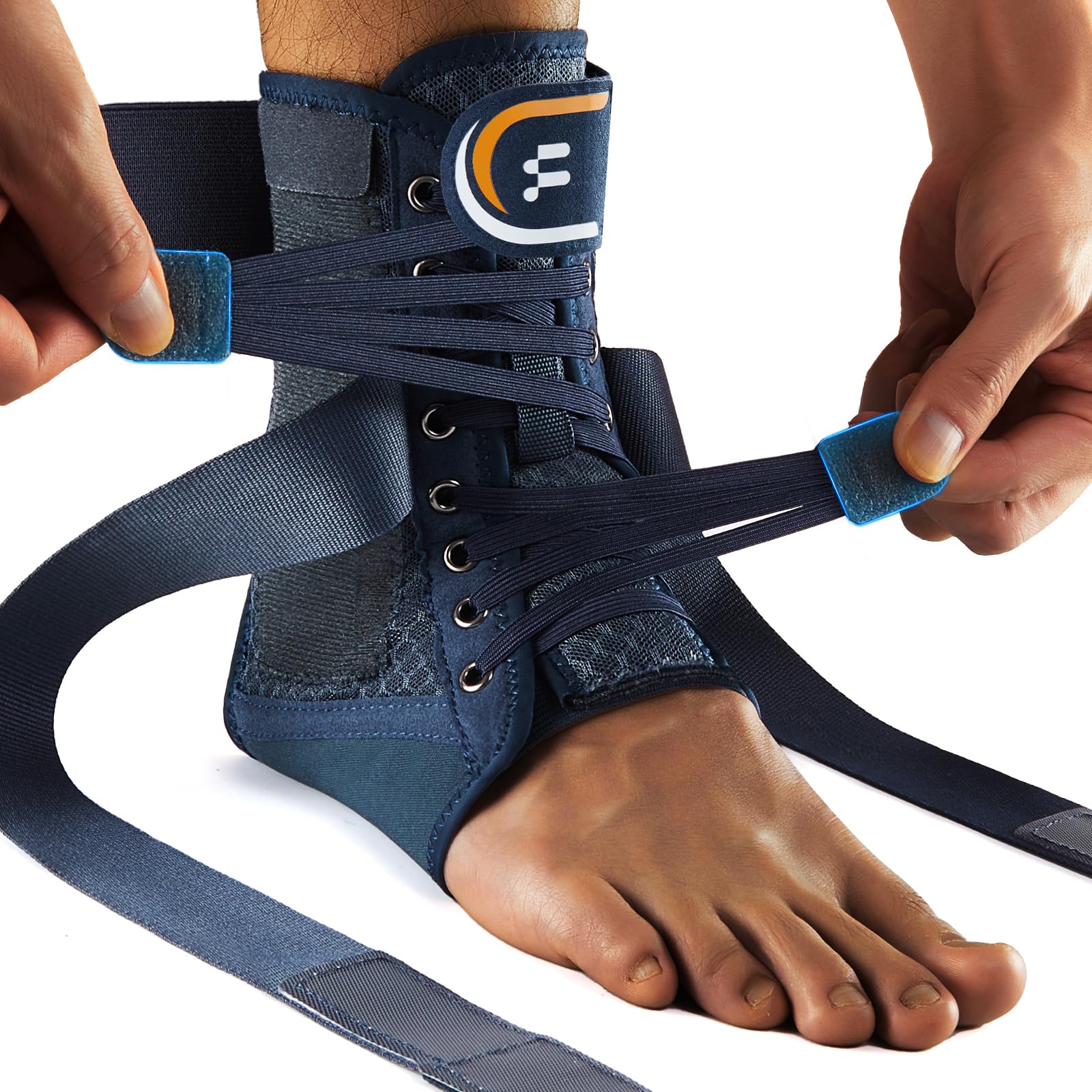
Fitomo Figure 8
Key Features
- Closure: Hook-and-loop quick lace
- Stabilizers: Removable side stabilizers
- Shoe Compatibility: Low-profile
- Material: Polyester/nylon
- Price: $$
The Fitomo Ankle Brace combines a figure-8 strap system with removable stabilizers for adjustable compression and a low-profile fit that slips easily into basketball shoes. The quick-lace closure is intuitive, and the slim design avoids bulk. However, long-term durability under consistent basketball use is less established than top picks, and fit can be inconsistent for some ankle shapes – careful sizing is recommended.
Pros
- Figure-8 straps with removable stabilizers deliver adjustable compression and inversion resistance.
- Slim profile fits comfortably inside basketball shoes without adding bulk.
Cons
- Fit can be too loose or tight for certain ankle shapes – careful measurement is advised.
This brace fits players who want modern figure-8 support with low bulk and don’t mind a less proven track record on durability.
Best for New Brand Trial
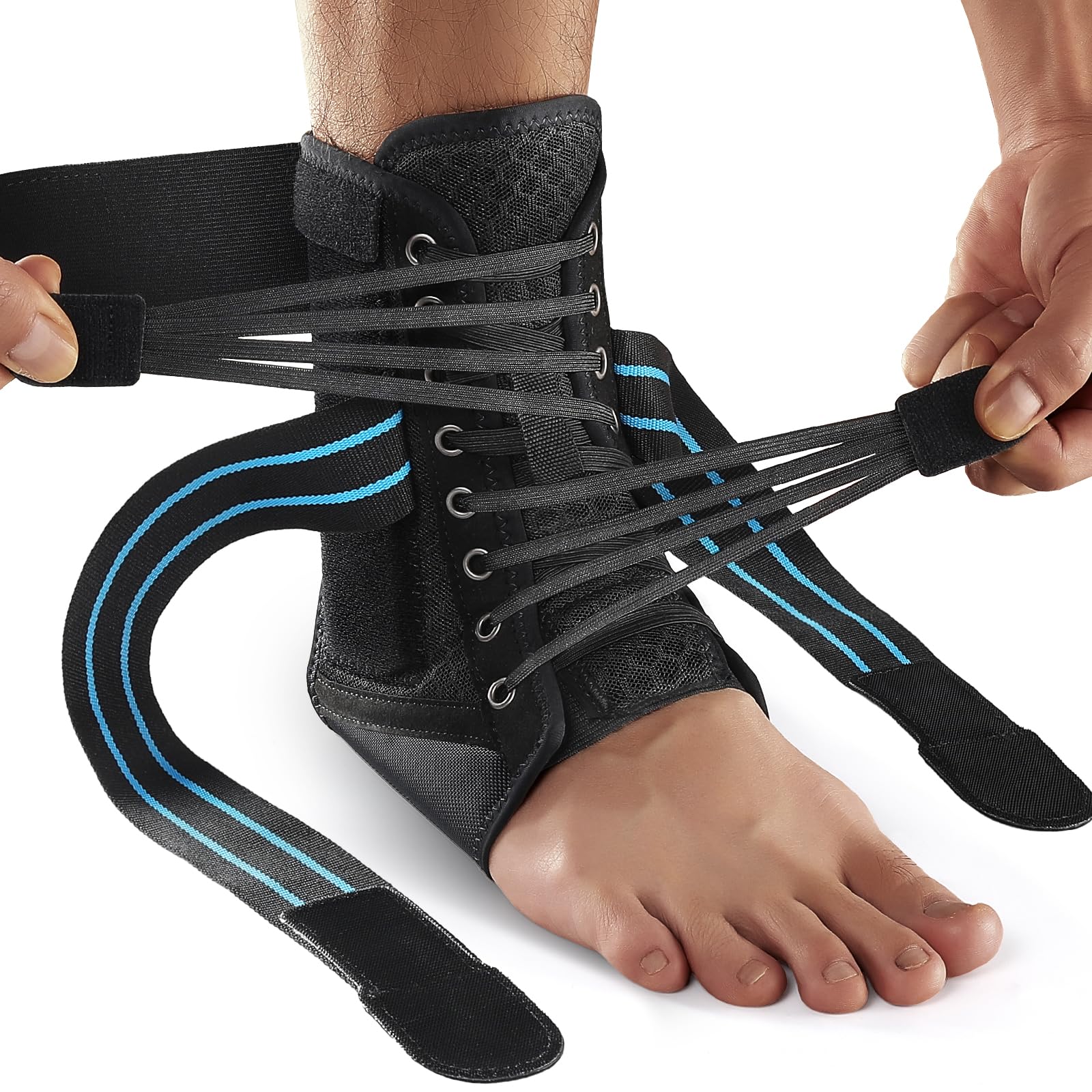
AGPTEK Lace-Up
Key Features
- Closure: Lace-up + hook-and-loop quick lace
- Stabilizers: Removable side splints
- Shoe Compatibility: Slim profile
- Material: Nylon Oxford
- Price: $$
The AGPTEK lace-up brace delivers strong support from removable side splints and an X-cross strap system, making it a cost-effective option for basketball players needing adjustable rigidity. Its slim profile fits well inside most shoes. However, long-term durability under regular play is unconfirmed given the limited track record, so early adopters should weigh that uncertainty before choosing it over more established alternatives.
Pros
- Strong support with removable splints and X-cross straps that stabilize sprains effectively.
- Good value for the price with easy lace-up and hook-and-loop adjustment.
Cons
- Sizing may run small for some users, making it a tight fit.
Best for early adopters who need adjustable support on a budget and are comfortable with a less established product.
Best for Casual Budget
ACE Deluxe Stabilizer

Key Features
- Closure: Hook-and-loop adjustable straps
- Stabilizers: Reinforced side stabilizers (plastic)
- Shoe Compatibility: Fits inside shoes
- Material: Breathable fabric
- Price: $
The ACE Deluxe Ankle Stabilizer is lightweight and simple to put on — a good option for daily walks or as a preventive measure during mild sprain recovery. However, it lacks the inversion/eversion resistance needed for basketball or any sport with quick cuts, and the hook-and-loop straps may lose grip over time. This brace suits casual use where convenience and low cost are priorities, not competitive play.
Pros
- Easy to put on and take off with hook-and-loop closure
- Lightweight and comfortable for extended daily wear
Cons
- Velcro straps can lose grip after repeated use, especially during active movement
- Limited support for inversion/eversion — not suitable for sports requiring lateral stability
Best for casual walks or mild sprain prevention where ease of use and low price matter more than high ankle stability.
How to Choose
Measure your ankle circumference, not shoe size – most sizing issues come from relying on shoe size alone.
Closure Type: Laces vs Quick-Lace
Traditional laces allow you to dial in tension across the entire ankle, but they take time to adjust and may loosen during play. Quick-lace hook-and-loop systems are faster to put on and off but the straps can stretch or lose grip after a season. Choose traditional laces if you need consistent, long-term support; quick-lace if convenience and speed matter more.
For basketball, where you might retighten between plays, traditional laces give you finer control. Quick-lace is better for players with dexterity issues or those who share a brace between games.
Strap Geometry: Figure-8 vs Simple Lace
Figure-8 straps wrap around the heel and arch to restrict both inversion (rolling outward) and eversion (rolling inward) better than straight laces. A simple lace-up only compresses the ankle without cross-connecting the heel. For basketball’s lateral cuts and jumps, figure-8 designs reduce re-injury risk significantly.
Some braces use a figure-6 strap that covers only one side. While lighter, they sacrifice some stability compared to full figure-8. If you have a history of sprains, figure-8 is the safer bet.
Stabilizers: Removable vs Fixed
Rigid side stays (spring steel or hard plastic) add medial/lateral support but can create pressure points against the ankle bones. Removable stabilizers let you adjust the level of rigidity as your injury heals – stiff for recovery, flexible for game play. Fixed stays offer maximum durability and consistent support but lack that adjustability.
For a basketball player returning from a grade 2 sprain, removable stabilizers allow you to progress from rigid protection to active prevention. Fixed stays are better if you want a set-it-and-forget-it brace for chronic instability.
Shoe Fit: Low-Profile vs Bulk
A bulky brace forces you to size up your basketball shoes, which can change your fit and feel for the ball. Low-profile designs (like those with slim padding and minimal closures) fit into standard low-top and mid-top shoes without causing heel slip or pressure. Measure the inside of your shoe before buying.
If you play in low-tops, prioritize a brace with a low-profile build. For high-tops, you have more room, but still check that the stabilizers don’t dig into the shoe sides.
Materials: Breathability and Durability
Neoprene retains heat and moisture, which can lead to skin irritation during long games. Nylon and polyester blends breathe better and dry faster, but may be less shock-absorbent. Look for moisture-wicking liners if you play multiple hours. Durability often correlates with stitch density – reinforced seams at stress points (like the heel cup) extend brace life.
Breathable materials matter most for players who wear the brace for entire practices. If you only use it during injury recovery, durability takes priority over ventilation.
FAQ
Can I wear an ankle brace with basketball shoes without it being too tight?
Yes, if you choose a low-profile brace and measure your shoe’s internal volume. Brands like WHCOOL and McDavid 195R are designed to fit inside standard basketball shoes without needing to size up. If you have wide feet, look for braces with adjustable straps that don’t rely on tight lace compression.
How tight should I lace up an ankle brace for basketball?
Tight enough to prevent the brace from shifting during lateral cuts, but not so tight that it restricts blood flow or causes numbness. You should be able to slide one finger under the laces at the top of the brace. After ten minutes of play, check for pressure points and adjust as needed.
Do lace-up ankle braces prevent ankle rolling during games?
Yes, especially those with figure-8 straps that cross the heel. The key is proper fit and tension – a loose brace offers little protection. The Med Spec ASO and Z Athletics models have the strongest track record for preventing inversion sprains in basketball.
Why does my ankle brace keep loosening during practice?
Lace-up braces naturally settle as the material compresses and your foot flexes. Traditional laces need retightening after the first few minutes. Quick-lace velcro systems can lose grip if the straps are stretched or dirty. A figure-8 strap that crosses the heel often holds tension better than straight laces.