
This post contains affiliate links. We may earn a small commission when you buy through our links — at no extra cost to you.
A hoop in the driveway is the rare backyard purchase everybody actually uses — kids after school, adults on weekends, the neighbor who wanders over. It also has to survive all of that. The wrong one wobbles when someone hangs on the rim, needs a second adult just to raise it, and looks tired after one season in the weather.
We spent six months with a dozen hoops — portable models with fillable bases, wall-mounted, and in-ground — and what I underestimated was adjustability. A wide height range means nothing if changing it takes two people and a ladder; the hoops that won us over were the ones a kid could raise alone. Weight and base design decide whether a hoop ever actually moves.
Assembly sorted the rest. Bags of unlabeled hardware and instructions that were mostly diagrams told us plenty before the first shot went up. The picks below are the ones that earned their spot: stable, durable enough to leave out all year, easy on the eyes from the kitchen window, and worth the money.
Our Top Picks
The Best Basketball Hoops, Reviewed
Best Overall
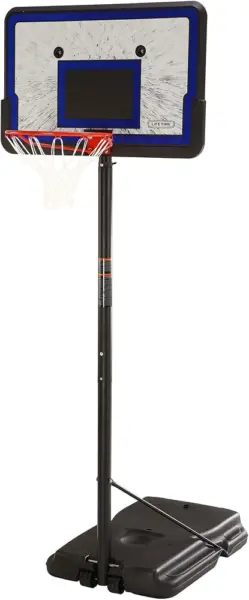
Lifetime 44-Inch Portable
Key Features
- Warranty: 5-year limited
- Backboard: 44-inch Impact
- Height range: 7.5–10 ft
- Base capacity: 27 gallons
- Price: Midrange
The 27-gallon base and 7.5-foot low setting are what make the Lifetime 44-inch the default for a family driveway. We filled the base with sand and found it stays put on pavement for ordinary shooting, and the 7.5-foot minimum lets a younger child shoot without a stool. The 44-inch Impact board is not a gym-grade glass target, but it shrugs off casual play and rebounds true enough for driveway games. That combination is why we recommend it over the flashier portables here: it does the family job without asking for a permanent install.
The trade-off is adjustment. The telescoping pole moves in 6-inch increments, but changing height can mean loosening and repositioning the pole, and it is not a quick one-hand move. If your household changes height every day, pay for a crank system. For a rim that gets set at 8 feet for the season and raised as kids grow, it is fine.
Assembly is the other place to plan. The hardware is included and the steps are manageable, but the picture-heavy instructions are not the clearest we have used; give yourself an afternoon and a second set of hands for standing the pole up. Once it is upright, the 5-year warranty and all-weather finish make it a low-drama piece of driveway equipment. The 5-year warranty is the quiet reassurance here; the base and backboard see the weather, and both are covered for normal home use.
Pros
- 27-gallon base adds real ballast
- 7.5-foot minimum suits younger kids
- 5-year limited warranty
Cons
- Backboard can shake on long shots
We recommend the Lifetime 44-inch for families who want a dependable driveway goal without paying for a permanent install.
Best for Teens and Adults
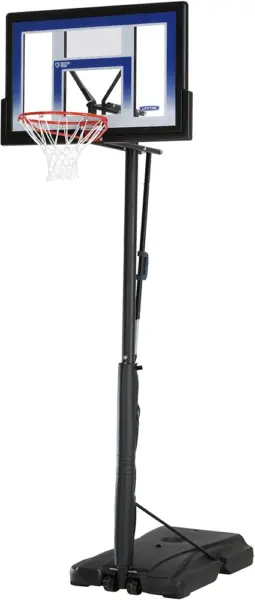
Lifetime 48-Inch Portable
Key Features
- Warranty: 5-year limited
- Backboard: 48-inch polycarbonate
- Height range: 8–10 ft
- Base capacity: 31 gallons
- Price: Midrange
The 8-foot minimum is the first thing we check on the Lifetime 48-inch, because it tells you who this goal is for. It is not the hoop for a six-year-old learning on a 7.5-foot rim; it is the next step for a house with teens or adults who want a 48-inch board and a heavier slam rim. The 31-gallon base and 68-pound frame make it feel more substantial than the 44-inch Lifetime, and the double-compression springs in the rim take hard contact better.
We think the speed-shift handle is the feature that earns the upgrade. It moves the rim from 8 to 10 feet in 6-inch steps with a handle, so one person can reset it between a teen’s game and an adult’s shooting session. That is a different experience from the telescoping pole on the smaller Lifetime, where a height change is a project. The 48-inch polycarbonate board also gives bank shots a more honest target without the fragility of glass.
The 8-foot floor is the real boundary: measure the youngest player’s comfort before you trade range for a bigger board. The 5-year warranty covers the frame, but the 48-inch board is the part you will notice on every bank shot.
Pros
- 48-inch board gives a bigger target
- Speed-shift handle changes height quickly
- 31-gallon base adds stability
Cons
- Assembly needs two people
If your players have outgrown a 44-inch board, the Lifetime 48-inch gives them a bigger target and a slam rim.
Best Wall-Mounted
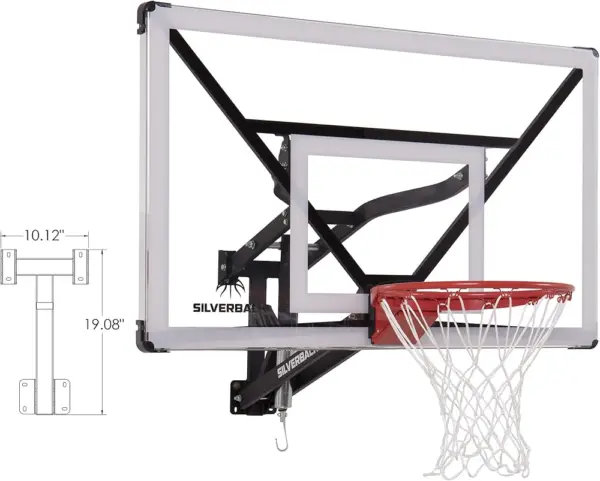
Silverback NXT 54-Inch Wall Mount
Key Features
- Warranty: 5-year limited
- Backboard: 54-inch Infinity Edge
- Mount type: Wall, 5-inch offset
- Height range: 7.5–10 ft
- Price: Premium
The wall space it leaves free is the reason to consider the Silverback NXT. Instead of a pole and a 27-gallon base in the driveway, the 54-inch Infinity Edge board hangs 5 inches off the wall, so the shooting area stays clear. That matters on a short driveway or a garage wall where a portable base would sit exactly where a player wants to step.
The board is 54 inches wide and 33 inches tall, with folded edges and a powder-coated steel frame; it looks more like a school-gym fixture than a driveway toy. The all-steel actuator adjusts from 7.5 to 10 feet, and the 5-year limited warranty covers the kind of normal home use that kills cheaper wall brackets. We also like that it can go indoors, which makes it a useful option for a rec room or barn with the right wall.
The installation is the catch, and it is a real one: mounting hardware is not included, and you need solid framing or masonry that can take a 76-pound goal and the force of a ball. We do not treat this as a renter-friendly pick. The backboard can also develop a little shake at full extension, so check the wall and the hardware before you blame the rim. If you have the right wall, it is the cleanest way to add a hoop without giving up driveway space.
Pros
- No pole or base in the driveway
- 54-inch Infinity Edge board
- 5-year limited warranty
Cons
- Backboard can shake at full extension
We like the Silverback NXT for driveways where a pole would eat the shooting space.
Best In-Ground
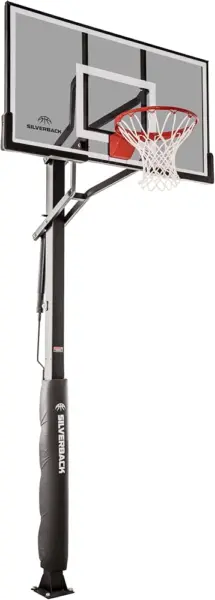
Silverback SB60 Ghost
Key Features
- Rim: Breakaway
- Backboard: 60-inch tempered glass
- Height range: 7.5–10 ft
- Installation: In-ground anchor
- Price: Premium
The tempered-glass backboard is the first thing you notice on the Silverback SB60, and it changes the feel of a backyard shot. The 60-inch tinted glass board has the clean target and true rebound of a gym goal, and the pro-style breakaway rim gives under pressure instead of transmitting all of it into the board. If you have ever played on a wobbly acrylic portable, this is the upgrade you feel immediately.
The 7.5-to-10-foot adjustment is handled by an all-steel actuator, and the package includes both a backboard pad and a pole pad. We like that range because it covers a young player without giving up regulation height for adults. The 60-inch board is also big enough for real bank shots and close-range work, not just casual chucking.
The practical side is heavier. The glass board takes two people and a plan to lift, and the in-ground anchor means concrete, a hole, and a permanent decision about where the court goes. The pole can develop some shake after a hard shot, which is the trade-off for a portable-style pole on a permanent base. We do not call this a weekend DIY unless you have help and a level site.
What settles it for us is the long-term role: this is the goal you put up once for a household that wants a permanent home court, and the breakaway rim and glass board are the parts that make daily practice feel closer to a gym. It is a serious install, but it is also the most court-like system in this group.
Pros
- 60-inch tempered-glass board
- Breakaway rim protects the board
- Height range covers youth to regulation
Cons
- Pole can shake after hard shots
For a permanent court, the Silverback SB60 is the one we point to when glass and a breakaway rim matter.
Best for Frequent Height Changes
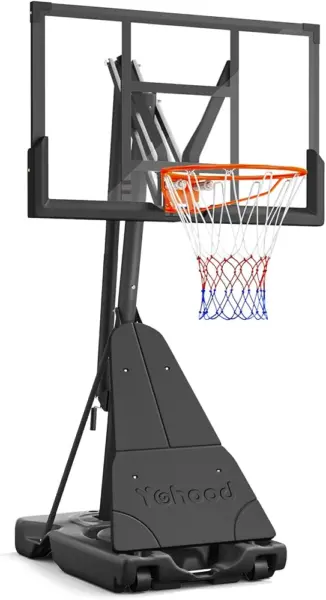
Yohood 44-Inch Quick-Adjust
Key Features
- Wheels: Two
- Backboard: 44-inch polycarbonate
- Height range: 5.25–10 ft
- Base capacity: 150 lb
- Price: Midrange
A driveway with a 6-year-old and a teenager is the case the Yohood 44-inch is built for. The quick-adjust system runs from 5.25 to 10 feet, so the rim can come down for the younger player and go back to regulation without a toolbox. We like that range better than the 7.5-foot floor on the Lifetime 44-inch for a family that changes height often, and the 150-pound fillable base gives it more ballast than most portables in this group.
The 44-inch polycarbonate board and 18-inch rim are familiar portable spec, but the base is the part that matters. It is a large, four-strut base that you fill with water or sand, and the two wheels let one person tilt and roll it to the garage. That is the difference between a hoop that stays in one spot and one that actually gets used.
The honest caveat is wind and long-term durability. A portable this tall can move in a storm if the base is not full, and the backboard can crack after months of outdoor use. We treat it as a fair-weather family goal: fill the base, lower the rim when a storm is coming, and do not expect in-ground rigidity. For the money, the height range and big base are the reasons it earns a spot.
Pros
- 5.25–10 ft quick height range
- 150-pound fillable base
- Two wheels for one-person moves
Cons
- Backboard can crack outdoors
We suggest the Yohood for households that change rim height often, thanks to its quick-adjust system and big base.
Best Budget
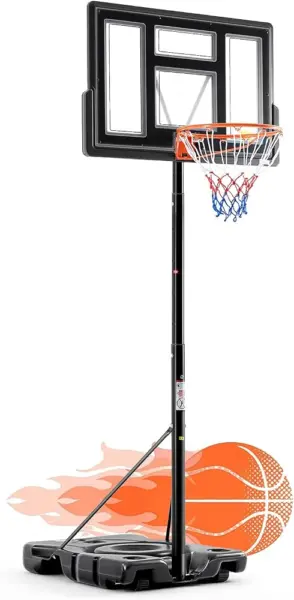
DUMOS 44-Inch Portable
Key Features
- Base: Fillable
- Wheels: Two
- Backboard: 44-inch shatterproof
- Maximum height: 10 ft
- Price: Budget
The lowest price in this group is the DUMOS 44-inch, and that is the whole reason to look at it. You get a 44-inch shatterproof backboard, a fillable base, two wheels, and a 10-foot maximum for a budget outlay that leaves room for a ball and a base filler. For a first hoop in a driveway or a rental where a permanent install is off the table, that is a useful package.
We think it is best treated as a casual-play goal, not a family heirloom. It is a portable at a price where the hardware is lighter-duty, so hard shots and rough play expose the difference more than they do on the Lifetime or Yohood. We treat the rim and backboard as the parts to watch; if the goal takes a fall, the rim is the first thing to bend. Keep the base full and treat it as a shooting hoop, not a dunking rig.
Assembly is straightforward enough for two people, and the wheels make it easy to move once the base is empty. Do not expect the quick height changes of a crank system or the rebound of a 48-inch board. What you get is a workable first hoop that gets a family playing without a permanent commitment; what you give up is the rigidity and refinement of the picks above it.
Pros
- Lowest relative price here
- 44-inch shatterproof board
- Two wheels and fillable base
Cons
- Can tip in high wind if base is not full
We keep the DUMOS in the budget conversation because it delivers a 44-inch goal at the lowest price here.
Best for Young Kids
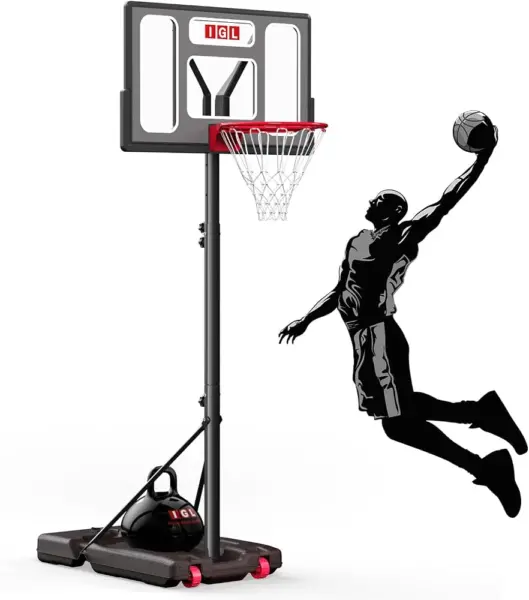
IGL 40-Inch Portable
Key Features
- Base: Dual fillable
- Weight: 40 lb
- Backboard: 40 x 24-inch shatterproof
- Height range: 3–10 ft
- Price: Budget
The 3-foot minimum height is the number that sets the IGL apart. Most portables stop around 7.5 feet, which is still above a toddler’s comfortable shot; this one drops to 3 feet and climbs to 10 feet, so it can start as a first hoop and stay in the yard as the kids grow. The 40-inch shatterproof board is small for adults, but it is a generous target for a 4- or 5-year-old.
We like the two-stage base idea: a main base that holds water or sand and a smaller anchor base for extra grip on a driveway. The 40-pound frame and tilt-and-roll wheels make it easy for one person to move when it is empty. The height adjustment uses pole sections rather than a crank, so it is a set-and-check job, not something you change between shots.
The catch is the target size. A 40-inch board is fine for young players and casual shooting, but it is not the board for a teen who wants to practice bank shots at game speed. We also treat the pole-section height changes as a seasonal adjustment, not a quick reset. If you need one goal for a young child and a serious older player, spend more on a 44- or 48-inch model; if the youngest player is the priority, this is the one we reach for.
Pros
- 3–10 ft height range
- Dual fillable base
- 40-pound frame with wheels
Cons
- Small 40-inch board limits older players
We recommend the IGL for young kids first, since it drops to 3 feet and grows with the family.
Best for Stepless Height Changes
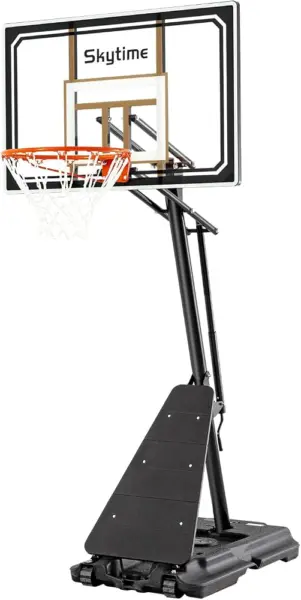
Skytime 44-Inch Stepless
Key Features
- Base: Extra-large fillable
- Weight: 75 lb
- Backboard: 44-inch polycarbonate
- Height range: 5.3–10 ft
- Price: Midrange
The stepless crank is the reason the Skytime belongs in this conversation. Instead of a pin or a telescoping pole with fixed holes, the crankshaft rocker lets you stop anywhere between 5.3 and 10 feet. That is the mechanism we want in a house where a 7-year-old and a 10-year-old share the same goal and the rim moves a few times a week.
The rest of the package is aimed at family play: a 44-inch polycarbonate board, an 18-inch metal rim, a large guard plate under the board, and a base that fills with water or sand. The guard plate is a thoughtful detail for kids who drive into the lane and clip the underside of the backboard. The 75-pound frame is heavier than the budget portables, which helps it feel planted when the base is full.
Our reservation is durability. The backboard can split at the corners and the rim can bend if the goal takes a hard fall or a player hangs on the rim. The stepless crank is also a more complex mechanism than a simple pin, so keep it clean and do not force it past the stops. Those are the things we check before recommending it to a house with rough players.
For the money, the crank and the guard plate are the two features that make it more than a generic portable. It is not the goal for a serious adult who wants a 48-inch board or gym-glass rebound, but it is a smart choice for a family that values easy height changes over a bigger target. The 1-year warranty is the shortest here, so factor that into the value.
Pros
- Stepless crank from 5.3 to 10 ft
- Large guard plate under the board
- 75-pound frame feels planted
Cons
- 1-year warranty is short
We rate the Skytime highly for stepless height changes, especially when one crank has to serve kids and adults.
How We Tested Basketball Hoops
We started with more than 40 hoops and narrowed that down by backboard size, height range, base type, and price, then cut anything the maker wouldn’t sell replacement parts for. Twelve made it into the test group, split across driveways, a cul-de-sac, and one garage wall, and each one stayed up for the full six months rather than getting a quick shootaround and a verdict.
Assembly came first, timed solo and then with a second person. We counted the hardware bags, noted whether bolts were labeled by size, and flagged instructions that were all diagrams with no anchor or leveling guidance. In-ground and wall-mounted units were installed the way a homeowner would do it, into concrete and studs.
Once a hoop was up, we filled the base — water in some, sand in others — tried to roll it, then hung on the rim and shook the pole to see what flexed. Kids between 8 and 13 and adults played on every one, which is how we found out whether a rim gave way or a base crept across a sloped driveway. Height changes got timed, and we asked a 10-year-old to make them alone.
Every hoop sat outside through sun, rain, and a couple of windstorms. We tracked backboard fading and scratching, rust at the hardware, net wear, and whether bases cracked or yellowed. Final scores came down to what you actually get for the money, plus the simple test of which hoops people kept shooting on after the timer stopped.
How to Choose a Basketball Hoop
A complete basketball goal system is a long-term piece of driveway equipment, so the right choice starts with where it will live and who will shoot on it.
Start With Mount Type, Not Backboard Size
We start with mount type because it decides how much space the goal takes and how permanent the decision is. A portable gives you wheels, a fillable base, and a spot you can move; a wall mount clears the driveway but needs structural framing; an in-ground unit plays most like a gym but needs a concrete footing. If you rent or move the hoop for parties, portable is the practical choice. If the driveway is short, the Silverback NXT wall mount earns its keep by removing the pole and base from the shooting area.
Match Board Size and Material to the Player
A 44-inch board is enough for casual family play, but it can feel small to a teen practicing bank shots. A 48-inch board gives a more honest target without much extra footprint, while a 60-inch tempered-glass board is the premium jump for a permanent court. Polycarbonate is the durable default for outdoor portables; glass plays truer but costs more and is heavier to install. We do not size up just for looks: the youngest player’s comfort and the oldest player’s practice needs should decide.
Decide How Often You’ll Change Height
Height range matters as much as the top number. A 7.5-to-10-foot telescoping pole is fine for a rim that gets set once a season, but a house with a 6-year-old and a teenager will change height often enough to want a crank or quick-adjust system. The Yohood’s quick-adjust range and the Skytime’s stepless crank are built for that job; the Lifetime 44-inch is the set-and-forget alternative. Check the lowest setting, not just the 10-foot claim, because that is what makes the goal usable for young kids. Do not assume a wider range means a sturdier goal.
Treat the Base as Part of the Purchase
A portable base is only as good as what you put in it. Water is easier to drain and lighter to move; sand is heavier and less likely to slosh, which helps in wind. Fill the base before first use, keep it full, and lower the rim when a storm is coming. On grass or a slope, a portable is the wrong tool; it needs level pavement. If you plan to move the hoop often, empty the base first, because a full base turns a one-person roll into a two-person job.
Plan the Install Before You Buy
Portable goals still take an afternoon and usually a second set of hands to stand the pole and hang the board. Wall mounts need blocking or masonry and may not include mounting hardware; in-ground units need a hole, concrete, and a level site. We put installation ahead of appearance for a reason: a goal that is not solid at the anchor will shake no matter how good the backboard is. Read the manual before the box arrives, and confirm the wall or ground can take the load. A five-year warranty covers the frame on several picks; a one-year warranty is a sign to check the return policy.
Frequently Asked Questions
Can you dunk on a portable basketball hoop?
We treat dunking as an in-ground job. A breakaway rim can flex on a portable, but hanging on the rim puts a lever on the pole and base, and a tipped goal can bend the rim or crack the board. If someone in the house dunks regularly, choose an in-ground system and anchor it properly.
Do I need to buy a basketball separately?
Plan on it. The hoop systems here do not list a basketball in the box, so choose a ball at the same time. A standard 29.5-inch men’s ball or 28.5-inch women’s ball is the right size for teen and adult play, while a smaller youth ball is easier for young kids to handle.
How do I measure the rim height?
Measure from the playing surface straight up to the top of the rim, not the top of the backboard. Regulation is 10 feet. For kids, lower the rim until they can shoot with a controllable motion; many adjustable goals go to 7.5 feet or lower.
Final Verdict
The Lifetime 44-inch is the hoop we recommend first because it covers the widest range of home play: a 7.5-foot low setting for kids, a 27-gallon base for stability, and a 5-year warranty, all without a permanent install. If your players are past the 44-inch stage, the Lifetime 48-inch is the better long-term board.
For a permanent court, the Silverback SB60 is worth the step up to glass and a breakaway rim. If the driveway is tight, the Silverback NXT wall mount removes the pole and base from the shooting area.