
This post contains affiliate links. We may earn a small commission when you buy through our links — at no extra cost to you.
Many portable basketball hoops promise ‘shatterproof’ backboards and durable rims, but real-world use often reveals warped backboards, bent rims, and leaky bases within months. The challenge isn’t finding a hoop—it’s finding one that holds up past a single season of driveway games.
This guide cuts through the marketing to focus on what actually matters: backboard material, base stability, and adjustability mechanisms that survive repeated use. Whether you’re buying for a growing family or a casual shooter, the right hoop balances build quality with a price that matches its lifespan.
We’ve identified the models that avoid common failure points—like HDPE backboards that deaden rebounds or crank systems that snap—and those that deliver genuine durability for years of play.



Best for Families, Teens, Adults
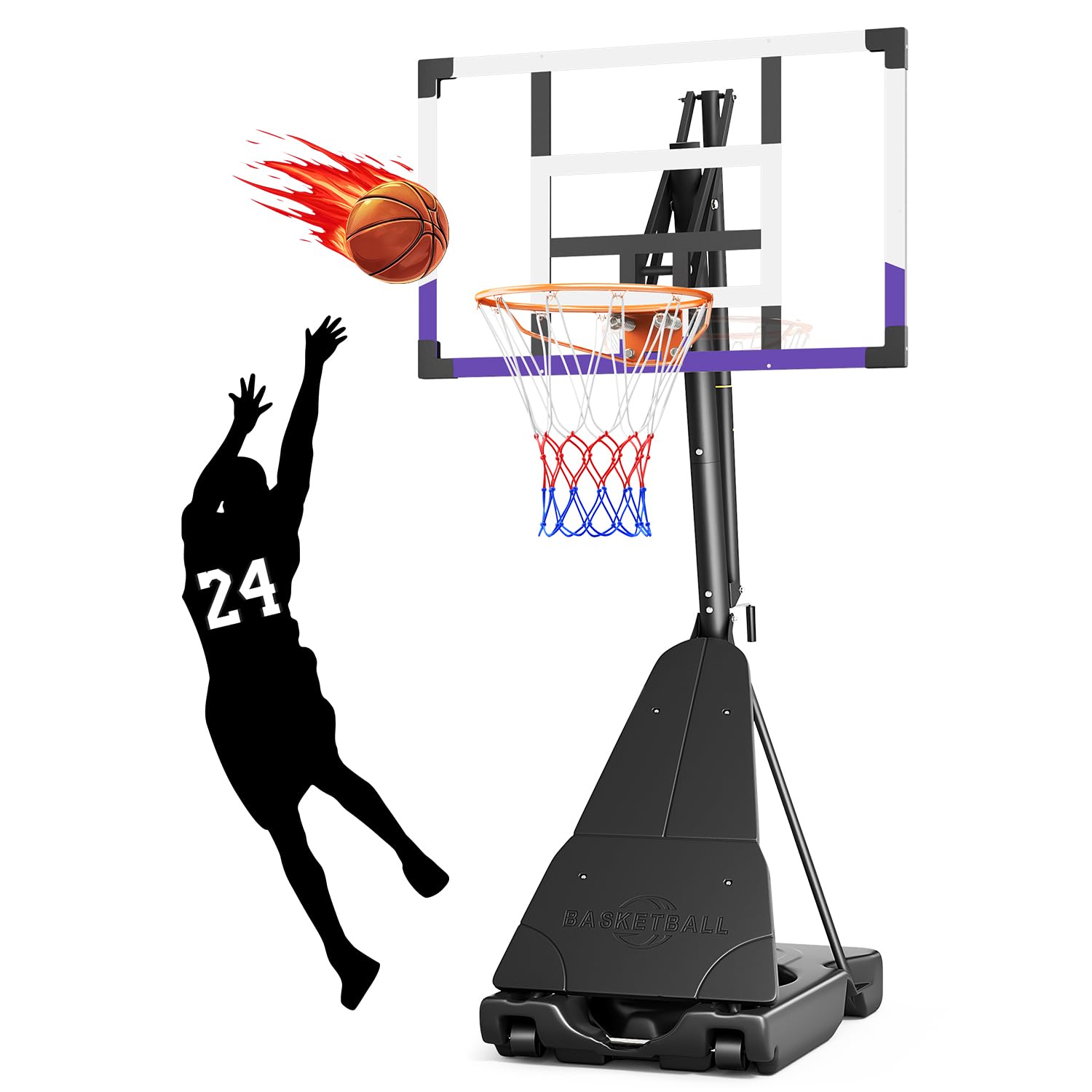
Lifetime NBA 44" Portable
Key Features
- Backboard: 44" polycarbonate
- Height Adjust: Telescoping pins, 7.5–10 ft
- Base Capacity: Water/sand, wheels
- Rim Type: 5/8" solid steel, standard
- Warranty: 5-year limited
- Price: $$$
This hoop’s polycarbonate backboard delivers consistent rebound and resists weather damage better than HDPE alternatives. The telescoping height adjustment (7.5–10 ft) uses pins and bolts, so changing heights requires two people and tools — a tradeoff for the sturdy single-piece pole that keeps the rim level during play.
Best suited for families who set the height once and leave it, or for teens and adults playing regularly. The 5-year limited warranty adds peace of mind for outdoor exposure, but the height adjustment process means this isn’t a hoop for households that need frequent changes between kids and adults.
Pros
- Polycarbonate backboard stays flat and weather-resistant over time
- Build quality outpaces many alternatives at this price tier
- Suitable for both kids and adults without wobble or flex
Cons
- Assembly takes longer than average; diagram-only instructions and tight bolt access can frustrate
- Height adjustment requires removing pins and bolts with two people — not quick for frequent changes
For those who want a hoop that lasts through weather and intense play, this Lifetime model earns its price — just plan for a dedicated setup and minimal height changes.
Best for Budget Youth Play
Lifetime 44" Basic
Key Features
- Backboard: 44" HDPE
- Height Adjust: Telescoping pins, 7.5–10 ft
- Base Capacity: 27 gal, water/sand
- Rim Type: Standard all-weather
- Warranty: 5-year limited
- Price: $$
For families looking to spend under $200, this hoop offers the same brand and warranty as the top pick but uses an HDPE backboard instead of polycarbonate. The rim and base match premium models, so casual shooting and youth games hold up fine.
This hoop works best for kids ages 6–13 who are learning to shoot or playing with friends, not for teens or adults expecting crisp rebound off misses. The HDPE backboard deadens the ball on errant shots — a fair trade given the budget-friendly price.
Pros
- Solid build for the price — backboard, rim, and base feel substantial for a budget hoop
- Lowest-priced option from a well-known brand with a 5-year warranty
- Height range from 7.5 to 10 ft suits most youth players and casual family use
Cons
- For players expecting a lively rebound, the HDPE backboard absorbs impact — better suited for shooting drills than pickup games
- Adjusting the telescoping height requires two people or tilting the unit, which is manageable for seasonal changes but not quick solo tweaks
If your budget stops at $200 and you’re buying for young kids who won’t care about rebound, this Lifetime hoop delivers reliable play without the premium price.
Best for Multi-Age Adjustability
Skytime Crank 44"
Key Features
- Backboard: 44" polycarbonate
- Height Adjust: Stepless crank, 5.3–10 ft
- Base Capacity: Extra-large, water/sand, guard plate
- Rim Type: 18" metal, breakaway springs
- Warranty: 1 year
- Price: $$$
The smooth, tool-free crank makes height changes effortless for a household where kids and adults both shoot. The 44-inch polycarbonate backboard and large fillable base give it a planted feel during play. Where it differs from the button-lift competitor is the granularity: you can dial in 7.3 feet for a younger player just as easily as 10 feet for a pickup game. The tradeoff is that some units have rim weld issues that surface over months, so this hoop suits families who will monitor that joint and avoid aggressive dunks.
Pros
- Set any height from 5.3 to 10 feet with a single crank – no tools or preset pins.
- Sturdy base with guard plate keeps the hoop stable during moderate play.
Cons
- Rim weld has been known to break after months of regular use in some setups.
- Assembly instructions can be confusing for certain steps, requiring patience.
Best for multi-age households that want precise, stepless height control and accept that the rim may need occasional inspection.
Best for Quick Height Changes
AWII Sport Crank 44"
Key Features
- Backboard: 44" polycarbonate
- Height Adjust: Button lift, 5.5–10 ft
- Base Capacity: Triangular support, water/sand, wheels
- Rim Type: 18" standard, shock absorber
- Warranty: 1 year (excellent CS)
- Price: $$$
The AWII Sport hoop stands out with its push-button height system — no cranks, no tools, just a smooth lift from 5.5 to 10 feet. The polycarbonate backboard feels solid, and assembly is a two-person job that goes quickly. Stability is good once the base is filled with sand or water.
This setup suits families where different players need different rim heights multiple times per session. The rim can bend if the unit tips over, so keeping the base fully weighted matters more here than with some competitors. The included net is light and tangles easily — a chain replacement will extend its lifespan.
Pros
- Push-button height adjustment works without tools
- Sturdy build with good backboard feel for the price
- Straightforward two-person assembly
Cons
- If the hoop tips over, the rim can bend and may need replacement
- The net is thin and prone to tangling; early replacement is likely
Best for families who change height often and want a quick, tool-free system — just be ready to keep the base heavy and swap the net for a sturdier one.
Best for Stable Driveway Use
TONBUX Crank 44"
Key Features
- Backboard: 44" polycarbonate
- Height Adjust: Crank, 5.25–10 ft
- Base Capacity: 44×28", holds 150–225 lbs
- Rim Type: 18" dual spring shock absorbers
- Warranty: 1 year
- Price: $$
The 44×28-inch base holds up to 225 lbs of sand, giving this hoop excellent stability for driveway play, and the crank system lets you adjust height from 5.25 to 10 feet without tools. It suits families with players of different ages who want quick height changes, but note that a small percentage of units may experience backboard shattering after 8–12 months – a risk that’s less common in the top pick’s longer warranty.
Pros
- Easy crank height adjustment – even kids can change the height.
- Oversized base provides great stability.
- Good quality build with strong backboard.
Cons
- Assembly instructions can be confusing for a few steps.
- In some units, the backboard may shatter after 8–12 months of use – a durability concern, not a safety hazard.
If you want a stable, easy-to-adjust hoop for mixed-age family play and can accept the possibility of backboard wear after a year, this is a strong mid-range value.
Best for Easy Crank, Family
Yohood Crank 44"
Key Features
- Backboard: 44" polycarbonate
- Height Adjust: Crank, 5.25–10 ft
- Base Capacity: Large, 150 lbs water/sand
- Rim Type: Standard
- Warranty: 1 year
- Price: $$
The Yohood’s crank mechanism delivers smooth height changes from 5.25 to 10 feet, and the triangular support keeps the hoop stable when the base is filled. For families who want quick adjustments between players of different ages, this is a solid alternative to oversized-base models. The setup suits driveways and backyards where the hoop can be staked down to prevent tipping – the rim can bend if the unit tips over, and base cracks may appear over time, so periodic checks are wise.
Pros
- Crank adjustment is smooth and quick between 5.25 and 10 feet.
- Triangular support design keeps the hoop stable once the base is filled.
- Good value for a crank-adjust hoop with a 44-inch polycarbonate backboard.
Cons
- The rim may bend if the hoop tips over in wind – anchoring or extra ballast reduces this risk.
- The base can develop cracks over time, which may lead to leaks.
For families who prioritize easy height adjustment and stability over long-term durability, the Yohood delivers good value – just plan to anchor it and check the base periodically.
Best for Toddlers Ages 3–7
Mayfire 33" Kids

Key Features
- Backboard: 33" polycarbonate
- Height Adjust: Fast lift, 4.0–8.5 ft
- Base Capacity: 9.5 gal water / 101 lbs sand
- Rim Type: 16" shock-absorbing springs
- Warranty: 2 years
- Price: $$
This Mayfire hoop offers a sturdy 33-inch polycarbonate backboard and quick height adjustment for kids ages 3–8. The build quality is good for a small hoop, and the 2-year warranty provides peace of mind. However, the small backboard and 8.5-ft max height make it unsuitable for older kids or adults who need a regulation-size setup.
Pros
- Quick and easy height adjustment
- Great for children ages 3–8
Cons
- Net may degrade and pole can show rust over extended use
Best as a first hoop for indoor or garage play by children ages 3–8.
Best for Young Kids Indoor
Play22 33" Kids

Key Features
- Backboard: 33" polyethylene
- Height Adjust: Telescoping, 70–84 in
- Base Capacity: Fillable, wheels
- Rim Type: Standard
- Warranty: 1 year limited
- Price: $
This hoop suits toddlers and early elementary kids who just want to toss a ball around indoors or on a covered driveway. The simple assembly and 11 height settings let it grow with a child from ages 4 to 7. However, the fillable base can develop leaks, and the thin plastic backboard isn’t built for outdoor weather or dunking — better left for occasional, gentle play.
Pros
- Size suits toddlers and early elementary kids
- Assembly is quick with clear instructions
Cons
- Fillable base can leak over time, limiting durability
Only consider if play will be indoors or on a protected surface with children under 8 who won’t hang on the rim.
Best for Light Kids Play
DUMOS 44" Budget
Key Features
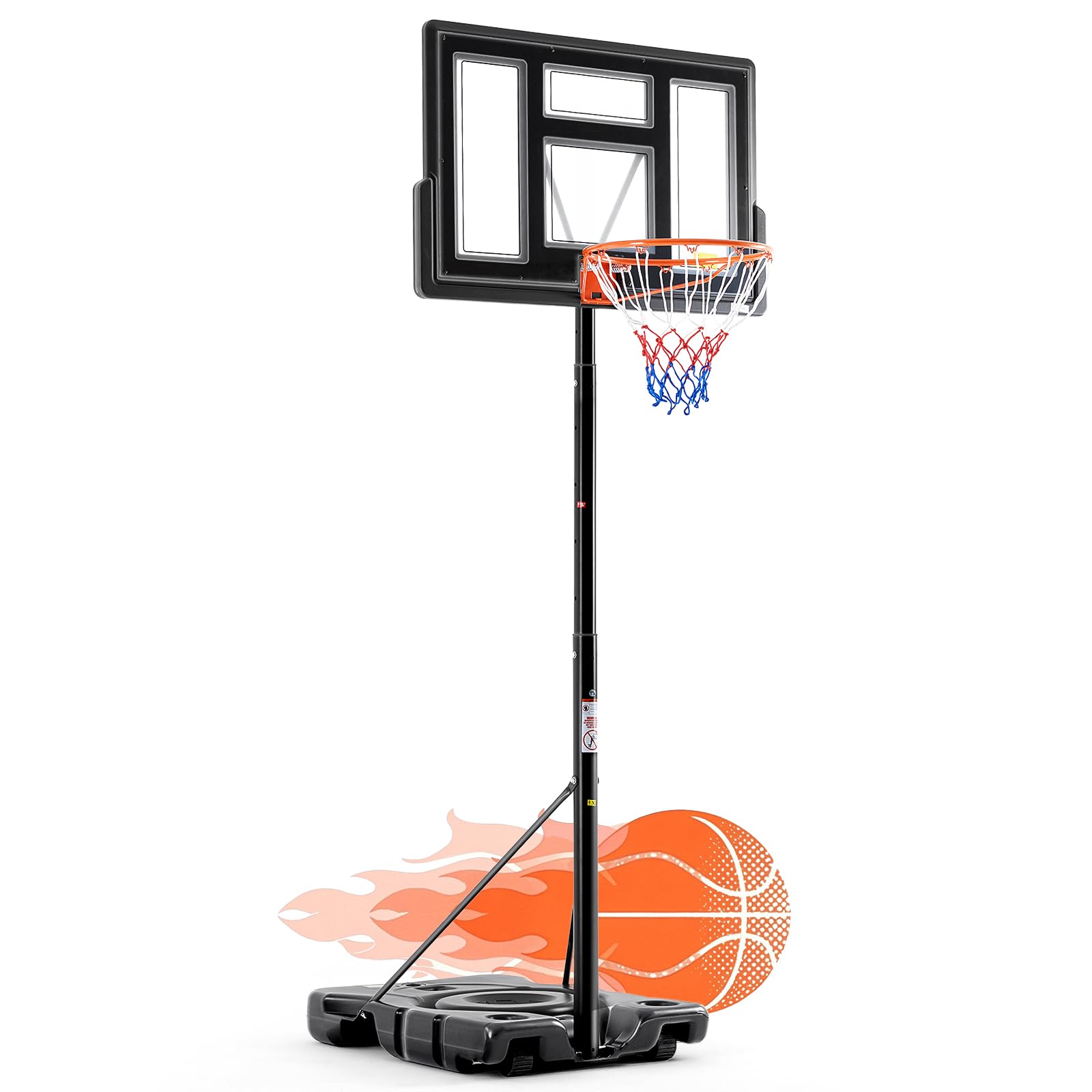
- Backboard: 44" polycarbonate
- Height Adjust: 6.1–10 ft
- Base Capacity: Fillable, wheels
- Rim Type: Shock-absorbent
- Warranty: 1 year
- Price: $
This DUMOS hoop pairs a 44-inch polycarbonate backboard and shock-absorbent rim at a budget-friendly price. For occasional light use by young children it’s functional, but regular outdoor play may cause backboard warping or rim bending, and the base can leak.
Pros
- Quick assembly with clear instructions
- Entry-level price delivers a functional hoop for casual play
Cons
- Backboard may warp and rim can bend under regular use
This hoop fits households needing an ultra-cheap option for light, supervised play by young kids — not for daily outdoor games.
Best for Light Indoor Use
Sweetcrispy 44" Budget

Key Features
- Backboard: 44" polycarbonate
- Height Adjust: 6.1–10 ft
- Base Capacity: Fillable, wheels
- Rim Type: Shock-absorbent
- Warranty: 1 year
- Price: $
This 44-inch portable hoop offers a polycarbonate backboard and shock-absorbent rim at a budget price, with easy assembly and height adjustment from 6.1 to 10 feet. However, the backboard can warp under outdoor sun exposure, making it suitable only for covered or indoor light play.
Pros
- Budget-friendly price for a 44-inch portable hoop.
- Assembly is simple with clear instructions.
Cons
- Backboard may arrive with cosmetic scratches or minor damage.
Best suited for occasional indoor or covered use where sun exposure and heavy play are not factors.
Best for Occasional Backyard
IGL 40" Dual Base

Key Features
- Backboard: 40" acrylic
- Height Adjust: 3–10 ft (4-pole)
- Base Capacity: Dual up to 140 lbs
- Rim Type: Standard
- Warranty: 1 year
- Price: $$
The IGL hoop reaches as low as 3 feet – rare for portable hoops. Assembly is quick and the price is budget-friendly. However, the rim can bend and backboard may crack with moderate play, and the net deteriorates quickly. It’s best for families with toddlers who will outgrow it before these issues appear.
Pros
- Height range from 3 to 10 ft works for toddlers through adults.
- Easy assembly with clear instructions.
Cons
- Net may deteriorate quickly, and rim can bend under moderate play – durability falls short of long-term use.
Best for families with toddlers who will outgrow the hoop before durability becomes an issue.
Best for Budget Light Use
TONBUX 44" Budget

Key Features
- Backboard: 44" polycarbonate
- Height Adjust: Telescoping, 4.43–10 ft
- Base Capacity: Fillable, wheels
- Rim Type: Standard
- Warranty: 1 year
- Price: $
The TONBUX 44" hoop delivers a full-size backboard and adjustable range from 4.4 to 10 ft at an entry-level price. Setup is quick with clear instructions, and the polycarbonate backboard is a step up from cheaper plastic alternatives. Where it falls short is in materials that can handle regular action: the rim may snap and the base can crack under consistent play, and the pole shakes during aggressive shots. This hoop suits households where young children take soft shots a few times a week, not daily driveway games or older kids who play hard.
Pros
- 44-inch polycarbonate backboard is a good size for the price
- Height adjusts from 4.4 to 10 ft, covering kids and adults
Cons
- Under regular use the rim can snap or the base may crack within months
Fine for occasional soft play by young children in a driveway or backyard, but not a hoop that will hold up to regular or aggressive use.
How to Choose
The backboard material (polycarbonate vs HDPE) determines rebound quality and longevity more than any other spec.
Backboard Size and Material
Backboard size directly affects the play experience. A 44-inch backboard is the minimum for teens and adults to practice realistic rebounding; smaller sizes limit the target area and make the game feel cramped. Material matters more: polycarbonate (often called ‘Fusion’ or ‘Impact’) offers a lively rebound similar to glass, while HDPE (high-density polyethylene) deadens the ball and produces a dull sound on impact.
Polycarbonate costs more but withstands weather and impact far longer. HDPE hoops are lighter and cheaper, making them suitable for younger children who don’t rely on backboard bounce. If you plan to play regularly, invest in a polycarbonate model—the extra price pays for years of use.
Height Adjustment Mechanism
Height adjustment ranges from telescoping pins to crank systems to stepless lift mechanisms. Telescoping pins require removing bolts and often two people—fine if you set the height once and leave it. Crank systems allow one-person adjustment with a handle, typically offering a range from 5 to 10 feet. Stepless crank models let you dial any intermediate height, ideal for families with multiple age groups.
The trade-off: pin systems are simpler and cheaper but inconvenient; crank systems add cost and potential failure points. Quick-lift button systems are the fastest but may require more frequent tightening. Choose based on how often you expect to change heights.
Base Capacity and Stability
The base weight directly determines stability during play. A base that holds 100–150 pounds of sand or water is standard for 44-inch backboards; heavier bases (up to 225 pounds) reduce wobble during aggressive moves. Sand is denser than water and won’t freeze, making it the better choice for year-round outdoor use. Water-filled bases can crack after freeze-thaw cycles.
Wheels on the base allow repositioning, but larger wheels handle grass and gravel better. Always fill the base to the manufacturer’s maximum—underfilling invites tipping, especially in wind.
Rim Type
Rim design affects both play and durability. Standard steel rims are rigid and transfer shock to the backboard during dunks or hang-offs. Shock-absorbent rims use springs to flex, reducing stress on the backboard and mimicking a regulation breakaway rim. Breakaway rims with a hinge mechanism are best for dunking but are rare at this price point.
The trade-off: shock-absorbent rims protect the backboard but can bend if the hoop tips over. For family play without heavy dunking, a standard solid steel rim (like 5/8-inch) is often more durable.
Build Quality and Warranty
Overall build quality is often indicated by the pole gauge (thicker steel resists bending) and weld integrity. Look for two- or three-piece telescoping poles rather than thin single tubes. A 5-year warranty is a strong signal of confidence; 1-year warranties are common on budget hoops and often reflect expected lifespan.
Customer support responsiveness can also make or break ownership—brands like Lifetime have a proven track record of honoring warranties, while lesser-known brands may not.
FAQ
Why does my portable basketball hoop rim bend so easily?
Rims on many portable hoops are not designed to handle the leverage from a tipped-over unit. When the base is underfilled or the hoop is left in a windy spot, the rim absorbs the fall and bends. Choose a model with a thicker rim (5/8" steel or dual springs) and always fill the base to capacity. Sand-filled bases reduce tipping risk compared to water.
Is a 44-inch backboard big enough for adults?
Yes, a 44-inch backboard is the standard for recreational adult play. It provides a realistic target for shooting practice and decent rebounding. For serious players or regulation practice, 54-inch backboards offer more surface area, but 44 inches is sufficient for driveway games and casual shooting.
Can I leave my basketball hoop outside all winter?
You can, but only if the base is filled with sand instead of water. Water expands when freezing, which can crack the base and damage the pole. Sand won’t freeze, and it adds more weight for stability. Also, protect the backboard and rim with a cover to reduce UV degradation and ice buildup.
How much sand do I need to stabilize a portable basketball hoop?
Most hoops with a 27–44 gallon base require about 300–400 pounds of sand to reach the manufacturer’s recommended fill. Check the product specs for exact weight capacity. Sand is typically sold in 50-pound bags, so plan for 6–8 bags. Filling the base entirely eliminates wobble during play.