
This post contains affiliate links. We may earn a small commission when you buy through our links — at no extra cost to you.
The double rim is a detail you notice the moment it saves you. Two steel rings sit a finger-width apart, so the rim gives on a hard, flat miss — the shot that folds a single rim or rattles a backboard loose — then springs back true. What that buys you is a hoop that still plays like a hoop three seasons in, provided the pole and base can carry the extra weight.
I grew up shooting on a hoop bolted to a garage wall, and the lesson from those years is that the rim is only as good as the pole holding it up. Since early spring, my team and I have been playing on 11 double-rim hoops, from portable models we rolled out for weekend games to heavier units that never moved. The surprise wasn’t the shooting — it was how much of the ownership experience comes down to an afternoon of assembly and a base that doesn’t creep. The picks below are the ones that earned their spot in the driveway.

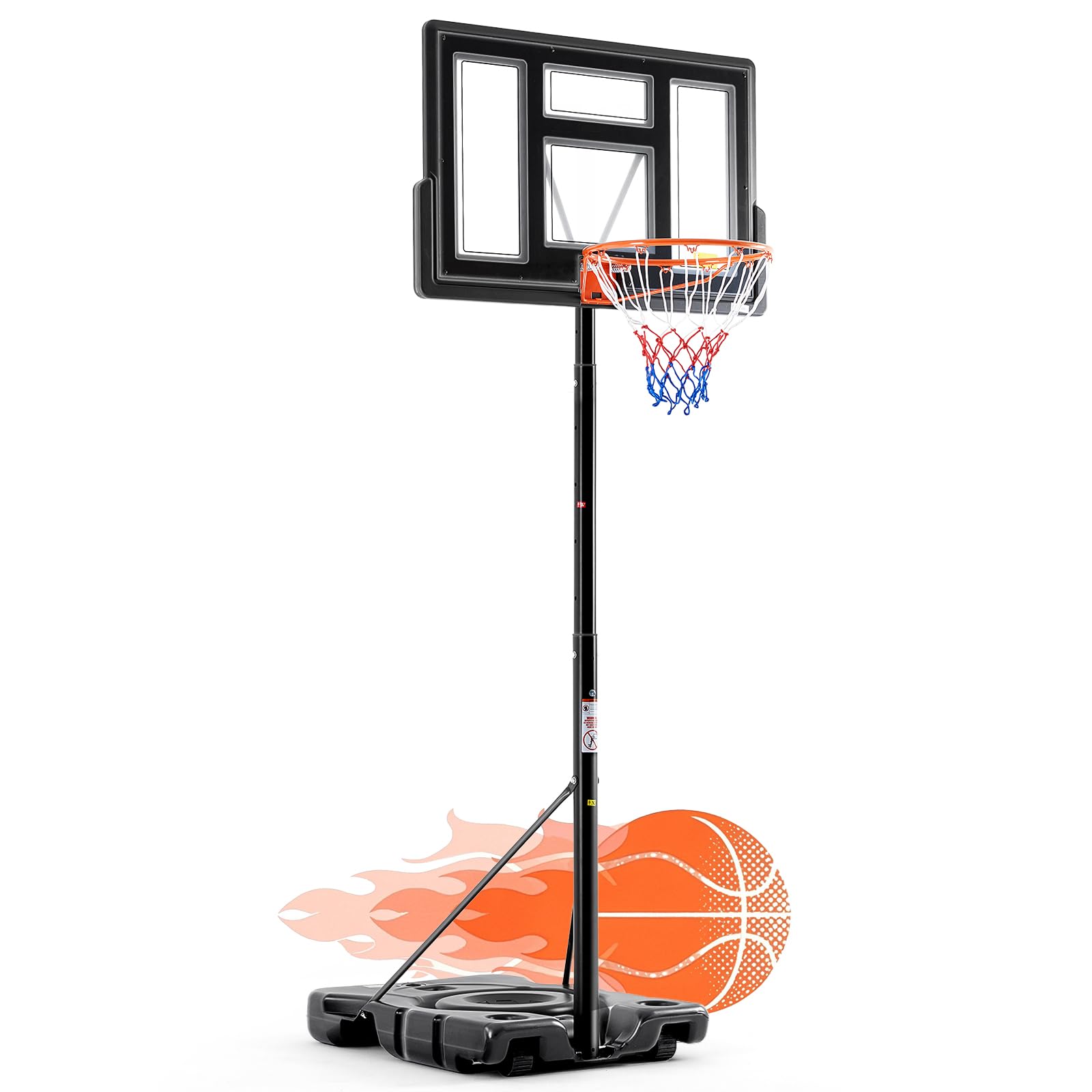


Best for All-Around Driveway Play
Lifetime NBA League Edition 44
Key Features
- Rim: 5/8 in. solid steel
- Warranty: 5 years
- Backboard: 44 in. polycarbonate
- Height range: 7.5 to 10 ft
- Price: Midrange
The rim is where a driveway hoop lives or dies, and Lifetime builds this one from 5/8-inch solid steel instead of the folded tube you find on cheap portables. It’s a single ring, not the welded double rim used on park and school courts, but it is the only rim in this group whose steel thickness is stated at all, and 5/8 inch is a serious piece of stock.
That’s a large part of why this is the hoop we point most families toward. The 44-inch polycarbonate board is billed as shatterproof and takes a bank shot without the hollow clatter of thin acrylic, and the telescoping pole runs from 7.5 to 10 feet, so the same goal works for a second-grader and for adults playing a real game. Wheels under the base let you position the hoop before you add water or sand, and the five-year limited warranty covers the parts that actually fail.
Assembly is the part to schedule. The instructions are the weakest link in the box — the manufacturer’s video does a better job than the printed sheet — and you want a second adult for the pole and board. Nothing about the build is difficult once the pieces are laid out; it just isn’t quick.
What keeps it at the top for us is how little there is to babysit afterward: powder-coated steel that resists rust, a fade-resistant board, and a rim that doesn’t need a replacement order every season. It’s not a gym goal, and it isn’t priced like one.
Pros
- Rim steel thickness is actually stated
- 7.5 to 10 ft covers kids and adults
- 44-inch shatterproof polycarbonate board
- Five-year limited warranty
Cons
- Height pin is stiff to work
We recommend it as the family default: 7.5 to 10 feet of height, a 44-inch shatterproof board and a 5/8-inch solid steel rim. If one hoop has to serve everyone in the house, start here.
Best for Tight Budgets
DUMOS 44 Inch Portable
Key Features
- Warranty: 1 year
- Backboard: 44 in. polycarbonate
- Base fill: Water or sand
- Height range: 6.1 to 10 ft
- Price: Budget
Nothing else in this roundup gets you a full-height hoop for less, and the DUMOS doesn’t embarrass itself on the court. The board is the same 44-inch shatterproof polycarbonate as our top pick’s, the pole reaches 10 feet, and the base has wheels so you can walk it into position before anything goes in it.
Where the savings show up is in the details. The base takes water or sand — sand is the better call for anything that lives outdoors, since it doesn’t slosh or freeze into a block — and the shock-absorbent rim mount takes some of the sting out of a hard bounce. The 6.1-foot floor is low enough for a young child, though not for a toddler.
The trade is real: height changes are a two-handed job that’s closer to a rebuild than a lever pull, and the rim is the first thing to bend if anyone decides to dunk. For a driveway where the hoop goes up in spring and gets left alone, neither matters much, and what’s left is a big board, a full 10 feet and a base that takes sand.
Pros
- Full 10-foot height for the least money here
- Board matches our top pick at 44 inches
- Base takes water or sand
Cons
- Height changes are slow and awkward
- Rim bends first under dunking
We keep this one in the guide for the household that wants a real hoop without spending much: full 10-foot height and a 44-inch board, with an awkward height pin as the trade.
Best for Toddlers and Teens
IGL 40 Inch Portable
Key Features
- Warranty: 1 year
- Backboard: 40 x 24 in. polycarbonate
- Anchor base: Adds 30 lb water or 40 lb sand
- Height range: 3 to 10 ft
- Price: Budget
Three feet is low enough that a four-year-old can shoot at a real rim, and that’s the number that earns the IGL its place here. The range runs from 3 to 10 feet, the widest in this group, and for a house where a toddler and a teenager share one hoop, that spread does more work than any other single specification on this page.
The way it gets there is unusual and worth understanding before you buy. Height is set by how many pole sections you bolt in: two sections for 3 to 5 feet, three for 5.5 to 7.5, four for 8 to 10. Changing bands is a start-of-season job rather than something you do at halftime, so plan the setup around your shortest player.
The 40-by-24-inch board is the smallest here — plenty for a six-year-old’s confidence, small for an adult banking one in. The clever part is the base: a main tank plus a separate anchor tank you fill for extra grip, a second layer of ballast none of the other portables here has.
Pros
- 3-foot floor for the youngest players
- Widest height range in this group
- Second anchor base adds ballast
- Well-labeled, easy assembly
Cons
- 40-inch board is small for adults
- Rim and net are the wear points
We reach for this one when there’s a preschooler in the house: a real rim at three feet, a board sized for small shooters, and a build that goes together without a fight.
Best for Frequent Height Changes
Skytime 44 Inch Portable
Key Features
- Rim: 18 in.
- Backboard: 44 in. polycarbonate
- Height range: 5.3 to 10 ft
- Height mechanism: Stepless hand crank
- Price: Midrange
Most hoops in this roundup change height with a pin and a shove. The Skytime turns a handle instead, running the board steplessly anywhere between 5.3 and 10 feet, and that one mechanism changes how the hoop gets used: one person can drop it to a child’s height and put it back without a second set of hands.
We rate that above a bigger backboard. In a house where the height moves twice an evening, the crank earns its place in a way ten extra inches of polycarbonate never will, and it’s why this hoop sits ahead of cheaper portables with the same size board.
The rest of the design is thoughtful in smaller ways. A padded guard plate sits under the board, which matters the moment a portable tips forward, and the base is a large fillable tub on wheels with a 75-pound frame above it — light enough for one adult to tilt and roll into the garage.
Set against the other portables here, it asks the least of you day to day, and the mechanism is the reason to pay the difference. If your height setting changes once a season, that money buys nothing.
Pros
- Stepless crank from 5.3 to 10 ft
- Guard plate under the board
- Wheels and a 75 lb frame
Cons
- Board corners can crack after a knock
- Rim bends if the base is underfilled
We point households that change height constantly to this one: a stepless hand crank from 5.3 to 10 feet, a 44-inch board, and a mechanism that earns its keep every evening.
Best for Garage Walls
Silverback NXT 54 Wall Mount
Key Features
- Weight: 76.3 lb
- Backboard: 54 x 33 in.
- Wall offset: 5 in.
- Height range: 7.5 to 10 ft
- Price: Midrange
The mounting bolts are not in the box. That’s the first thing to know about the NXT: the bracket, arms, board and rim arrive, the fasteners don’t, and you’re buying structural hardware sized to your wall before the drill comes out. On a 76-pound assembly, that’s not a detail you improvise.
What you get for the trip is the cleanest installation in this group. The 54-by-33-inch Infinity Edge board hangs five inches off the wall, the all-steel actuator moves the rim from 7.5 to 10 feet, and there’s no base to fill, drain or roll away before a storm — the hoop simply becomes part of the building.
For a garage gable or a brick face with clear pavement underneath, that’s the tidiest way to own a hoop, and the 54-inch panel is one of the two biggest boards on wheels-free mountings here. Set the height before you drill: on a long overhang the board can shake, and once the anchor bolts are in, relocating it is a masonry job.
Pros
- No base to fill, drain or tip
- 54 x 33 in. board, five inches off the wall
- 7.5 to 10 ft on an all-steel actuator
Cons
- Mounting hardware not included
- Board can shake when fully extended
The pick for anyone with a garage wall and no room for a base: 54 inches of board, 7.5 to 10 feet of height adjustment, and a hardware-store trip the box doesn’t cover.
Best for Big Portable Boards
Lifetime 54 Inch XL
Key Features
- Rim: Pro-style breakaway
- Weight: 107 lb
- Backboard: 54 in. polycarbonate
- Height range: 7.5 to 10 ft
- Price: Premium
A 54-inch backboard is the closest a wheeled hoop gets to a gym goal, and this is the one that puts it on a base you can still move. The polycarbonate is billed as shatterproof, the rim is a pro-style breakaway that flexes instead of folding, and the Power Lift mechanism runs the height from 7.5 to 10 feet without a ladder or a second person.
That rim is the part that justifies the upgrade. A breakaway ring gives on contact instead of passing the hit into the board, which is why gyms use them and why a portable with a rigid rim eventually cracks where the panel meets the frame.
The base is the part worth planning. Fill it with a freeze-resistant gel rather than water if your winters drop below freezing, because a split base is a far worse afternoon than a slow one — and set the whole job aside for a day when you have help, since this is not a solo build.
Once it’s standing, the XL plays like a fixed goal with a warranty: five years of coverage, a board big enough to bank off, and a rim that survives a dunk. What it doesn’t do is travel — this is a hoop you site once, fill once and leave.
Pros
- 54-inch shatterproof board on wheels
- Pro-style breakaway rim
- Power Lift adjusts 7.5 to 10 ft
- Five-year limited warranty
Cons
- 107 lb frame takes two people to move
- Build wants a full day and extra hands
We point the biggest driveways here: a 54-inch board, a pro-style breakaway rim and a Power Lift crank, with a build that wants two or three people and a free weekend.
Best for Permanent Courts
Silverback 60 In-Ground
Key Features
- Rim: 18 in. breakaway
- Weight: 198 lb
- Backboard: 60 in. tempered glass
- Height range: 7.5 to 10 ft
- Price: Premium
Tempered glass is what separates this hoop from every other one here. It rebounds like a gym board, it doesn’t cloud the way polycarbonate can, and it’s backed by a pro-style breakaway rim that gives on a dunk so the glass doesn’t have to.
The rest is regulation thinking: a 60-inch board, an 18-inch rim on an all-steel actuator that walks the height from 7.5 to 10 feet, and an anchor kit in the box. There’s no base to fill and nothing to tip in wind, because the pole is in the ground.
Installation is the whole project. There’s a hole, a bag of concrete, and a board that takes more than one set of hands to raise. We think the glass earns that weekend every time the ball comes off it, which is the reason people put up with in-ground hoops at all.
Where it asks for faith is at the edges: a glass board can arrive shattered, and a hard fall onto the rim can take one out. The breakaway rim is the mitigation, and the five-year limited warranty covers the rest. For a house that will still be there in ten years, this is the hoop that makes a driveway feel like a court.
Pros
- 60-inch tempered glass backboard
- 18-inch pro-style breakaway rim
- 7.5 to 10 ft adjustment on a steel actuator
- Five-year limited warranty
Cons
- Permanent install you can’t move
- 198 lb board needs a lift and help
The permanent-court answer: 60 inches of tempered glass on a breakaway rim, 7.5 to 10 feet of adjustment, and a weekend of digging standing between you and it.
Best for Fast Premium Setup
Spalding Momentous EZ

Key Features
- Rim: Arena Slam breakaway
- Backboard: 54 in. acrylic
- Height range: 8 to 10 ft
- Assembly time: 30 minutes or less
- Price: Premium
Thirty minutes is the claim, and even discounting it heavily, the promise points at the real difference here: this is the portable designed not to eat a weekend. The board is a 54-inch clear acrylic panel with arena-style padding, the Arena Slam rim is a genuine breakaway, and assembly is treated as the product rather than an afterthought.
Two specifications decide who it suits. The height range starts at 8 feet, not 7.5, so this is an adult and teen hoop that a younger child grows into rather than one that comes down to a preschooler. And acrylic is the clearest panel material in this roundup, which is why the hoop reads as a piece of equipment rather than a toy from the street.
The catch is that it sits at the very top of the price range while still being a portable that fills with water and rolls, and spending more again buys tempered glass on a concrete footing. Buy this one for the build, not for the board.
Pros
- Assembles faster than anything here
- 54-inch acrylic board with padding
- Arena Slam breakaway rim
Cons
- 8-foot floor rules out young kids
- 134 lb frame, so it’s a two-person move
We keep this in the roundup for the buyer who would rather pay for a clean, fast build than spend a weekend on bolts: 54 inches of acrylic, a breakaway rim and an 8-foot floor.
How We Picked and Tested Double Rim Hoops
We started with roughly 30 double-rim hoops sold at major retailers and cut the list down before a single box arrived. Anything with a pole under 3 inches in diameter, a base holding less than 30 gallons, or a rim welded straight to the backboard instead of bolted through it got dropped — those are the three weak points that turn a sturdy-looking hoop into a wobbly decoration by August. Price counted, but as a ratio rather than a ceiling: what the money actually bought. That left 11 hoops, which we purchased at retail and lived with for six months.
Assembly happened on a Saturday morning in my driveway with two adults, a socket set, and a stopwatch. We timed each build from opening the box to the first made shot, and noted exactly where the instructions lost us — hardware bags with no labels, a step buried three pages after you needed it, a base that had to be filled before the pole went in. Once upright, we shook each pole at rim height and rocked the base by hand to feel where the joints gave.
After that, the hoops had real lives: kids shooting after school, adults running threes on weekends, a summer of free-throw drills, and more hanging on the rim than any manual recommends. Every few weeks we checked whether the rim still sat level, whether the base had leaked or slid in wind, whether the height adjustment still locked where we set it for shorter players, and how the finish was holding — fading, rust at the bolt heads, a net stretched out of shape. We also just watched which hoop everyone drifted back to after dinner, which turned out to be its own kind of data.
How to Choose a Double-Rim Basketball Hoop
A true double rim is two steel rings welded into one unit, and almost nothing sold for a driveway is built that way — so the useful question is what that double ring was doing in the first place, and what stands in for it on a home hoop.
What a Double Rim Does, and What Replaces It
Park and school hoops use a double rim because two stacked rings resist bending when a hundred kids hang on them. The trade-off is a ring with no give: hard bounces, rattled-out misses, and nothing to protect the board behind it. Home hoops moved to a single ring, usually spring-mounted, which flexes on contact and passes the shock into a hinge instead of the backboard.
If rim toughness is what you’re chasing, check two things instead of the ring count: the steel, which Lifetime states as 5/8 inch on its League Edition, and whether the ring is a breakaway. A breakaway rim on a tempered glass board, as on the in-ground Silverback, is the combination that actually survives dunking.
Pick the Lowest Height First
Every hoop worth buying reaches 10 feet, so the ceiling isn’t the deciding number — the floor is. A 7.5-foot minimum covers school-age kids, 6 feet reaches a tall five-year-old, and the IGL’s 3-foot floor is the only one here that works for a preschooler.
Then look at the mechanism, because a height range you avoid using is worth nothing. A pin is fine for a setting you touch twice a year, a crank or power lift is for a hoop that moves daily, and a pole-section system, like the IGL’s, is for a start-of-season change.
Backboard Size and Material
Forty-four inches is the family standard and enough for a driveway; 54 inches is where bank shots start behaving like they do indoors; 60 inches of tempered glass is a permanent-court purchase. Material matters as much as size: polycarbonate is light and sold as shatterproof, acrylic is the clearest of the three, and tempered glass rebounds best and weighs the most.
Bigger boards also catch more wind and load the mount harder, so a 60-inch board on a portable base is a different proposition from the same board in concrete. In an open, windy spot, a 44-inch panel is the easier thing to live with.
Ballast and Wind Decide Whether It Stays Up
A portable hoop is a lever with a heavy end, and the base is the only thing holding it down. Fill it before the first game rather than after the first gust, and prefer sand outdoors, where it is denser than water and doesn’t slosh. A full base is effectively immovable, so drain it before you relocate the hoop for a storm.
Budget Time, Not Just Money, for the Build
Plan for two people and most of a day, whatever the box implies. The printed sheets are the weak point in most of these cartons, so pull the manufacturer’s PDF before you start and lay the hardware out in step order. An in-ground hoop needs a hole and a concrete pour before there is anything to shoot at, so schedule the build as well as the delivery.
Frequently Asked Questions
How long does an outdoor basketball hoop last?
The net goes first, usually within a season or two, and it’s the cheapest thing to replace — buy two while you’re at it. Polycarbonate boards handle sun and rain but can crack at the corners after a hard knock or a tip-over, and a rim that has been dunked on repeatedly is the next part to need replacing. Check the board’s corners each spring, since that is where a crack starts.
What do I do with a portable hoop’s base in winter?
Drain it before the first hard freeze. Water expands as it turns to ice, and a split base is a much bigger repair than an hour with a hose; a freeze-resistant gel fill sold for this purpose avoids the problem entirely. An empty base also lets you move the hoop out of winter wind, which is when a portable is most likely to go over.
What wears out first, and what does it take to keep one going?
Nets are the recurring purchase and the easiest fix. Rims are replaceable on most hoops here, and 18 inches is the standard size, but check the bolt pattern against your board before ordering. The board is the expensive part and often the reason a hoop gets replaced rather than repaired, which is the practical argument for a breakaway rim in the first place.
Final Verdict
Buy the Lifetime NBA League Edition. It earns the recommendation on the least glamorous grounds: 5/8-inch steel at the rim, a 44-inch board that takes a bank shot, 7.5 feet for a young player and 10 for an adult, and wheels under a base you fill once.
If the shortest player in the house is a toddler, the IGL’s three-foot floor changes the answer. If you have a garage wall and no flat ground to spare, the Silverback NXT is the better hoop. Neither of those is a knock on the Lifetime; they are simply different driveways.