
This post contains affiliate links. We may earn a small commission when you buy through our links — at no extra cost to you.
An indoor court looks forgiving and isn’t. The floor is dusty, the paint is slick, and the gap between a shoe that holds a hard cut and one that slides opens up in about half a second. Most players learn that the hard way — a rolled ankle at pickup, or a pair that felt springy under the store lights and turned into a slip-and-slide by the second quarter. A good indoor shoe buys you trust: you stop thinking about your feet and start playing.
I’ve rotated 12 pairs through rec-league games, Tuesday-night pickup, and plenty of shooting drills over the past four months, and the spread surprised me. Sizing tripped up more than one — a few ran a half size long, and one only felt right with thick socks. After that it came down to support, sole stability, how the rubber behaved once the floor got dusty, and whether the outsole still had life left. Appearance counts too, since these get worn to the gym and the store. The picks below earned a permanent spot in my rotation.



Best for Most Indoor Players
adidas Own The Game 3.0
Key Features
- Cut: Mid-top
- Fit: Wide-foot friendly
- Outsole: Non-slip
- Price: Budget
If your feet have never been called narrow, start here. The Own The Game 3.0 opens across the forefoot instead of pinching it, and that single decision is why we point broad-footed players to it before anything else on this page. The mid-top cut steadies the ankle without the stiff, brace-like collar that makes some mid-tops feel like a punishment, and the outsole is a proper non-slip compound with real bite on clean hardwood.
Nothing here is exotic — a simple upper, a simple midsole — and that is the appeal. The materials start out firm, so give them a couple of shootarounds before a full game; once they soften, the shoe disappears, which is the highest compliment a court shoe gets. We also like that the colorways are loud enough to be fun without turning the shoe into a costume.
The trade is ambition. Players who want the softest landing should look at the All-Pro Nitro; players who want the lightest, quickest shoe should look at the Precision 7. What this one does that neither does is open up across a broad forefoot and still feel secure through a hard cut — and after a few weeks of gym sessions, the outsole has stayed sharp at the pivot points rather than smoothing over, which is usually the first thing to go on a cheap court shoe.
Pros
- Wide toe box suits broader feet
- Mid-top stability without a stiff collar
- Non-slip outsole bites clean indoor floors
Cons
Our default indoor pick for most players: it opens up for wide feet, holds a clean floor, and stays stable through a long run of games.
Best for Narrow Feet
PUMA All-Pro Nitro Skybreak
Key Features
- Fit: Runs narrow
- Sizing: Men’s
- Listed weight: 2.43 lb
- Price: Budget
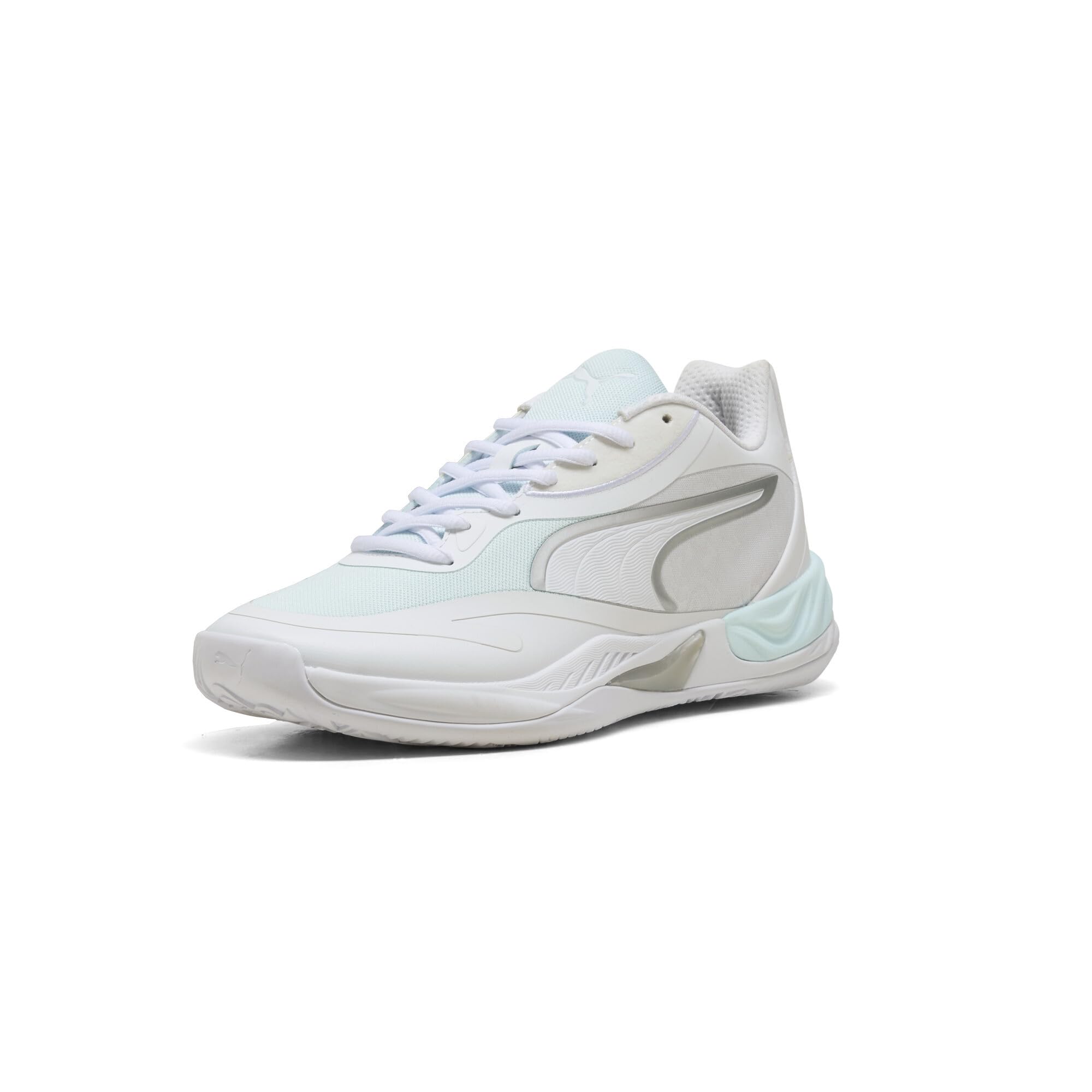
The All-Pro Nitro lands in the same corner of the price list as our top pick and makes a completely different case: softer underfoot, sharper looking, and cut for a narrower foot. Where the adidas asks you to break it in, this one is comfortable from the first session — no hot spots, no adjustment period, no thinking about your feet at all.
We rate the cushioning the best in this set for a long night of games. It is the shoe we reach for when we know we are playing three or four straight, because it takes the edge off landings without feeling vague or slow. The finish is the other surprise: it looks like a more expensive shoe than it is, and the colorways are strong without shouting.
The catch is width. The All-Pro is built close, and if you have a broad forefoot you want to go up a size — the standard fit is tight across the toes and the upper does not give much. On a narrow or average foot that same closeness is the whole point: it holds you through cuts without any slop. Try it if basketball shoes have always felt baggy on you; skip it if you need room across the front.
Pros
- Softest, most forgiving cushioning here
- Polished looks for the money
- Comfortable from the first session
Cons
- Narrow cut squeezes wide feet
We reach for this one when our feet are narrow: it is the most comfortable shoe here, and it looks sharper than anything else at its price.
Best for Quick Perimeter Play
Nike Precision 7
Key Features
- Fit: Runs small
- Sizing: Unisex adult
- Traction: Strong grip
- Price: Midrange
The size on the box is not the size you want. The Precision 7 runs small and narrow, and there is not much give in the upper, so most players should go a half size up from their usual basketball shoe. Get that wrong and it feels tight in exactly the places you push off from.
Get it right and this is the fastest-feeling shoe in the group. It sits low, the heel stays locked in place, and the grip on a clean floor is excellent — the kind of bite that lets you stop and change direction without a slide. We noticed the weight most in the second half of a session, when the heavier shoes here start to feel like work and this one does not. There is less to worry about long-term than with the premium picks, too; the build is simple and it has held together through regular play.
The trade is coverage. There is less around the ankle than on the mid-tops here, so if you have rolled one before or you play against bigger opponents, the adidas or the Under Armour gives you more shoe. For a guard, a smaller wing, or anyone who wants to feel the floor, that is a compromise worth making.
Pros
- Light, low, quick court feel
- Excellent grip on clean floors
- Heel stays locked in on cuts
Cons
- Runs small and narrow
The quickest, lightest shoe here, and the one we hand to guards — order a half size up and do not expect much ankle coverage.
Best for Court and Street
Under Armour Lockdown 7
Most basketball shoes come off at the door. This one does not have to. The Lockdown 7 has a leather upper that shrugs off scuffs and wet walks to the car, enough padding for a full day on your feet, and a look that passes at the grocery store — which is why it is the pair we suggest to anyone who wants one shoe for the gym and everything after.
The support is the part we appreciated most. The collar holds the ankle without the hard, brace-like stiffness of a serious mid-top, and the arch support does not dig in under a long session. Sizing is where it needs care: these run snug, and the leather does not stretch much, so if you are between sizes or have a wide forefoot, go up.
Then break them in properly. The leather is stiff out of the box, and a snug fit plus a stiff upper is exactly how blisters start; a doubleheader in a fresh pair is asking for trouble. Two or three short sessions and the upper softens around the ankle.
It is not the lightest or the fastest shoe on this page — the Precision 7 wins that argument — but it is the most versatile, and it takes a beating without looking beaten. For a rec player building one bag, that is the trade worth making.
Pros
- Works on court and off
- Ankle and arch support that does not dig in
- Leather upper wipes clean and takes abuse
Cons
- Runs snug, so size up
This is the one pair here we are happy to wear off the court too: supportive, easy to wipe clean, and comfortable all day.
Best for Gym and Blacktop
PEAK Lou Williams Streetball Master

Key Features
- Cut: High top
- Upper: Breathable fabric
- Traction: Strong grip
- Price: Midrange
PEAK built this one for outdoor courts: a breathable fabric upper rather than leather, a sole meant to survive abrasive surfaces, and a soft, forgiving feel that suits long streetball sessions. That is not the usual starting point for an indoor shoe, and it changes what you get.
Indoors, though, it earns its place. The grip is genuinely good on a clean floor — it holds where a lot of soles start to skate — and the upper breathes well enough that your feet stay cool through a long run of games. It is also one of the most comfortable shoes here straight out of the box, with none of the break-in the leather options ask for.
The upper is the risk. Seams and the toe box can give out within a month of hard, regular play, and the outdoor-first build is no protection against that indoors. If you are on court three or four times a week, treat this as a shoe you will replace rather than one you will keep. For a weekly game, or as a second pair you do not mind scuffing up, that is an easy trade.
Pros
- Grip holds on slick, dusty surfaces
- Light, breathable upper
- Comfortable straight out of the box
Cons
- Upper can tear within a month of hard play
We like it for blacktop and gyms both: light, grippy, comfortable out of the box — as long as you do not need the upper to last a full season.
Best for Style-First Players
Nike Jordan Max Aura 2

Key Features
- Fit: Slightly small
- Style: Modern retro
- Sizing: Men’s
- Price: Premium
This is the pair that gets comments. The Max Aura 2 walks the line between retro and modern better than anything else here — chunky enough to read as a basketball shoe, clean enough to wear with jeans — and the finish is a clear step above the budget picks.
It is comfortable, too. The fit suits most feet without much fuss, there is enough structure around the ankle for a normal night of pickup, and the cushioning underfoot is soft without feeling vague. Sizing runs a touch small for some players, so a half size up is the safer call if you are on the edge.
The sole is where this one can let you down. Separation and peeling at the edges can show up within the first month of light use, and on a premium-priced shoe that is the kind of thing that sours the whole purchase. We still like it for the player who wants the look and plays once or twice a week — just go in knowing the upper will probably outlast the bottom.
Pros
- Modern-retro looks that draw compliments
- Comfortable for hoops and daily wear
- Fit works for most feet
Cons
- Sole can peel within the first month
The best-looking shoe in this group, and the one we suggest if you play a couple of times a week and want a pair that works off the court too.
Best for Standout Colorways
361° Big3 4.5 Quick

Key Features
- Fit: Very narrow
- Upper: Breathable
- Colorway: Mismatched two-tone
- Price: Premium
The mismatched colorways are what people notice first, but the ride is what kept us interested: light underfoot, springy on takeoff, and a grip that bites a clean court. It is the most playful shoe on this page, and it does not feel like a novelty once the ball goes up.
Width is the problem. This is the narrowest shoe in the group, and the sizing runs small on top of it, so wide-footed players should look elsewhere before they start comparing size charts. Even average feet will probably want a half size up.
The sole is the other question mark. Edges can start to lift with nothing but court wear, and at a premium price that is a gamble rather than a quirk. It is a fun shoe for a player who wants something different and rotates through pairs; as your only pair, it is hard to justify.
Pros
- Mismatched colorways stand out
- Light, springy ride with strong grip
Cons
- Runs very narrow and small
- Sole edges can lift with court wear
We had the most fun in this one: light, springy, impossible to miss — but it is narrow, and the premium price buys looks rather than durability.
How We Tested the Best Indoor Basketball Shoes
We started with every indoor model we could find from brands with a track record on hardwood, then cut the list by the things that actually matter indoors: a rubber outsole meant for clean floors rather than asphalt, a heel counter that holds, cushioning that doesn’t mush out after a month, and a full size run with half sizes. Price was a tiebreaker, not a filter. That left 12 pairs, which we bought ourselves and handed to testers in sizes 8 through 14, from former high school guards to weekend pickup regulars.
Every pair got four months of real use: rec-league games, Tuesday-night pickup on a floor that gets swept about once a week, shooting drills, defensive slides, and the unglamorous walking to and from the car. We wiped some outsoles with a damp towel between runs and left others alone, just to see how quickly the rubber loaded up with dust.
Fit came first, because half sizes were all over the place. We tried each pair with the socks we’d actually wear, then a half size up and down, noting heel slip, toe pinch, and whether the toe box let our toes spread on hard stops. Support was judged by cutting off one foot for forty minutes and feeling whether the ankle wanted to roll inside the collar. Traction we checked by ear as much as by foot — a clean squeak on a clean floor, and whether the shoe still bit once dust built up.
At the end we flipped every pair over to read the wear on the lateral forefoot and outsole edges, looked for blown stitching and midsole separation, and pressed a thumb into the cushioning to see how much had died compared with a fresh pair. Then we asked the boring question: at its price, would we buy it again?
How to Choose Indoor Basketball Shoes
Indoor basketball is decided by two things — whether the outsole bites a clean floor and whether the shoe actually fits — and everything else is a distant third.
Traction before anything else
An indoor court is smooth and often dusty, which is close to the opposite of what an outdoor sole is built for. Softer rubber and finer tread patterns bite a clean floor; harder, deeper outdoor treads survive asphalt but give up some of that bite indoors. If you play almost exclusively in a gym, buy a shoe meant for it and keep a separate pair for blacktop.
The word to distrust on a listing is non-slip, because every basketball shoe claims it. Look instead at what the shoe was designed for and at the tread itself, then treat grip as the first thing you verify on court. A shoe that slides on a clean floor is the wrong shoe no matter how good it looks.
Fit and width before brand
Sizing across this group is not consistent: several pairs run a half size small, and a couple are noticeably narrow through the forefoot. Try shoes on late in the day, in the socks you play in, and leave about a thumb’s width between your longest toe and the end of the shoe.
Width matters more than length. A shoe that is long enough but pinches across the forefoot will hurt more than one that is slightly roomy. Broad feet should start with the adidas; narrow feet can use the All-Pro Nitro or the Precision 7, both of which want a size up.
Cushioning versus court feel
There is a real trade between feeling the floor and softening the landing. Low, firm setups feel quick and connected, which guards tend to prefer; softer setups absorb impact and suit heavier players or anyone whose knees complain the morning after.
Be honest about your body rather than your position on the depth chart. If you play three nights a week on a hard floor, cushioning earns its keep. If you are a lighter player who lives on quick cuts, a close ride is worth more than a plush one.
What a mid-top actually does
A higher collar adds coverage and a little resistance to rolling, but it does less work than the base of the shoe. A stable platform, a heel that does not slide, and a fit that holds the midfoot are what keep you upright. If you have had ankle trouble, a mid-top plus a proper fit beats a high collar on its own.
How often you play decides how much shoe you need
Uppers and outsole edges fail first, and indoor-only wear stretches their life a long way compared with blacktop. At one session a week, a cheaper shoe makes sense. At three or four, pay for the build and consider rotating two pairs so neither one wears out mid-season.
Frequently Asked Questions
Can I play basketball in running shoes?
Not for long. Running shoes are built on a narrow base with no real lateral support, and basketball is a sideways sport. Rolling an ankle in a running shoe is a common way to lose a season.
If you are only shooting around, fine. Once there is defensive sliding involved, put a basketball shoe on.
Why do I keep sliding on a clean court?
Usually dust or a worn outsole, not the floor. Wipe the tread with a damp hand or towel between games, and check the forefoot: if the pattern there is smooth, the shoe is the problem.
If the tread is still sharp, the court needs a sweep more than you need new shoes.
Do basketball shoes need breaking in?
Leather and stiff uppers do. Two or three short sessions is usually enough, and the Under Armour Lockdown 7 is the clearest example in this group. Knit and synthetic uppers need far less.
If a shoe hurts in the first twenty minutes, that is a fit problem rather than a break-in one, and swapping sizes is the fix.
Is it worth spending more on indoor basketball shoes?
Not for grip. The things that decide whether a shoe works indoors, a biting outsole and a fit that does not cramp you, turn up at every price in this group.
More money buys cushioning, materials, and looks. Pay up for those if you want them, but do not pay up expecting better traction.
Final Verdict
The adidas Own The Game 3.0 is the pair we recommend to most indoor players: it fits more feet than anything else here, holds a clean floor, and stays stable through a full night of games. If your feet are narrow and you want a softer ride, the PUMA All-Pro Nitro is the better buy; if you want the lightest, quickest shoe on the page, order the Precision 7 a half size up.
Start with fit. A shoe that pinches will still pinch after every other problem is solved.