
This post contains affiliate links. We may earn a small commission when you buy through our links — at no extra cost to you.
I played one pickup game last winter in running shoes and spent the next three days explaining my bruised toenails to people who didn’t ask. Basketball shoes exist because running shoes are built to go forward, and basketball is nothing but hard stops, cuts, and landings on the balls of your feet. A good pair bites into a dusty gym floor, cushions the landing, and keeps your foot from rolling over the edge of the sole when you change direction. Get that wrong and your knees file a complaint by the second quarter.
Sizing is the trap nobody warns you about: I’ve worn a 10 in one pair and a 10.5 in another from the same wall, so measure your foot rather than trusting the number. My team and I have played in 14 pairs over six months, three sessions a week on hardwood plus outdoor runs, and we judged comfort, support, traction, and whether they still looked decent after a month.


Best for Outdoor Court Play
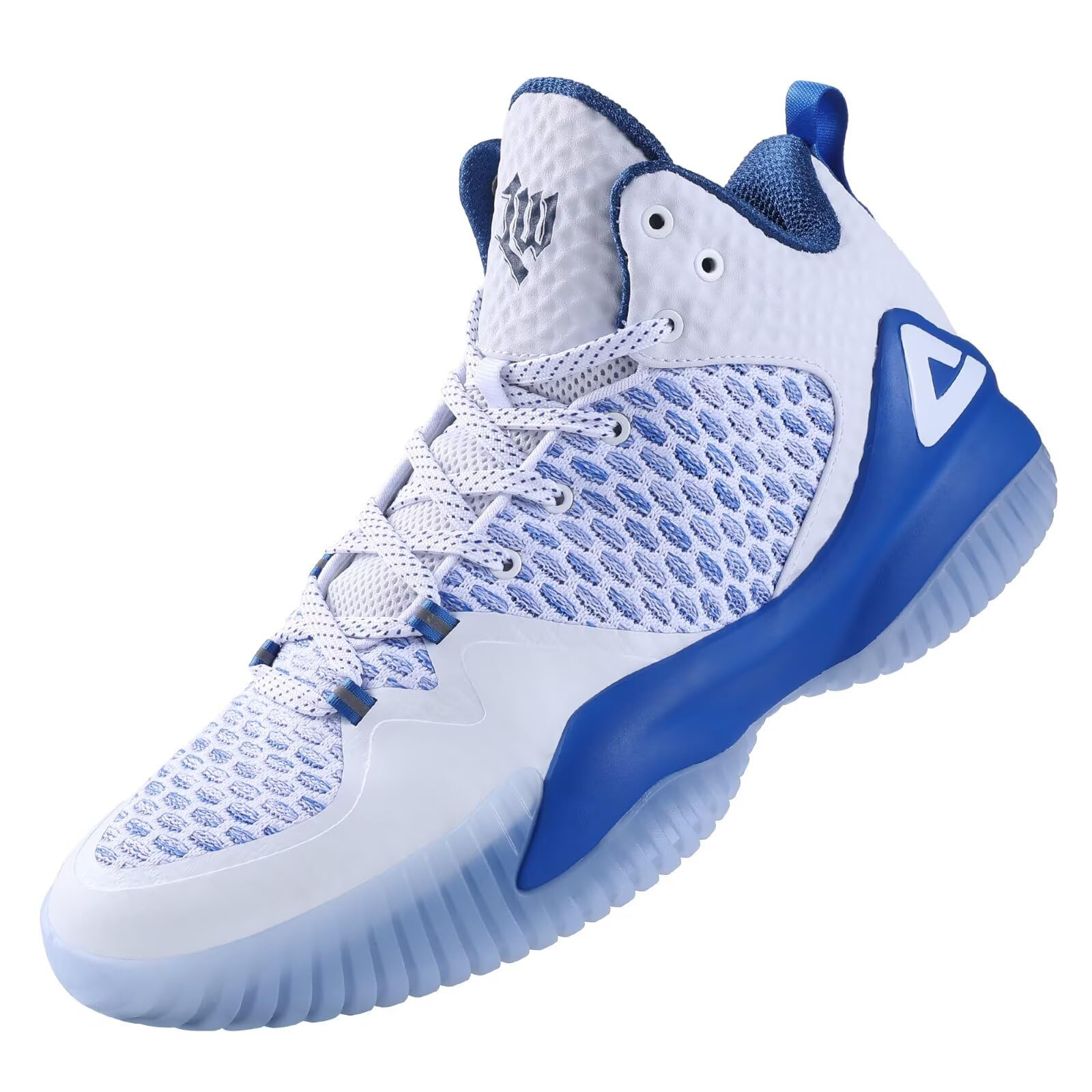
PEAK Streetball Master
Traction is the first thing to go on a budget basketball shoe, and it’s the first thing we look at. The Streetball Master’s outsole is the most convincing in this group: it bites on a clean indoor floor, holds on the dusty ones, and doesn’t skate when you stop hard. That, more than the price, is why it leads this guide over better-known names that cost more.
The high cut earns its keep too. The collar sits above the ankle bone and the lacing pulls the midfoot in without strangling it, so you can crank it down for a game and loosen it for a shootaround, and the laces stay put instead of loosening mid-run. The upper is fabric rather than leather, which we prefer for warm gyms: it breathes and keeps the shoe light enough to wear all session. Cushioning is soft without going mushy underfoot.
Fit is the one thing we can’t call for you. This shoe runs large on some feet and narrow on others, which is a sizing-consistency problem rather than a simple order-up rule. Measure your foot against the size chart instead of trusting your usual number, and buy somewhere with easy returns so a bad pair costs you a shipping label rather than a season.
What keeps it on top is what it does for the money. This is a real court shoe, grippy and supported and built for streetball, where several cheaper options in the category are lifestyle sneakers with a basketball silhouette. If you play outdoors more than indoors, it’s the pair we reach for.
Pros
- Court grip that holds on dusty floors
- High cut with real ankle stability
- Light, breathable upper for warm gyms
- Costs less than the big-name picks here
Cons
- Upper can tear under hard outdoor use
We put the Streetball Master first because the grip is the best-supported in this group, the high cut steadies the ankle, and it costs less than the big-name shoes here.
Best for Tight Budgets
Under Armour Lockdown 6
Key Features
- Shoe type: Basketball
- Department: Men’s
- Model number: 3025616
- Price: Budget
This is the cheapest shoe in the guide, and nothing about wearing it announces that. Cushioning is soft enough for a full practice, the forefoot has genuine room in it, and the shoe laces up ready to play rather than stiff and unforgiving. For a rec-league player who needs one pair to cover a season, that’s a lot of shoe for the least money here.
Fit is where it surprised us. Budget basketball shoes usually pinch across the toes, and the Lockdown 6 doesn’t; the toe box is wide enough that a broad forefoot can play without the pins-and-needles feeling that shows up twenty minutes in. It’s also comfortable enough to wear from a game straight into a work shift, which is not something we expected from the least expensive pair on the page.
The compromise is underfoot. Arch support is thin as delivered, so flat-footed players should fit an aftermarket insole before the first game, a small fix that turns a budget shoe into a supportive one. Everything else about the ride is comfortable, which is why we keep recommending it to players who would rather spend the difference on league fees.
Pros
- Lowest price in this group
- Roomy toe box at a budget price
- Cushioning comfortable enough for all-day wear
Cons
- Midsole can crack under daily wear
The cheapest pair here and the one we point budget-minded players to: a wide toe box, soft cushioning, and enough comfort for a full practice or a work shift.
Best for Wide Feet
adidas Own The Game 3.0
Key Features
- Model number: 34DC094-OFW
- Package size: 12 x 6 x 5 in
- Package weight: 2.43 lb
Most shoes in this guide fit somebody. This one fits the feet the others squeeze. The Own The Game 3.0 has the roomiest forefoot in the group, enough width that wide feet and toes that need space can play without the ache that turns up halfway through a game.
What we didn’t expect at this price is how well the rest holds together. The mid-top collar steadies you side to side without the locked-in feel of a full high top, so you can move laterally without fighting the shoe. The materials are stiff out of the box, which is the price of that structure, and a week of shooting around softens them into shape.
It crosses over, too. The outsole grips an indoor floor well enough for racquetball and pickleball, and it doesn’t fight you when you change direction. Narrow-footed players should look elsewhere in this guide, because the volume that makes it generous for everyone else will feel sloppy on a slim foot.
Pros
- Roomy forefoot for wide feet
- Mid-top stability without a locked-in feel
- Grip that works on indoor courts
Cons
- Upper feels stiff until broken in
If most shoes pinch your forefoot, this is where we start: the toe box is the roomiest in this group, and the mid-top holds you without feeling locked in.
Best for Fast, Light Play
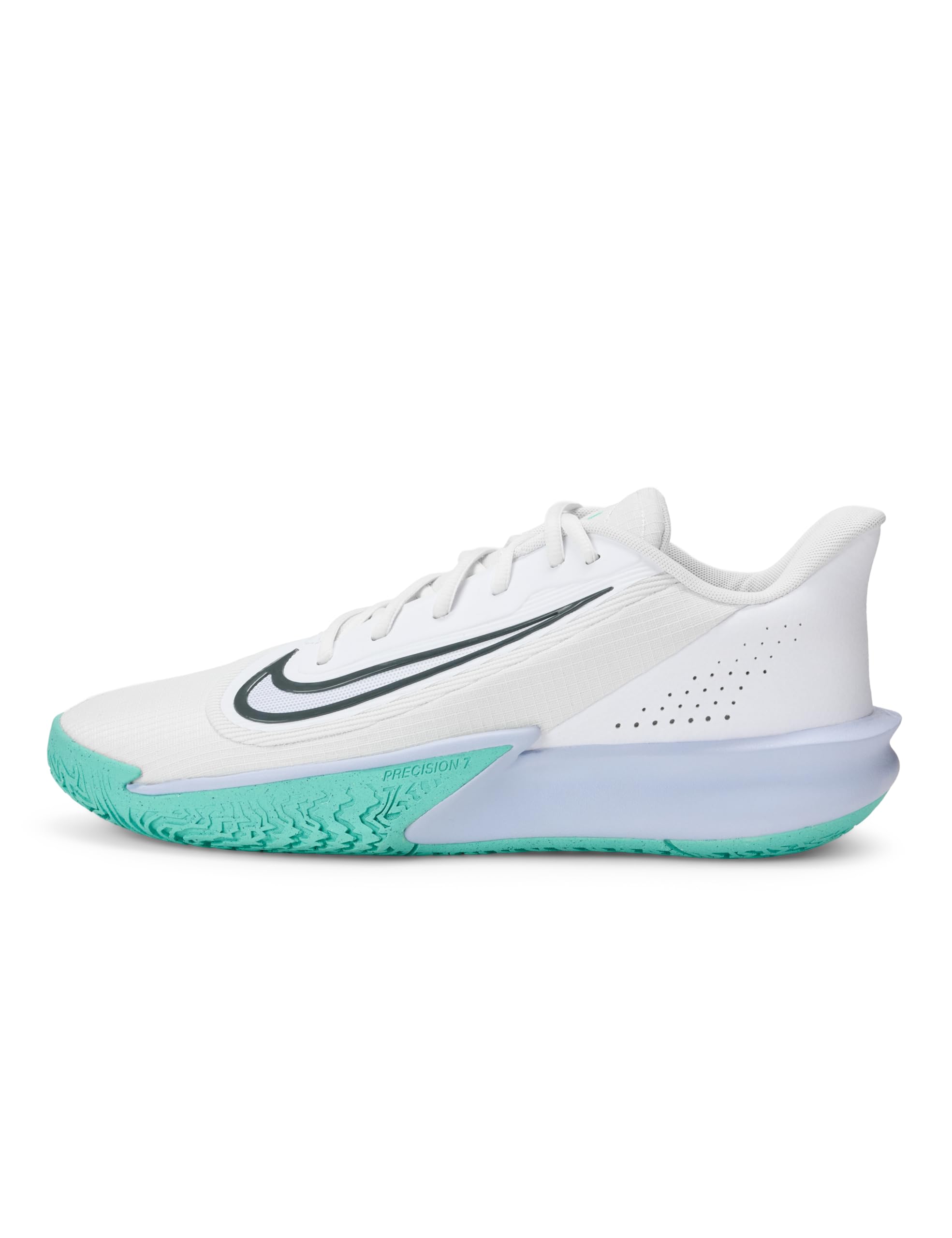
Nike Precision 7
Key Features
- Model: Precision 7
- Sizing: Unisex adult
- Shoe type: Basketball
- Price: Midrange
Some shoes you notice with every step. This one disappears. The Precision 7 feels like the lightest shoe in this group, and for a player who cuts and stops a lot, that matters more than another slab of foam. You get to your spot a beat earlier, and your legs are fresher late in the game.
It isn’t stripped down, either. Cushioning is soft enough that a full game doesn’t leave your heels sore, the heel sits locked down so your foot doesn’t slide forward when you brake, and the outsole holds a hard cut instead of letting it slip. We were impressed by how little it gives up at this weight, and it doesn’t feel flimsy the way light shoes sometimes do.
The catch is the last. This shoe runs narrow and a little short, so half a size up is the safer order for most feet, and wide-footed players should start elsewhere in this guide. Buy from a seller with easy returns and try them indoors first; the fit is the only real question mark.
Pros
- Light enough to forget you’re wearing it
- Grip that holds a hard cut
- Heel stays locked down on stops
Cons
- Runs narrow, so size up for most feet
Light enough to forget you’re wearing it and stable enough to cut in — we found it the quickest-feeling shoe here, as long as you size up for the narrow fit.
Best for Court and Casual Wear
Jordan Max Aura 2

Key Features
- Model number: CK6636
- Package size: 14 x 9 x 5 in
- Package weight: 3 lb
- Price: Premium
It’s the most expensive shoe in this guide, and the one whose long-term record we trust least. Jordan’s Max Aura 2 has the best finish of the group and a retro-modern shape that draws comments, but the sole is the weak point: separation at the toe can start within the first month of regular court use.
What it does well is the part you notice every time you lace up. The fit lands well for most feet, the cushioning under the forefoot is genuinely soft, and the styling works with jeans as easily as with shorts, which is more than we can say for most of the performance shoes here. It’s a shoe you’ll wear off the court, and that’s the argument for owning it.
Buy it as one of two pairs rather than the only pair you own. That way the looks earn their keep on and off the court while the sole gets a rest between sessions, and you’re not asking it to survive a full season of practice on its own. If you want one pair to do everything until it dies, a cheaper pick here is the better bet.
Pros
- Styling that works on and off the court
- Soft forefoot cushioning
- Fit lands well for most feet
Cons
- Sole can peel at the toe with regular use
Buy it for the look and the soft ride, not as your only court shoe — the styling is the reason to pick it, and the sole is the reason to rest it between sessions.
How We Tested 14 Pairs of Basketball Shoes
We started by pulling every current model across the price tiers most people shop, then cut the list using spec sheets — cushioning setup, outsole rubber, whether the shoe came in wide sizes — and by checking what actually stayed in stock. That left 14 pairs. We dropped anything we couldn’t get in multiple sizes, since a shoe that only fits one kind of foot isn’t much use to a shopper.
Over six months, each pair got at least two full sessions before we passed judgment, because a shoe that feels tight out of the box often loosens by the second hour. On the court we ran the same drills in every pair: defensive slides, jab steps, and one-legged landings, first on a freshly swept floor and then on a dusty one. We noted whether the outsole squeaked and grabbed or skated, how much grit it picked up, and whether a palm wipe was enough to bring the grip back.
For fit, we pulled the insoles and compared them against a Brannock device, then checked the stated size against the actual internal length — that’s where our half-size notes come from, along with which pairs ran narrow. We watched whether the foot slid sideways over the footbed during hard cuts, and asked each tester how their feet felt the next morning. Durability came from blacktop: wear at the pivot point, frayed toe stitching, creased midsoles. We also wore every pair to the gym and the grocery store afterward, because looks and value matter when one shoe has to do both.
How to Choose Basketball Shoes
A basketball shoe earns its price on two things: grip on the floor you actually play on, and a fit that doesn’t punish you after twenty minutes. Everything else is preference.
Match the outsole to the floor you actually play on
Indoor courts are usually clean, and soft, tacky rubber grabs them beautifully. That same rubber wears smooth quickly on asphalt, which is why outdoor shoes use harder, thicker compounds. If most of your games happen outside, buy a shoe built for streetball and accept that the outsole will be the part that retires first.
The trap is buying for the wrong surface. A dusty, rarely swept gym can make a soft indoor sole feel like ice, so the outdoor-oriented picks here are not automatically the worse choice for a rec center with a dirty floor. Count where you actually play most weeks before you fall for a tread pattern.
Fit first: length and width are separate problems
A shoe can be the right length and the wrong width, and that’s where most of the disappointment in this category starts. Wide forefeet need room ahead of the toes, not a longer shoe; sizing up to fix width usually just hands you a heel that slips. Narrow feet have the opposite problem, because excess volume feels sloppy when you cut.
Treat every model as its own sizing system. Your size in one shoe does not transfer to another, even inside the same brand, which is why we read fit as a per-model question. Measure your foot late in the day, leave a thumb’s width in front of the longest toe, and start with the model that already fits feet shaped like yours.
What a high top actually does for your ankle
A high collar limits how far the ankle can travel sideways, and it gives the lacing more room to lock the midfoot down. It is not a brace and it doesn’t make a weak ankle strong. If you’ve rolled one recently, treat the collar as a supplement to strengthening and bracing rather than the plan itself.
Mid-tops split the difference: enough collar for lateral stability, enough freedom that you don’t feel strapped in. For most rec players that’s the sensible middle. Buy a high top if you want the collar clearly above the ankle bone; otherwise the mid-cut options here are easier to live in for a full game.
Cushioning, break-in and what wears out first
Soft foam feels wonderful on day one and compresses as the weeks pass; firmer setups feel boardy at first and hold their shape longer. Neither is wrong, so match it to how often you play. Stiff uppers are a temporary problem instead: a week of shooting around usually softens them, and a shoe that still pinches after two weeks is simply the wrong shape.
On a budget pair, the insole is often the first thing to give up. If you need arch support, fit an aftermarket insole at the start rather than after the original flattens out; it costs less than replacing the shoe and it fixes the most common comfort complaint in this category.
Where the extra money goes
Below the middle of this group you’re buying function: grip, cushioning, a toe box with room in it. Above it, more of the money goes into finish, styling and branding than into longevity, and the priciest shoe here is also the one with the shakiest record on sole separation. Pay more for looks if looks matter to you, but don’t expect the sole to last longer because the shoe cost more.
Frequently Asked Questions
Can I wear basketball shoes for running?
Not for distance. Basketball shoes are built for lateral stops and hard landings, with a wider, flatter base and more weight than a running shoe, so a few miles will feel clunky. Wear them for the gym floor, lifting and walking, and keep a running shoe for actual runs.
How do I break in new basketball shoes without blisters?
Wear them around the house for a few hours in the socks you play in, then do one light shootaround before a real game. Lace them loose across the instep and firm at the top for that first session. If the heel rubs, re-lace with a heel-lock pattern, which pulls the collar against the ankle instead of letting it slide up and down.
How do I keep the grip on a dusty court?
Wipe the outsoles with a damp towel between games. Dust fills the tread and turns a good sole into a skating rink, and a slightly damp sole bites better than a dry one on a dirty floor. If the rubber has glazed over and gone shiny, a light scuff with sandpaper opens the surface again.
Final Verdict
Buy the PEAK Streetball Master if you play outdoors or on floors nobody sweeps: it has the surest grip in this group, a high cut that steadies your ankle, and a price below the big-name picks. If the budget is the hard limit, the Lockdown 6 is the pair we point people to, with a wide toe box and soft cushioning for the least money here.
And if every shoe pinches across your forefoot, start with the Own The Game 3.0. It’s the one pick here that solves width first and everything else second.