This post contains affiliate links. We may earn a small commission when you buy through our links — at no extra cost to you.
Every jump, cut, and landing sends force through your feet. Most insoles claim shock absorption, but basketball demands lateral stability and a heel cup that won’t shift during a crossover. The wrong pair leaves you either sore or fighting for traction inside your shoe.
Here the key split: running insoles are built for forward motion; basketball insoles need to handle multi-directional impact and keep your foot planted during hard stops. That difference shows up in arch rigidity, heel depth, and how cushioning holds up under 200+ pound loads game after game.
This guide focuses on the half-dozen insoles that balance real impact protection with the fit and support that actually work on hardwood. No carbon-fiber hype or cheap multi-packs that bottom out in a month.



Best for Serious Basketball Players
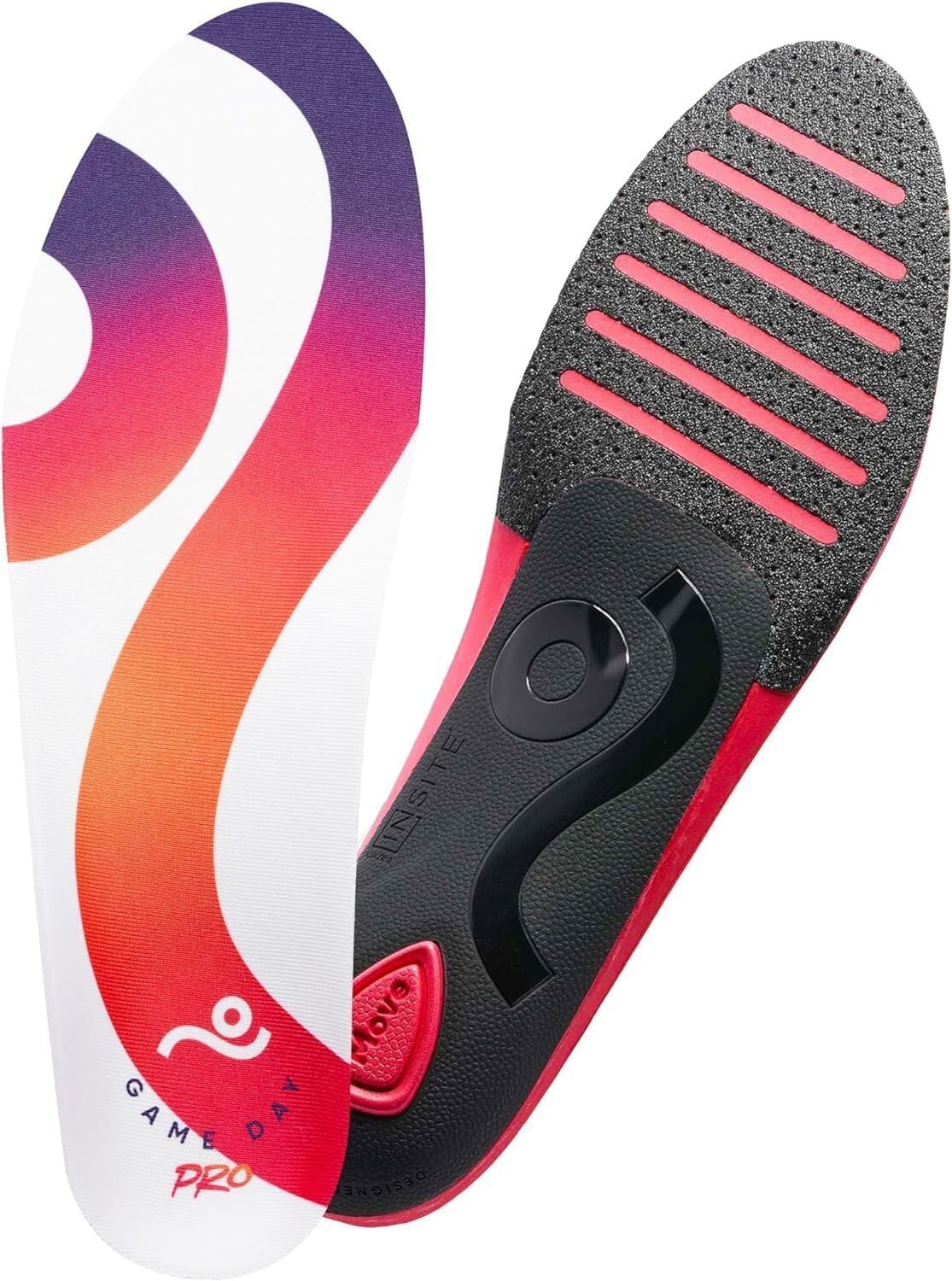
Move Game Day
Key Features
- Durability: Top fabric may peel months
- Arch Support: High, patented rigid arch
- Fit Compatibility: Basketball-specific, no trim needed
- Impact Protection: Active Heel Technology, molded forefoot
- Price: Premium
Move Game Day delivers basketball-specific arch support and impact protection that outperforms general-purpose insoles on the court. Co-founded by Damian Lillard, the design uses patented high arch support and Active Heel Technology to absorb shock during jumps and lateral cuts. The composite heel and reactive stability system transfer energy efficiently, reducing fatigue during extended play.
Designed for serious basketball players and athletes with high arches, this insole trades longevity for targeted performance. The thick profile provides necessary support but may feel tight in low-volume shoes. The fabric top cover can separate after months of heavy use — an expected tradeoff for court-focused cushioning.
The no-trim design fits standard medium to medium-high volume athletic shoes well. For low-profile basketball models, removing the stock insole is recommended to maintain toe room.
Pros
- Targeted arch support relieves pressure for high-arched players during cuts and jumps
- Cushioning absorbs impact on hard courts without sacrificing lateral stability
- Quality construction with no trimming needed for most sizes
Cons
- Thick profile can cause tightness in low-volume shoe styles
- Fabric top cover may peel after months of regular use
The highest-rated basketball insole (4.6) with a no-trim fit and patented arch support — built for court performance, not multi-sport versatility.
Best for Multi-Sport Athletes
Sof Sole Athlete
Key Features
- Durability: Foam may compress with heavy use
- Arch Support: Medium neutral arch
- Fit Compatibility: Most athletic shoes, neutral width
- Impact Protection: PU foam + gel heel and forefoot
- Price: Mid-Range
Where the Game Day zeroes in on basketball-specific arch support, the Sof Sole Athlete takes a broader route with PU foam and gel pads that absorb shock across any sport. The medium neutral arch fits most foot shapes, and the moisture-wicking top layer keeps feet dry during intense play.
This insole is best for multi-sport athletes who want one pair for everything — casual basketball, gym sessions, and daily runs. Under heavy, frequent use the foam can compress faster than expected, so a replacement may be needed every few months.
Pros
- Heel-to-toe gel and foam pads deliver solid impact absorption on hard courts.
- Medium neutral arch suits a wide range of foot shapes without being too aggressive.
- Moisture-wicking cover helps keep feet dry during sweaty play.
Cons
- Foam compression can occur with very heavy, frequent use — expect shorter lifespan than some alternatives.
The Sof Sole Athlete offers neutral arch support and multi-sport cushioning that works across basketball, running, and gym — a solid all-rounder if you don’t need court-specific features.
Best for Casual Basketball Players
Dr. Scholl’s Sport Insoles
Key Features
- Durability: Basic foam; replace 6-12 months
- Arch Support: Medium-high rigid arch
- Fit Compatibility: 1/4 in height increase, trim to fit
- Impact Protection: Gel heel and forefoot pads
- Price: Budget
Dr. Scholl’s Sport Insoles bring decades of brand recognition and gel heel/forefoot pads at a budget-friendly price. The medium-high arch support and 1/4-inch lift work well for casual pickup games and walking, though arch placement may not align perfectly with every foot shape. These insoles suit budget-conscious shoppers who want basic shock absorption, but they lack the targeted support and impact protection needed for intense basketball or high-impact jumping.
Pros
- Gel heel and forefoot pads protect heels during jumps and runs.
- Can provide noticeable pain relief during activity for many users.
- Affordable price with effective cushioning for the cost.
Cons
- Arch support may feel off for those with non-standard foot shapes.
- Shock absorption may be insufficient for high-impact jumping – better suited for low-impact activities.
A budget-friendly classic with gel cushioning and broad appeal, ideal for casual play but not for intense basketball.
Best for Flat Feet or Plantar Fasciitis
TANSTC Pro Sport
Key Features
- Durability: Firm, lasts longer than budget foam
- Arch Support: Golden Triangle ergonomic rigid arch
- Fit Compatibility: Deep U-shaped heel cup, trim to fit
- Impact Protection: Double PORON layers in heel/forefoot
- Price: Budget
The TANSTC Pro Sport delivers orthotic-level arch support and shock absorption at a budget-friendly price, making it a strong alternative for players with flat feet or plantar fasciitis who don’t need the basketball-specific tailoring of the top pick. This insole suits budget-conscious athletes seeking structured support and impact damping for casual basketball. The double PORON layers and deep heel cup provide stability during lateral movements. However, the firm feel requires a break-in period and will not satisfy those who prefer plush cushioning underfoot.
Pros
- Foam cushioning absorbs impact without feeling mushy.
- Ergonomic arch support holds the foot in neutral alignment.
- Construction holds up well under repeated use.
Cons
- Firm feel can feel stiff during initial wear, especially for those accustomed to soft insoles.
Orthotic-level arch support and shock absorption at a budget price, best for flat feet and plantar fasciitis relief in casual basketball.
Best for Competitive Athletes
Move Game Day Pro
Key Features
- Durability: Forefoot may bottom out in 3 months
- Arch Support: High rigid arch
- Fit Compatibility: Basketball shoe volume, trim to fit
- Impact Protection: Active Heel Tech + X-Frame torsional
- Price: Premium
The Move Game Day Pro adds Active Heel Technology and an X-Frame for torsional support, making it the more aggressive option for court athletes who want maximum shock absorption. However, the forefoot cushioning can compress within three months under heavy use, so this premium insole suits players who treat insoles as consumable gear rather than long-term investments.
Pros
- Substantial impact absorption for repetitive jumping and sprinting
- High rigid arch delivers lateral stability during quick cuts and changes of direction
- Noticeable reduction in foot fatigue during high-impact sports
Cons
- Forefoot cushioning may degrade within a few months for frequent players
- Premium price is a larger upfront cost given the shorter replacement cycle
A premium upgrade for competitive athletes seeking extra shock absorption and lateral stability, but expect to replace them more often than the standard Game Day.
Best for High-Arch Active Users
Dr. Scholl’s Run Active
Key Features
- Durability: Moderate; arch can feel aggressive
- Arch Support: Medium-high firm arch
- Fit Compatibility: May be too wide or big for narrow shoes
- Impact Protection: Gel + foam in heel and forefoot
- Price: Budget
The Dr. Scholl’s Run Active uses gel and foam layers in the heel and forefoot to absorb impact during forward motion, making it a budget-friendly option for runners. Basketball players with high arches may find the firm arch support holds up well on court, but the arch is designed for a running stride and can feel too aggressive for those with neutral or low arches. The insole also runs wide, so sneakers with a narrower fit may require careful trimming or not accommodate the larger footbed.
Pros
- Gel and foam cushioning absorbs impact at heel and forefoot.
- Budget-friendly price for the level of cushioning and support.
- Durable construction holds up to regular running sessions.
Cons
- Firm arch support can cause discomfort for runners with neutral or low arches.
- Wide footbed may fit poorly in narrow athletic shoes.
A running-oriented insole with gel cushioning in heel and forefoot — a possible fit for basketball players with high arches who prioritize forward-motion impact absorption.
Best for Plush Gel Feel, Narrow Feet
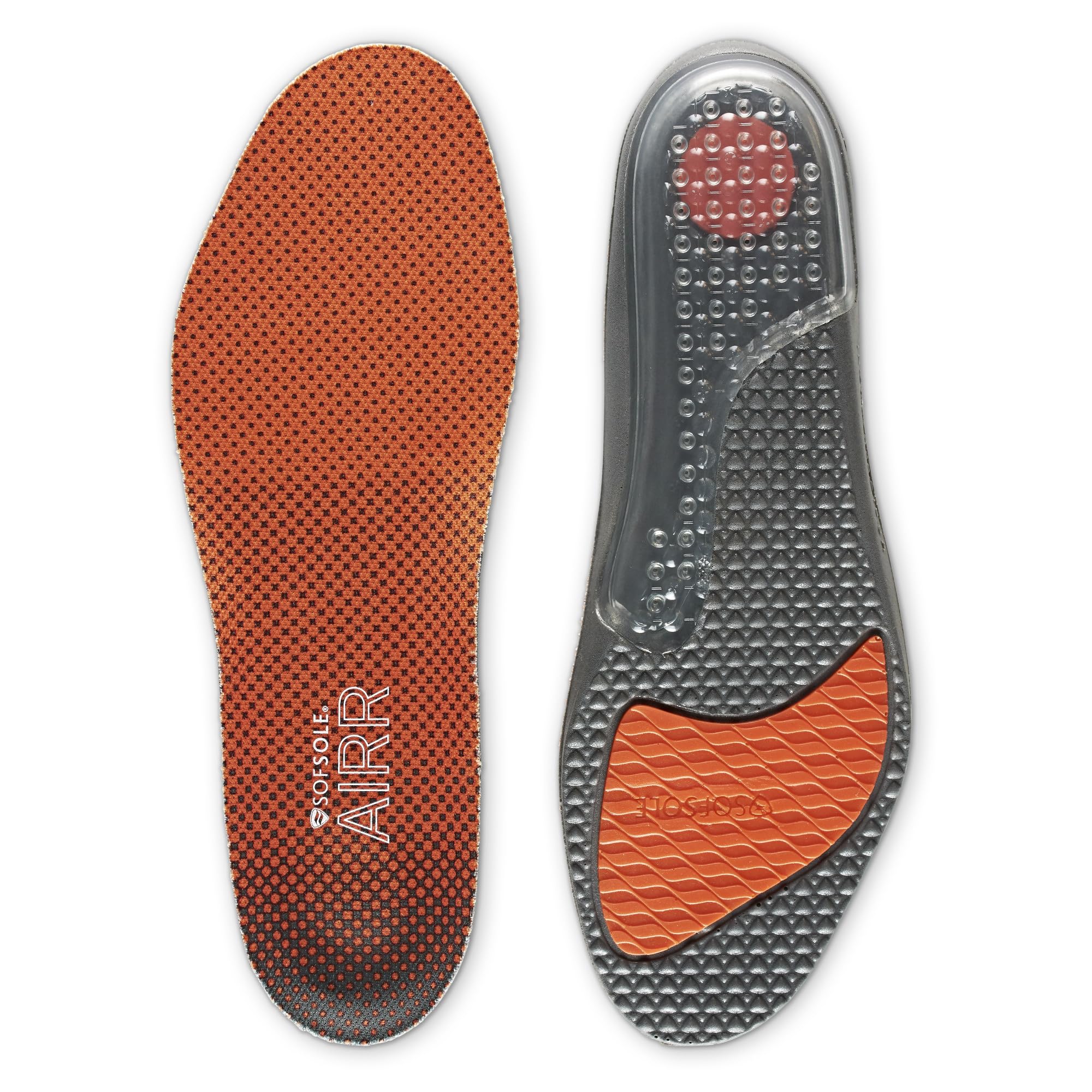
Sof Sole AIRR Gel
Key Features
- Durability: Gel may degrade in months
- Arch Support: Medium neutral arch
- Fit Compatibility: Narrow to medium feet only
- Impact Protection: Skydex air bubbles + gel forefoot
- Price: Mid-Range
The Sof Sole AIRR Gel uses Skydex air bubbles in the heel and gel in the forefoot for a plush, shock-absorbing feel that runners with narrow to medium feet will appreciate. However, the narrow fit and gel pads that can degrade quickly under heavy impact make it a poor fit for basketball players who need lateral support and long-term durability.
Pros
- Plush Skydex and gel cushioning absorbs impact well for a soft ride
- COOLMAX fabric helps keep feet dry during runs and walks
Cons
- Narrow toe area may not accommodate wider feet or basketball shoe shapes
Skydex air bubbles plus gel forefoot for maximum softness, best suited for narrow-footed runners, not basketball players needing lateral support.
Best for Short-Term Backup Only
EASYFEET Flame Boost

Key Features
- Durability: Plastic parts break in weeks
- Arch Support: Medium-low flexible arch
- Impact Protection: Forefoot/heel shock pads
- Price: Mid-Range
The Flame Boost delivers noticeable arch support and shock absorption right away, making it a comfortable choice for occasional wear. However, the plastic support components can degrade within weeks, limiting its lifespan to short-term use only.
Pros
- Comfortable cushioning that provides immediate relief
- Effective arch support for medium-low arches
Cons
- Plastic support components can become unreliable after a few weeks
Good comfort and arch support in the first few weeks, but plastic parts can give out quickly – best as a short-term backup.
Best for Casual Walking, Low Impact
XINIFOOT Honeycomb 3pk

Key Features
- Durability: Crumbles quickly
- Arch Support: Minimal
- Impact Protection: HI-POLY buffer + EVA base
- Price: Budget
Three pairs of honeycomb insoles at a budget-friendly price deliver decent comfort for low-impact walking. The honeycomb design offers some breathability, but the overall support is minimal – cushioning is thin and firm, and the center layer can break down under regular use. This makes them a casual-only choice, not a fit for basketball or high-impact sports.
Pros
- Three pairs for a low price – solid value for everyday walking shoes.
- Breathable honeycomb foam feels comfortable for low-impact walking and casual wear.
Cons
- Cushioning is thin and firm, limiting shock absorption for high-impact activities like basketball.
Three pairs of honeycomb insoles for the price of one – suitable only for casual walking, not athletic use.
Best for Casual Shoes Only
UISUI Memory Foam

Key Features
- Durability: Disintegrates quickly
- Arch Support: Minimal
- Fit Compatibility: Too thick for low sneakers
- Impact Protection: Memory foam + gel heel pad
- Price: Budget
The UISUI Memory Foam delivers plush cushioning at a budget price, ideal for casual walking and standing. However, its 10mm thickness takes up too much space in low-cut athletic shoes, and the foam can compress quickly under impact. This insole suits everyday loafers or work boots but isn’t designed for basketball or high-impact sports.
Pros
- Plush foam cushioning relieves tired feet during long standing or walking.
- Budget-friendly price for a pair of comfortable insoles.
Cons
- Thick 10mm profile may crowd low-cut sneakers or athletic shoes.
Ultra-affordable memory foam comfort for tired feet — not for athletic use.
Best for Neutral Arch Users
CRUVHEAL Sport

Key Features
- Durability: Moderate
- Arch Support: Medium neutral arch
- Fit Compatibility: Deep heel cup, trim to fit
- Impact Protection: Gel pads at heel and forefoot
- Price: Mid-Range
Gel cushioning at the heel and forefoot paired with a deep, non-slip heel cup provides solid impact absorption for basketball and high-impact sports. However, foot pain relief is inconsistent — some users may see no improvement or even increased discomfort. This makes the insoles a reasonable fit only for those with neutral arches who don’t depend on pain reduction from their insoles.
Pros
- Gel pads at heel and forefoot absorb shock during jumps and cuts
- Deep heel cup keeps foot stable inside the shoe
Cons
- Some users may not experience foot pain improvement; results vary
Gel pads at heel and forefoot with deep heel cup offer decent mid-range cushioning for neutral arch athletes.
Best for Narrow Feet, Budget
XINIFOOT Breathable 3pk

Key Features
- Durability: Moderate for light use
- Arch Support: Minimal
- Fit Compatibility: Runs small and narrow
- Impact Protection: Soft elastic foam
- Price: Budget
These insoles offer breathable honeycomb foam cushioning at a low cost per pair, making them a budget-friendly option for adding comfort to athletic shoes. However, the fit runs small and narrow, so checking measurements is essential to avoid disappointment.
Pros
- Soft foam cushioning helps absorb impact during hard landings.
- Three pairs for the price of one – easy to rotate or replace.
Cons
- Can run small and narrow; verify sizing before buying.
Breathable honeycomb foam at a low cost per pair, but only if the narrow sizing fits.
Best for Carbon Fiber Seekers
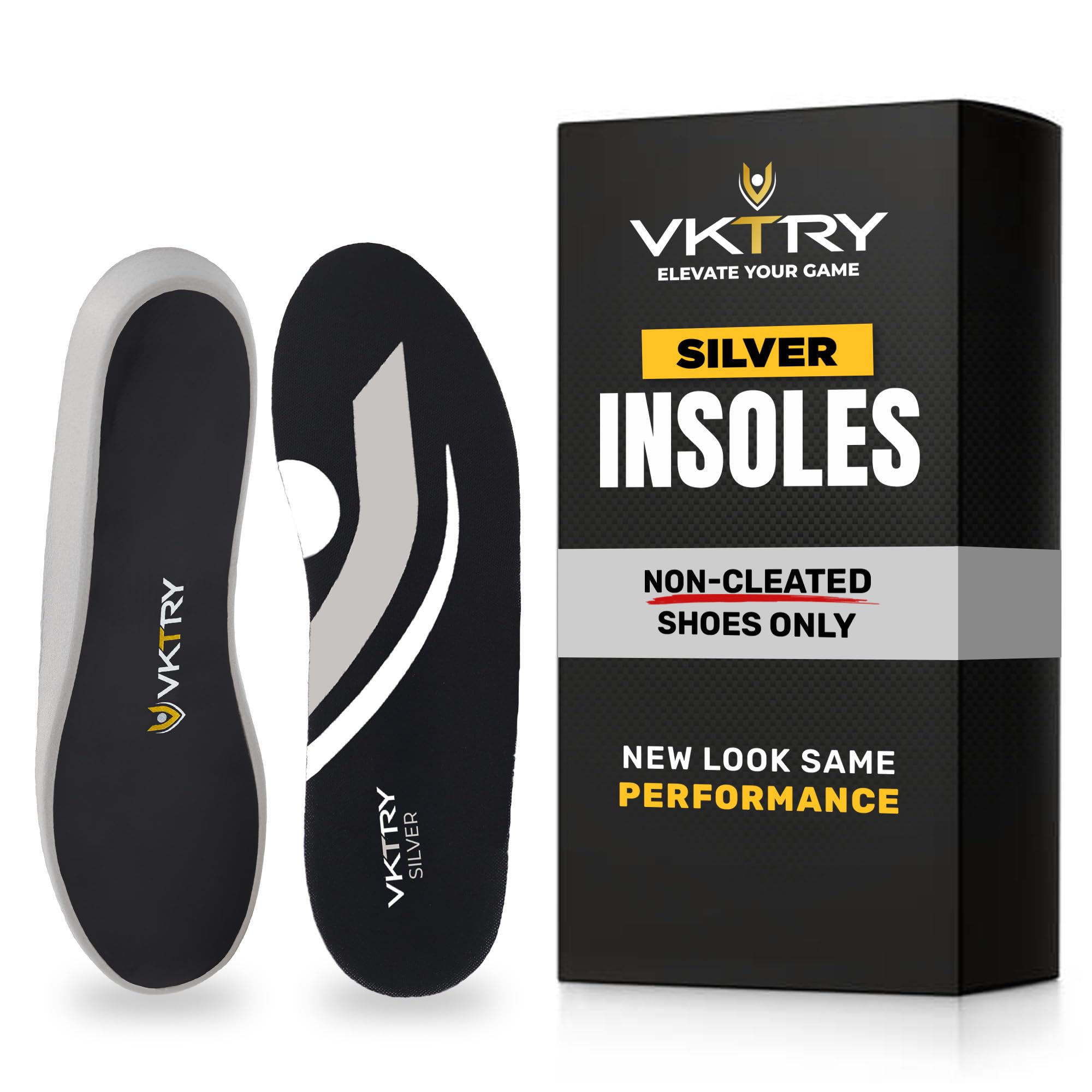
VKTRY Silver Carbon
Key Features
- Durability: Sole wears at toe quickly
- Arch Support: Structured ergonomic arch
- Fit Compatibility: Narrow feet only
- Impact Protection: Multilayer carbon fiber composite
- Price: Premium
The VKTRY Silver uses a multilayer carbon fiber composite to deliver noticeable energy return and lightweight support during explosive movements. However, the very firm construction can feel hard underfoot for longer play, the narrow fit limits shoe compatibility, and the toe area may show premature wear. This makes it a niche option for athletes who specifically want carbon fiber benefits and can tolerate the tradeoffs in comfort and longevity.
Pros
- Structured arch support provides stable footing during cuts and jumps.
- Slim profile fits snugly in narrow athletic shoes.
Cons
- Firm carbon fiber may feel too hard for extended court sessions.
Entry-level carbon fiber insoles for athletes seeking maximum energy return, but comfort and durability take a back seat.
How to Choose Shock Absorbing Insoles for Basketball
The real difference between a good basketball insole and a mediocre one is how it handles the three things that happen on every play: landing, cutting, and pushing off.
Impact Protection
Heel and forefoot cushioning technology matters most for landing after jumps and hard stops. Gel pads absorb shock well initially but can displace under lateral load. PU foam holds shape longer but feels firmer. Carbon fiber plates offer high energy return but little give—firmness that many players find uncomfortable.
For basketball, look for a combination: a gel or foam pad in the heel zone for landing, plus a firmer material (PU or rigid foam) in the forefoot that won’t bottom out when you push off for a crossover. Avoid insoles that rely only on soft memory foam; they compress too fast under 200+ pounds and leave you with no real protection.
Arch Support Height and Rigidity
Arch support is the most personal fit factor. High arches need a firm, elevated support to prevent the foot from collapsing inward. Flat feet need a structured arch that doesn’t feel like a rock jabbing into the sole. Neutral arches sit in the middle and can tolerate medium rigidity.
The trade-off: a rigid arch that’s too high or placed slightly off can cause pain in the arch or even the knee on the opposite side. That’s why many complaints about Dr. Scholl’s Run Active center on arch placement. If you have flat feet, a deep heel cup combined with a medium-high rigid arch (like TANSTC or Move Game Day) works better than a flexible arch that offers little real support.
Fit Compatibility
Basketball shoes typically have low to medium volume. An insole that’s too thick (like the UISUI at 10mm) will push your foot too high, causing heel slippage or tightness across the midfoot. Conversely, a narrow insole in a wide basketball shoe will leave your arch unsupported and cause your foot to slide during cuts.
Measure the original insole of your basketball shoe before buying. Standard athletic insoles are around 3-5mm thick at the heel. If you have wide feet, avoid products flagged as narrow (Sof Sole AIRR, XINIFOOT Breathable) and stick to designs that accommodate wider platforms, like Dr. Scholl’s Sport or Sof Sole Athlete.
Durability Under High-Impact Play
No insole lasts forever under basketball demands. The common failure timeline: gel pads start dissipating around 3-4 months, foam compresses after 6 months, and top fabric peels when the material can’t handle friction from sweaty socks and lateral moves. Carbon fiber insoles (VKTRY) may crack or delaminate at the toe bend.
The practical rule: plan to replace basketball insoles every 6-12 months regardless of price. A $15 pair that lasts 3 months is worse value than a $50 pair that lasts 9 months. The Move Game Day and Sof Sole Athlete both show that comfort often comes at the cost of longevity—you trade time for feel.
Frequently Asked Questions
Can I use running insoles for basketball?
Running insoles are designed for forward motion, not lateral cuts and hard stops. They often lack a deep heel cup to keep your foot stable during side-to-side moves. For basketball, choose insoles built with wider platforms and reinforced arch support that handle multi-directional impact.
How often should I replace insoles for basketball?
Plan on replacing them every 6 to 12 months depending on how often you play. If you play twice a week or more, check for signs of compression—if the heel pad no longer feels springy or the arch feels flat, it’s time for a new pair. Even premium insoles like the Move Game Day show fabric wear at 6 months.
Do carbon fiber insoles really improve vertical jump?
Some studies claim small improvements in energy return (around 9% for VKTRY), but that benefit comes with significant comfort trade-offs. The stiff carbon fiber plate reduces natural foot flexion and can cause pain for players not used to rigid support. For most basketball players, a well-cushioned PU or gel insole offers better overall comfort without hurting performance.
Why do my insoles squeak in basketball shoes?
Squeaking usually happens when the insole’s backing material rubs against the shoe’s inner sole. It can be caused by a poor fit (insole moving slightly during play) or moisture trapped underneath. Try removing the insole, dusting the shoe bed with baby powder, and reinserting. If squeaking persists, the insole might be too thick or the wrong shape for your shoe.