
This post contains affiliate links. We may earn a small commission when you buy through our links — at no extra cost to you.
Every basketball player who’s bought an ankle brace knows the frustration: the one that promises maximum roll protection adds so much bulk you can’t fit it inside your regular shoes, and the slim sleeve that slips on easily offers zero lateral stabilization when you cut. This forces a choice between protection and playability that shouldn’t exist.
The braces that actually work solve this differently. Low-profile lace-up designs with figure-8 strapping lock down the ankle without requiring a shoe size up, and quick-lace systems cut the fumbling without sacrificing roll resistance. What makes a brace fit inside a basketball shoe is not a marketing term like ‘slim’—it’s the shape of the heel cup, the strap thickness, and how the closure sits against the ankle bone.
For mild support or recovery days, a simple compression sleeve may be enough. But for games where you’re jumping and cutting, the time spent lacing up pays off in confidence on the court.


Best for Maximum Roll Protection
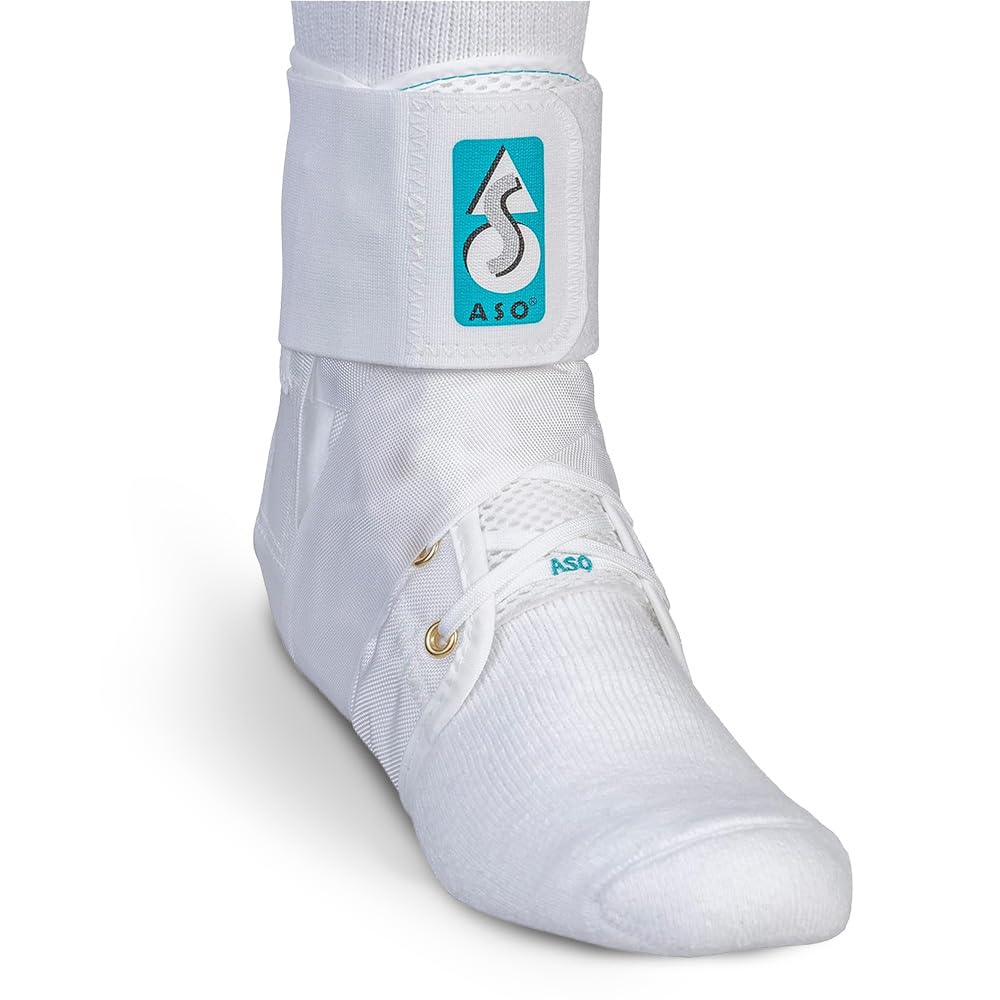
ASO Ankle Stabilizer
Key Features
- Support Type: Lace-up with figure-8 straps
- Shoe Fit: Fits most basketball shoes
- On/Off: Lace-up, slow to put on
- Roll Prevention: Figure-8 strapping, high resistance
- Breathability: CoolFlex padding, ventilated
- Price: $$$
The signature figure-8 strap system cinches the ankle from two angles, resisting inversion rolls during sharp cuts and landings. CoolFlex padded lining prevents the nylon shell from digging into skin, even when laced tight. The low-profile build slides into a standard basketball shoe without forcing a half-size up.
Getting into the brace takes a few minutes. You’ll thread laces through seven eyelets, then wrap the two external straps in a crossing pattern and secure them with hook-and-loop tabs. The break-in period is short — straps soften after a couple of sessions — but the rhythm of lacing and strapping demands practice. For athletes who prioritize stability over speed, that minute spent adjusting is the cost of top-tier roll resistance.
This brace is made for competitive basketball and volleyball players with a history of severe sprains or chronic ankle instability. It suits those who are willing to learn the lacing sequence and accept a brief pre-game routine. If you need a slip-on brace or plan to switch between ankles frequently, the speed-oriented alternative in this set skips the lace-up entirely. Be ready for a learning curve with the straps and a sizing trial — the bilateral fit can feel slightly different on left versus right feet.
Pros
- Dual external figure-8 straps cinch down to resist inversion rolls during aggressive lateral moves.
- High-denier nylon shell and reinforced stitching hold up to daily hardwood use without fraying.
- Consistent compression and stabilization aid recovery from grade 2 sprains and peroneal tendonitis.
- Slim profile fits inside standard basketball shoes; no need to size up.
Cons
- Fit may vary based on foot shape, with some experiencing overly tight or loose sizing that requires exchange.
- Securing the laces and figure-8 straps can feel slow and complicated, especially when rushing between plays.
If you’ve ever felt your ankle roll inside a lesser brace, the ASO Stabilizer’s methodical lockdown is what you trade a few minutes of pre-game time for. It’s a deliberate choice for athletes who won’t compromise on lateral protection.
Best for Lightweight Stability
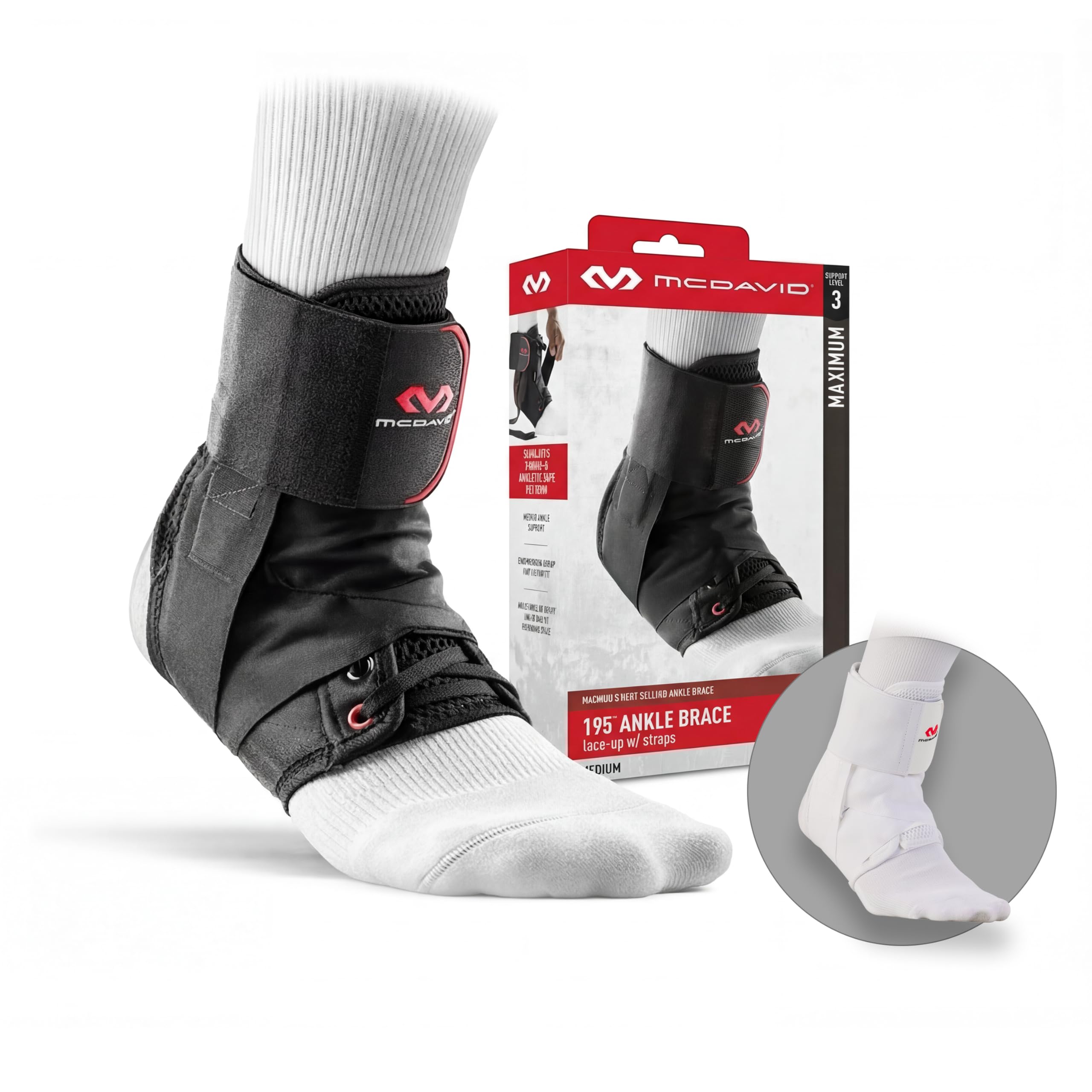
McDavid Ultralight Brace
Key Features
- Support Type: Lace-up with figure-6
- Shoe Fit: Fits narrow-average feet
- On/Off: Lace-up, moderate effort
- Roll Prevention: Figure-6 strapping
- Breathability: Ventilated tongue
- Price: $$$
At just 0.2 lb, the McDavid Ultralight Brace provides true ankle roll protection without the stiff, heavy feel of steel-reinforced alternatives. The ventilated tongue and open-weave polyester shell promote airflow, so you’re less likely to overheat during a game. Instead of bulky plastic or metal stays, a figure-6 strap system and laces lock down the ankle with a custom feel.
This brace fits best on narrow to average-width feet; if you have wide feet or need a quick slip-on design, the snug lacing and strap process can feel frustrating. The hook-and-loop closures may show signs of fraying with repeated, aggressive use, but the tradeoff is a brace light enough that you might forget you’re wearing it — ideal for basketball players who want cool, barely-there stability inside standard shoes.
Pros
- Delivers solid ankle roll protection in a featherlight package
- Breathable materials and ventilated tongue help keep the foot cool and dry
- Customizable lace and figure-6 strap system secures without rigid stays
Cons
- Sizing tends narrow; wide-footed athletes may find it too tight or difficult to lace
- The hook-and-loop strap can fray or lose grip after repeated heavy use
If you don’t have wide feet and appreciate a brace that adds stability without weight, the McDavid Ultralight does what few others can: serious roll protection you’ll barely notice during play.
Best for Customizable Lockdown
Z Athletics Ankle Brace
Key Features
- Support Type: Lace-up with side stabilizers
- Shoe Fit: Fits most shoes
- On/Off: Lace-up, time-consuming
- Roll Prevention: Side stabilizers, high
- Breathability: Neoprene, moderate
- Price: $$$
Side stabilizers and a fully customizable lace-up system let you dial in ankle lockdown with a precision that simpler braces lack. Where the top pick relies on a structured figure-8 strapping pattern, this brace gives you control over every eyelet and strap, creating a personalized fit that counters lateral roll effectively during cuts and jumps.
Basketball players with narrow to medium feet who prioritize side-to-side stability over instant step-in comfort will get the most from this design. The brace runs tight and requires a deliberate break-in period — pressure points on the top of the foot are possible until the material conforms to your shape. Those who can tolerate a stiff, snug feel during the first few wears will be rewarded with excellent roll prevention.
Pros
- Excellent support and ankle stability for intense sports
- Superior build quality that outperforms simple bandages
- Highly effective for healing and pain relief from sprains
Cons
- The lace-up process is slow and cumbersome, adding time before every session
- Straps may tear prematurely under the repeated stress of aggressive lateral movements
A serious stabilizer for athletes willing to trade quick on-off for a meticulously personalized, locked-down feel, provided they can handle the initial stiffness.
Best for Fast-On Stability
WHCOOL Ankle Brace
Key Features
- Support Type: Quick-lace with pads
- Shoe Fit: Slim profile fits shoes
- On/Off: Quick Velcro, easy
- Roll Prevention: Auto-shaped pads, moderate
- Breathability: Air fabric, breathable
- Price: $$$
The quick-lace Velcro system and auto-shaped pads get you laced up in a fraction of the time it takes to secure the top pick’s figure-8 strapping. Where that professional brace demands patience, this one trades minimal bulk for immediate movement, slipping neatly into standard basketball shoes without the break-in hassle.
Basketball players returning from a moderate sprain will find the lateral support reassuring through cuts and jumps. The slim profile and breathable air fabric keep things cool and unobtrusive during full-court runs. Those who grind through daily two-a-day practices should calibrate expectations: the quick-lace design can show wear on the Velcro straps and plastic loops sooner than a heavy-duty lace-up brace, making it a better fit for rotational use or shorter seasons than for year-round daily pounding.
Pros
- Strong lateral support and twist prevention for cuts, jumps, and quick stops.
- Quick-lace system puts the brace on in seconds, no laces to thread or knot.
- Breathable air fabric and slim profile stay cool inside basketball shoes.
Cons
- Plastic lace loops and Velcro straps may show fraying or tension loss after several weeks of intense play, reducing long-term lockdown.
For players who want to slip on ankle support between quarters or before a pickup game, this brace delivers the fastest on/off of any stabilizer in this set — just plan to replace it sooner than a more rugged lace-up model.
Best for Rigid Budget Protection
SNEINO Ankle Brace
Key Features
- Support Type: Lace-up with spring steel
- Shoe Fit: Fits most shoes
- On/Off: Lace-up, difficult
- Roll Prevention: Spring steel, maximum rigidity
- Breathability: Neoprene, moderate
- Price: $$
Spring steel stays give this brace the roll resistance of a high-end stabilizer without the premium price tag—a combination that’s uncommon at this budget. The reinforced side stabilizers and curved arch design lock the ankle down securely during cuts and jumps. It’s bulkier than minimal sleeves, but the structure fits inside most basketball shoes and provides confidence that comes from knowing your ankle won’t roll on a hard plant.
This brace is best for budget-conscious players recovering from moderate to severe sprains who need rigid lateral support. The stiff neoprene and lace-up closure do require a longer gear-up routine and can become uncomfortable during all-day wear, so it’s less suited for athletes who need to sub in quickly. For focused training sessions or rehab work, the tradeoff is worth the protection.
Pros
- Steel-reinforced design delivers strong lateral support — solid roll resistance for high-intensity sports.
- Solid construction quality at a mid-range price, competing with pricier braces.
- Effective for sprain recovery and pain reduction during active rehab.
Cons
- Sizing can run tight, causing pressure points for those with wider feet.
- The lace-up system takes time and can be awkward during quick substitutions.
A cost-effective choice for athletes who want the reassurance of steel stays and don’t mind spending extra time lacing up — best for practice, rehab, or any court where every lateral cut matters.
Best for Pain Relief Wrap
Bodyprox Ankle Brace
Key Features
- Support Type: Adjustable wrap
- Shoe Fit: Fits inside shoes
- On/Off: Quick hook & loop
- Roll Prevention: Compression only
- Breathability: Breathable neoprene
- Price: $
Unlike the top pick’s elaborate figure-8 strapping, the Bodyprox wrap requires virtually no setup — slide it on, secure the single Velcro strap, and go. That simplicity trades rigid roll prevention for lightweight compression that stays breathable during casual shootarounds or light practice. The open-heel design and neoprene blend keep things cool and low-profile inside most basketball shoes.
For athletes recovering from a mild sprain or dealing with plantar fasciitis, the targeted compression can soothe pain during everyday movement. However, this wrap is not built for the lateral demands of intense basketball — hard cuts and jump stops will overwhelm its slip-on design. Those with wide ankles or high arches should check the fit carefully, as the one-size sleeve can feel constricting and the heel band may dig in. It’s a budget-friendly pick for shootarounds, light practice, or off-day compression, not for players who need a locked-in feel.
Pros
- Steady compression that keeps the ankle feeling secure during casual play and daily wear.
- Quick on/off with a single Velcro strap — no laces, no fuss.
- Effective pain relief for mild sprains and plantar fasciitis, especially during walking or light practice.
Cons
- The one-size design can feel overly tight on wide feet or high arches; the heel band may dig in during extended wear.
- Lacks lateral roll prevention, making it unsuitable for aggressive basketball cuts and jump landings.
Right for casual shootarounds or mild sprain recovery when all you need is breathable compression at a budget price. For hard cuts and lateral lockdown, step up to a stabilizer like the top pick.
Best for Hybrid Support
Sleeve Stars Ankle Brace

Key Features
- Support Type: Sleeve with strap
- Shoe Fit: Fits inside shoes
- On/Off: Pull-on, easy
- Roll Prevention: None, mild support
- Breathability: Breathable knit
- Price: $$
The Sleeve Stars Ankle Brace combines a breathable compression sleeve with a removable strap that lets you dial in extra support for mild sprains and plantar fasciitis pain. It’s slim enough to slip into basketball shoes, and all-day comfort is a genuine strength. Just know that this is a compression-focused support: it lacks the rigid lateral stabilizers needed to prevent ankle rolls during aggressive cuts and jumps, so it’s a recovery and low-impact tool rather than a primary brace for high-intensity hoops.
Pros
- Customizable compression via the removable strap delivers solid ankle support for mild sprains and pain relief.
- Effectively reduces plantar fasciitis discomfort and aids sprain recovery.
Cons
- Sizing runs small; wearers with thicker or wider ankles may find the sleeve too constricting.
A good choice for everyday ankle support, mild sprain recovery, or plantar fasciitis relief where lateral roll prevention isn’t the priority — just not the right tool for aggressive basketball cuts.
Best for Casual Stability
ACE Ankle Stabilizer

Key Features
- Support Type: Wrap with side stabilizers
- Shoe Fit: Fits most shoes
- On/Off: Velcro, easy
- Roll Prevention: Side stabilizers, moderate
- Breathability: Breathable materials
- Price: $$
The ACE Deluxe Ankle Stabilizer wraps on quickly with adjustable hook-and-loop closure and side stabilizers, offering moderate support for daily wear and recreational use. For high-intensity basketball, the absence of a lace-up lockdown limits roll resistance during sharp cuts and landings. It fills a simple, no-fuss role for casual movement rather than competitive play.
Pros
- Provides solid support for daily activities and moderate sports.
- Lightweight and comfortable enough for all-day wear.
Cons
- Fit can be inconsistent, and the Velcro straps may lose grip over time.
For casual shootarounds, daily errands, and low-intensity gym work where fast on/off and basic lateral stabilizers are enough, this ACE stabilizer does the job without overcomplicating things.
Best for Recovery Compression
Modvel Ankle Brace Socks

Key Features
- Support Type: Compression sock
- Shoe Fit: Fits inside shoes
- On/Off: Pull-on, easy
- Breathability: Soft breathable
- Price: $$
The Modvel ankle brace socks deliver soft, seamless compression that eases foot fatigue and swelling during long days or light activity. The knit material breathes well and fits comfortably under casual shoes. For basketball, however, this sleeve offers no lateral roll resistance — it is a recovery and daily support piece, not a sports stabilizer. Sizing can be inconsistent, so the sleeve may slip if not snug enough.
Pros
- Comfortable all-day wear with gentle ankle support, soft and non-irritating.
- Effective for reducing swelling and easing pain during recovery.
Cons
- Sizing can be inconsistent, and a loose fit may cause the sleeve to slip during activity.
It’s a comfortable, quality compression sleeve for daily wear and recovery, but basketball players seeking roll protection will need a brace with lateral stabilizers.
Best for Custom Compression
ComfiLife Ankle Brace

Key Features
- Support Type: Compression wrap
- Shoe Fit: Fits most shoes
- On/Off: Velcro wrap, easy
- Breathability: Breathable elastic
- Price: $$
The ComfiLife Ankle Brace delivers customizable compression via its wrap-around design, letting you dial in pressure precisely on the arch, heel, or ankle. The breathable, non-bulky build stays comfortable enough for all-day wear and sleep, making it a practical tool for managing plantar fasciitis, tendinitis, or daily swelling. However, the one-size Velcro closure can be overly grippy when removing or may slip during sudden movements — not the stability you want for basketball cuts or hard pivots. This wrap shines for off-court recovery and light support, not for preventing ankle rolls.
Pros
- Supportive yet slim enough for most shoes and all-day wear
- Comfortable for extended wear, even overnight
Cons
- Velcro can be too grippy or slip during sudden movements; one-size design may not secure very small or large ankles
If you need a recovery wrap for plantar fasciitis or mild sprains away from the court, this brace provides spot-specific compression that many sleeves overlook — keep it out of games that require roll prevention.
Best for Light Sports
BraceUP Ankle Brace

Key Features
- Support Type: Wrap with stabilizers
- Shoe Fit: Fits most shoes
- On/Off: Velcro, easy
- Roll Prevention: Side stabilizers, light
- Breathability: Standard materials
- Price: $
The BraceUP Ankle Brace wraps the ankle with a low-profile design and integrated side stabilizers, secured by a quick hook-and-loop strap. It provides enough mid-level support for light basketball shootarounds, casual games, and daily practice — all at a budget-friendly price. The one-size construction, however, can be a gamble: ankles on the larger or smaller end may get a loose fit that reduces stability, or a tight one that pinches. For severe instability, the side support is less rigid than a lace-up brace.
Pros
- Good stabilization for daily sports activity, sufficient for light basketball and practice.
- Comfortable, low-profile design that fits easily inside basketball shoes and is simple to secure.
Cons
- One-size design can be too loose on thin ankles or too tight on larger ones, compromising support.
If your ankle circumference falls near the middle of the sizing bell curve and you need a simple, budget-friendly stabilizer for light practice, this brace does the job without overcomplicating things.
Best for Mild Daily Support
JIUFENTIAN Ankle Brace

Key Features
- Support Type: Ultra-thin sleeve
- Shoe Fit: Ultra-thin, fits any shoe
- On/Off: Pull-on, easy
- Breathability: Highly breathable copper
- Price: $
The JIUFENTIAN ankle brace delivers a barely-there compression fit that slips under socks without bulk, making it a practical choice for recovery days or mild aches. The copper-infused fabric breathes well during all-day wear and helps ease discomfort from minor sprains. However, this ultra-thin sleeve provides no lateral roll protection, so it can’t support aggressive basketball cuts or jumps. For light practice or casual wear, it’s a solid low-profile option; for high-intensity play, look for a brace with rigid stays.
Pros
- Eases discomfort from minor sprains and weak ankles during daily wear.
- Breathable, ultra-thin fabric stays comfortable under socks for long hours.
Cons
- Sizing may run small; the brace can feel overly tight on larger ankle circumferences.
If you need a barely-there support for recovery or daily aches, this thin sleeve works under any shoe and stays comfortable. Skip it for basketball games where lateral cuts demand rigid protection.
How to Choose
The biggest factor separating a brace that sits in your gym bag from one you actually wear every game is whether it fits inside your basketball shoes without forcing you to size up.
Support Type: Lace-Up vs. Sleeve vs. Wrap
A lace-up brace with figure-8 or figure-6 strapping physically limits the ankle’s inversion and eversion through tensioned bands that cradle the joint. This is the only mechanism that reliably prevents a roll when you come down off a rebound or plant for a cut.
Compression sleeves and wraps, on the other hand, provide circumferential pressure that can reduce swelling and improve proprioception—but they won’t stop your ankle from turning. For competitive play, choose a lace-up stabilizer; for recovery days or mild soreness, a sleeve or wrap is enough.
Shoe Compatibility: Bulk vs. Low Profile
Many braces add volume around the heel and forefoot that prevents a shoe from lacing up fully, especially in low-top basketball models. A brace that fits without sizing up needs a slim heel cup and thin, flexible straps that don’t bunch under the laces.
The trade-off is that lower-profile braces often sacrifice some padding or strap coverage. If you’re between shoe sizes or wear thick socks, measuring your ankle circumference and comparing it to the brace’s size chart is essential.
Ease of On/Off: Quick-Lace or Traditional Laces
Traditional lace-up braces demand several minutes and a practiced technique to achieve even tension, but they let you adjust compression precisely. Quick-lace systems with large Velcro straps cut that time dramatically, though the Velcro can degrade faster under repeated basketball use.
Roll Prevention: Figure-8, Side Stays, and Spring Steel
Figure-8 strapping creates a locking loop that resists lateral forces, while rigid side stays or spring steel inserts add hard stops. The stiffer the brace, the more likely it is to cause pressure points on the top of the foot or over the malleoli after extended play.
If you’ve had severe sprains, spring-steel reinforced braces offer the most protection. For mild instability, a well-designed figure-8 lace-up without hard inserts may give you enough control without the comfort penalty.
Breathability: Staying Cool During Games
Neoprene braces trap heat and can become uncomfortable by the fourth quarter. Ventilated tongue designs and air-knit fabrics improve airflow but may sacrifice some structural integrity over time. If you play in warm gyms or multiple games in a row, prioritize a brace with a ventilated tongue or open-knit construction.
FAQ
Can I wear a lace-up ankle brace inside basketball shoes without sizing up?
Most low-profile lace-up braces, like the ASO or McDavid, fit inside standard basketball shoes if you lace them snugly against the ankle. If you have wide feet, high insteps, or wear thick socks, you may need a half-size larger shoe. Always check the brace’s heel-cup measurement and compare it to your current shoe fit before buying.
Why does my ankle brace dig into my heel or the top of my foot when playing basketball?
That digging usually comes from the figure-8 straps being pulled too tight over the top of the foot or from a brace that’s simply too small for your ankle shape. Loosen the upper strap, reposition it slightly lower toward the ankle joint, and make sure the tongue of your shoe isn’t adding pressure. If the discomfort persists, a different brace with a wider top strap or an open-heel design may fit better.
Do compression sleeves actually prevent ankle sprains in basketball, or do I need a stabilizer?
Compression sleeves provide proprioceptive feedback and mild swelling control, but they do not stop the ankle from rolling during a hard cut or landing. For sprain prevention during competitive basketball, a lace-up stabilizer with figure-8 strapping or rigid side stays is necessary. Sleeves are best used for recovery or light practice, not for high-intensity games.
How long do ankle braces last if I play basketball 3–4 times a week?
A premium lace-up brace like the ASO can last an entire season if you replace the laces annually and avoid machine washing. Mid-range braces with Velcro straps often begin to lose grip or fray after 2–3 months of regular use. Keep an eye on the stitching around the heel and strap anchors—those fail first and signal time for a replacement.