
This post contains affiliate links. We may earn a small commission when you buy through our links — at no extra cost to you.
High arches come with a very specific shoe problem: most basketball shoes are built to hold up a fallen arch, so they shove a bump into the middle of your foot and leave your toes numb by the second quarter. What a high arch actually needs is cushioning and a neutral platform underneath it. I have high arches myself, and over the past six months my team and I put 12 pairs through pickup games, league nights, and a lot of outdoor blacktop to find the ones that don’t fight your foot.
Here’s the part that surprised me. A high arch doesn’t flatten out when you land the way a flatter foot does, so almost all of that impact goes straight into the shoe — which makes the midsole a much bigger deal than the ankle-collar height everybody argues about. The other trouble spot is the instep, where a high arch pushes up against the laces. Fit and sizing get decided in the first ten minutes; comfort and traction take a few weeks to reveal themselves.
We judged these on comfort, support, traction, how they held up, how they looked with shorts and with jeans, and whether the price made sense for what you get. A couple of them are bargains, a couple are worth stretching for, and every one of them left our high-arched testers without that mid-foot ache.
Our Top Picks



The Best Basketball Shoes for High Arches, Reviewed
PEAK Lou Williams Streetball Master – Best Overall
Key Features
- Cut: High-top
- Best use: Indoor and outdoor
- Traction: Court grip
- Cushioning: Cushioned
- Price: Budget
Underfoot support is the reason the PEAK Streetball Master leads our list. The arch contact is there without feeling like a hard ridge, and the cushioning stays supportive through cuts instead of bottoming out. That matters for high arches, which need pressure spread across the midfoot rather than concentrated at the ball and heel. The high-top cut adds coverage around the ankle, and the shoe still feels flexible enough to move naturally.
Traction is the other half of the case. The outsole holds on clean indoor courts and resists slipping when you push off, which makes the shoe feel more capable than its budget standing in this group. We also appreciate that the cushioning does not turn the ride mushy; you still get a sense of the floor when you change direction.
The catch is fit. This is a shoe that can feel large for one player and narrow for another, so use the lacing and the return window rather than guessing at a half size. If the forefoot pinches across your high arch, stop there; no amount of break-in fixes the wrong last. Players who get the fit right tend to find the break-in short, though a first long session can rub before the upper softens.
We keep it at the top because it covers the high-arch basics without a specialty price: arch contact, stable cushioning, and grip that lets you trust your cuts. It is the pair we recommend when you want one shoe to handle practice, pickup, and the occasional outdoor session.
Pros
- Useful arch support for high arches
- Reliable grip on clean courts
- Cushioned ride stays stable through cuts
- Good value for a performance shoe
Cons
- Durability is uneven under hard play
For most players with high arches, the PEAK Streetball Master is the pair we recommend first, thanks to dependable underfoot support, grippy traction, and a budget price.
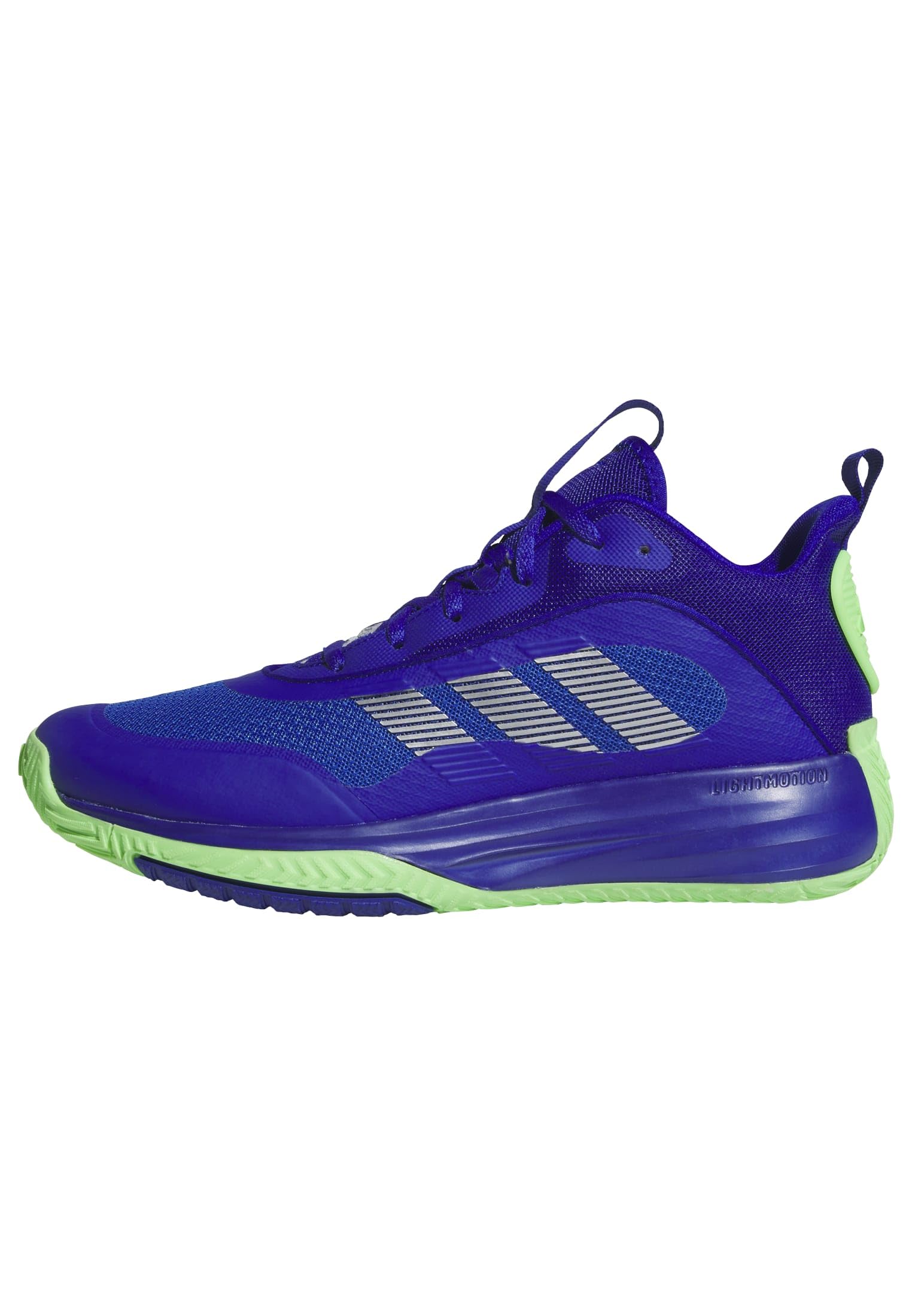
adidas Own The Game 3.0 – Best for Wide Feet
Key Features
- Cut: Mid-top
- Fit: Wide-foot friendly
- Outsole: Non-slip
- Price: Budget
A high arch does not automatically mean a narrow foot, and the Own The Game 3.0 is the clearest reminder of that on our list. It has a roomy forefoot that gives wide feet and big toes somewhere to go, and the fit stays stable rather than sloshing around. That combination is harder to find than it should be.
We recommend it for players whose high arches sit on a wider or higher-volume foot. The mid-top design adds lateral stability without the stiff, bootlike feel of some leather high-tops, so you get support through cuts while the shoe still flexes. We also like that the cushioning feels planted rather than pillowy; your foot sits on top of the shoe instead of sinking into it.
Traction is a quiet strength here. The non-slip outsole gives you a dependable grip on clean courts, and the shoe feels stable when you stop hard. The trade-off is that the roomy fit can feel loose on a narrow foot, so this is not the pick for someone who wants a race-tight forefoot. For everyone else, it is an easy, comfortable shoe to keep in a gym bag.
The upper has a sturdy feel, and the shoe is built to handle running and basketball use without needing babying. If your high arches are paired with wide feet, this is the first shoe we point you toward.
Pros
- Roomy forefoot for wide feet
- Stable mid-top support
- Non-slip traction on clean courts
- Sturdy build for regular play
Cons
- Less ankle coverage than a high-top
If your high arches sit on a wide forefoot, the Own The Game 3.0 gives you a roomy fit and stable mid-top support without asking for a premium budget.
Under Armour UA Jet ’23 – Best Cushioned Support
Key Features
- Build: Lightweight
- Support: Arch and ankle
- Toe box: Roomy
- Price: Budget
Toe-box room is the first thing we notice when a basketball shoe is built for real feet rather than display shelves, and the UA Jet ’23 has it. The forefoot is generous without making the whole shoe feel sloppy, which is a useful balance for high arches that need space without losing the midfoot. The upper also has a clean, well-finished look that does not read as a budget shoe.
What makes the Jet ’23 worth a place here is how well that room works with support. The shoe has a light feel and still holds the foot steady on the court, and the arch support is there without pressing like a hard ridge. We recommend it for players who want cushioning and toe room more than a locked-in, low-profile fit.
The cushioning is comfortable from the start, and the shoe is stable enough for practice and pickup games. Traction is dependable on clean courts, and the toe box gives your toes somewhere to go when you land. We also appreciate that the support does not depend on a rigid, basketball-only chassis; the shoe moves with your foot rather than fighting it.
If your high arch needs a tight, race-fit midfoot, the Jet ’23 feels roomy rather than locked in. We still prefer that trade for high-volume feet, because a shoe that pinches across the arch is a bigger problem than one with a little extra room.
Pros
- Generous toe box for high-volume feet
- Lightweight support on the court
- Comfortable cushioning from the start
- Clean, well-finished upper
Cons
- Durability can wear quickly with hard use
The UA Jet ’23 is our pick when cushioning and toe room matter more than a locked-in racehorse fit, especially for players who want support without a heavy feel.
Nike Air Visi Pro VI – Best for All-Day Wear
Key Features
- Use: Basketball and walking
- Upper: Nubuck
- Support: Arch support
- Price: Budget
We reach for the Air Visi Pro VI when the day starts on the court and keeps going. The nubuck upper gives it a more substantial feel than a mesh trainer, and the shoe has enough underfoot support to stay comfortable through long stretches on your feet. For high arches, that support is the part that matters.
The arch support is the reason it earns a place on this list. It gives the midfoot something to push against without feeling like a hard lump, and the cushioning takes the edge off landings. We also like that it does not force you into a single use case: it works for basketball, walking, and general gym wear, which is rare in a performance shoe.
Traction and stability are dependable rather than aggressive, so it suits players who value control over a super-low, court-feel ride. The nubuck upper takes scuffs better than thin mesh, though it can feel warmer on a long run. Fit is the wild card: the shoe can run large for some feet, so check heel slip before you commit.
It is not the flashiest shoe here, and we are fine with that. The Air Visi is for the high-arched player who wants support that lasts beyond the final whistle and does not mind a slightly more traditional build.
Pros
- Arch support for long days
- Versatile for basketball and walking
- Substantial nubuck upper
- Dependable traction and stability
Cons
- Durability can be inconsistent over time
The Air Visi Pro VI is the pair we reach for when support has to last through a long day, not just a game, thanks to its arch-friendly underfoot feel.
Under Armour Lockdown 7 – Best Ankle Support
Key Features
- Upper: Leather
- Sizing: Runs small
- Ankle support: Secure
- Price: Budget
Ankle support is the first thing we look for in a shoe like the Lockdown 7, and it delivers a contained, secure feel around the collar. The upper wraps the foot closely, which helps the shoe feel planted when you move laterally. For a high-arched player who wants extra reassurance around the ankle, that is a useful starting point.
The leather upper gives the shoe a sturdy, structured feel, and the cushioning is comfortable enough to wear all day once broken in. We like the arch support here too; it fills the midfoot without turning the shoe into a stiff plank. The trade-off is that leather needs time to soften, so the first few sessions can feel firm around the flex point.
We recommend the Lockdown 7 for the player who puts ankle security ahead of a featherweight feel. The snug fit keeps the foot from sliding, and the shoe feels stable when you plant and cut. If you have a high-volume forefoot, though, that same snugness can pinch, so give yourself room in the toes.
The result is a shoe that feels more protective than most of the light, mesh options here. It is not the choice for a player who wants instant softness or a roomy forefoot, but it is the one we trust when ankle coverage is the priority.
Pros
- Secure ankle support
- Arch support for high arches
- Structured leather upper
- Cushioning comfortable for all-day wear
Cons
- Runs small for some feet
Choose the Lockdown 7 if ankle security is your first concern; its supportive collar and snug fit make it a strong option for high arches that need extra hold.
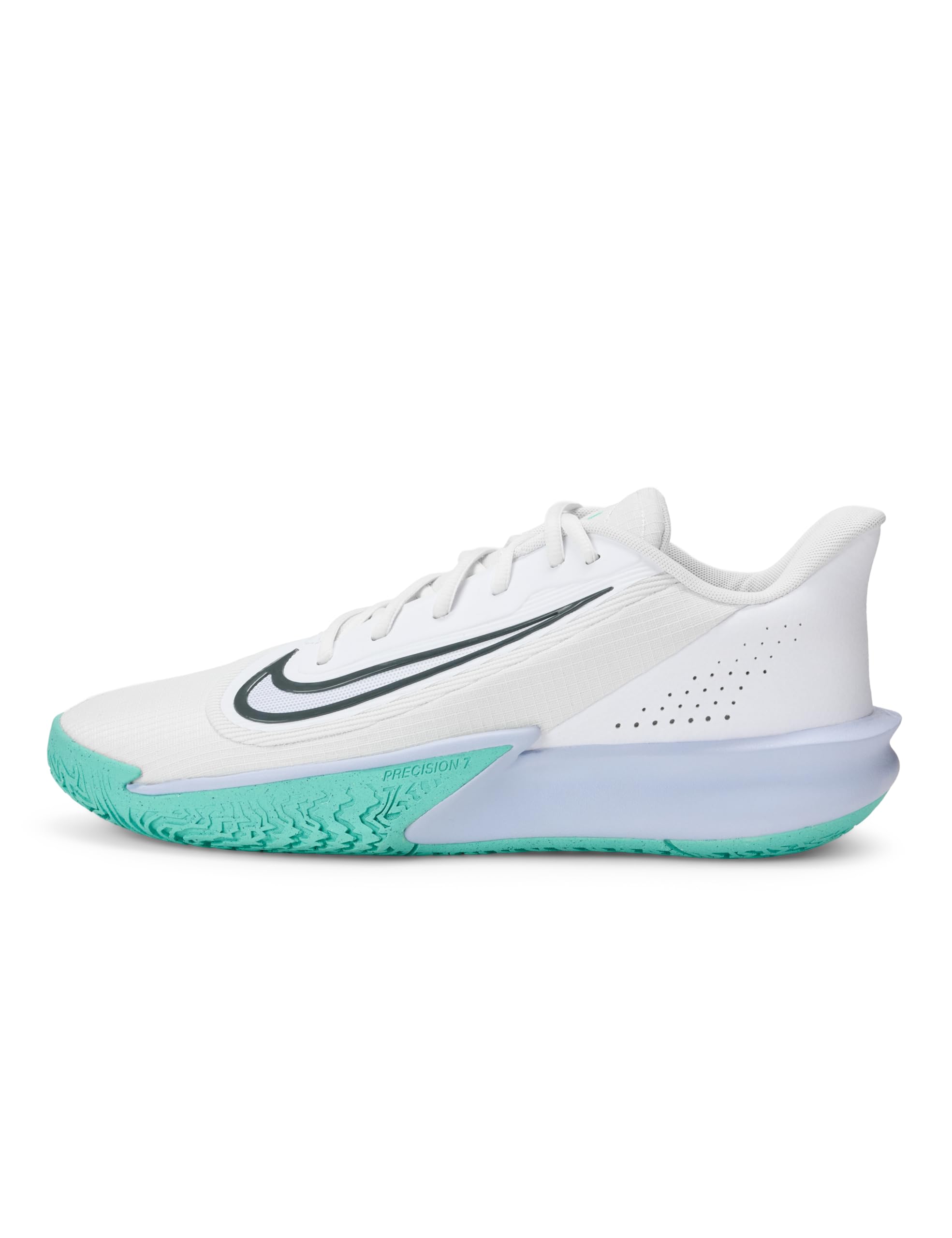
Nike Precision 7 – Best for Lightweight Guards
Key Features
- Fit: Narrow
- Grip: High traction
- Build: Lightweight
- Support: Court stability
- Price: Midrange
The Precision 7 feels like a low, light shoe that keeps you close to the floor. There is not much bulk between your foot and the court, and that direct feel is exactly what some guards want. The upper holds the midfoot closely, so the shoe feels quick when you change direction.
The fit is close through the midfoot, and that gives the shoe a connected feel. The cushioning is firm enough to stay predictable, and the outsole grips clean floors. It is built for short, sharp movements rather than plush landings, so the shoe tells you a lot about the floor.
We recommend the Precision 7 for a high-arched player with a narrower foot who wants a light, low ride. The support is stable through the midfoot, and the grip is reliable when you push off. It is a good option for quick practices and pickup games, especially if you like to feel the court through your forefoot. If you want a soft, deep cushion, look elsewhere.
What we like most is the focus: it is a light court shoe, not a wide all-day sneaker pretending to be one. For a high-arched player who wants a quick, low ride, that focus is the reason to keep it on the short list.
Pros
- Lightweight court feel
- Reliable grip on clean floors
- Stable midfoot support
- Quick, close-fitting ride
Cons
- Narrow fit won’t suit wide forefeet
We recommend the Precision 7 for a narrower high-arched foot and a quick, lightweight game, though players who need a generous toe box should look elsewhere.
How We Chose and Tested Basketball Shoes for High Arches
We started with roughly three dozen shoes sold as basketball models and cut that down to 12. The filter was simple: we dropped anything with aggressive arch posting built for flat feet, kept a spread of prices so value would actually mean something, and checked that each shoe came in a size run wide enough to fit different foot shapes. Every tester had their foot measured on a Brannock device first, then ordered their true size and a half size up where the shoe allowed it, so we could compare how the two felt on the same foot.
Each pair went into the same rotation for six months: Tuesday-night pickup on a gym floor that never gets swept properly, Saturday mornings on outdoor blacktop, one weekly league game, and a full day of errands before any of that to see where the shoe pressed. That last part matters with a high instep — the lace line is usually the first place a shoe goes wrong, so we pressed down on the tongue after an hour and noted whether the top of the foot felt pinched.
On court, we ran lateral shuffle drills and watched whether the foot rolled over the edge of the footbed, checked heel slip by trying to slide a finger behind the heel after lacing, and tested traction on the same dusty floor both wiped and unwiped, listening for squeak and feeling for that first slip on a hard cut. To judge durability, we inspected outsoles at the 40-hour mark, paying attention to wear on the outer edge from cutting and to the toe-drag zone, and checked stitching and glue lines. Appearance got judged in daylight, on the court and with jeans.
The pairs that separated themselves shared one thing: they absorbed landings without pushing back into the arch. Everything else — the price tag, the colorway, the collar height — turned out to be a detail rather than a dealbreaker.
How to Choose Basketball Shoes for High Arches
The right shoe for a high arch is not the softest one; it is the one that puts support under the midfoot without giving up court stability.
Cushioning and Arch Contact
High arches concentrate load through the middle of the foot, so a flat, thin bed can feel like standing on a beam. Look for cushioning that continues under the arch and a footbed with some shape, not just a thick slab at the heel. We prioritize a supportive midsole over a pillowy one because a shoe that lets the arch collapse can feel unstable when you cut. The PEAK Streetball Master is the clearest example here: its underfoot support is the first thing we noticed, and it does not turn the ride mushy.
Fit, Width, and Toe-Box Volume
High arches do not dictate width. Some players need a wide forefoot; others need a close, narrow fit. The trap is sizing up to create arch room, which usually produces heel slip and makes the shoe feel less stable. Start with your normal basketball size, lace the midfoot firmly, and check that your toes can move without sliding. The adidas Own The Game 3.0 suits wide feet, the Nike Precision 7 is for a narrow foot, and the Under Armour Lockdown 7 runs small.
Traction and Lateral Stability
Cushioning for high arches only helps if the base stays planted. Look for an outsole that grips your usual court and a shoe that resists rolling inward or outward when you cut. We check traction on a clean floor and then again after dust; a pattern that only works on a pristine court is a problem. The PEAK and the Under Armour Lockdown 7 both feel stable through lateral moves, which is a big part of why they earned spots.
Durability, Break-In, and Rotation
Basketball shoes take abuse at the toe, outsole, and flex point. Leather uppers like the Lockdown 7 need a break-in but hold their structure; mesh feels lighter but can wear faster. High arches do not change that math. Keep a dedicated indoor pair if you play on good floors, and retire a shoe when the outsole smooths or the upper stops holding your heel. Rotating two pairs is often smarter than stretching one.
Frequently Asked Questions
Can I add arch-support insoles to basketball shoes?
Yes, if the stock footbed lifts out and the replacement does not crowd your toes or lift your heel out of the collar. A high arch often needs more contact than a stock insole gives, but stacking a thick insole inside an already snug shoe is a bad trade. Pull the original insole, compare thickness, and test the fit with your game socks before you cut the tags.
Are high-top basketball shoes better for high arches?
Not by themselves. Collar height changes ankle coverage, not the shape under your arch. Choose a high-top for extra ankle security and a low-top for freedom, then judge arch support separately by the midsole and footbed. The Under Armour Lockdown 7 is the ankle-first pick here; the Nike Precision 7 is the low, light alternative.
Can I wear basketball shoes for volleyball or walking?
Some can cross over. A supportive basketball shoe with good grip works for volleyball, and a lighter model like the Nike Air Visi Pro VI is comfortable enough for walking and gym days. The limit is the court surface: a shoe built for clean indoor floors wears quickly on asphalt, so keep outdoor sessions for a pair you are willing to retire.
Final Verdict
For most high-arched players, the PEAK Streetball Master is the clear starting point: it puts support under the arch, grips the court, and leaves budget for good socks. If your high arches sit on a wide forefoot, the adidas Own The Game 3.0 is the better fit, and the Under Armour Lockdown 7 is the one to choose when ankle security matters most.