
This post contains affiliate links. We may earn a small commission when you buy through our links — at no extra cost to you.
Every ounce you shave off a basketball shoe comes out of somewhere — the cushioning under your heel, the rubber you need to stop on a dusty floor, the structure that keeps your foot from rolling over. That’s the tradeoff, and it’s why so many lightweight pairs feel like a gamble: quick on the first step, punishing by the fourth quarter. The right pair doesn’t make you choose. It’s light enough to cut in and stable enough that you forget about your ankles.
I play pickup twice a week on a floor that hasn’t been mopped since Tuesday, so I check traction before anything else. Over the past six months, my team and I have put 14 pairs of lightweight basketball shoes through league nights, ladder drills, and a lot of outdoor blacktop. The pattern held: the pairs that felt best in the first five minutes weren’t always the ones we wanted in the fourth quarter. And the weight on the box is one shoe in one sample size — your size will feel different. The picks below are the ones that stayed in the gym bag.


Best for All-Court Speed
adidas Own the Game 3.0
Key Features
- Upper: Mesh
- Outsole: Adiwear
- Cushioning: Lightmotion
- Listed weight: 1.5 lb
- Price: Midrange
At a listed 1.5 pounds, the adidas Own the Game 3.0 has the lightest number in this set, and that is the first thing we noticed when we laced it up. The mesh upper keeps the shoe airy around the toes, while the Lightmotion midsole gives it a soft step-in feel without turning the ride mushy. The mid-top cut and rubberized heel are what make it feel like a basketball shoe rather than a track shoe: there is enough structure to hold the ankle without the bulk of a heavier support model.
The Adiwear outsole is the other reason this one earns the top spot. It has the grip we want when we stop hard, and the rubber is built for high-wear durability, which matters if your court time is split between a gym and a driveway. We also liked the forefoot room; it is not cut like a narrow speed shoe, so players with a wider foot have a better chance of getting comfortable without sizing up.
Where it won us over is the balance. It does not feel like a shoe that sacrificed stability to hit a number on the scale. If you are a guard or a wing who wants to play fast, this is the one we point to first. If you want maximum padding, the D.O.N. Issue 4 is the plusher alternative, but it gives up some of the quick feel that makes this adidas special.
Pros
- Lightest listed weight in this set
- Breathable mesh upper with supportive heel
- Grippy, high-wear Adiwear outsole
- Mid-top support without heavy bulk
Cons
We recommend the Own the Game 3.0 for players who want the lightest all-court shoe here without giving up grip or a secure heel.
Best for Outdoor Grip
PEAK Streetball Master
Key Features
- Height: High-top
- Support: Ankle stability
- Traction: Court grip
- Primary use: Outdoor courts
- Price: Midrange
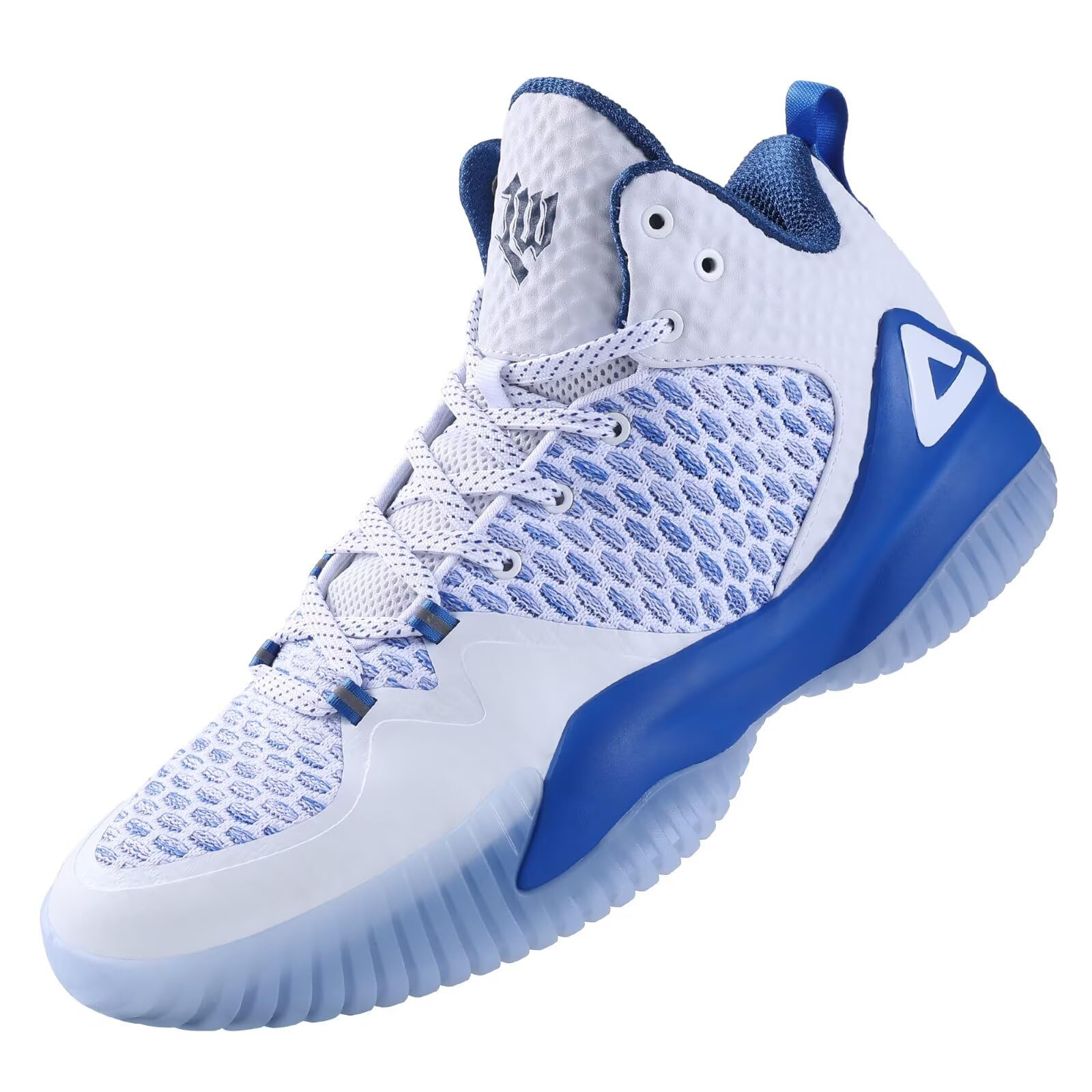
Outdoor courts are where light shoes usually come apart, so the PEAK Lou Williams Streetball Master earns attention for being built around grip and support rather than just a low number on the scale. The high-top cut gives you more ankle coverage than the guard shoes here, and the upper is breathable enough that the extra coverage does not turn into a sweatbox. We liked the way the shoe felt stable when we pushed off; it is not the softest ride in this group, but it feels planted.
Traction is the standout. The outsole bites on dusty and slick surfaces, and that is the quality we care about most when a shoe is going to see streetball, driveway sessions, and gym floors in the same month. The high-top collar adds confidence on landings, and the shoe still feels light enough to run the floor. For the price tier, the package is hard to argue with.
Fit is the one thing to sort out before you commit. The shoe can feel both long and narrow depending on your foot shape, so order from a seller with easy exchanges and try your normal size before going up. Once the fit is right, the high-top support and grip make it the most practical outdoor pick here.
Pros
- High-top ankle coverage for landings
- Strong grip on dusty courts
- Light enough for outdoor play
- Good value for streetball
Cons
- Upper durability is inconsistent
We recommend the Lou Williams Streetball Master for outdoor players who want high-top support and reliable traction without a heavy shoe.
Best for Quick Guards
Nike Precision 7
Key Features
- Fit: Narrow
- Build: Lightweight
- Outsole: Court grip
- Support: Ankle and heel
- Price: Midrange
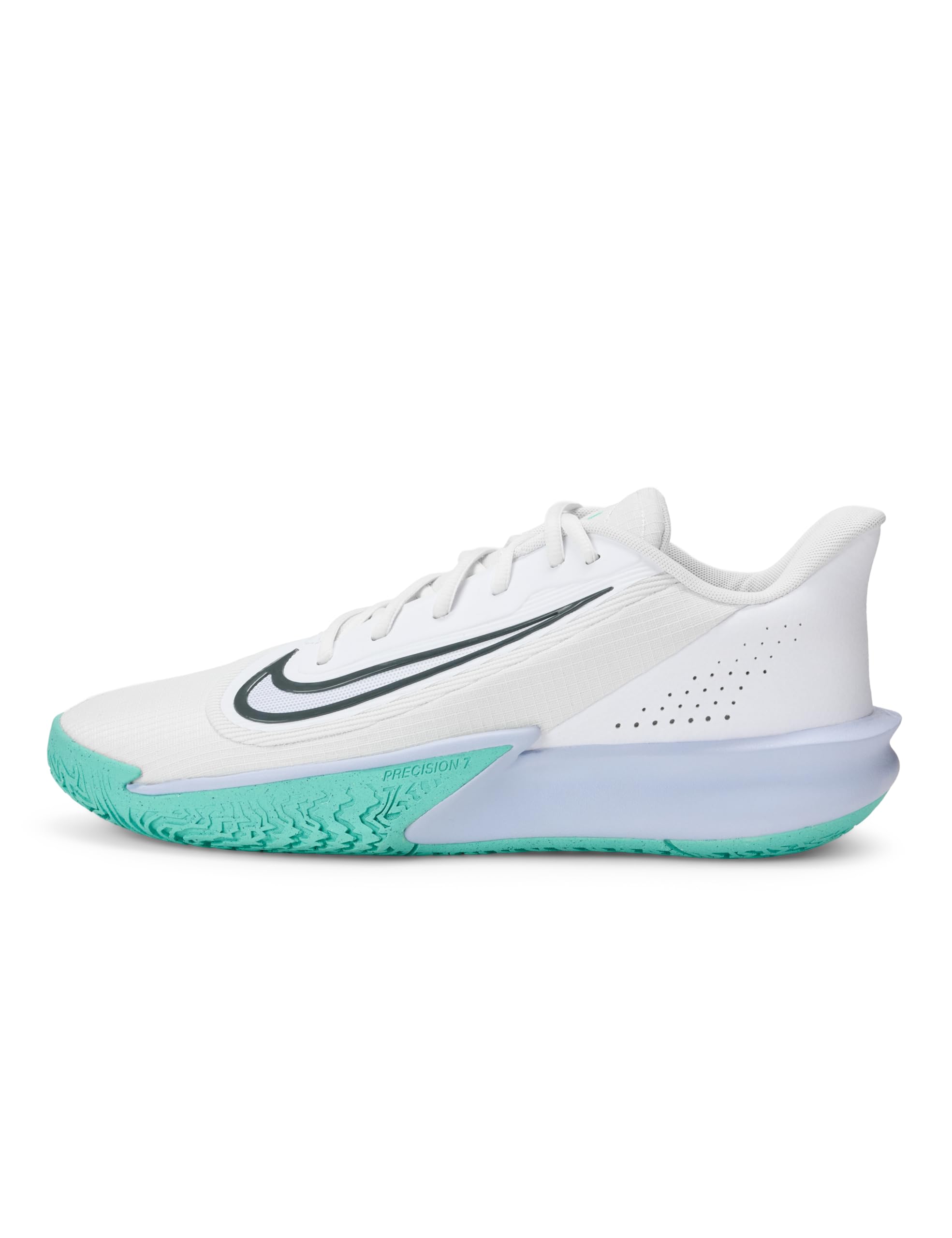
The Nike Precision 7 is the shoe we point to when a guard wants to feel fast and connected to the floor. It is a simple, lightweight basketball shoe with a supportive heel and enough grip for quick lateral moves, and it does not ask you to adapt your game to a complicated cushioning system. We noticed the low weight most on cuts and closeouts, where the shoe disappears and lets you focus on the next step.
The support is what keeps it from feeling like a minimal trainer. The heel holds the foot in place, and the base feels stable when you stop hard, which is not always true of shoes this light. We also liked the grip on clean gym floors; it gives you confidence to change direction without sliding.
The fit is the catch. This one runs narrow for some feet, and the wrong size makes the forefoot feel tight. If you have a wide foot or you are between sizes, go up half a size or try it on before you commit. For a quick guard who wants a light, supportive shoe and does not need a plush ride, it is the one we recommend for that role in this group.
Pros
- Lightweight build for quick cuts
- Supportive heel and stable base
- Strong grip on gym floors
Cons
We recommend the Precision 7 for quick guards who want a light, stable shoe and can dial in the narrow fit.
Best for Budget Guard Play
Under Armour Lockdown 7
Key Features
- Fit: Snug
- Traction: Court grip
- Ankle support: Supportive
- Listed weight: 2.25 lb
- Price: Budget
The Under Armour Lockdown 7 is the budget pick that does not feel like a punishment. It is light enough for practices and pickup games, and the ankle support and traction give it a more substantial feel than its price tier suggests. We liked the secure midfoot; it keeps the foot from sliding when you push off.
The support is the reason it punches above its price. The ankle collar and secure midfoot keep the foot from sliding, and the outsole has enough grip for gym floors. It is not the lightest shoe here, but it is the one we trust to handle a full practice without feeling disposable.
For the money, the Lockdown 7 covers the essentials: light-enough build, reliable grip, and real ankle support. We recommend it as a first shoe for a young player or a second pair for practices, especially if the top pick is more than you want to spend.
Pros
- Budget-friendly court shoe
- Supportive ankle and heel
- Solid traction for gym floors
- Secure midfoot hold
Cons
- Snug fit for wide feet
We recommend the Lockdown 7 for budget-minded players who want real ankle support and grip without chasing the lowest weight.
Best for Signature Feel
adidas D.O.N. Issue 4

Key Features
- Fit: Runs narrow
- Primary use: Indoor courts
- Listed weight: 2.43 lb
- Ankle cushioning: Plusher
- Price: Premium
The adidas D.O.N. Issue 4 is the premium option in this group, and it asks you to pay for a plusher signature feel rather than the lowest number on the scale. At a listed 2.43 pounds it is still a reasonable lightweight basketball shoe, but it is not as feathery as the top pick. The ankle cushioning is the part we liked most; it takes some of the sting out of landings without making the shoe feel vague.
The fit is the catch. This one runs narrow and small, and the upper does not have much give for a wide forefoot. If you are between sizes, go up a full size; if you have a wide foot, this is probably not your shoe. Once the size is right, the shoe feels comfortable and supportive enough for indoor runs.
Where it fits best is indoor play. The plusher collar and cushioning make it a comfortable shoe for practices and league nights, and the light build keeps it from feeling like a heavy signature model. For a player who wants that extra comfort and does not mind sizing up, it is a solid alternative to the top pick.
Pros
- Lightweight for a signature shoe
- Plusher ankle cushioning for landings
- Comfortable for indoor play
Cons
- Upper can show wear early
We recommend the D.O.N. Issue 4 for players who want a lighter signature shoe with more ankle cushioning, provided they can size up.
How We Tested Lightweight Basketball Shoes
We started with more than 40 pairs drawn from brand spec sheets and reader requests, then cut the list using the numbers a shopper actually sees: listed weight, stack height, price, and whether the shoe comes in wide sizing. A few models marketed as lightweight were heavier than the shoe they replaced, so those came off early. That left 14 pairs, spanning budget to premium and low-top to mid.
Testing ran six months. Each pair went through two-hour pickup runs twice a week on old rec-center hardwood, Saturday sessions on outdoor blacktop, and a standing date with ladder and defensive-slide drills. We weighed every shoe on a kitchen scale in our own sizes and compared it to the number on the box.
Fit came first: true size, plus a half size up where stock allowed, with thin and thick socks, noting toe-box room and whether the heel locked down. On court we watched traction on dusty floors — whether we had to wipe soles between possessions — and how each shoe behaved on hard lateral cuts and landings, especially for the tester with two old ankle sprains. Comfort announced itself as hot spots and blisters after hour two. Following the blacktop sessions we checked outsole wear, fraying at the toe, and whether the midsole had gone flat. Each pair also got worn off court, to the gym and with jeans, so we knew which looked clunky and which scuffed on day one. Value came last: what the shoe cost against how it looked and played after six months.
How to Choose Lightweight Basketball Shoes
Lightweight only helps if the shoe still grips, holds your foot, and survives the court you actually play on.
Weight Is a Starting Point, Not the Whole Story
A listed weight can tell you a lot, but only if you compare like with like. Check whether the number is for one shoe or a package, and remember that a size 12 will not weigh the same as a size 8. We care more about how the shoe feels when you cut than about a few grams on a spec sheet. A 2.25-pound shoe with a secure heel can feel quicker than a lighter shoe that lets your foot slide. Start with the lightest options, then eliminate any that do not hold your heel or leave room in the toe box.
Match the Outsole to Your Court
Indoor gyms reward a clean, grippy rubber that lets you stop and start without sliding. Outdoor courts punish soft rubber, so look for a denser outsole and a reinforced toe if most of your games are on asphalt or concrete. The adidas Own the Game 3.0 is the most versatile of this group because its Adiwear outsole is built for high-wear use, while the PEAK Streetball Master leans toward outdoor grip. If you play both surfaces, prioritize durability over the last few grams.
Support Comes From the Fit, Not Just the Collar
A high-top does not automatically make a shoe stable, and a low-top does not automatically make it unstable. What matters is how the heel is held, how wide the base feels, and whether the upper wraps the midfoot when you push off. The Under Armour Lockdown 7 gives you more ankle coverage at the budget end, while the Nike Precision 7 uses a supportive heel to feel stable without extra bulk. Try the shoe on late in the day, lace it fully, and cut a few times; if your heel lifts, the support is not doing its job.
Fit and Toe Box Decide Whether You Can Play Fast
Most lightweight basketball shoes feel fast only when they fit correctly. You want about a thumb’s width between your longest toe and the end of the shoe, and enough room to splay your toes without sliding forward. Wide-footed players should look at the adidas Own the Game 3.0 first; the D.O.N. Issue 4 runs narrow and small, so it is not the shoe to force. If you are between sizes, go up rather than hoping the upper stretches.
Cushioning, Break-In, and Durability
Light shoes often trade padding for court feel. That is a fine trade if you are a guard who wants to feel the floor, but not if you need soft landings after every rebound. Mesh uppers breathe well and need little break-in, while leather or synthetic uppers can take a few sessions to soften. Durability is the other side of the bargain: a thin upper may wear through before a heavier one, especially on abrasive outdoor courts. Check the toe box and seams monthly if you play several times a week.
Frequently Asked Questions
Can I play basketball in running shoes instead?
No. Running shoes are built to go straight ahead, with soft cushioning and a narrow base that can roll when you cut. Basketball shoes put more rubber on the court and wrap the foot for lateral moves. If you only shoot around occasionally, a budget basketball shoe like the Under Armour Lockdown 7 is still the safer choice.
Should I wear ankle braces with lightweight basketball shoes?
Only if you have a history of ankle injury or a clinician has advised it. A brace changes how much room you need, so try the shoe on with the brace in place, and do not use a brace to fix a shoe that lets your heel lift. A secure-fitting shoe comes first; the brace is extra support, not a substitute.
Can I wear these shoes for volleyball or pickleball?
Some basketball shoes cross over well because they grip a gym floor and support lateral movement. Volleyball asks for more cushioning for repeated jumps, while pickleball punishes the outsole on abrasive outdoor surfaces. If you play all three, choose a shoe with a durable outsole and a secure heel, and avoid a narrow guard shoe that pinches your forefoot.
Final Verdict
Start with the adidas Own the Game 3.0. It has the lightest listed weight in this set, and it pairs that with a mesh upper, a stable mid-top cut, and an Adiwear outsole that can handle more than clean gym floors. If your games are mostly outdoors, the PEAK Streetball Master gives you more high-top coverage and grip for the surface. If the budget is tighter, the Under Armour Lockdown 7 is the pair we recommend for practice and backup duty.