
This post contains affiliate links. We may earn a small commission when you buy through our links — at no extra cost to you.
Between the hard cuts, jumps, and constant pounding on the court, your calves and shins take serious abuse. Many compression socks promise relief, but the reality is that a lot of budget multipacks deliver a fraction of the advertised pressure.
That mismatch between label and feel is why this guide focuses on verified compression levels and consistent fit. The choice often comes down to a single proven pair versus a multipack with reliable firmness – each has its own trade-off for game day versus practice rotation.
Understanding what mmHg actually means for your legs, and why copper-infused fabric won’t save you from poor elastic, makes the difference between buying a tool that works and a drawer full of glorified tights.


Best for Maximum Performance Support
Physix Gear 20-30 mmHg
The graduated 20-30 mmHg compression in the Physix Gear sock provides palpable support through the calves and shins during jumps and cuts. The nylon/spandex blend feels breathable and soft against the skin, and the design avoids the pinching or bunching that can distract during play.
Over time, the compression holds its tension wash after wash, and the fabric stays comfortable even during long sessions. This consistency means athletes can count on the same level of support game after game, making it a durable option for regular use.
This sock is for basketball players who need reliable shin splint protection and muscle support during high-impact activity, and who are willing to measure their calf and leg length carefully to get the fit right. The single-pair purchase means building a rotation requires buying multiple units, but the firm compression justifies the investment for those who prioritize performance.
Pros
- Firm graduated compression reduces leg fatigue and swelling during extended play.
- Soft, breathable fabric stays comfortable all day without pinching or irritation.
- Helps manage shin splint discomfort and supports muscle recovery after games.
- Retains compression and shape through repeated washing, offering lasting value.
Cons
- A single pair per purchase means higher cost to build a rotation for regular use.
- Sizing can be inconsistent – the sock may be too long or the top band too tight if calf or leg length doesn’t match the chart.
For basketball players who want firm, effective compression for shin splints and calf support, the Physix Gear sock delivers the performance that lighter or multipack options often miss.
Best for Shin Splint Support
FITRELL 3-Pair 20-30 mmHg
Key Features
- Compression Level: 20-30 mmHg
- Length: Knee-high
- Material: Nylon/Spandex
- Quantity: 3 pairs
- Price: $$
FITRELL’s 3-pack delivers genuine 20-30 mmHg compression that supports shin splints and leg fatigue during basketball, with a cushioned sole that absorbs impact on hard cuts and jumps. Unlike the top pick’s single pair, this set gives you three for rotation without sacrificing compression strength. The main fit catch: the knee-high length runs long, so shorter players may need to fold the top band — it stays put once adjusted.
This multipack suits taller athletes or those with average-to-long legs who want consistent compression across multiple sessions. The top band holds firmly without slipping, though some may find it snug enough to leave indentations — more noticeable during long practices than short games. If you’re under 5’8" or have small calves, the extra fabric can bunch at the knee, making a single-pair option a more tailored choice.
Pros
- Three pairs of firm 20-30 mmHg compression at a mid-range price — cost-effective for rotation.
- Cushioned sole adds comfort during high-impact cuts and jumps.
- Grippy top band stays in place through activity without slipping down.
Cons
- Sizing runs long — shorter athletes may need to fold the top, which can feel bulky.
- Top band can feel tight for some, leaving indentations after extended wear.
For players who need firm compression across multiple pairs and have longer legs, FITRELL delivers the support at a fair price — skip it if you’re shorter or prefer a single precise fit.
Best for Wide Calf Fit
SB SOX 20-30 mmHg
Key Features
- Compression Level: 20-30 mmHg
- Length: Knee-high
- Material: 80% Nylon, 20% Spandex
- Quantity: 1 pair
- Price: $$
SB SOX achieves 20-30 mmHg graduated compression with sizing that extends to 24-inch calf circumference – a practical difference for players who feel pinched by narrower alternatives. The tradeoff is that each box holds a single pair, so building a rotation for practices and games requires multiple purchases.
This sock fits basketball players with calves above 20 inches who need consistent support for shin splints and recovery without the top-band discomfort common in standard-length compression socks. Measure your calf carefully – the sock may feel too long or tight at the top if the fit isn’t spot-on.
Pros
- Firm 20-30 mmHg compression effectively reduces leg fatigue during games and long periods of standing.
- Breathable fabric keeps feet comfortable during extended wear – wearers report legs feeling better after use.
- Compression holds after repeated washing, consistent with long-term durability.
Cons
- For someone with short legs or sensitive calves, the top band may feel too tight or the sock too long – careful measurement reduces this risk.
- If you need multiple pairs for a rotation, the per-pair cost adds up compared to multipack options.
For basketball players with wide calves who prioritize fit over upfront quantity, the SB SOX delivers the compression you need – just plan to buy a few pairs for season-long rotation.
Best for Budget Practice Rotation
CHARMKING 8-Pair 15-20 mmHg
Key Features
- Compression Level: 15-20 mmHg
- Length: Knee-high
- Material: Nylon, Polyester, Copper
- Quantity: 8 pairs
- Price: $
At under $20 for eight pairs, this set offers a cost-effective rotation for daily training sessions. The graduated compression provides noticeable leg support and recovery benefits, while the fabric feels soft and comfortable for all-day wear. Unlike many budget compression socks that look medical, these have stylish patterns that blend in with regular socks.
This multipack suits players who want a large rotation of socks for practice and recovery without spending heavily on individual pairs. The 15-20 mmHg compression is effective for mild swelling and fatigue, but some may find it lighter than expected — less supportive for shin splints or high-impact game performance.
Pros
- Comfortable for all-day wear with no irritation
- Graduated compression reduces leg fatigue and swelling
- Great value: eight pairs at a budget price for frequent rotation
Cons
- Compression may feel lighter than the 15-20 mmHg rating, making it less effective for intense basketball activity or shin splint prevention
A practical choice for practice and recovery rotation when maximum compression isn’t required, but not a substitute for firmer socks during games.
Best for Budget Daily Use
FuelMeFoot 3-Pack Copper

Key Features
- Length: Knee-high
- Material: Copper-infused nylon
- Quantity: 3 pairs
- Price: $
Three pairs at a budget-friendly price make this set an easy choice for light compression needs like daily standing or casual walks. The soft fabric feels comfortable and provides mild support for tired legs. However, the compression level is moderate at best, and the material in heel and toe areas may wear through within weeks of regular activity. For players expecting socks that hold up to the cutting and jumping of basketball practice, the FITRELL 3-pack offers more reliable construction and consistent compression.
Pros
- Three pairs at a budget-friendly price for daily wear.
- Soft fabric provides comfort and mild support for tired legs.
Cons
- Heel and toe areas may wear through within weeks of regular use.
- Compression level can vary across the three pairs, leading to an uneven fit.
Fine for casual daily standing or light walking where comfort matters more than longevity, but expect to replace these socks every few months.
Best for Firm Compression Budget
SONORAN 6-Pair 20-30 mmHg

Key Features
- Compression Level: 20-30 mmHg
- Length: Knee-high
- Material: Nylon/Spandex
- Quantity: 6 pairs
- Price: $
The SONORAN socks deliver genuine 20-30 mmHg graduated compression at a cost-effective per-pair price, making them a tempting option for budget-conscious basketball players. However, the sizing runs short in the foot and small overall — players with larger feet or longer legs may find the socks too tight or too short. Durability can be inconsistent, with some pairs developing holes after limited use. This makes them a worthwhile gamble for those who size up carefully and have smaller calves.
Pros
- Provides firm graduated compression to reduce swelling during activity.
- Strong value in a multipack for players needing several pairs.
Cons
- Foot section runs short — may require ordering a size up.
- Durability can vary — some pairs may develop holes over time.
Best suited for athletes with average to small feet and calves who need firm compression on a budget — size up one step for a secure fit.
Best for Runners and Players
CS CELERSPORT 3-Pair 20-30

Key Features
- Compression Level: 20-30 mmHg
- Length: Knee-high
- Material: Nylon/Spandex
- Quantity: 3 pairs
- Price: $$
This three-pack provides firm 20-30 mmHg compression that effectively supports circulation and reduces swelling during basketball. The fabric is comfortable for extended wear. However, the socks tend to run long, which can cause bunching behind the knee for shorter players, and some pairs have experienced tearing after limited use. These issues make fit and durability a gamble, but when they fit, the compression value is solid.
Pros
- Provides firm 20-30 mmHg compression that helps reduce swelling and leg fatigue during games.
- Three-pair pack offers cost-effective compression compared to single-pair alternatives.
Cons
- Socks may be too long for shorter legs, leading to bunching behind the knee.
- Some pairs have shown tearing after a few wears, raising durability concerns.
This three-pack suits players with average to long legs who want budget-friendly 20-30 mmHg compression; those with short legs or expecting long-term durability should consider other options.
Best for Budget Mild Compression
Double Couple 7-Pair 20-30

Key Features
- Compression Level: 20-30 mmHg
- Length: Knee-high
- Material: Nylon/Spandex
- Quantity: 7 pairs
- Price: $
This 7-pack delivers generous value for those seeking affordable compression socks for light daily use. The fabric is comfortable and easy to pull on, making it a convenient option for office or travel wear. However, the compression is noticeably lighter than the advertised 20-30 mmHg, feeling closer to mild support, which limits its effectiveness for basketball or high-impact sports. Durability can vary, with some pairs showing wear at the toes and heels sooner than expected.
Pros
- Seven pairs at a budget-friendly price for a generous rotation
- Comfortable material that’s easy to slip on and off
Cons
- Compression level feels lighter than the 20-30 mmHg label suggests, more like mild support
- Durability can be a concern, with holes possible in toe and heel areas over time
Best suited for everyday office or travel use where light compression is acceptable, but not for game-day support.
Best for Casual Daily Wear
Bluemaple 6-Pack Copper

Key Features
- Length: Knee-high
- Material: Copper-infused nylon blend
- Quantity: 6 pairs
- Price: $
These copper-infused knee-highs are soft, breathable, and easy to pull on — the kind of sock you might wear around the office or during a long flight. The compression, however, is noticeably lighter than the 20–30 mmHg typically required for basketball-related shin splint prevention or muscle support. Some users also note that the fabric can develop holes in the toe area after repeated use. For anyone seeking reliable graduated compression during high-impact activity, a dedicated athletic compression sock would be a better fit.
Pros
- Soft and comfortable for extended wear
- Cute patterns and colors that look like regular socks
Cons
- Compression may feel lighter than expected for athletic needs
- Fabric can develop holes in the toe area after several wears
Best for casual daily wear, commuting, or light standing — not for basketball or high-impact activities.
Best for Budget Light Recovery
Sooverki 8-Pack 15-20 mmHg
Key Features
- Compression Level: 15-20 mmHg
- Length: Knee-high
- Material: 85% Nylon, 10% Polyester, 5% Copper Fiber
- Quantity: 8 pairs
- Price: $
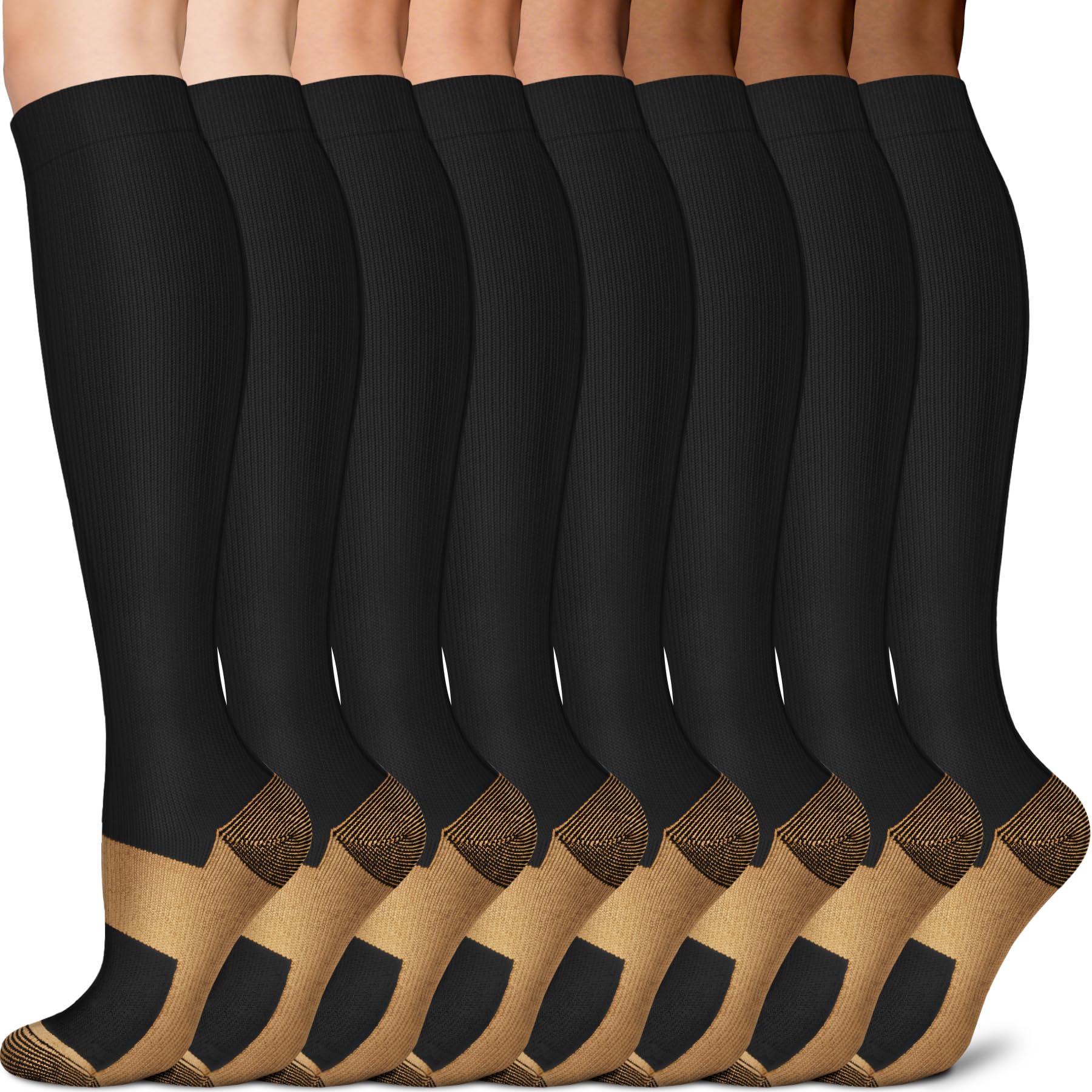
These socks are comfortable and soft, good for everyday wear or light recovery. The 8-pack offers great value per pair. However, compression feels closer to 10-15 mmHg than the advertised 15-20, and some socks develop holes in the toes after a few wears. For standing all day or mild swelling reduction, they work fine, but for basketball performance or firm compression needs, consider the FITRELL 3-pack or Physix Gear single pair.
Pros
- Very comfortable and soft, feels like regular socks
- Great value with 8 pairs at a low price
Cons
Best for casual daily use or light recovery when compression strength isn’t critical.
How to Choose
The single most important buying insight is that compression level (mmHg) and proper fit matter far more than copper infusion or quantity of pairs.
Compression Level
The mmHg rating directly determines the pressure applied to your legs. 15-20 mmHg provides mild support, good for light recovery and circulation during daily wear. 20-30 mmHg applies firmer pressure that reduces muscle oscillation during jumps and cuts, which can help with shin splints and calf fatigue.
Firmer socks are harder to put on and may feel restrictive if you aren’t used to them, but the trade-off is better performance support. Many budget multipacks label themselves 20-30 mmHg while delivering noticeably lighter compression – cross-check reviews for users who mention actual feel.
Length
Knee-high is essential for basketball because graduated compression needs to span the full calf to shin area. Socks that end mid-calf won’t provide the pressure gradient needed for circulation return and muscle stabilization.
That said, too-long socks can bunch behind the knee or slide down under high-top sneakers. Look for a product that offers multiple size options based on calf circumference, not just shoe size, to avoid fit issues.
Material and Breathability
Moisture management during intense play is critical – cotton or low-nylon blends trap sweat and increase blister risk. Nylon/spandex blends wick well and retain elastic longer, while copper-infused fabric is mostly marketing with minimal measurable benefit.
Durability often comes down to the nylon content; higher spandex percentages add stretch but can break down faster under repeated washing. Cold water and air drying preserves the elastic fibers significantly longer than machine drying.
Number of Pairs
A single high-quality pair costs roughly the same as a budget multipack of 6-8 socks. If you play multiple times a week and need consistent compression, investing in 2-3 proven single pairs is often more reliable than a bulk set where individual socks vary in quality.
Multipacks shine as rotation for practice days or recovery wear when you just want something comfortable. Just be prepared for possible inconsistencies in compression strength and shorter lifespan in the budget tier.
FAQ
Do compression socks help with shin splints during basketball?
Yes, but only if they provide firm 20-30 mmHg graduated compression that supports the calf muscles and reduces tibial strain. Many budget 15-20 mmHg socks are too light to make a difference for shin splint management. Look for models with proven compression consistency and proper fit to relieve symptoms.
Why do my compression socks lose tightness after a few washes?
Heat is the main culprit – drying on high or washing in hot water breaks down the spandex and nylon fibers. Always wash in cold water and air dry flat. Also, budget socks often skimp on elastic content, so the drop-off happens faster than with mid-range or premium brands.
Can I wear compression socks for basketball under high-top sneakers?
Yes, but choose a knee-high sock with a thinner cuff and shorter overall length to avoid bunching inside the shoe. Some socks are designed too long and will stack at the top of the sneaker, causing irritation. If you have high-tops, look for a sock that stays below the knee cap and has a snug top band.
How tight should compression socks be for basketball?
Firm enough to feel a consistent squeeze from ankle to knee, but not so tight that the top band leaves deep indentations or cuts off circulation. A well-fitted 20-30 mmHg sock will feel snug but not painful. If you can pull the fabric away from your leg easily, the compression is too weak for game-day performance.