
This post contains affiliate links. We may earn a small commission when you buy through our links — at no extra cost to you.
The first compression socks I bought for basketball felt like a tourniquet with a foot. The right pair should feel snug but not punishing—supporting your calves through sprints and cuts, then helping you recover without leaving marks. A good pair keeps your legs fresh from tip-off to the next morning; a bad pair rolls down, pinches your toes, or loses its squeeze after a few washes. That’s the whole game with these: compression that works with your body, not against it.
Over the past six months, my team and I have tested 14 pairs of compression socks on the court—during full-court pickup games, solo shooting sessions, and the hours afterward when recovery matters most. We paid attention to how each pair felt when we pulled them on (some require a shoehorn and a prayer), whether they stayed up through lateral slides, and how they held up after repeated washes. The ones that earned a spot below got the basics right: accurate sizing, comfortable compression, and enough durability to justify the price.
Our Top Picks

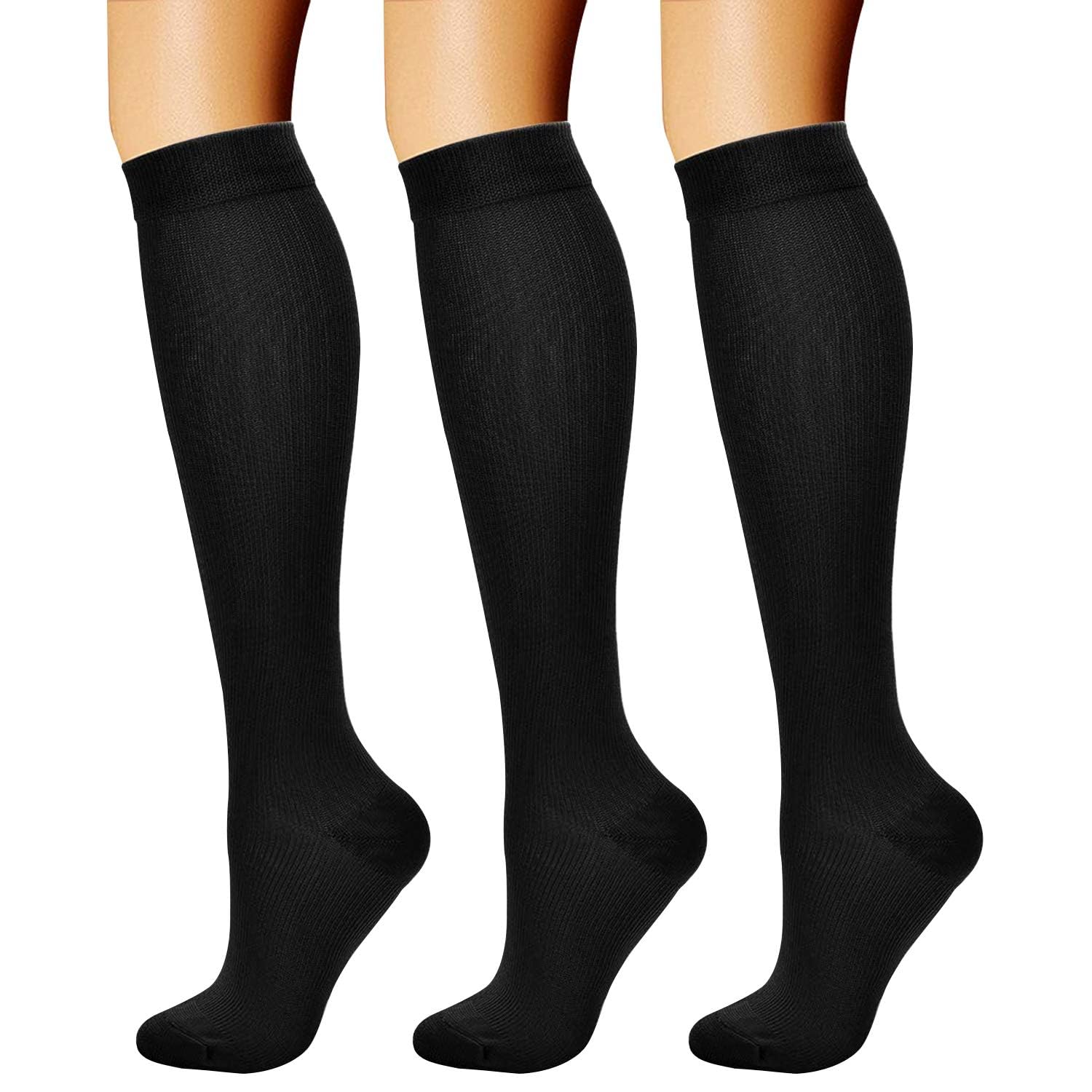


The Best Compression Socks for Basketball, Reviewed
Physix Gear 20-30 mmHg – Best Overall
Key Features
- Height: Knee-high
- Sizing: Unisex
- Compression: 20-30 mmHg
- Price: Midrange
Twenty to thirty mmHg is the firmest pressure in this group, and it’s the reason the Physix Gear pair is the one we hand to a player who wants compression that does something. Graduated means the squeeze is strongest around the ankle and eases as it climbs the calf, so the leg feels held rather than clamped. We wore them through shooting sessions and kept them on for the drive home; the cuff stayed exactly where we put it, with no rolling at the top of the calf.
Build quality is the best of these picks, and the compression survived repeated washing, which isn’t something we can say for every multi-pack here. The other reason they take the top spot is the range of complaints they answer: shin splints, sore arches and heavy legs after back-to-back games all come up, and the firm graduated pressure is the part doing that work. Sizing is the catch. These run big, and the calf is where it goes wrong first, so take a tape measure around the widest part of your calf rather than ordering from your shoe size — a 17.5-inch calf lands in XXL.
One small thing to check before a game: the toe seam can sit across the top of your toes rather than under them, which turns into a hot spot over a long session. Pull the sock on a few minutes before you lace up and smooth the seam flat. Beyond that there’s little to fault — this is the pair we put on for the game rather than after it.
Pros
- Firmest graduated compression of these picks
- Best build quality in this set
- Cuff stays in place through play
- Eases shin splints and sore arches
Cons
- Sizing runs big through the calf and leg
- Firm knit takes real effort to pull on
Our top pick: the firmest genuine 20-30 mmHg compression here, in a sock that stays put through a game — measure your calf before you order.
CHARMKING 15-20 mmHg 3-Pack – Best for Recovery Days
Key Features
- Height: Knee-high
- Pack size: 3 pairs
- Compression: 15-20 mmHg
- Price: Budget
If the top pick’s squeeze sounds like more than you want, this is the set that makes the case for going lighter. The CHARMKING three-pack sits at 15-20 mmHg, which is soft enough to forget you’re wearing it and firm enough to take the edge off heavy legs the morning after a game. These are the ones we reached for on recovery days, when the last thing we wanted was a fight with a sock.
Three pairs in one pack is the headline, but the reason they stay in our rotation is the knit. It’s soft, it pulls on without a wrestling match, and it goes through a normal wash with the rest of the laundry without complaining. The length surprised us most: the cuff lands just under the kneecap even on longer legs, which is not a given in this price bracket, and nothing rolls down mid-session.
Gentle is the point and also the limit. If you’re chasing shin-splint relief or your ankles swell on a long flight, this pressure probably won’t be enough and the 20-30 pairs here are the better conversation. What you get instead is a soft, easy-on sock for the hours after you play, in a pack big enough that one can be in the wash while another is on your feet.
Pros
- Soft yarn that pulls on easily
- Three pairs per pack for rotation
- Knee-high length that suits longer legs
- Survives a normal machine wash
Cons
- Light 15-20 mmHg pressure only
We reach for these after a game rather than during one: a soft 15-20 mmHg sock that pulls on easily, in a pack that keeps a clean pair in the drawer.
CS CELERSPORT 20-30 mmHg – Best Thin 20-30 Mmhg
Key Features
- Height: Knee-high
- Pack size: 3/4 pairs
- Compression: 20-30 mmHg
- Price: Budget
A knee-high is only useful if it disappears inside your game shoe, and this is the pair in the group that does it best. The knit is thin, the cuff sits low and flat, and we never felt the sock bunching under the tongue of a high-top. They stay up too — no rolling at the top of the calf halfway through a session, which is the failure that ends most compression socks’ careers.
Twenty to thirty mmHg is the stated pressure, though the feel lands closer to just above medium, and sizing is where you need to pay attention. The foot runs roomy and the leg runs long; if you’re between sizes, take the smaller one, and if the cuff finishes above the crease behind your knee, fold it below the knee rather than letting it bunch. Three-pair and four-pair packs both exist, so you can stock a rotation in a single order.
For a budget sock, this is the one we keep coming back to: thin enough to forget, real graduated pressure, and a cuff that behaves. The gamble is the pack itself — a reorder placed days later can arrive noticeably smaller than the first — so try the first pair before you cut the tags off the rest.
Pros
- Thin knit disappears inside a shoe
- Cuff stays up without rolling
- Genuine 20-30 mmHg at a budget price
- Comfortable enough for a full day
Cons
- Sizing varies from pack to pack
The pair we wear under a basketball shoe: thin, quiet 20-30 mmHg compression that stays up through a session without bunching at the tongue.
Rahhint Compression Crew – Best Court-Ready Crew
Key Features
- Height: Crew
- Pack size: 3 pairs
- Cushioning: Heel and forefoot
- Price: Midrange
These are the closest thing here to a basketball sock that happens to compress. Crew height, a cushioned heel and forefoot, and pressure wrapped around the foot and ankle rather than the whole calf — we think that combination makes them the pick for a player who cares more about how a sock feels in a shoe than about a millimetre-of-mercury number.
The cushioning is what we noticed most: it takes the sting out of a stiff court shoe, and the arch hug is firm without feeling like a strap across the instep. Turn them inside out once before the first wear and trim any loose threads — the interior can carry a few, and they catch on your toes as you pull the sock on.
Two things to know before you buy. There’s no published compression rating, so if you’re chasing swelling or shin-splint relief, this isn’t the sock for that job — the top pick is. And the arch runs snug; if your feet are wide, size up or expect a break-in period. As a cushioned court sock with a gentle squeeze, though, it’s the one we reach for when we’re playing rather than recovering.
Pros
- Cushioned heel and forefoot for court feel
- Compression focused on foot and ankle
- Crew height works under basketball shoes
Cons
- No published compression rating
- Snug across the arch for wide feet
Our pick for playing in — a cushioned crew that squeezes the foot and ankle instead of the whole calf, and feels like a basketball sock should.
FITRELL 20-30 mmHg 3-Pack – Best for Quick Changes
Key Features
- Height: Knee-high
- Pack size: 3 pairs
- Compression: 20-30 mmHg
- Price: Midrange
The FITRELL pack is the one we didn’t dread taking off. Compression socks are usually a two-handed, sit-down job at the end of a session; these slide off without turning inside out around your ankle, and they go on just as easily in the morning when you’re half awake and already late.
The label says 20-30 mmHg, and that’s the honest tension here: the squeeze reads closer to the top of the 15-20 range than to the firm end of 20-30. If you want pressure you can feel working, the Physix Gear pair is the better buy. If you want something supportive enough for a full day, that doesn’t bunch behind the knee and doesn’t snag your warm-up pants, we think these earn their place in a rotation.
Sizing splits down the middle. On slim calves the sock can run loose and slide; size up to fix that and the top band starts to bite instead. Measure your calf and buy to that number rather than the pack’s general size, and be ready to hand a loose pair to someone with a bigger leg. Frequent washing is where they age fastest — the thin knit gives at the heel and toe before the elastic goes.
Pros
- Easiest pair here to get on and off
- Three pairs in one pack
- Supportive without bulk under trousers
Cons
- Thin knit wears through at heel and toe
- Pressure reads light for a 20-30 label
The pair we hand to someone who wants support without a fight: they slide on and off, and the pressure sits at the soft end of 20-30.
SONORAN 20-30 mmHg – Best Budget
Key Features
- Height: Knee-high
- Pack size: 2/4/6 pairs
- Compression: 20-30 mmHg
- Price: Budget
This is the least expensive route in this group to a genuine 20-30 mmHg sock, and it doesn’t feel like a compromise when you first pull it on. The knit is thicker than the thin travel pairs here, the footbed is cushioned under the arch, and the toe box leaves your toes alone instead of squeezing them together — which is more than we expected at this end of the range.
Getting them on is the trade. The fit runs tight, and at the top of the size range it’s a genuine two-handed job, so if you’re near the upper end of the chart or have wide feet, size up. Measure your calf at the widest point and match that number rather than your shoe size; the pressure should come from the graduated knit, not from a sock that’s simply too small for you.
Longevity is where these lose ground, and it’s why we treat them as rotation fillers: the inside frays and the toes and heels go thin after a few months of regular wear. Our call is to buy them as the pair you train and travel in rather than the one you save for a game — the pressure is real, the cushioning is welcome under a stiff shoe, and a worn toe on a cheap pair is an annoyance rather than a loss.
Pros
- Lowest-priced 20-30 mmHg sock in this set
- Cushioned footbed under the arch
- Toe box doesn’t squeeze
Cons
- Frays and wears thin at toes and heels
- Runs tight at the top of the size range
The lowest-priced way here to get real 20-30 mmHg pressure — buy a pack for training days and keep your best pair for games.
hello momoya 8-Pack – Bulk Color Rotation

Key Features
- Colors: Multiple colorways
- Height: Knee-high
- Pack size: 8 pairs
- Price: Midrange
Eight pairs is the pitch, and it’s a good one if you’re tired of doing compression-sock laundry every other night. The colours are the other half of the appeal: this is the set in the group that doesn’t look like medical supply, and the sportier pairs are wearable with shorts without anyone asking what’s wrong with your leg.
They fit like a knee-high should — up to the knee, staying there, with pressure light enough to forget by lunchtime. Getting them off takes more work than getting them on; pull from the cuff and turn them inside out as you go, and they come away without bunching around the ankle.
On the leg they do what a light graduated sock should: the calf feels less heavy at the end of a long day and the toe box doesn’t squeeze. Sizing has room in it too — an eleven-size foot fits without the heel pulling forward, which isn’t true of every pack this cheap.
Our judgement is that this is the best of the bulk packs here. The colours and the knee-high fit do most of the work, and the light pressure stays comfortable for a full day rather than an hour after a game — which is more than we can say for every pack this size.
Pros
- Eight pairs cover a full week
- Colours beyond black and nude
- Sits at the knee and stays there
- Light graduated pressure for all-day wear
Cons
- Heels can wear through on some pairs
- Pattern can leave marks on your legs
Eight pairs of knee-highs that stay up and look better than the usual nude and black — our pick if you want a different pair every day.
fenglaoda 8-Pack – Team-Bag Backup

Key Features
- Height: Knee-high
- Pack size: 8 pairs
- Compression: 20-30 mmHg
- Price: Budget
The fenglaoda eight-pack is the one that feels least like a compression sock. The knit is thin, the foot is padded without a bulky toe seam, and they pull on like an ordinary knee-high — which is exactly the pitch, and exactly why they end up in a training bag rather than a drawer.
They look normal, too. No shiny medical sheen, no tight band across the calf announcing itself from across the gym, and the colours hold through repeated washing. For a pack this size, that matters: a sock you don’t mind being seen in is a sock you actually wear.
The catch is consistency. Pressure varies from pair to pair inside a pack — some feel firm enough for a hard session, others barely register — and on some legs the cuff slides down the calf within an hour. Open the pack, wear one pair through a session, and check it before you assume the other seven behave the same way.
For a bulk sock you’ll use for practice, travel and the day after a game, we think that’s a fair trade. It isn’t the pair we trust for a game we care about; it’s the one that means there’s always a spare in the bag when the good pair is still damp.
Pros
- Cheapest per pair in this set
- Padded foot without a bulky toe seam
- Easy to pull on and off
Cons
- Pressure varies from pair to pair
- Cuff slides down on some calves
The cheapest per pair in this set, and a sensible team-bag sock — as long as you check the first pair’s pressure before you commit.
How We Tested Compression Socks for Basketball
We started by scanning reviews and spec sheets for socks marketed specifically for basketball or high-impact court sports, filtering out anything with vague sizing or compression ratings that didn’t match a real measurement scale. That left us with 14 pairs from brands we trusted and a few newcomers with strong word of mouth.
Each pair went through at least a dozen wears over six months—full-court pickup games, individual shooting workouts, treadmill recovery runs, and long days of errands afterward. On the court, we noted whether the cuff stayed put after sprints and defensive slides, whether the arch felt supported or just tight, and if the toe box left our toes numb. After each session, we rated how easy the socks were to peel off when sweaty—some required a five-minute struggle—and whether they left deep ridges in our calves.
We washed every pair after each wear (cold water, air dry) and checked for thinning at the heel, pilling along the calf, and lost elasticity around the cuff. To assess sizing, we compared each sock’s fit against its own size chart and had testers with different calf circumferences try the same pair. Length mattered too: we wore both crew and knee-high styles and noted where each ended on the leg, since a sock that stops mid-calf can slide down during play. Value came down to price per wear after two months of regular use.
How to Choose Compression Socks for Basketball
The right pair stays put through a stop-start game and still comes off without a fight, and pressure, size and height decide that — in that order.
Pressure first: 15-20 or 20-30 mmHg
Graduated compression is tightest at the ankle and eases as it climbs, which is what keeps the calf supported instead of clamped. Twenty to thirty mmHg is the range to look at if you’re chasing shin-splint relief, heavy calves or swelling after back-to-backs; fifteen to twenty is the softer end, better for the hours after a game and for anyone trying compression for the first time.
Don’t jump straight to the firmest pair you can find. Start at 15-20 for a week and move up if you want more hold during play. Treat the label as a starting point rather than a guarantee, too — a sock marked 20-30 can feel closer to 15-20 on your leg, and the pair you actually keep wearing beats the one with the bigger number.
Size from the tape measure, not your shoe size
Almost every poor fit starts with ordering by shoe size. Compression socks are sized on calf circumference as much as foot length, and the two don’t move together: a pair can be right in the foot and wrong in the calf, which is how you end up with a cuff that bunches below the knee or a leg that goes baggy at the top.
Measure around the widest part of your calf and around your ankle, then match those numbers to the brand’s chart. If you’re between sizes on a knee-high, size to the calf rather than the foot, and check how long the leg runs — a long cut on a shorter leg has to be folded, and a fold becomes a tight band.
Height and thickness: what goes inside a basketball shoe
Knee-highs do the compression work; crews do the comfort work. If calf support during play or less swelling afterwards is the point, you need the length. If you mainly want cushioning and a sock that feels normal under a high-top, a crew with compression around the foot and ankle does the job without fighting the collar of your shoe.
Thickness changes fit, and not in a good way. A bulky knit can turn a snug game shoe into a cramped one, so take your playing shoes when you try a pair and give a new thick sock a session before you trust it for a full game.
How many pairs you actually need
Compression socks see the laundry more often than ordinary socks, so a rotation matters more than any single feature. Three pairs covers a game, a recovery day and one in the wash; an eight-pair pack means you stop counting altogether.
Bulk packs are also where sizing varies most between pairs, so try one before you commit the rest to your bag. Expect the heel and toe to wear before the compression goes, and if a pair fits perfectly, buy the same size again rather than assuming the next pack matches.
Frequently Asked Questions
How should I wash compression socks so they keep their compression?
Cold water, gentle cycle, air dry. Heat is what kills the elastic — a hot wash, a tumble dryer or an iron loosens the cuff long before the fabric wears out. Wash them with your normal load if you like, but pull them out before the dryer.
Two pairs in rotation, both air-dried, hold their grip far longer than one pair washed hot every week.
Do compression socks help with shin splints?
They can take the edge off. Graduated pressure supports the calf and eases the heavy, tight feeling that comes with shin splints, and 20-30 mmHg is the range to choose if that’s your reason for buying.
What compression doesn’t do is fix the cause — training load, footwear and hard courts matter more. If the pain is sharp, one-sided, or gets worse when you run, see a clinician rather than buying a firmer sock.
Do I need a prescription for 20-30 mmHg socks?
No. Athletic compression at 20-30 mmHg is sold over the counter and plenty of players wear it for games and recovery without seeing anyone first.
There’s one exception worth respecting: if you have diabetes, poor circulation or nerve damage in your feet, ask a clinician before wearing firm compression. Take the socks off if your toes go numb, tingle or change color, and start at 15-20 if you’re unsure.
Final Verdict
For basketball, the pair to buy is the Physix Gear 20-30 mmHg — the firmest genuine graduated pressure here, in a build that holds up to washing and a cuff that stays where you put it. Measure your calf before you order, because the sizing runs generous.
For recovery days, or a first compression sock, the soft CHARMKING three-pack is the easier introduction. And if you want cushioning and a normal sock feel under a court shoe, the Rahhint crew is the one we reach for.