
This post contains affiliate links. We may earn a small commission when you buy through our links — at no extra cost to you.
A lace-up ankle brace is a trade-off you feel on the first hard cut: tighten it enough to trust your ankle on a landing and you give up some push; back it off for mobility and you spend the rest of the run wondering whether it will hold. The good ones find the middle, holding the foot through a rebound and then disappearing from your mind by the second quarter.
I’ve turned the same ankle twice coming down from a rebound, so I know what a bad brace feels like — stiff, hot, and halfway unlaced by the third quarter. My team and I spent six months lacing up 12 different braces for pickup games, open gyms, and solo drill sessions, and the split was obvious. One thing I’d tell any first-time buyer: most of these are sized by shoe size rather than ankle circumference, and a half size in the wrong direction is the difference between real support and a numb foot. The picks below are the ones that held without costing you your first step.


Best for All-Round Court Play
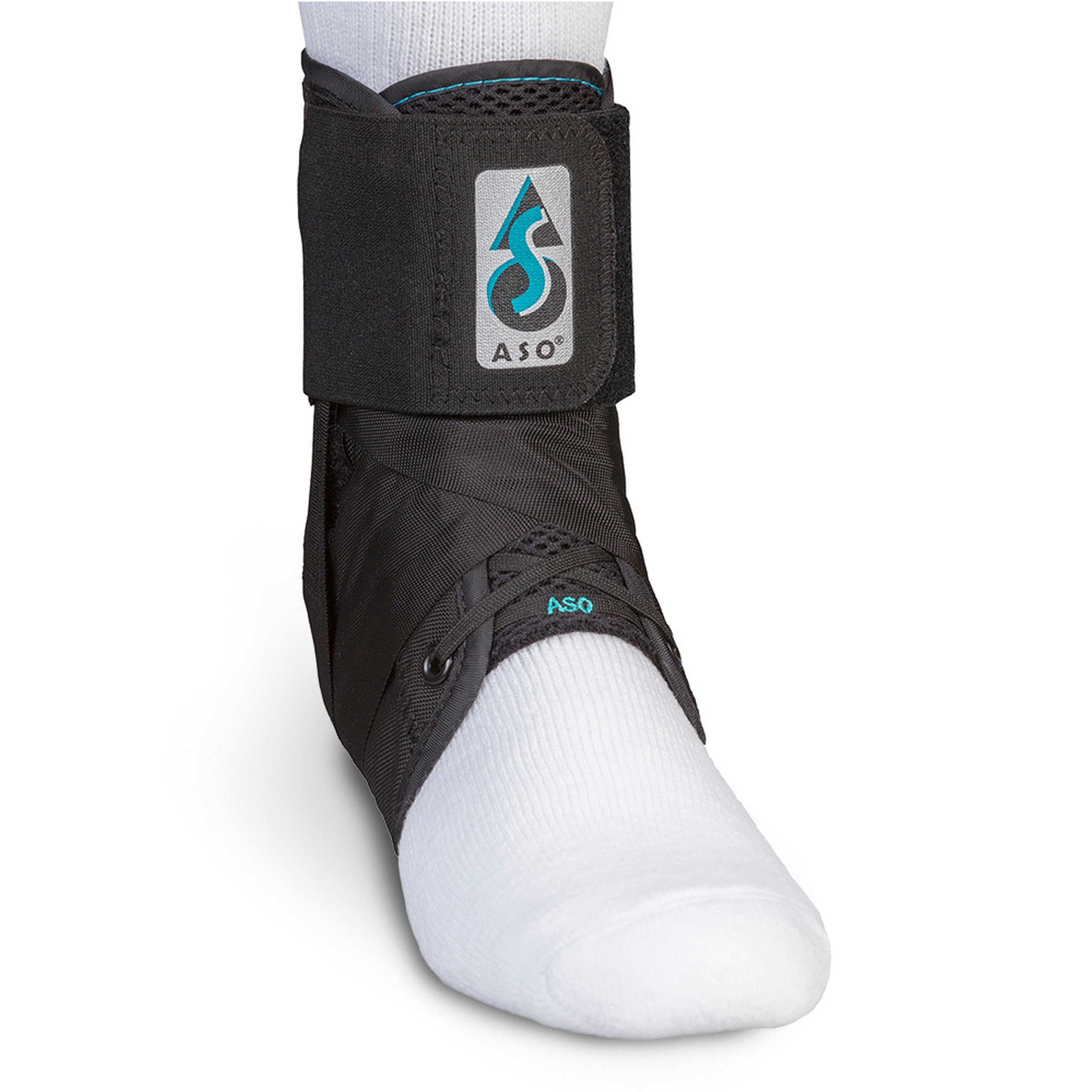
Med Spec ASO Ankle Stabilizer
Key Features
- Care: Machine wash
- Size: Large
- Closure: Lace-up with figure-8 straps
- Padding: CoolFlex tongue and lining
- Price: Midrange
A landing on someone’s foot is the moment a brace either works or it doesn’t, and the ASO is the one we stopped thinking about after a few sessions. The laces pull the shell snug around the ankle, then two straps cross under the arch and come back around to fasten over the top, roughly the sequence a trainer uses with tape. We especially like that the two stages work independently: keep the laces firm and back the straps off when you want to run.
The padding is what makes that tightness livable. CoolFlex lining and a padded tongue sit between the laces and your skin, so pressure spreads instead of digging into the ankle bone. It’s also the only brace in this group that goes in the washing machine, which matters more than it sounds after a season of practices.
Sizing is where to slow down. The shell runs generous for its stated size, so ordering your sneaker size can leave you cranking the straps to feel anything at all. Measure around the ankle and check the chart; if you’re between, the smaller shell pulled snug locks better than a big one cinched down.
Inside a shoe it’s unobtrusive — normal sock, normal court sneaker, and the brace disappears. It won’t hide under a very snug low-top that presses the lacing into your instep, so bring your game shoe along the first time you fit it.
Pros
- Laces and figure-8 straps lock independently
- Padding spreads pressure off the ankle bones
- Machine washable, unlike the rest here
- Low enough for a normal court shoe
Cons
- Fiddly to lace tight over a swollen ankle
The ASO is the brace we recommend first: laces and figure-8 straps lock the ankle, the padding lets you wear it genuinely tight, and it still slides into a normal court shoe.
Best for Low-Cut Shoes
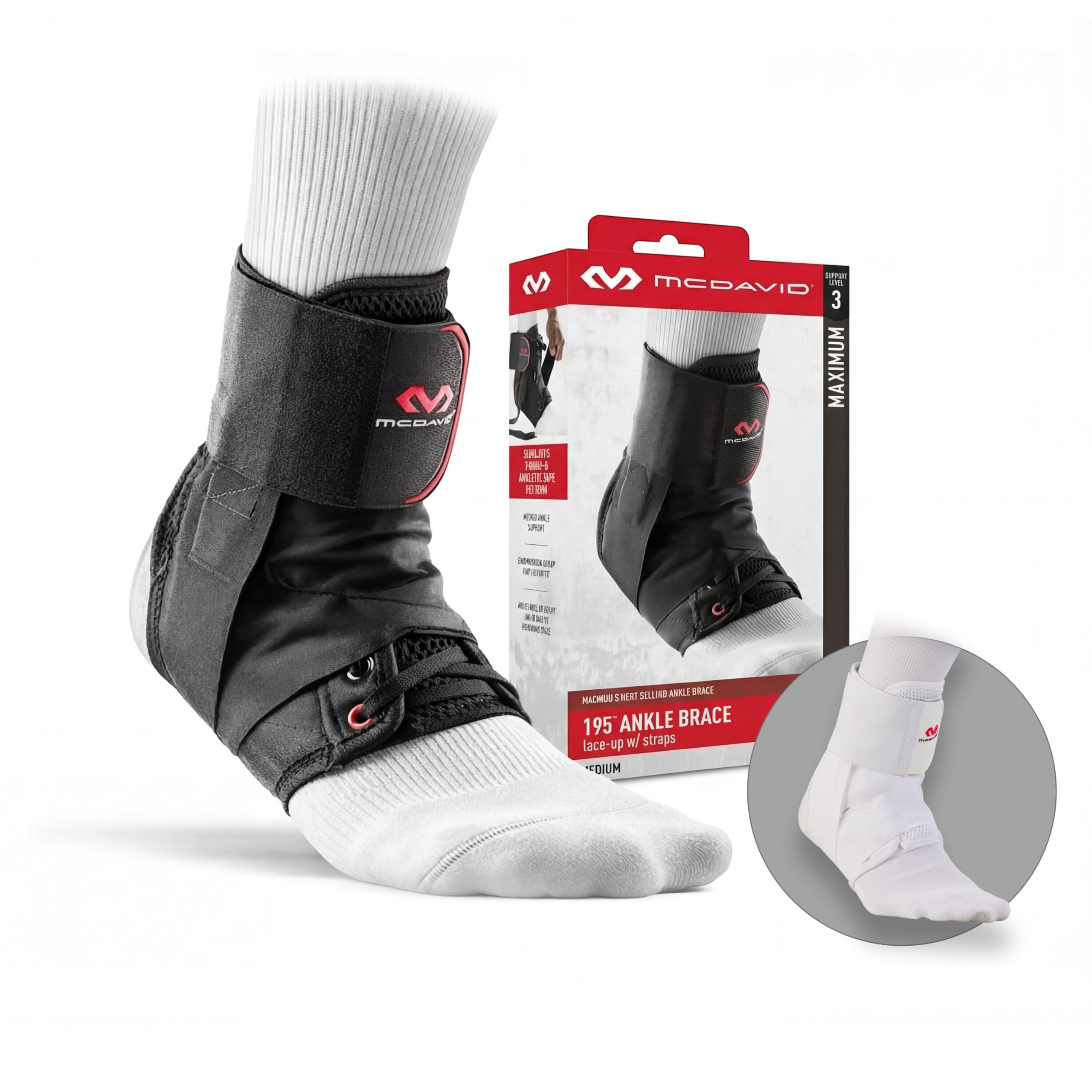
McDavid 195R Lace-Up
Key Features
- Care: Hand wash only
- Weight: 3.2 oz
- Closure: Lace-up plus hook-and-loop strap
- Side support: Rigid side stabilizers
- Price: Midrange
At 3.2 ounces the 195R barely registers, and that’s the first thing we noticed about it. The rigid side plates do the real work: they sit against the outside of the ankle and stop a roll from starting, rather than relying on compression alone to hold everything together.
That pairing — an ultralight shell with hard stabilizers and figure-8 lacing — is why this is the brace we hand to players who want protection without a boot on their foot. It’s also the one that disappears most completely inside a low-top, which is not a small thing if you’ve spent years playing in low-cut shoes.
The shell is small and stiff, and pulling it over your heel the first few times is a fight; you’ll wonder whether you’ve got the wrong size. You haven’t, as long as you ordered off the chart rather than your sneaker size. Once it’s on, the low profile is exactly the point, and re-tensioning between games takes seconds.
Pros
- Just 3.2 ounces in the hand
- Rigid side stabilizers stop a roll early
- Vanishes inside a low-cut shoe
Cons
- Runs small for its stated size
The lightest lock in the group: rigid side plates and a 3.2-ounce shell that disappears in a low-top, for players who hate a boot-like brace.
Best for Quick Routines
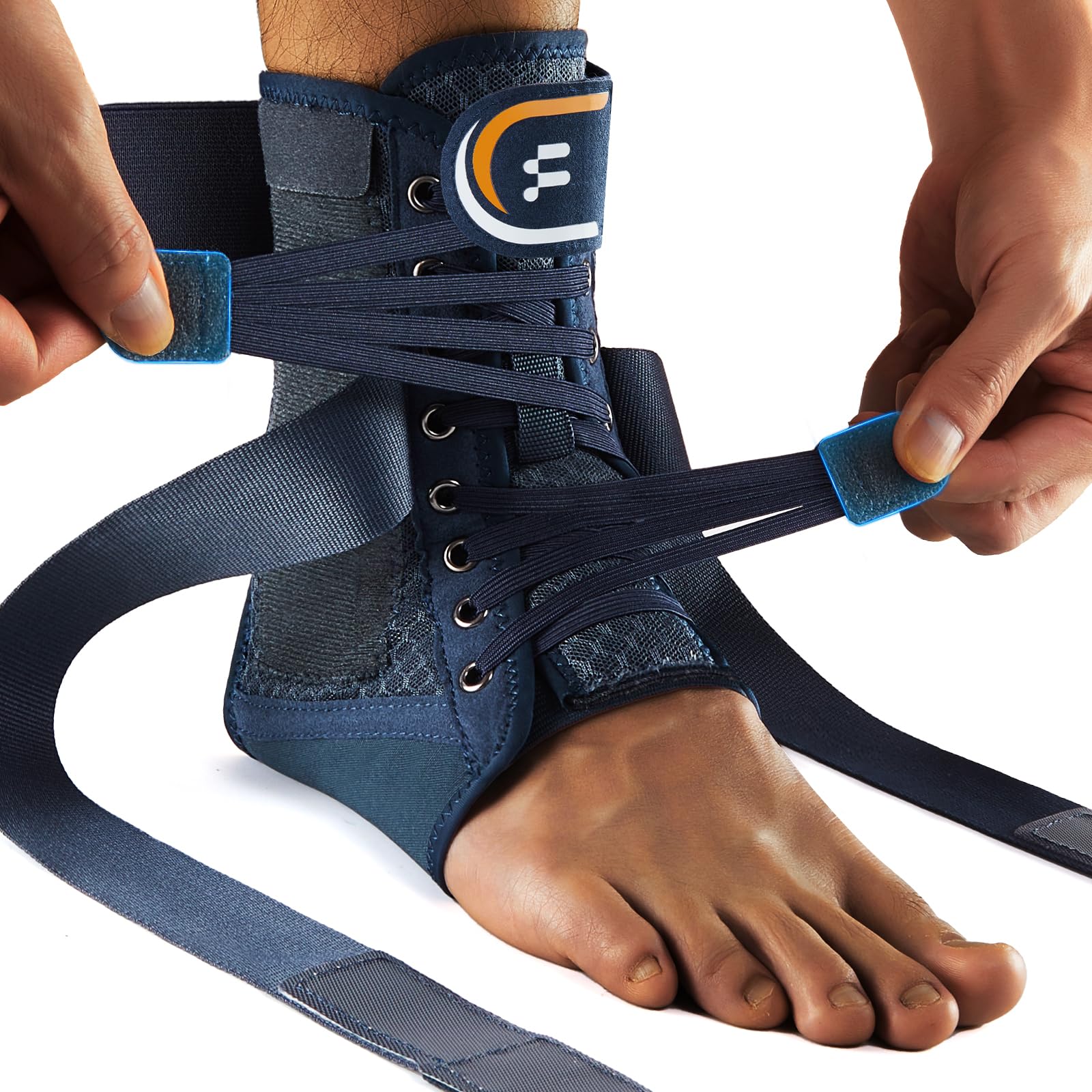
WHCOOL Slim-Fit Ankle Brace
Key Features
- Size: Small
- Closure: Quick-pull laces, hook-and-loop lock
- Profile: Slim, low-elastic fabric
- Sizing basis: Ankle circumference
- Price: Budget
There’s no eyelet-by-eyelet routine with the WHCOOL: the laces run through the shell, you pull them, and a hook-and-loop flap locks the whole thing down. It’s the fastest brace here to get on, and if you’re the player lacing up in a corridor between games, that’s most of the argument right there.
Two auto-shaped pads sit over the ankle bones, and the figure-8 strapping is cut from non-stretch fabric, so the lock comes from the strap path rather than from cranking the laces until your foot goes numb. The material is thin and airy — this is a brace you can wear through a full practice without your foot cooking.
Sizing goes by ankle circumference rather than shoe size, so measure before you order and add a little for swelling. In a snug shoe the side straps can press against the collar, which is the one place it makes itself known. As for the last few percent of rigidity, it gives some away to a stay-based brace, and for most players that’s the right trade for a routine they’ll actually keep.
Pros
- Fastest fastening of the lace-ups here
- Slim enough to wear with the shoe you own
- Breathable fabric for long sessions
Cons
- Side straps can press in a snug shoe
Seconds to put on and a genuinely slim shell — the brace to choose when a long lacing routine is the thing stopping you wearing one at all.
Best for Changing Support Needs
Fitomo Triple-Lock Ankle Brace
Key Features
- Care: Hand wash only
- Size: M
- Closure: Quick lace-up, hook-and-loop
- Side support: Removable side splints
- Price: Midrange
Two plastic splints slide into pockets on either side of the Fitomo, and the fact that they come out is why it earns a place. Leave them in for a game and it behaves like a stay-supported lace-up; pull them out and it’s a soft wrap for the days in between, when you want support without a brace that argues with every step.
The fastening is quick: lace it once, then set the tension with straps that press flat. We paid attention to whether those straps crept during a session, because that’s what turns a good brace into a nuisance, and they held where we set them. It’s also low enough in profile to sit inside a normal workout shoe without loosening the laces much.
Sizing is the weak point. The sizes don’t track shoe size cleanly, so measure the ankle; if the shell feels baggy across the top of the foot, that’s a size down, not a strap to tighten. The rest is straightforward — hand wash, air dry, ready for the next session.
Pros
- Removable splints change how stiff it feels
- Straps stay where you set them
- Low bulk in workout and casual shoes
Cons
- Sizing doesn’t follow shoe size
A brace that stiffens for games and softens for recovery, thanks to splints you can pull out; just measure your ankle before ordering.
Best for Hot Gyms
Z Athletics Reinforced Lace-Up
Key Features
- Size: Small
- Panels: Air-mesh, wicking
- Weight: 4.64 oz
- Closure: Figure-8 laces plus side straps
- Price: Midrange
Size is the first thing to sort out with this one, because the fit is where it makes you work. The shell runs tight across the top of the foot, so a high instep or a wide forefoot is where you’ll feel it first, and the sizes don’t line up neatly with shoe size.
Get past that and there’s a lot to like. Figure-8 lacing and side straps lock the ankle firmly, the stitching and side straps feel sturdy rather than flimsy, and the air-mesh panels breathe better than anything else in this group — worth having in a gym with no air conditioning.
The lacing across the instep is also what limits your shoe choice: a snug low-top will feel it, while a roomier shoe hides it. The stability strap is the part to keep an eye on, since that’s what gives out first when you’re hauling on it every session.
For a player who wants a breathable brace for long practices and will take the trouble to get the size right, it’s a good buy. Wide-footed players should start with the ASO and its padded tongue rather than fighting this one.
Pros
- Air-mesh panels breathe better than the rest here
- Figure-8 lacing with side straps locks firmly
- Sturdy stitching and side straps
Cons
- Tight across the top of the foot
- Stability strap wears out first
Breathable and firmly locking, but it runs tight across the top of the foot, so a wide instep should look at a padded-tongue brace instead.
Best for Heel Lock
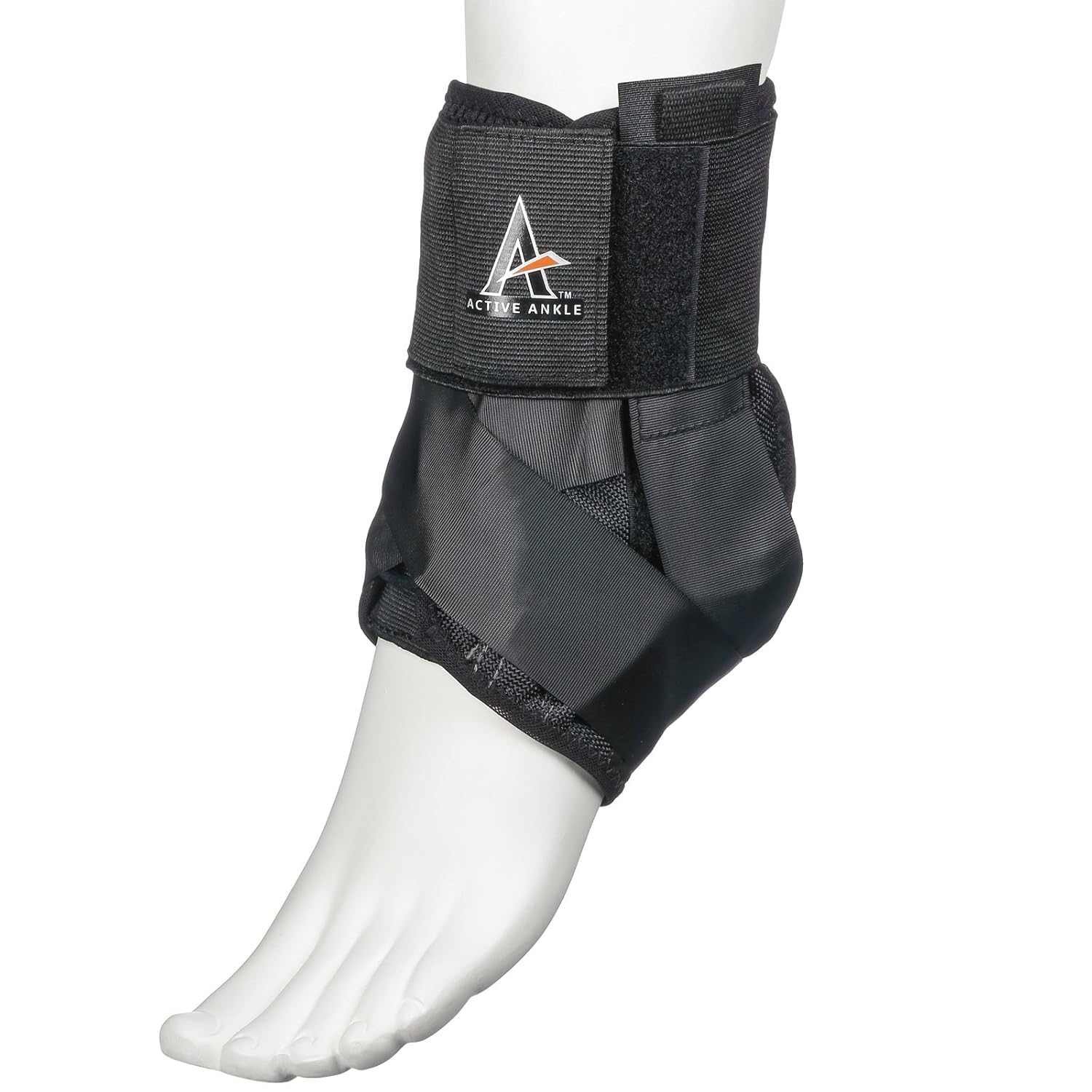
Cramer Active Ankle AS1 Pro
Key Features
- Grip: Non-slip silicone sole print
- Size: Medium
- Closure: Speed-lace eyelets
- Side support: Figure-8 and circumferential straps
- Price: Midrange
Turn the AS1 Pro over and there’s a silicone print on the sole. It’s a small thing — it keeps the straps from sliding under your foot as you cut — and it’s the sort of detail you notice only when a brace doesn’t have it.
The lacing is the real argument, though. Speed-lace eyelets let you haul the whole shell tight in two pulls instead of working around the eyelets one at a time, and the non-stretch vertical straps run in a heel-lock path, so the tension lands where a tape job would. It’s the quickest traditional lace-up here to apply, and it stays locked once it’s on.
The pro-fit cut trims material at the forefoot, which keeps bulk down but leaves little room if you’re wide across the toes. Sizing lands somewhere between snug and slightly roomy depending on the foot, so buy where you can exchange. The wider heel hole is a genuine kindness if you’ve had braces rub a blister behind the ankle.
Pros
- Speed eyelets make lacing noticeably quicker
- Silicone sole print keeps straps in place
- Wider heel hole reduces rubbing
Cons
- Little room for a wide forefoot
Speed lacing, a heel-lock strap path, and a silicone sole that keeps everything in place — a smart design for a mid-size foot.
Best for Cushioned Pressure Relief
Shock Doctor 849 Ultra Gel

Key Features
- Size: Large
- Closure: Lace-up with finger tabs
- Cushioning: Internal gel pads
- Support level: Performance Level 3
- Price: Premium
Internal gel pads are the Shock Doctor’s answer to the usual complaint about lace-ups: that a stiff shell presses on the ankle bones. The cushions sit where the brace tightens hardest, and the pre-curved tongue keeps the laces off the top of the foot.
Support is listed as Performance Level 3, medium stability, and that’s about right. This is a brace for a moderate sprain or an ankle that needs a reminder, not the locked-down feel of the ASO or the McDavid. What it does give you is a lot of padding, and that’s what keeps it on your foot for a full session instead of coming off at the first timeout.
Getting it on is the part that tests patience. The shell is thick, the lacing is slow, and the finger tabs only partly make up for it — this is a brace you put on sitting down with time to spare. It also wants a roomier sneaker; in a tight low-top you’ll feel every millimeter of the gel.
Pros
- Gel cushions over the ankle bones
- Pre-curved tongue keeps laces off the instep
- Non-slip footbed holds it in place
Cons
- Slow to get on and off
- Lace eyelets can break
Gel pads take the sting out of a stiff lace-up, so it suits a tender ankle that needs cushioning more than a maximal lock.
Best for Adjustable Stiffness
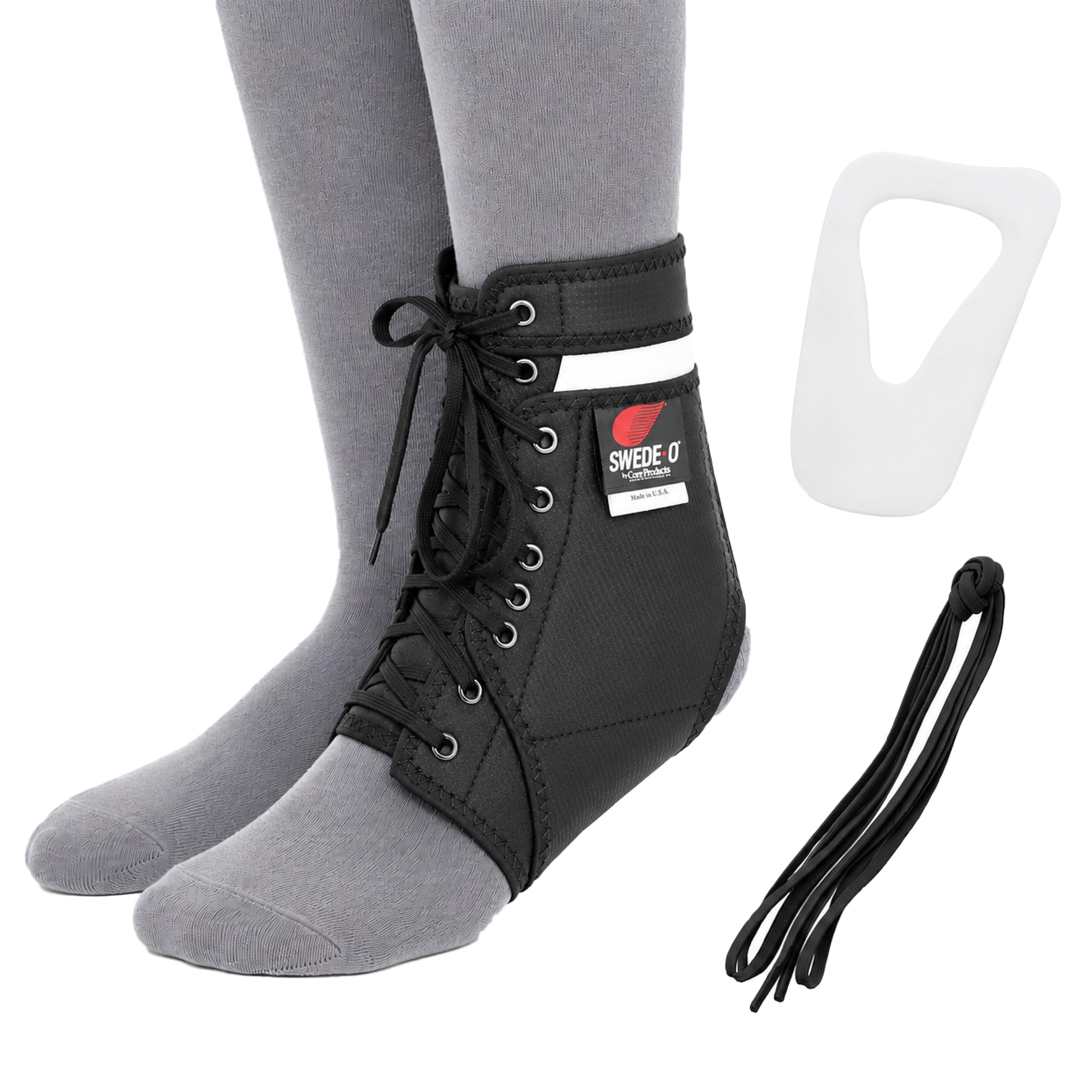
Swede-O Ankle Lok
Key Features
- Size: Small
- Closure: Laced closure
- Back panel: Full elastic back
- Side support: Removable side stabilizers
- Price: Midrange
A full elastic back panel is the Ankle Lok’s quiet advantage. It gives where the heel and calf rub, which is where a laced brace usually starts to chafe, so you get a firm shell without a hard edge behind your ankle.
The removable side stabilizers add a second gear. With them in, it’s a stiff brace for a rolled ankle or a game you probably shouldn’t be playing; pulled out, it’s a supportive wrap for the days in between.
Wear a thin sock underneath. The elastic back helps, but bare skin under laces and stays is asking for trouble, and a sock also helps the shell slide on. Lacing takes a deliberate minute or two, and that’s before you’ve adjusted the stays.
It ends up being the pick for someone who wants one brace that changes as their ankle does, across a season rather than a single game. Set it up once at home, with the stays where you want them and the laces worked out, and game day gets considerably easier.
Pros
- Removable stabilizers dial stiffness up or down
- Elastic back panel reduces chafing
- Fits either ankle
Cons
- Runs big for its stated size
- Thick shell crowds a snug shoe
One brace that goes from stiff to soft as your ankle improves, with the caveat that it runs big and wants a roomier shoe.
How We Tested the Best Lace-Up Ankle Braces
We started with more than 30 lace-up braces from the brands that turn up in gym bags and athletic training rooms, then cut the list down by construction, price, and sizing method. Figure-8 strapping, eyelet count, and whether a brace was sold by shoe size or by ankle measurement all mattered more than the copy on the box. Twelve made the cut, and each one went into a rotation of Tuesday night pickup games, open gym runs, and solo drill sessions over six months.
Every brace got the same treatment. We timed how long it took to put on and take off with cold hands in a gym hallway, then noted whether we could repeat the same fit twice without re-measuring. Each one went inside a normal basketball shoe to see whether it forced us up half a size or bunched at the heel, and we checked circulation after 20 minutes of play — tingling toes counted against a brace no matter how stable it felt.
On the floor we ran defensive slides, box jumps, and rebound drills, and had a partner step on the inside edge of the foot to mimic a roll. We watched whether the ankle stayed planted or the brace shifted and needed re-lacing mid-run. Durability got checked the unglamorous way: eyelets for stretching, laces for fraying, elastic straps for losing snap after repeated washing. Quality showed up in the stitching as much as in the first wear.
How to Choose a Lace-Up Ankle Brace for Basketball
The brace that protects you is the one you’ll wear tight for a full game, so we judge these on three things: how they lock the ankle, how they sit inside a shoe, and how quickly you can get one on.
What Actually Stops a Roll
Laces only do half the job. They set the fit around your ankle and instep; the figure-8 straps, run under the arch and back around, are what limits the sideways roll that sprains an ankle. Where these braces really differ is the side support: a rigid plate or a removable stay stops the roll earlier than fabric and compression alone.
If you’ve rolled the same ankle more than once, we prioritize a brace with stays or plates. The McDavid 195R and the Fitomo both give you that, and the Fitomo lets you take the stiffness out later, which is useful when you’re easing back in.
It Has to Live Inside Your Shoe
Bulk is the reason most braces end up in a drawer. A lace-up shell adds volume across the instep and around the heel, and a low-cut basketball shoe has no spare room for it. Try the brace with the shoe you actually play in, and expect to loosen the laces a notch.
Thin, sock-like models such as the WHCOOL all but disappear; a thick, gel-lined shell like the Shock Doctor needs a roomier sneaker. If you play in a very snug shoe, choose on profile before anything else.
Measure the Ankle, Not the Sneaker
Sizing is where lace-ups go wrong most often. Brands size by ankle circumference, by shoe size, or by a chart that doesn’t quite match either, and a shell that’s too big slides down while one that’s too tight presses on the instep. Measure around the ankle just above the bone rather than assuming your sneaker size carries over.
Between sizes, size for the swelling you have on the day, not the ankle you hope to have in a month. A brace you can tighten is better than one you can’t get over your heel.
Who Puts It On, and How Often
Traditional lacing takes a couple of minutes and two hands, which is fine at home and miserable in a crowded corridor. Quick-pull and hook-and-loop designs such as the WHCOOL and the Fitomo cut that to seconds, at some cost in fine adjustment. If you’re also taping a teammate, speed matters more than the last few percent of lock.
Care belongs in the same routine. The ASO is the only brace here that goes in a washing machine; the rest want hand washing and air drying, which keeps the straps tacky and the shell in shape.
Frequently Asked Questions
Can you play in a lace-up ankle brace, or is it just for practice?
You can play in one — these are built to be worn in games, and the shells are designed to sit inside a shoe. The practical checks are your league’s rules, since some competitions require braces to be padded or covered, and your shoe, which may need loosening a notch. Ask a referee before the first game rather than during it, and break the brace in at a practice.
How tight should an ankle brace be?
Tight enough that your heel can’t lift and the ankle can’t roll, loose enough that your toes stay warm and pink. Lace it, flex the ankle a few times, then re-tension — that second pass is what most people skip. If the laces leave deep marks or your foot goes numb, back off a notch before you go back on court.
Does bracing every session make your ankle weaker?
A brace supports the ankle the way tape does; it doesn’t strengthen the ankle and it doesn’t do the rehab for you. If you’re bracing because of repeated rolls, wear it for games and practices while you put real time into balance and calf work, and get a significant sprain looked at instead of letting the brace cover for it.
Final Verdict
The Med Spec ASO is the brace we recommend first: it locks the ankle with laces and figure-8 straps, it’s padded enough to wear genuinely tight, and it slides into a normal court shoe. If weight and a rigid plate against the outside of the ankle matter more to you, the McDavid 195R is the better buy. If you need the brace on in seconds between games, take the WHCOOL. Everyone else can start with the ASO and stop shopping.