
This post contains affiliate links. We may earn a small commission when you buy through our links — at no extra cost to you.
Many calf stretchers marketed as “professional” develop broken hinges or split wood within weeks of daily use. For basketball players who stretch before every practice and game, that failure rate is a real problem — you need equipment that holds up to repeated pressure without surprise repairs.
The real challenge is matching the stretcher type to your routine. Adjustable slant boards give you progressive stretch angles for tight calves and Achilles, but only if the build quality supports your weight and motion. Foot rockers offer targeted relief for plantar fasciitis but require shoes for comfort. Straps are portable but demand more effort for a consistent stretch.
That’s why the best choice for most players is an adjustable wooden slant board with a proven hinge mechanism — it’s the only design that handles daily use without compromise.

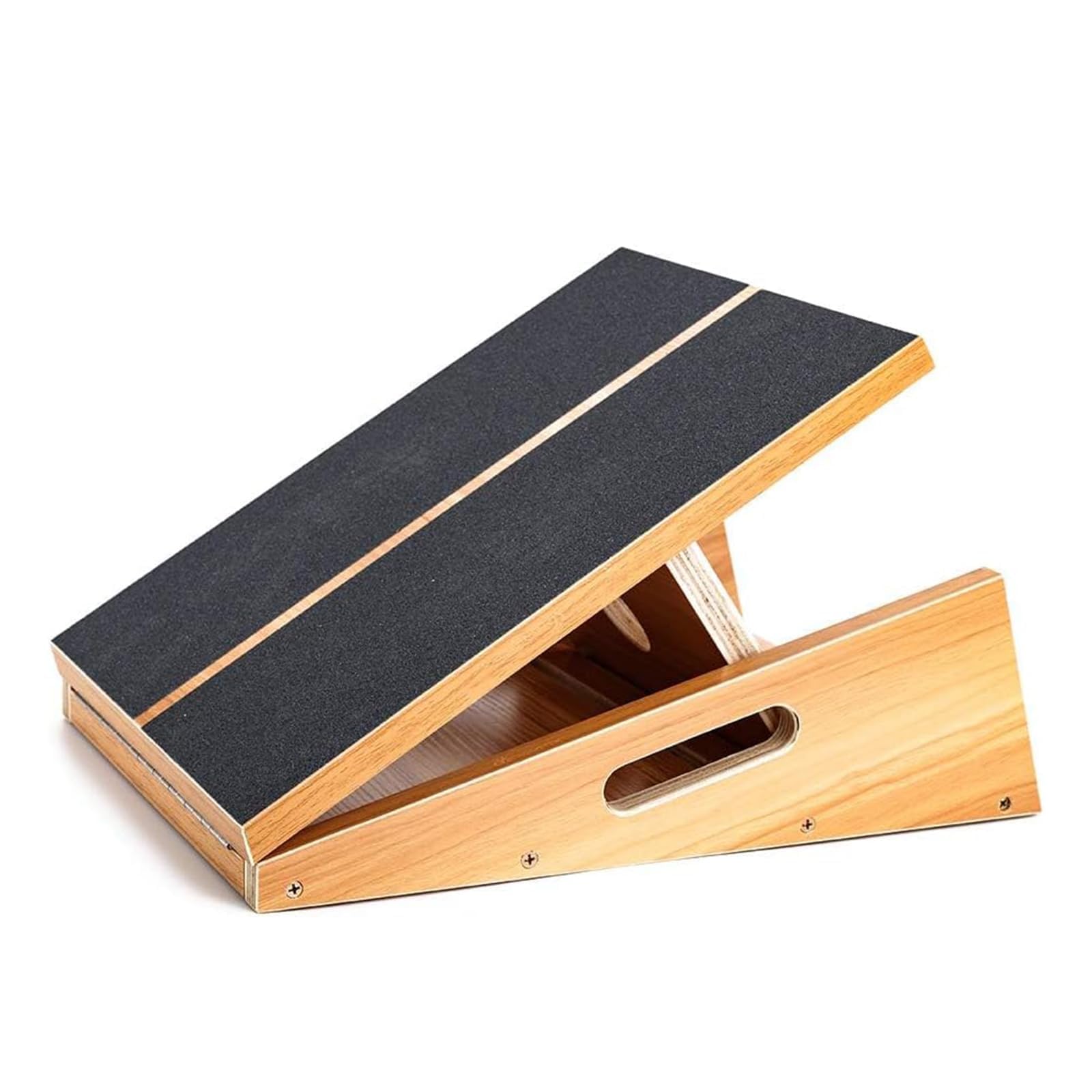
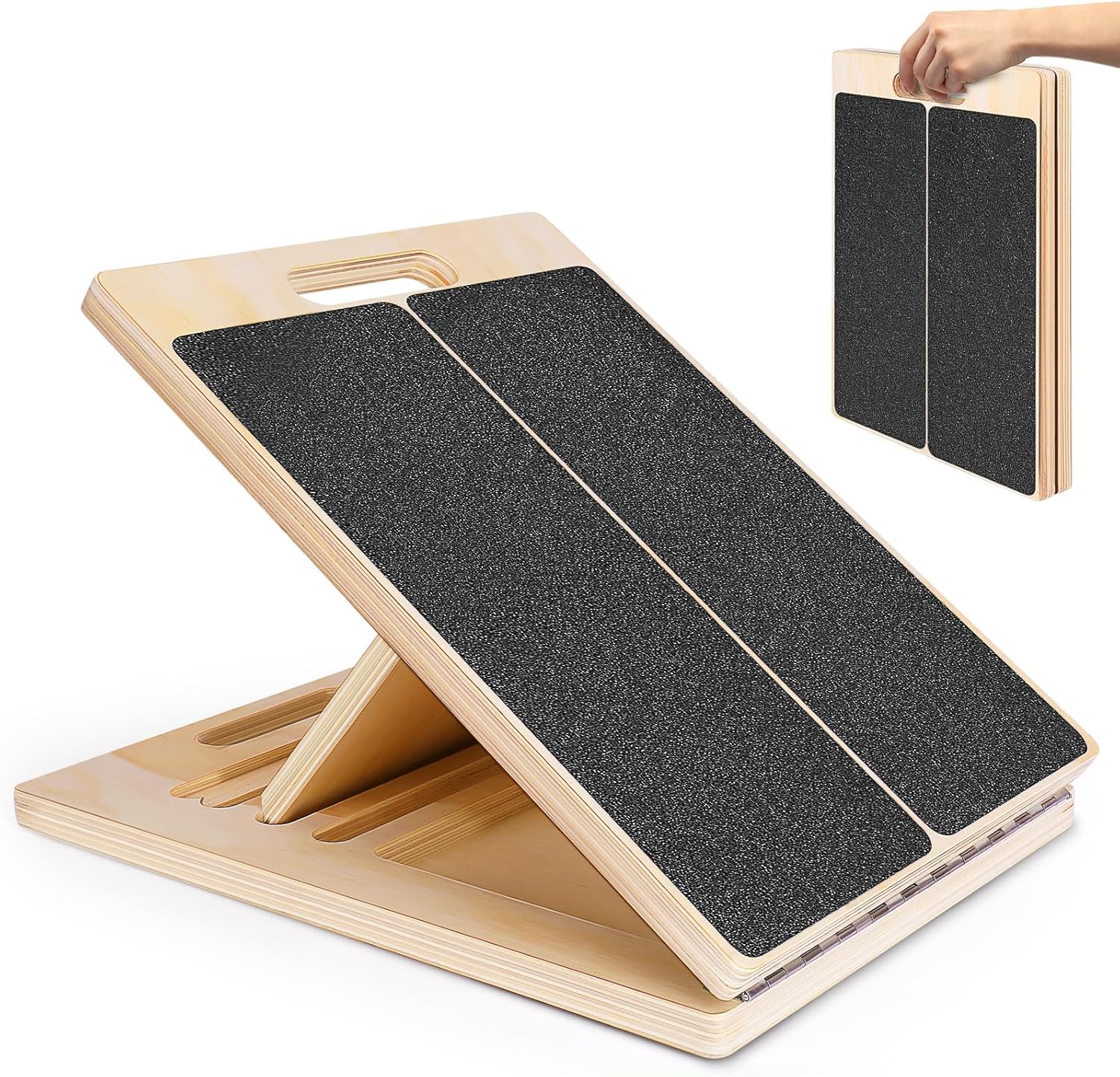


Best for All-Around Slant Board
MUCITAGF Wooden Slant
Key Features
- Type: Slant board
- Adjustable Angles: 5 (15°-35°)
- Material: Natural hardwood
- Price: Mid-Range
The MUCITAGF Wooden Slant delivers five precise incline positions ranging from 15° to 35°, allowing basketball players to dial in the exact stretch depth for calf and Achilles flexibility. The natural hardwood frame feels substantial underfoot — no flex or wobble during heavy use. This level of adjustability covers progressive stretching from mild relief to deep flexibility work without needing multiple boards.
In practice, the board stays planted on most surfaces, thanks to the board’s weight and the non-slip base. It handles not only calf stretching but also squat therapy and balance work — a bonus for players who incorporate accessory movements into their warm-up. The 12.5-inch width accommodates sizes up to men’s 13 without the heel overhang, though users with larger feet may prefer to verify fit before purchase.
This is the safest choice for basketball players who want a long-term stretch tool without compromises. It avoids a common durability concern found in comparable wooden slant boards — the grip tape peeling issue that has been noted on some rival units. The MUCITAGF uses a natural wood surface with enough texture for barefoot use and for wearing shoes, so traction stays reliable over time. It is priced in the mid-range, reflecting its build quality rather than a budget target.
The board is not the lightest at 8.5 pounds, but that weight contributes to its stability during dynamic stretches. For players who travel frequently, a lighter plastic option may be more portable. But for home gym or team facility use, the sturdiness is a clear advantage. Every hinge and angle lock operates smoothly, and the five positions cover the full range needed for progressive calf stretching without gaps.
Pros
- Solid hardwood frame that stays stable during heavy calf stretches and squat holds
- Five angle positions let you gradually increase stretch intensity without buying multiple boards
- Works for calf stretching, squat therapy, and balance exercises — one tool for multiple warm-up moves
- No reported build defects or durability issues, even with regular basketball training loads
Cons
For basketball players who want one slant board that handles calf stretching, squat therapy, and balance work without any durability concerns, this is the pick.
Best for Premium Slant Board
StrongTek Wooden Slant
Key Features
- Type: Slant board
- Adjustable Angles: 5 (15°-35°)
- Material: Lauan hardwood plywood
- Price: Mid-Range
Its solid wood construction and wide angle range have made it a popular choice among basketball players looking to improve calf and Achilles flexibility. While the top pick in this category shows no reported durability concerns, the StrongTek’s long market presence and thousands of reviews indicate consistent performance across varied routines.
This board suits players who want a sturdy home stretching tool and don’t mind its heavier weight (8.97 lbs) compared to plastic alternatives. The grip tape surface may peel on some units over time, so buyers planning daily use should monitor the condition—still, the build quality and adjustability remain strong.
The five precise angles (15° to 35°) allow gradual progression from gentle stretches to deep calf and Achilles work, which is especially useful for injury prevention and post-game recovery. The side handles make it easier to carry between storage and the court, though it’s not the most portable option for frequent travel.
Pros
- Furniture-grade wood construction holds up well to repeated use.
- Five incline angles accommodate beginners to advanced stretchers.
- Effective for relieving calf tightness and plantar fasciitis symptoms.
Cons
- Grip tape surface may peel over time on some units, requiring eventual replacement.
- At 8.97 lbs, it’s heavier than plastic boards—less convenient for carrying to the gym daily.
A proven, adjustable slant board with a minor surface tradeoff—best for players who prioritize build quality over portability and don’t mind occasional grip tape upkeep.
Best for Budget Slant Board
NORBASE Wooden Slant
Key Features
- Type: Slant board
- Adjustable Angles: 4 (30°-45°)
- Material: Wood
- Price: Budget
Solid wood construction and four adjustable angles make this a practical choice for budget-minded basketball players. The board is sturdy, easy to use right out of the box, and holds up well under regular stretching routines.
Users find it effective for calf stretching, squats, and balance exercises. The four positions from 30° to 45° cover the common range needed for improving ankle flexibility and Achilles tendon mobility.
This slant board is best for budget-conscious basketball players who need a reliable calf stretcher for home gym use. The lowest incline is 30°, which may be too steep for absolute beginners with very tight calves — those users should consider a board with a gentler starting angle.
Pros
- Solid wood build that holds up well under daily use
- Effective for calf stretching and also useful for squats and balance work
- Ready to use immediately with no assembly required
- Good value for the adjustability and build quality
Cons
- Lowest incline at 30° may be too steep for absolute beginners with very tight calves
For players who want a durable wooden slant board without overspending, this NORBASE model delivers solid performance and adjustability — just verify that the 30° minimum works for your current flexibility.
Best for Portable Stretch Board
StrongTek Plastic Slant
Key Features
- Type: Slant board
- Adjustable Angles: 5 (15°-45°)
- Material: ABS plastic
- Price: Budget
At 3.7 pounds, the StrongTek Portable Slant Board is the lightest adjustable calf stretcher in this lineup – it folds flat enough to slide into a gym bag or backpack. The ABS plastic construction keeps weight down without compromising the 300 lb capacity, and the five angle settings (15° to 45°) cover the range most athletes need for calf and Achilles stretching.
On carpet or rubber gym floors, the non-slip surface holds position well. On tile or hardwood, the board can shift slightly during deeper stretches – a thin non-slip mat underneath resolves that. The plastic feels less dense than a wooden board, which some users notice when stepping onto it, but the stretch itself is firm and effective.
This board is a strong fit for basketball players who travel frequently and need a calf stretcher that won’t add weight or bulk to their luggage. It also suits home users with limited storage who prioritize compactness over premium materials. If you prefer the weight and stability of solid hardwood and stretch exclusively on smooth floors, the top pick (a five-angle wooden board) is a better match.
Pros
- Extremely lightweight and portable – slides into a gym bag with room to spare
- Provides a solid calf and ankle stretch across five adjustable angles
- Budget-friendly price for an adjustable slant board that travels well
Cons
- Plastic construction feels lighter and less substantial than wooden alternatives
- Can slide on tile or hardwood floors without an additional non-slip mat
For athletes who need a travel-friendly calf stretcher that doesn’t take up space, this lightweight board delivers the stretch without the weight penalty – just plan for a non-slip mat on smooth surfaces.
Best for Targeted Rocker Stretch
ProStretch Original
The ProStretch Original stands out as a targeted tool for calf and Achilles stretching, widely recommended by physical therapists for plantar fasciitis relief. Its rocker design delivers a deep stretch to the lower leg muscles. Unlike lightweight foldable slant boards that emphasize portability, this foot rocker prioritizes focused tension but requires shoes and fits only up to size 12 feet.
The rubber/plastic construction and slip-resistant base provide stability on gym floors, reducing the need for hand support during stretches. This makes it a practical addition to home rehab routines or post-workout cooldowns.
This product suits basketball players recovering from plantar fasciitis or Achilles tightness who follow a physical therapist’s guidance. It is not ideal for those who prefer stretching barefoot, as heel discomfort can occur—wearing athletic shoes resolves this. The size limit of up to 12 means users with larger feet will experience overhang, so check shoe size before purchase.
Pros
- Deep calf stretch that targets the lower leg muscles effectively.
- Physician-recommended for plantar fasciitis and Achilles tendonitis relief.
- Sturdy build with slip-resistant base for stable use on smooth surfaces.
Cons
- Heel discomfort when used barefoot – wearing shoes resolves this.
- Shoe size limit of up to 12 – larger feet will cause overhang.
For basketball players needing a PT-recommended calf stretcher who wear shoes and have up to size 12 feet, the ProStretch Original delivers targeted relief with a durable build.
Best for Portable Strap Stretch
DMoose Stretching Strap
Key Features
- Type: Stretching strap
- Material: Nylon, neoprene padding
- Price: Budget
The DMoose Stretching Strap uses a padded neoprene cradle that loops around the foot, with seven adjustment loops to vary pull intensity. Unlike rocker-style devices that lock the foot at a fixed angle, this strap requires you to pull on the strap to control stretch depth — making it a portable alternative for post-game recovery or travel.
It suits basketball players with average to smaller feet who prioritize portability over hands-free stretching. Larger feet may find the Velcro closure does not hold securely, and those accustomed to slant boards will need to maintain manual tension throughout the stretch.
The neoprene padding reduces pressure on the foot during sustained pulls, and the included exercise guide provides varied stretch routines. For the price, it offers a cost-effective way to target hamstrings, calves, and plantar fascia without a bulky board.
Pros
- Padded neoprene foot cradle reduces foot strain during pulls.
- Seven adjustment loops allow variable stretch intensity for hamstrings and calves.
- Comes with a bonus exercise guide that adds value for price.
Cons
- Velcro closure may not hold securely for larger feet, requiring periodic readjustment.
- Requires continuous manual tension, so it lacks the hands-free convenience of a slant board.
A good choice for basketball players who value portability and comfort over hands-free stretching, especially those with average or smaller feet.
Best for Budget Foot Rocker
PowerStep Foot Rocker

Key Features
- Type: Foot rocker
- Adjustable Angles: Fixed
- Material: Plastic
- Price: Budget
The PowerStep UltraFlexx is a simple plastic rocker designed for targeted calf and plantar fascia stretches. Its lightweight build makes it easy to toss in a gym bag or use by the couch. For players with average foot sizes (up to 12), the curved base provides a decent range of motion for loosening tight calves and reducing heel pain. However, the footbed is short — size 13+ shoes overhang the edge, and the rocker itself can feel tippy without holding onto a wall or chair. Stability concerns and limited size compatibility keep it behind the top pick foot rocker, but at its price it remains a viable entry point for those curious about rocker-style stretching.
Pros
- Effective for relieving plantar fasciitis pain and calf tightness
- Lightweight and portable for use anywhere
- Good value at a budget price
Cons
- Footbed is too short for size 13+ shoes, causing overhang and instability
- Rocking motion may feel unstable without hand support from a wall or chair
A sensible choice for basketball players with feet up to size 12 who want an inexpensive, portable rocker for occasional use and can brace against a wall for stability.
Best for Multi-Function Board
ZocoSquat 3-in-1

Key Features
- Type: Slant board / balance board
- Adjustable Angles: 7 (22°-45°)
- Material: Pine wood
- Price: Budget
This board combines a slant stretcher, balance rocker, and squat platform in one affordable package. The non-slip surface stays grippy, and assembly takes minutes. Unlike dedicated slant boards, the wobble function adds a balance-training dimension — useful for basketball players working on ankle stability. For lighter athletes under 200 lbs, it’s a space-saving option that covers multiple needs. Heavier users should look at single-purpose boards with higher structural margins.
Pros
- Three functions in one: slant board, stretch platform, and balance rocker.
- Non-slip surface keeps feet planted during stretches and squats.
- Clear instructions make assembly quick and tool-free.
Cons
- Peg adjustment system can be stiff, making angle changes less smooth.
- For users over 200 lbs, the wood frame may not hold up under repeated heavy loads.
Best for light basketball players who want a single board for calf stretching and balance work — skip it if you regularly squat or stretch over 200 lbs.
Best for Ultra-Budget Wedge
NOONCRAZY Foam Wedge

Key Features
- Type: Slant board (foam wedge)
- Adjustable Angles: 5 angles
- Material: EPP foam
- Price: Budget
The NOONCRAZY foam wedge is impressively light, with each piece weighing about 10.5 ounces, and the stackable design gives five incline angles for varied stretches or squat wedging. Its EPP foam supports up to 480 lbs, making it a functional choice for basic calf and ankle mobility work. The tradeoff that limits its role for more demanding routines means it’s better suited as a gentle stretch companion than a primary training tool.
Pros
- Extremely lightweight and portable; stackable for multiple angles
- Effective for basic calf stretching and improving squat depth
- Great value at a low price point
Cons
- Surface is slippery, especially barefoot or with socks, and the wedge may slide on hard floors
A cost-effective stretch wedge for occasional use when you can manage the surface traction — wear shoes and use on carpet or a mat.
Best for Budget Slant Board
XCMVCN Wooden Slant

Key Features
- Type: Slant board
- Adjustable Angles: 5 (23°-45°)
- Material: Wood
- Price: Budget
This wooden slant board delivers sturdy construction and effective calf stretching at a budget price. The non-slip surface keeps feet planted during use. However, the lowest incline of 23° remains steep for those with tight calves or limited ankle flexibility, restricting it to users who already have good ankle dorsiflexion. It’s a decent entry-level board, but the angle limitation keeps it from competing with more adjustable options.
Pros
- Sturdy construction for the price, with non-slip surface
- Good value and effective for calf stretching
Cons
- Lowest incline (23°) still steep for users with limited ankle flexibility
A budget-friendly option for basketball players who already have good ankle mobility and want a simple wooden slant board. If you have tight calves, look for a board with a shallower starting angle.
How to Choose
The single most important buying insight: wooden slant boards with at least four adjustable angles and a robust hinge mechanism outlast all other types for daily basketball training.
Type – Slant Board, Foot Rocker, or Strap
Slant boards provide a static incline that stretches the calf and Achilles under your body weight. They allow progressive overload by adjusting the angle — essential for basketball players who need to improve ankle dorsiflexion for jumping and cutting.
Foot rockers use a curved base to create a dynamic stretch; they isolate the lower leg more precisely but require holding onto something for balance. Straps are the most portable option but rely on manual tension and don’t offer the same depth of stretch for tight calves.
Adjustable Angles
More angle options let you start with a gentle stretch and gradually increase intensity as flexibility improves. A board with 4–5 positions ranging from 15° to 45° covers most needs — lower angles (15°–25°) are safer for beginners or rehab, while steeper angles (35°–45°) challenge mobile athletes.
Fixed-angle devices like foot rockers or the CalfPRO offer no room to progress. If your calf flexibility changes over the season, you’ll outgrow them quickly.
Material – Wood, Plastic, or Foam
Wooden boards (hardwood or multi-layer plywood) absorb impact and distribute weight evenly, lasting years with proper care. Plastic boards are lighter and often foldable but can feel less stable under heavy loads and may crack over time. Foam wedges are the cheapest but compress and slide — they work for gentle stretching but not for intense daily use.
Weight Capacity
Most slant boards claim 300 lbs, but cheaper models fail well below that limit due to weak screws or thin wood. Check the actual hinge hardware and material thickness. For basketball players weighing over 200 lbs, a board with metal-reinforced hinges and solid hardwood construction is safer.
Portability
Foldable or ultra-light boards (under 4 lbs) are ideal for players who travel for tournaments or store equipment in a gym bag. The trade-off is that lightweight plastic boards may shift on smooth floors without a non-slip mat. Heavy wooden boards don’t move during use but are harder to transport.
FAQ
Can a slant board help with anterior pelvic tilt from tight calves?
Yes — tight calves and limited ankle dorsiflexion can pull the pelvis forward. Stretching the calves with a slant board at 15°–20° angles helps restore ankle mobility and allows the pelvis to return to a neutral position. For best results, combine with hip flexor stretches.
Is a calf stretcher or slant board better for basketball players?
For basketball, an adjustable slant board is the most versatile choice. It covers calf stretching, squat depth improvement, and ankle mobility — all critical for jumping and cutting. Foot rockers are better for targeted pain relief if you already have plantar fasciitis or Achilles issues.
Why does my calf stretcher slip on tile floors?
Most plastic and foam slant boards lack enough grip on smooth surfaces. Wooden boards with rubber feet or non-slip pads stay in place better. If your board slides, place it on a yoga mat or use a thin rug to increase friction.
How long should I use a calf stretcher each day for injury prevention?
Hold each stretch for 30–60 seconds, repeating 2–3 times per leg. A 5–10 minute daily session before or after practice is enough to maintain flexibility. Overstretching (more than 15 minutes per session) can irritate the Achilles tendon.