
This post contains affiliate links. We may earn a small commission when you buy through our links — at no extra cost to you.
Many balance boards marketed for ankle rehab are too small or too stable to challenge healing ankles. For basketball players returning from a sprain or surgery, the wrong board either feels pointless or fails to build the strength and stability needed to cut and jump safely.
The right board depends on your recovery stage and foot size. Some offer adjustable tilt to progress from gentle rocking to full instability, while others focus on retraining the small muscles in the foot and ankle. The choice often comes down to whether you need controlled progression or targeted proprioception.
This guide helps you match a board to your specific rehab needs, so you can rebuild confidence in your ankle without wasting time on equipment that can’t deliver the challenge you need.


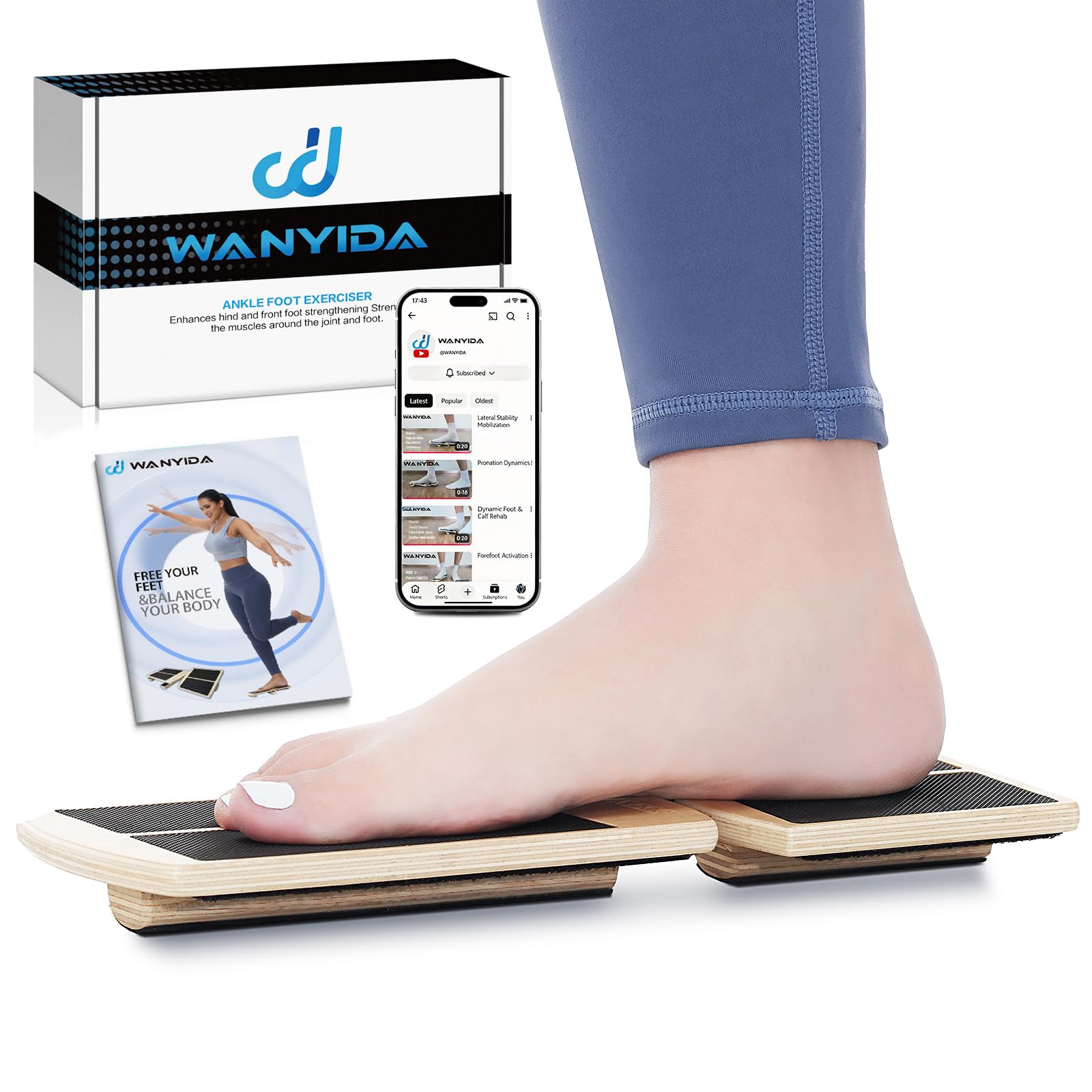
Best for Progressive Ankle Rehab
Fitterfirst Rocker 20"
Key Features
- Board Type: Rocker (single-plane adjustable)
- Size: 20" x 20"
- Weight Capacity: 350 lbs
- Material: Baltic birch plywood
- Adjustability: 10°, 12°, 15°
- Price: $$$
Adjustable tilt angles from 10° to 15° let you start with a gentle rock after injury and increase the challenge as strength returns — a feature most boards lack. The 20-inch wide platform gives secure footing for all foot sizes, and the Baltic birch construction holds up to daily clinic use without flex or wear.
This board is built for people who need controlled, linear ankle rehab — post-surgery patients, seniors, or athletes working with a PT. The premium price (around the cost of a few PT sessions) keeps it out of casual use, and the single-plane rocker won’t deliver multiplanar wobble. That’s fine: the target buyer values adjustable progression over all-in-one versatility.
Pros
- Adjustable tilt allows gradual difficulty increase from gentle rocking to full-strength challenge
- Wide 20” platform provides a stable, comfortable stance for all foot sizes
- Professional-grade Baltic birch construction holds up in physical therapy clinics
Cons
- Premium price is a barrier for short-term or casual rehab users
- Single-plane rocker limits movement to forward/back or side/side — no 360° wobble
For anyone serious about ankle rehab — from early range-of-motion to full strength — this board’s adjustable tilt and stable platform deliver controlled progression no other at-home board offers.
Best for Foot Proprioception Training
Mobo Board
Key Features
- Board Type: Single-leg balance board
- Size: 14.72" x 13.9"
- Weight Capacity: 300 lbs
- Material: Bamboo
- Adjustability: Interchangeable rockers
- Price: $$$
The MOBO Board delivers targeted foot and ankle proprioception training through its interchangeable rocker pieces and unique toe box design. Created by a physical therapist, it excels at isolating the small stabilizing muscles that runners, dancers, and basketball players need to rebuild after injury. The bamboo construction feels solid, and swapping rockers adjusts difficulty. Where it falls short for some: the 14.7" x 13.9" platform feels small for wide feet or men above size 13, and the rocker pieces can slide on hardwood or tile without a mat underneath.
Pros
- Designed by a PT expert for precise foot and ankle proprioception training
- Beautiful bamboo build feels crafted and durable
- Interchangeable rocker pieces let you increase challenge as rehab progresses
Cons
- On hard floors, the rocker pieces can slide unless paired with a non-slip mat
- The small platform may feel cramped for users with wide feet or shoe sizes 13+
Best suited for athletes and rehab patients who need focused foot and ankle work and don’t mind a compact board – but choose the Fitterfirst if you need a wider platform and adjustable tilt for progressive general balance training.
Best for Multiplanar Wobble Rehab
StrongTek 360° Board
Key Features
- Board Type: Wobble (360°)
- Size: 17.5" x 13.5"
- Weight Capacity: 350 lbs
- Material: Lauan hardwood plywood
- Adjustability: Fixed
- Price: $$
The StrongTek wooden wobble board delivers a 360° multiplanar challenge on a spacious 17.5-inch platform. It’s a mid-range option for those who want a larger, sturdier surface than the top pick’s adjustable tilt — but without the progressive tilt control. Best for home rehab after ankle or knee surgery, especially for heavier users up to 350 lbs, and for core and balance training. However, the non-slip surface can abrade bare feet, so wearing socks or shoes is advisable. Also, the rubber corner bumpers may detach due to weak adhesive, potentially scratching floors.
Pros
- Wide 17.5-inch platform accommodates a natural stance
- 350-lb weight capacity and durable hardwood construction
- 360° rotation provides multiplanar challenge ideal for ankle rehab
Cons
- Corner rubber bumpers may detach due to weak adhesive and can scratch floors
- Non-slip surface can cause skin abrasion on bare feet
This is a spacious, sturdy wobble board for multiplanar ankle rehab at a mid-range price — just plan to secure the bumpers and wear footwear.
Best for All-Round Balance Training
Yes4All Wooden Wobble
Key Features
- Board Type: Wobble (360°)
- Size: 15.75" x 15.75"
- Weight Capacity: 300 lbs
- Material: Wood
- Adjustability: Fixed
- Price: $$
The Yes4All Wooden Wobble Board pairs a 15° tilt with a 300-lb weight capacity, offering a stable platform for balance and ankle strengthening once initial mobility returns. This board suits adults recovering from ankle or knee injuries who have moved past the gentlest exercises and want a non-adjustable option for home use. The 15.75-inch diameter works for average feet, but wider feet or larger men’s sizes may feel snug. The fixed tilt can feel steep early on — better as a next step than a starting point.
Pros
- Solid wood build handles up to 300 lbs with no flex.
- Effective for improving balance and ankle strength during rehab.
- Cost-effective choice for a wood board that withstands regular use.
Cons
- Footprint feels snug for wider feet or men’s size 10+ sneakers.
- 15° tilt can be too demanding during early stages of ankle rehab.
If your rehab has progressed beyond gentle rocking and you want a fixed-intensity board that won’t flex or break, this wood wobble board delivers solid performance for the price.
Best for Entry-Level Balance
Amazon Basics Wobble Board
Key Features
- Board Type: Wobble (360°)
- Size: 15.75" x 15.75"
- Weight Capacity: 265 lbs
- Material: Wood
- Adjustability: Fixed
- Price: $
The Amazon Basics Wobble Board offers an affordable entry point into balance training with solid wood construction and strong community validation. For ankle rehab, however, the wobble is too stable to provide progressive challenge beyond the first few weeks, and the 15.75-inch platform feels cramped for feet larger than size 10. The grip tape can lose traction on hard floors over time, making it better suited for carpeted areas or use with a mat. This board fits budget-conscious buyers seeking a starter balance board for general core training or standing desk fidgeting, not for those needing gradual instability progression in ankle rehabilitation.
Pros
- Cost-effective option for basic balance exercises
- Sturdy wood construction holds up over months of use
- Improves core strength and coordination for general fitness
Cons
- Limited wobble challenge – too stable for progressive ankle rehab past the first few weeks
- Grip tape may become slippery on hard floors and can wear over time
Best for budget-limited beginners who need a functional balance board for general fitness, not for those requiring progressive ankle rehab.
Best for Acute Sprain Recovery
WANYIDA Foot Trainer
Key Features
- Board Type: Single-leg balance
- Size: 11.61" x 4.33"
- Weight Capacity: 220 lbs
- Material: Birch plywood
- Adjustability: Velcro balance bar
- Price: $
The WANYIDA uses Velcro panels to isolate specific ankle motions, making it a targeted option for early-stage sprain rehab or plantar fasciitis exercises. Build quality can vary between units – some have stitching or Velcro that may loosen under regular use, so it suits occasional rehab sessions rather than daily heavy training. Best for athletes needing a low-cost, portable way to rebuild foot strength after an injury, especially when paired with a physical therapist’s guidance.
Pros
- Specifically targets foot and ankle strengthening for sprain recovery
- Compact and portable with included storage bag
- Physical therapist approved and FSA/HSA eligible
Cons
- Narrow platform supports single-leg work only – not suitable for two-footed exercises or larger feet
A low-cost ankle rehab tool with focused isolation, but the build quality means it’s best for occasional use under professional guidance rather than daily heavy training.
Best for Beginners / Seniors
HAPOO Wooden Wobble

Key Features
- Board Type: Wobble (360°)
- Size: 16.5" x 13"
- Weight Capacity: 350 lbs
- Material: Wood
- Adjustability: Fixed
- Price: $
This budget-friendly wobble board offers solid wood construction and anti-slip pads, ready to use immediately without any setup. The gentle wobble is fine for basic balance maintenance or early-stage rehab, but the fixed tilt cannot be adjusted, so progress plateaus quickly once you gain stability. At 16.5" x 13", the platform may feel narrow for larger feet, limiting its appeal for buyers needing progressive ankle strengthening.
Pros
- Affordable price with solid wood build and anti-slip pads
- Ready to use out of the box, no assembly needed
Cons
- Wobble is too easy for ongoing rehab progression – difficulty plateaus quickly
Best for casual balance maintenance or beginners on a strict budget, not for buyers needing progressive ankle rehab challenge.
Best for Light Balance Work
VANKUTL Wooden Wobble
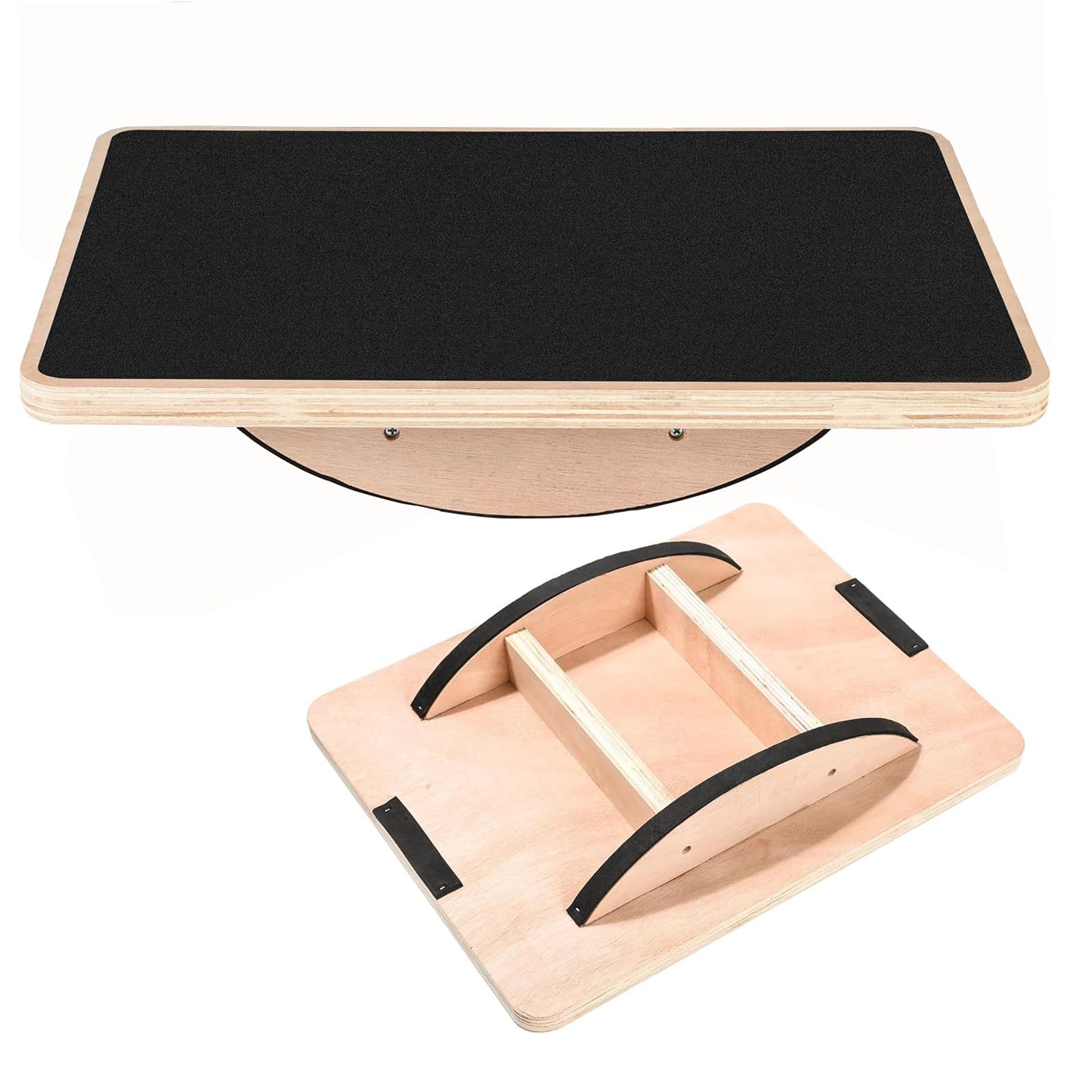
Key Features
- Board Type: Wobble (360°)
- Size: 16.45" x 12.99"
- Weight Capacity: 350 lbs
- Material: Wood plywood
- Adjustability: Fixed
- Price: $
This budget-friendly board feels solid and supports up to 350 lbs, offering a safe entry point for those new to balance work or needing gentle maintenance. However, the wide arch creates minimal instability – fine for light use but too easy to progress ankle rehab beyond the initial stage.
Pros
- Sturdy construction with high weight capacity
- Good for basic balance and ankle physical therapy
Cons
- Wide arch makes it too easy to balance – lacks challenge for rehab progression
Best for those who need a safe, low-intensity wobble board for maintenance or introductory balance work, not for progressive ankle strengthening.
Best for Portable Standing Desk
Yes4All Plastic Wobble

Key Features
- Board Type: Wobble (360°)
- Size: 16.34" diameter
- Weight Capacity: 300 lbs
- Material: Plastic (TPE/PP)
- Adjustability: Fixed
- Price: $$
This plastic board offers a generous 16.34-inch diameter and integrated handles that make it easy to carry between desk and gym. The surface texture and massage spikes, however, become slippery with bare feet and the spikes are uncomfortable—better suited for use with shoes. This puts it more in the standing desk or casual balance training category than progressive ankle rehab.
Pros
- 16.34-inch diameter provides a larger platform than many wooden wobble boards for added stability.
- Built-in handles make it portable and allow for exercise variations like overhead presses while balancing.
Cons
- Slippery top surface and uncomfortable massage spikes limit safe use without shoes, reducing rehab practicality.
A serviceable option for standing desk users or gym-based balance work with shoes, but not recommended for barefoot ankle rehab.
Best for Linear Balance Training
THERABAND Rocker

Key Features
- Board Type: Rocker (single-plane)
- Size: 13.125" x 14"
- Weight Capacity: 330 lbs
- Material: Molded plastic
- Adjustability: Fixed
- Price: $$
THERABAND’s rocker board delivers a 30° tilt for forward/back balance work and stays light enough to toss in a gym bag. However, the 13″x14″ platform forces a narrow stance, and the hard plastic surface feels rough on bare feet — limiting its appeal for full ankle rehab sessions.
Pros
- 30° tilt provides a controlled single-plane challenge for linear balance exercises.
- Lightweight molded plastic stands up to daily clinic use without feeling flimsy.
Cons
- 13″x14″ platform is too small for a comfortable, natural stance during exercises.
Suits a PT clinic that needs a portable single-plane rocker for linear rehab — if you can work within the compact platform.
Best for Diy Home Rehab
Woodure Wobble Board

Key Features
- Board Type: Wobble (360°)
- Size: 13.5" x 17"
- Weight Capacity: 350 lbs
- Material: Wood
- Adjustability: Fixed
- Price: $
This budget wobble board delivers a sturdy, high-capacity platform for balance training once put together, and the price is attractive for home rehab on a tight budget. However, the required assembly is often frustrating due to misaligned pre-drilled holes and occasionally mismatched parts, so it’s not a ready-to-go solution. The narrow 13.5" x 17" surface can also feel cramped for larger feet, making it best suited for smaller foot sizes and users willing to invest time in setup.
Pros
- Sturdy once assembled – solid wood construction supports up to 350 lbs.
- Good value for budget-conscious rehab if assembly goes smoothly.
Cons
- Assembly can be frustrating with misaligned holes and mismatched parts – not a ready-to-use product.
Worth considering only if you’re comfortable with DIY assembly and have smaller feet – otherwise, a ready-to-use board avoids the hassle.
Best for Small-Footed Users
EVERYMILE Wobble

Key Features
- Board Type: Wobble (360°)
- Size: 15.7" diameter
- Weight Capacity: 300 lbs
- Material: Plastic (ABS/TPR)
- Adjustability: Fixed
- Price: $$
This plastic wobble board has earned broad user acceptance for entry-level balance training, thanks to its portable handle and affordable price. However, the 15.7-inch diameter and smooth plastic top create a narrow, slick platform that feels cramped for users with average or larger feet and provides insufficient grip for controlled ankle exercises. It works best for kids or small-footed adults using it at a standing desk, not for anyone seeking progressive ankle rehabilitation.
Pros
- Widely used for basic balance training with strong community validation
- Integrated handle makes it easy to carry and store
Cons
- Small 15.7-inch diameter provides limited footing for users with average or larger feet
Best suited for casual standing desk use or for children, not for ankle rehabilitation beyond the most basic level.
Best for Calf Stretches + Balance
ODCPN 3-in-1 Board

Key Features
- Board Type: Slant / rocker / wobble
- Size: 17" x 11.8"
- Weight Capacity: 300 lbs
- Material: Wood (11-ply poplar)
- Adjustability: 6 tilt angles + magnetic attachment
- Price: $
Combines slant, rocker, and wobble modes in a fold-flat design for calf stretching and basic balance work. The wobble motion can feel inconsistent, and durability concerns (screw stripping, wood splitting) may appear with use. This suits occasional stretching and light balance training but not progressive ankle rehab.
Pros
- Three balance modes in one portable, space-saving unit.
- Effective for calf stretching and basic balance exercises.
Cons
- Durability can be an issue – screws may strip and wood can split over time.
Best for those who need a compact device for calf stretching and basic balance work, not for sustained ankle rehab.
Best for Standing Desk
Gaiam Evolve
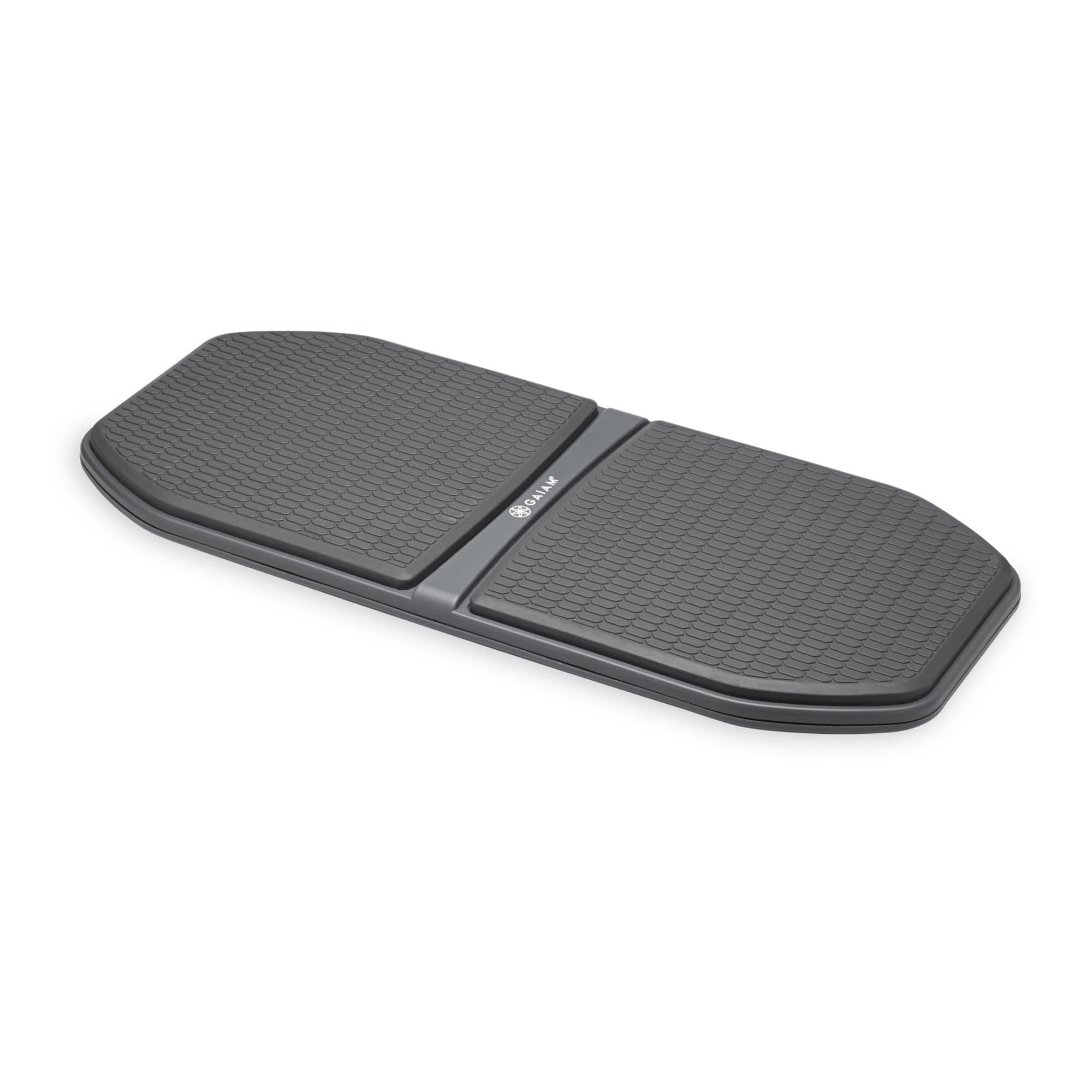
Key Features
- Board Type: Rocker (multi-directional fluid)
- Size: 27" x 12"
- Weight Capacity: 250 lbs
- Material: PU, PVC, TPR foam
- Adjustability: Fixed
- Price: $$
The cushioned top makes this board comfortable for all-day standing desk use, promoting subtle shifts that ease fatigue. Its stability is too low-arc to challenge ankle muscles in a rehab context, and the foam padding can peel under moderate use over time.
Pros
- Cushioned top supports comfortable standing for extended periods
- Stable design allows micro-movements without breaking focus
Cons
- Board is too stable to provide the controlled instability needed for ankle strengthening
A good option for office workers wanting gentle movement while standing, but not suited for ankle rehabilitation exercises.
Best for Children / Small Pets
CanDo Economy Board

Key Features
- Board Type: Wobble (360°)
- Size: 14" diameter
- Material: Plastic
- Adjustability: Fixed
- Price: $
The CanDo Economy Board is one of the most affordable balance boards available, and its lightweight design makes it easy to carry for travel or classroom use. The 14-inch diameter and raised bumps, however, create a platform that’s too small for adult foot placement and uncomfortable for barefoot sessions — better suited for children’s balance games or occasional light stretching than for ankle rehabilitation.
Pros
- Extremely affordable — accessible for nearly any budget
- Lightweight and easy to transport for travel or the classroom
Cons
- 14-inch diameter limits foot placement for adults, especially those with larger shoe sizes
Best left to children or as a very occasional travel companion — not a practical tool for ankle rehab.
How to Choose
The most important decision is choosing between a wobble board (360° multi-directional challenge) and a rocker board (single-plane movement) – because the wrong type can delay recovery or frustrate progress.
Board Type
Wobble boards allow tilting in all directions, forcing the ankle to stabilize in multiple planes – ideal for rebuilding proprioception and dynamic control. Rocker boards move only forward/back or side/side, offering a more predictable, less challenging stimulus.
For basketball players, full-ankle rehab usually requires multiplanar work to prepare for cutting and jumping. Rocker boards work well early after surgery when motion must be controlled, but wobble boards are better for later stages.
Size
A board smaller than 16 inches in diameter forces your feet close together, reducing stability challenge and increasing the risk of stepping off the edge. A larger platform (17+ inches) allows a natural shoulder-width stance and accommodates bigger shoe sizes.
Single-leg boards like the Mobo or WANYIDA trade size for targeted foot work – they work for specific exercises but cannot be used for two-footed balance training.
Weight Capacity
Capacity directly correlates with build quality. Boards rated below 300 lbs often use thinner wood or plastic that flexes under heavier users, reducing stability. Boards rated 350 lbs are typically built with multi-ply plywood or hardwood that maintains rigidity.
If you weigh over 250 lbs or plan to use the board for push-up variations, choose a 350-lb rated model to avoid warping or cracking.
Material
Wooden boards (plywood, birch, bamboo) offer stiffness and durability that hold up to daily use. Plastic boards are lighter and more portable, but the surface can become slippery with sweat or socks, and some crack over time.
Felt or rubber pads on the bottom protect floors but wear out; check that replacements are available or that the board has replaceable bumpers.
Adjustability
Boards with adjustable tilt (10°–15° range) let you start at a gentle angle and increase difficulty as your ankle strengthens – critical for progressive rehab. Fixed-tilt boards offer only one difficulty, which may become too easy after a few weeks.
Interchangeable rockers (like the Mobo) provide a similar benefit but through different base shapes rather than tilt angle. Both approaches are effective, but adjustability makes a board usable across the entire rehab timeline.
FAQ
Can a wobble board help me recover from an ankle sprain faster?
Yes, when used correctly. A wobble board retrains the proprioceptors in your ankle, which are often damaged during a sprain. Starting with a gentle tilt and gradually increasing time and complexity can speed up recovery, but it’s not a replacement for a structured PT program. Pair it with strengthening exercises for best results.
What’s the difference between a rocker board and a wobble board for ankle rehab?
A rocker board moves only in one plane (forward/back or side/side), making it easier and more controlled – good for early rehab or post-surgery. A wobble board tilts in 360 degrees, challenging the ankle in multiple directions simultaneously, which is better for later-stage rehab and preparing for sport-specific movements.
How long should I use a balance board each day for ankle rehabilitation?
Start with 2–3 minutes per session, twice a day. Increase by one minute per week as your balance improves. Stop if you feel sharp pain – some muscle soreness is normal, but instability pain means you’re pushing too fast. Progress to longer sessions (up to 10–15 minutes) only after you can stand on the board without holding support.
Will a cheap balance board under $30 work for ankle rehab or just waste my time?
Some budget boards work for basic balance training, but many are too small (under 16 inches) or too easy (wide base, low tilt) to provide progressive challenge. They can help in the first week or two, but you’ll likely outgrow them quickly. If your rehab needs more than a few weeks, a mid-range board with a larger platform and steeper tilt is a better investment.