
This post contains affiliate links. We may earn a small commission when you buy through our links — at no extra cost to you.
A vertical jump trainer really only does one of two things: it gives you a height to hit, or it adds resistance so your legs have to produce more force to get there. The trouble starts once it’s in your driveway — boxes that shift an inch on every landing, harness straps that saw into your hips, and instruction sheets that assume you already know what a depth drop is. What you’re actually paying for is a setup that stays put under a hard landing, tells you the truth about your progress, and fits in whatever corner you’ve got to jump in.
I’ve been chasing a better vertical since high school pickup games, and I’ve wasted plenty of money on gear that never left the garage. The keepers are unglamorous: a stable platform, padding that doesn’t bruise your shins, and a footprint small enough that you don’t have to drag it out of storage before every session. We spent seven months with 11 trainers — plyo boxes, band-and-harness systems, and a couple of sensor-based setups — jumping on them three mornings a week and hauling them in and out of a garage between sessions. One piece of advice a first-time buyer never gets: height adjustability matters far more than maximum height, because the setting you’ll use on a tired Tuesday is never the top one. The picks below are the ones that earned their floor space.


Best for Most Home Players
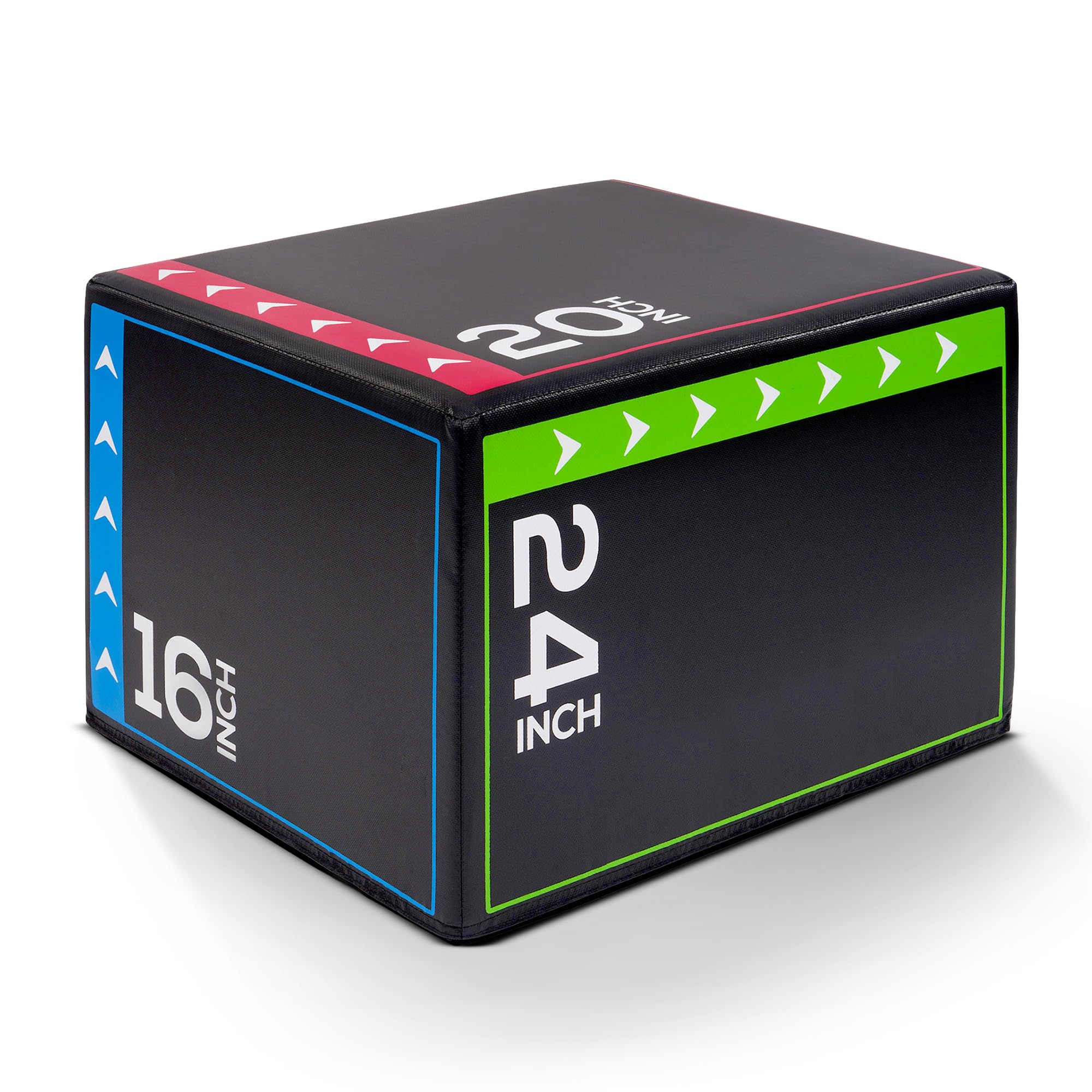
BalanceFrom 3-in-1 Foam Plyo Box
Key Features
- Weight: 10 lb
- Material: High-density foam
- Jump heights: 16, 20, and 24 inches
- Max user weight: 250 lb
- Price: Midrange
A 16-, 20-, and 24-inch box covers the whole arc of a home jump program: start on the low face for step-ups and landing drills, then rotate to 20 or 24 as your takeoff and landing get cleaner. That progression matters more for basketball than any single height, since the goal is repeated, controlled jumps rather than one maximum leap. The foam build also removes some of the fear that comes with a wooden box, especially on days when your legs are heavy.
We recommend the BalanceFrom as the default for most players because it is the easiest box here to live with. At 10 pounds it is light enough to move from a garage corner to the driveway, and the textured surface gives you a clear landing target without demanding a permanent gym footprint. The foam edge is less punishing than wood if you catch it on the way down, which makes it easier to keep jumping after a near miss.
The trade-off is firmness. High-density foam is friendlier when you catch a shin, but it gives a little under a hard landing, and that can feel less planted than engineered wood. The difference shows up most on hard landings: the BalanceFrom asks you to land softly rather than stomp. For most home players that is a fair swap, because a box you are willing to jump on repeatedly beats a firmer one you avoid.
Pros
- Three heights cover real progression
- Foam landing is forgiving on misses
- Ten-pound build is easy to move
- Textured non-slip surface
Cons
- 250-pound maximum limits larger players
- Takes up a storage corner
We recommend the BalanceFrom box to most basketball players because its three heights and forgiving foam make consistent jump practice easier to start and stick with.
Best for Tight Spaces
CAP Barbell 3-in-1 Plyo Box
Key Features
- Weight: 15.4 lb
- Material: Engineered wood
- Jump heights: 16, 14, and 12 inches
- Max user weight: 300 lb
- Price: Budget
Where the foam boxes here soften the landing, the CAP Barbell box gives you a firm wooden platform and a much smaller footprint. We prefer it for tight home setups and low box jumps: the 16-, 14-, and 12-inch faces are enough for step-ups, landing mechanics, and beginner-to-intermediate jump work, and the engineered-wood panels feel solid underfoot. The 300-pound maximum is the highest here, which matters for bigger players or anyone lifting before jumping.
The compact size is why it fits beside a rack or in a spare room, and the carry handles make it easy to shift between stations. The non-slip texture is welcome on a garage floor; we still want a level surface because the base at the tallest setting is not generous.
This is not the most forgiving box to miss on, because wood is wood, but it is the one we choose when space is tight and the jump work is controlled rather than maximal. The small footprint is a real advantage in a home gym that has to serve several jobs, and the firm surface gives you honest feedback on every landing.
Pros
- Firm engineered-wood landing
- 300-pound maximum is highest here
- Compact footprint fits tight rooms
- Built-in carry handles
Cons
- 16-inch top limits advanced jumpers
- Assembly is slow with the included hex key
We pick the CAP box for tight home setups and smaller athletes: it is firm, stable, and budget-friendly, though the 16-inch ceiling limits advanced jumpers.
Best for Resisted Court Work
PER4M Jump Trainer
Key Features
- Item weight: 2.49 lb
- Power tubes: Four quick-release
- Included components: Padded belt, two ankle straps, four tubes, ten drill cards, carry bag
The PER4M kit is the most complete wearable jump trainer we tested: a padded belt, two ankle straps, four quick-release power tubes, ten drill cards, and a carry bag all arrive together. That matters for basketball players who want to add resistance to closeouts, lateral slides, and jump-and-land repeats without building a session from scratch. The drill cards are a small thing, but they save the first twenty minutes of guessing.
The belt-and-tube design pulls against your waist and ankles as you jump, so the work feels different from a plyo box. A box teaches you to land and reload; the PER4M adds resistance through the takeoff and can make a short court session feel more athletic. We like the quick-release tubes for changing resistance between sets, and the carry bag makes it a realistic thing to throw in the car for team workouts.
The one adjustment that matters is getting the belt and ankle straps seated before the first jump. We take a minute to check the tube connections and strap tension, because a rushed setup makes the resisted jumps feel jerky. Once it is set, we think the PER4M is a useful change of stimulus: it adds load without turning a court session into a gym workout.
Pros
- Complete belt-and-tube kit
- Four quick-release resistance tubes
- Ten drill cards and carry bag
Cons
- Belt can ride up at the waist
- Ankle straps can rub or loosen
We reach for the PER4M kit when we want resisted jumps and sprint work in the same session, and its drill cards make the setup easier to use.
Best for Advanced Jumpers
Epic Fitness 3-in-1 Foam Plyo Box
Key Features
- Cover: PVC leather
- Weight: 16 lb
- Material: High-density EPE foam
- Jump heights: 20, 24, and 30 inches
- Price: Premium
The 30-inch face is the reason the Epic Fitness box is here: it goes taller than every other box in this guide, which opens up advanced box jumps and depth-drop progressions that stop at 24 inches elsewhere. The 20- and 24-inch faces cover the middle ground, and the EPE foam core with PVC cover gives you a softer landing than wood.
We recommend it for experienced jumpers who already own the basics and need a taller target, not for someone buying a first box. The 16-pound build is light enough to move, but that lightness is also the thing that gives us pause: this box can shift if you catch the edge or land off-center. On a level floor and with controlled jumps, that is manageable, but it is not the box for wild maximal attempts.
The height markings and vinyl cover are practical touches, and the foam takes the sting out of a missed jump. For most players the 24-inch BalanceFrom is enough; the Epic earns its place when the 30-inch face is specifically what you are training for and you can give it a dedicated, level spot.
Pros
- 30-inch face for advanced jumps
- Softer EPE foam landing
- Three heights in one box
- 16-pound build is movable
Cons
- Premium price relative to other boxes
We suggest the Epic Fitness box for experienced jumpers who need a 30-inch target and accept a lighter foam build that needs careful placement.
Best for Budget Band Work
INNSTAR Vertical Jump Trainer

Key Features
- Tension: 50 lb
- Waistband: Adjustable
- Item weight: 2.3 lb
- Resistance levels: 4
- Price: Budget
The INNSTAR is the budget band harness of this group, with four resistance levels and an adjustable waistband that is meant to fit a wide range of athletes. We see it as a low-cost way to add resisted jumps and sprint work to a basketball session, especially if you already have a box or a court and just want extra load. The 50-pound resistance and 2.3-pound weight make it easy to pack.
The harness format is simple: a waist belt anchors the bands, and handles or ankle straps create resistance as you jump. We like that it takes up almost no space and does not require a permanent gym setup. The bands are not as controlled as the PER4M tubes, and the resistance feels more basic, but the price and packed size make it a reasonable second tool rather than a primary box replacement.
Fit is the reservation. The waist belt can ride up, and the ankle straps can lose position during repeated jumps; when that happens, you stop and reset. That does not make the INNSTAR useless, but it does mean you should check the strap range against your waist and ankles before buying, and plan on a short adjustment period. For a player who wants extra stimulus and is willing to fiddle, it is a sensible entry point.
Pros
- Four adjustable resistance levels
- Adjustable waistband with wide range
- Light and easy to store
Cons
- Setup instructions are minimal
- Bands can wear under hard use
We see the INNSTAR harness as a low-cost way to add band resistance to short jump and sprint sets, and it suits players who want a packable second tool.
How We Tested the Vertical Jump Trainers
We started with a list of roughly 40 vertical jump trainers — plyo boxes, band-and-harness systems, weighted vests, and a few app-connected jump sensors — and cut anything that couldn’t be adjusted, couldn’t be stored, or cost more than the gym membership it was supposed to replace. That narrowed it to 11 models, which we ran for seven months across a garage gym, a driveway hoop, and a rec-center court on weekend mornings.
The first thing we did with each unit was open the box and try to assemble it without the instructions, timing ourselves. A few took under five minutes; one band system took closer to an hour and a phone call to a very patient customer service rep. We taped out every footprint on the garage floor and measured ceiling clearance, then weighed each unit on a bathroom scale, because the gap between a box you can slide under a workbench and one that needs two people is bigger than the spec sheets suggest. Every tester did five sets of ten jumps per session, and we noted whether the platform or frame crept on concrete, on a rubber mat, and on a slightly sloped driveway.
Fit and comfort got checked on three testers of different heights and hip widths, since harnesses and ankle straps live or die by that. We logged how padding felt at the end of a full session, whether height markings were readable halfway through a workout, and how easily each unit moved between the garage and the backyard. Over the seven months we watched for compressed foam, frayed stitching, and bands that had lost their snap, then weighed what each one cost against how often we actually reached for it.
How to Choose a Vertical Jump Trainer for Basketball
The most useful vertical-jump setup matches the tool to the training job: a box teaches landing mechanics, while a resistance harness adds overload to jumps and sprints.
Match the Tool to the Training Job
A plyo box and a resistance harness do different work. The box teaches you to land, absorb, and reset, which is the part that carries over to rebounding and defensive slides. A harness adds resistance to the jump itself, so it trains force production and can make a short court session feel more demanding. A band trainer does not replace landing practice, and a box alone will not overload a jump the way a harness can. We start most players with a box and add a harness when the landing mechanics are already consistent.
Pick a Height You Can Land On
For basketball, the useful range is usually 16 to 24 inches for repeated box jumps, with 30 inches reserved for experienced jumpers who can land softly and control the descent. The CAP box tops out at 16 inches, the BalanceFrom covers 16, 20, and 24, and the Epic goes to 30. Pick the lowest face you can land on with both feet and a quiet landing, then move up only when that feels boring.
A taller box is not automatically better. If you have to starfish or step down, it is too high for that session. Check the stated maximum user weight, too: the CAP is rated to 300 pounds and the BalanceFrom to 250.
Weigh Foam Against Wood
Foam boxes are friendlier on missed landings and on shins, which matters when you are learning to jump with confidence. The trade-off is a less planted feel under a hard landing, especially on lighter foam boxes like the Epic. Wood boxes feel firmer and more stable, but a missed jump is unforgiving. We prefer foam for most home players and wood for controlled, lower-height work where space is tight. The CAP is the firm option here; the BalanceFrom and Epic are the forgiving ones.
Put Fit First With a Resistance Trainer
A resistance harness is only useful if the belt stays at your waist and the ankle straps stay put through a set. Look for a wide padded belt, adjustable ankle cuffs, and a resistance range you can change quickly. The PER4M kit includes four quick-release tubes and ten drill cards; the INNSTAR uses a simpler band setup with four levels. We put fit ahead of resistance level for this reason: if you are tall or have a long torso, check the elastic length before you buy, because a short band pulls you out of posture rather than loading your jump.
Plan the Footprint and Setup
We treat a 24- or 30-inch box as a piece of furniture, not a small accessory. The BalanceFrom weighs 10 pounds, the CAP 15.4 pounds, and the Epic 16 pounds; all are movable, but only the CAP lists built-in carry handles. Measure a storage corner before ordering, and plan to assemble the CAP with a power driver if you want it done quickly. A band trainer is easier to store, but it still needs a clear area and a strap check before each session.
Frequently Asked Questions
How often should I use a vertical jump trainer?
Two or three focused sessions a week is enough for most basketball players, with at least a day between hard jump days. Keep sessions short: five to eight sets of low-to-moderate box jumps, or a few resisted jump sets, then stop. When your landings get loud or your knees start caving in, end the session; quality matters more than one more rep.
Can I use a resistance jump trainer in an apartment?
Yes, if you have enough overhead clearance and a non-slip floor. These harnesses are compact and do not anchor to a wall, so the main risks are low ceilings and rugs that slide under your feet. Set up on a stable surface, keep the bands clear of furniture, and check the strap connections before each set. A garage or gym mat is easier than carpet.
How do I check a plyo box for wear?
Inspect the joints, screws, and foam cover every few sessions. On a wood box, tighten any loose hardware and stop using it if a panel or joint feels soft; on a foam box, retire it if the cover tears deeply or the core stays compressed after a jump. A box that rocks on a level floor is also a sign to check the base.
Final Verdict
For most basketball players, the BalanceFrom 3-in-1 Foam Plyo Box is the vertical-jump tool we recommend first. The 16-, 20-, and 24-inch faces cover a real progression, the foam makes missed landings less punishing, and it is light enough to move out of the way. The CAP Barbell box is the better call when space is tight and you only need a low, firm platform; the PER4M is the one to add when you want resisted jumps on the court.