
This post contains affiliate links. We may earn a small commission when you buy through our links — at no extra cost to you.
Automatic ball pumps promise effortless inflation, but many fail within months or deliver pressure readings that drift over time. A pump that reads 8 PSI fresh out of the box might be off by a full PSI after a season—enough to affect a basketball’s bounce or a referee’s call. Reliable pressure control is the real differentiator.
The trade-off often comes down to convenience features versus core performance. Pumps with multiple preset modes and deflation are handy for multi-sport households, but they can compromise sensor accuracy or build quality at the same price. The best options focus on consistent pressure output and durable components first.
This guide highlights automatic ball pumps that maintain accuracy through regular use, so you can spend less time troubleshooting and more time playing.




Best for Best Overall
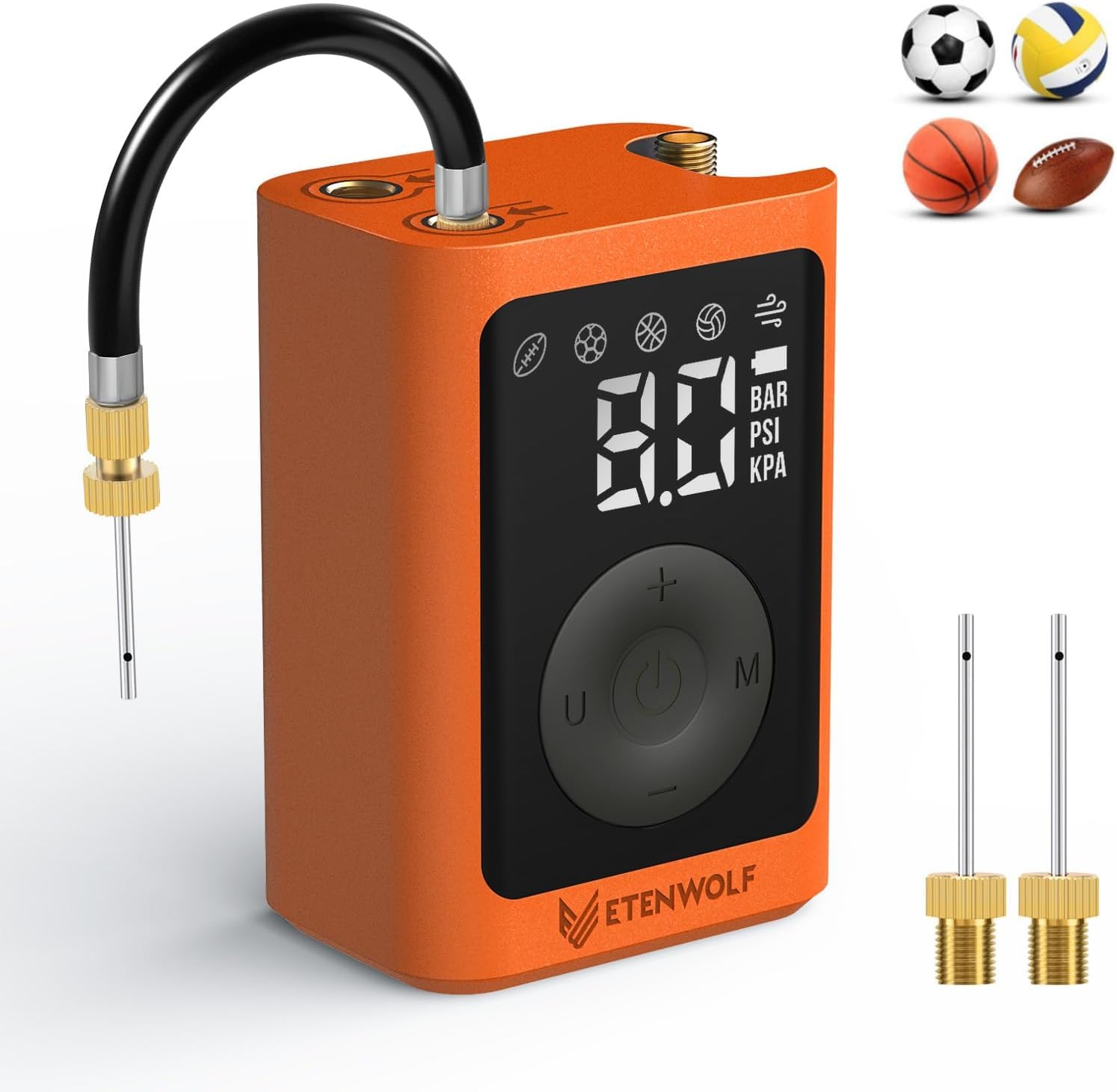
ETENWOLF P300 17 PSI
Key Features
- Max PSI: 17
- Airflow: 6.5 L/min
- Battery: 2600 mAh
- Presets/Deflation: 4 presets + deflation
- Price: $
The P300 holds pressure within 0.3 PSI of the target and stops automatically, giving coaches and parents a precise inflation tool that takes the guesswork out of ball prep. Its compact frame stores needles inside and carries easily in a jacket pocket, while the 2600 mAh battery handles weeks of moderate use between charges.
This pump suits coaches, referees, and multi-sport households who want an automatic inflator at a budget-friendly price. Keep in mind it cannot operate while charging, and direct summer sun can trigger an error screen — both are minor constraints that don’t affect typical gym or garage use. The 17 PSI limit covers every standard sports ball, so there’s no concern there.
Pros
- Accurate auto-stop within 0.3 PSI of the set target – no over-inflating.
- Sturdy construction that withstands regular use without mechanical issues.
- Compact design with integrated needle storage and long-lasting battery.
Cons
- Cannot be powered on while charging – requires a full charge before use.
- In direct sunlight on hot days, the pump may display an error and temporarily shut down.
For coaches, parents, and team managers who want an automatic ball pump that delivers consistent results without a premium price, the P300 is the simple choice.
Best for Coaches
Pumteck MY01 15 PSI
Key Features
- Max PSI: 15
- Airflow: 6+ L/min
- Battery: 2000 mAh
- Presets/Deflation: 4 presets + deflation
- Price: $$
The Pumteck MY01’s four preset modes and deflation function make it a strong option for households with multiple ball types. While the top pick delivers tighter pressure consistency, the MY01 adds convenience with one-touch selection for basketball, soccer, football, and volleyball. A full charge handles multiple sessions, and the pump inflates a basketball in under a minute.
Coaches and parents who inflate several balls before games and need to deflate for compact storage will find this pump well-suited. The pressure gauge can become less accurate after extended use, so periodic manual checks are worth planning. Build quality supports regular team use without feeling fragile.
Pros
- Inflates a basketball in under a minute — fast enough for pre-game prep.
- Preset modes for four ball types with a single button press.
- Deflation function reduces ball size for storage or travel.
Cons
- Pressure readings may shift after many uses, requiring occasional manual verification.
- Buttons can activate unintentionally when packed alongside other gear.
A smart choice for multi-sport households that value presets and deflation — just keep an eye on the pressure gauge over time.
Best for Heavy Use
ETENWOLF P300 Plus 17 PSI
Key Features
- Max PSI: 17
- Airflow: 6.5 L/min
- Battery: 3200 mAh
- Presets/Deflation: 4 presets + deflation
- Price: $$
The P300 Plus improves on the standard model with a 3200 mAh battery and an included storage bag plus extra hose – ideal for coaches who inflate dozens of balls each week. Pressure accuracy stays within ±0.3 PSI with auto-stop, and the four presets cover most sports. However, a small number of units have developed issues after several months; the responsive warranty covers replacements.
Pros
- 3200 mAh battery lasts weeks with frequent use
- Includes storage bag and extra hose for convenience
- Accurate pressure control with ±0.3 PSI and auto-stop
Cons
- Some units may develop issues after extended use – warranty support is responsive
- Carrying bag’s velcro closure may not stay shut under weight
For coaches who need extended run time and don’t mind the premium, this is the better choice over the basic P300 – especially with warranty backing.
Best for Officials
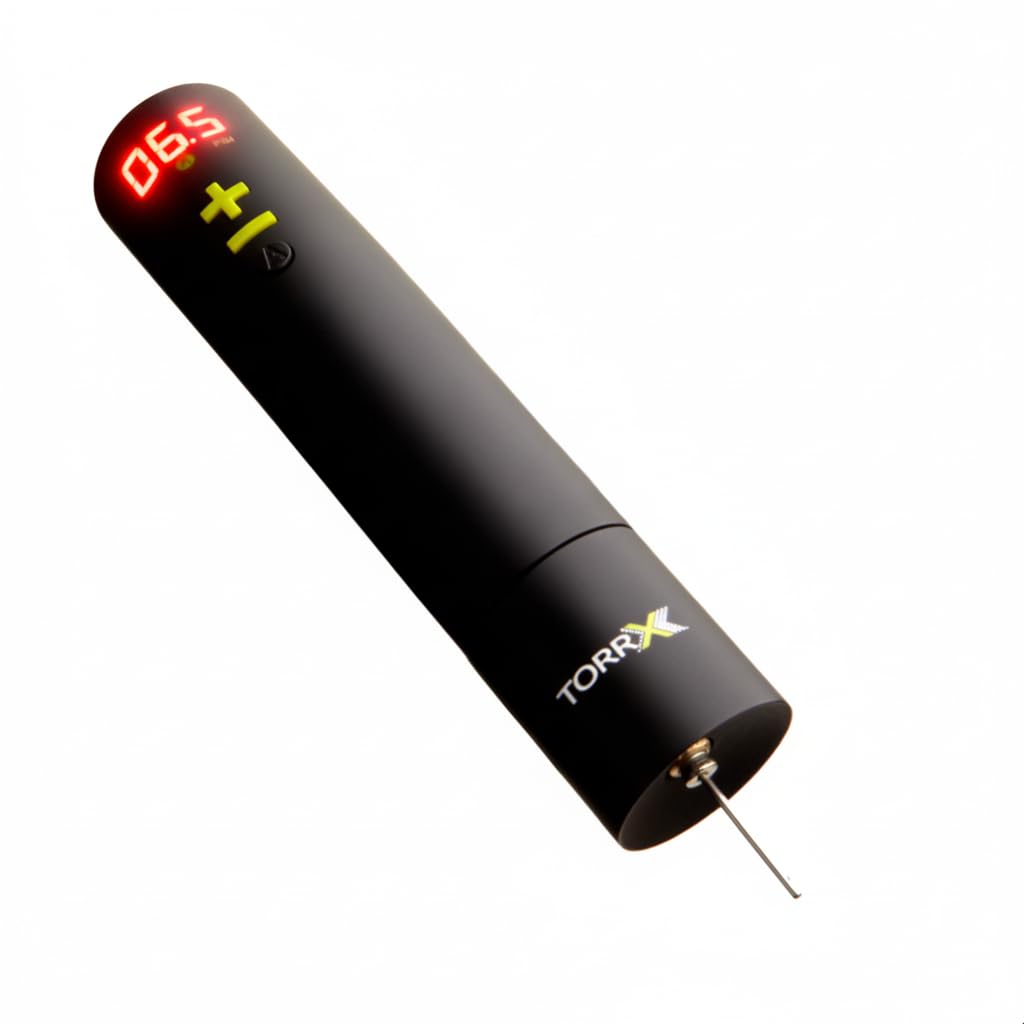
TorrX Smart Pump
Key Features
- Battery: 50+ top-ups
- Presets/Deflation: Auto + manual, deflation
- Price: $$$
The TorrX Smart Pump delivers the finest pressure resolution in its class: 0.1 PSI increments and an automatic stop that referees rely on for match-ready balls. It inflates a ball in 20–30 seconds with minimal noise. The tradeoff is a premium price that suits officials and coaches who need consistent accuracy, not casual users. The micro-USB charging port can loosen after extended use, so careful handling is wise.
Pros
- Build quality that withstands years of regular use
- Accurate 0.1 PSI resolution with auto-stop for precise pressure
- Quick and quiet inflation – 20–30 seconds per ball, low noise
Cons
- Micro-USB charging port may loosen after a couple of years of use
Best suited for referees and coaches who demand precise pressure and are willing to invest in build quality.
Best for Speed
TOPUMP 20 PSI Fast
Key Features
- Max PSI: 20
- Airflow: 10 L/min
- Battery: 1400 mAh
- Presets/Deflation: Custom only, deflation
- Price: $$
With a 10 L/min airflow, the TOPUMP inflates a basketball in about 50 seconds – the fastest rate among the pumps we tested. This speed advantage comes with trade-offs: the pressure gauge can be off by 0.5–1 PSI, and some units may have air leaks at the hose connection.
This pump fits coaches or programs needing to top off many balls quickly before a game, where absolute pressure precision is less critical. For consistent, accurate readings for official play or personal training, the top pick with its ±0.3 PSI accuracy is a better match.
Pros
- Fastest inflation speed – fills a basketball in 50 seconds at 10 L/min.
- Compact, textured grip design fits easily in a bag for portability.
Cons
- Air may leak from the hose adapter during inflation.
- Pressure gauge readings can be inconsistent, varying by up to 1 PSI.
Attractive for its speed, but the accuracy and potential hose leaks make it a niche choice for bulk inflation rather than a daily driver for precise ball prep.
Best for Portability
Pumteck AP1-M 15 PSI
Key Features
- Max PSI: 15
- Airflow: 4 L/min
- Battery: 2000 mAh
- Presets/Deflation: 4 presets, no deflation
- Price: $
Small enough to slip into a gym bag pocket, the Pumteck stores its needles inside the housing and comes with a lanyard for clipping onto a backpack. It pumps at 4 L/min — enough for topping off a basketball before a pickup game, but slower than options like the ETENWOLF P300 if you’re inflating a flat ball. Casual players who want one-touch presets without spending much will appreciate the four sport-specific modes and digital display. Just note: the pressure sensor can drift at higher altitudes, so it’s not a tool for precise regulation.
Pros
- Built-in needle storage and lanyard make this the most carry-friendly ball pump we’ve tested.
- Preset modes for basketball, soccer, volleyball, and football eliminate guesswork — press start and it stops at the right pressure.
- Priced low enough that even occasional users get their money’s worth.
Cons
- Slow inflation speed — takes about 90 seconds to fully fill a flat basketball where competitors do it in 50.
- No deflation mode means you can’t quickly let air out to adjust pressure.
If you want a pump that disappears into your gym bag and has presets for the occasional top-off, this is the budget-friendly pick. For faster inflation or deflation, look at the P300 or the sibling model with deflation.
Best for Budget
HYVOHEX Portable 17 PSI

Key Features
- Max PSI: 17
- Battery: 1500 mAh
- Presets/Deflation: Custom only, no deflation
- Price: $
At under $20, this pump brings digital pressure control and fast inflation in a pocket-sized package. However, the lack of a charging cable in the box and the custom-only PSI mode (2–17 PSI) make it less convenient than similarly priced competitors that include both a cable and preset buttons.
Pros
- Compact enough to slip into a pocket or small gear bag.
- Inflates basketballs, soccer balls, and volleyballs quickly.
Cons
- No USB-C cable included, and some USB-C cables may not charge it; only a custom pressure mode is available, no presets.
Works fine for occasional inflations on a tight budget — just be prepared to supply your own cable and set pressure manually each time.
Best for Home Use
AstroAI L6S 20 PSI

Key Features
- Max PSI: 20
- Airflow: 6 L/min
- Presets/Deflation: 5 presets, no deflation
- Price: $
The AstroAI L6S inflates a volleyball in under 50 seconds at a quiet 50 dB and stores the needle inside its palm-sized body. Its five presets cover common sports balls with a 20 PSI ceiling. However, battery life may fall short of the advertised count per charge, and the 4.4 rating signals variability that pushes it behind similarly priced options like the ETENWOLF P300.
Pros
- Quiet, fast inflation – volleyball in under 50 seconds
- Compact build with internal needle storage and five presets
Cons
- Battery life can be shorter than claimed for some users
A decent budget pick for occasional home use if you value presets over longevity; heavier users or those wanting consistent battery should step up to the ETENWOLF P300.
How to Choose
The real differentiator among automatic ball pumps is not price but the consistency of their pressure sensor over months of use.
Maximum PSI
Most sports balls require 6–13 PSI. A pump that maxes out at 12 PSI won’t properly inflate an official football or a high-pressure basketball. Pumps rated for 15–20 PSI cover all standard balls and leave a margin for sensor drift. The trade-off: higher max PSI often comes with a larger motor that drains the battery faster during heavy use.
Airflow Rate
Airflow (L/min) determines how fast a ball inflates. A 6.5 L/min pump fills a basketball in about 40 seconds, while a 4 L/min pump takes over a minute. That difference matters when you’re inflating multiple balls before practice. Faster airflow tends to generate more heat inside the pump, which can affect long-term reliability in lower-cost models.
Battery Capacity
Battery capacity (mAh) directly impacts how many balls you can inflate per charge. A 2000 mAh battery typically handles 10–15 top-offs, while 3200 mAh can get through a full team session. Advertised numbers are often 20–30% higher than real-world performance, so look for pumps with user-replaceable batteries or warranties that cover degradation.
Presets and Deflation
Preset modes let you select the ball type and the pump automatically stops at the target pressure. Deflation speeds up packing gear for travel. The hidden trade-off: the pressure sensor that enables these features can drift over time, especially if the pump is stored in extreme temperatures. For competition balls, verify the final pressure with a manual gauge.
FAQ
Why does my electric ball pump stop working after a few months?
The most common cause is a failing battery or a faulty charging port. Many budget pumps use off-the-shelf cells that degrade after 50–100 charge cycles. If the pump stops charging, try a different cable and charger. For persistent issues, look for a model with a user-replaceable battery or a warranty that covers battery failure.
Can I use a ball pump with a USB-C cable from my phone?
Yes, if the pump supports USB-C Power Delivery. But some pumps require a specific voltage or amperage that standard phone cables may not deliver. Always use the cable that came in the box, or check the manual for compatible chargers. If the pump doesn’t include a cable, expect to buy one separately.
How accurate are the preset pressure modes on automatic ball pumps?
Preset modes rely on internal pressure sensors, which can drift by 0.5–1 PSI after months of use. For casual play, that’s acceptable. For game-ready balls, use a manual pressure gauge to confirm the reading. Pumps with ±0.3 PSI accuracy (like the ETENWOLF P300) are more reliable than those without a tolerance specification.
What is the best way to store an electric ball pump to avoid accidental activation?
Store the pump in a dedicated case or pouch that prevents the power button from being pressed. Some pumps have a button lock or require a long press to turn on—check the manual. If you carry the pump loose in a bag, remove the needle and place the pump in a separate pocket to avoid pressure on the button.