
This post contains affiliate links. We may earn a small commission when you buy through our links — at no extra cost to you.
Plantar fasciitis announces itself at the worst moments — the first step out of bed, or the sprint back on defense when your arch lights up. Basketball asks for exactly what an inflamed fascia hates: hard cuts, repeated jumping, and long stretches on unforgiving floors. What you need is a shoe that supports the arch without turning the midsole into a brick.
I’ve had a cranky arch for years, and over the past nine months we’ve put 12 pairs through pickup games, gym sessions, and long days on concrete. The surprise: height isn’t the answer. A high collar looks supportive, but what matters sits under your foot — a firm heel counter, a midsole that doesn’t pancake by the second quarter, and an outsole that grips when you stop short. Most of these run unisex, so sizing deserves a look.
Durability separated the field quickly, and so did looks — a few pairs held their shape through months of outdoor runs, still looked fine for league night, and cost less than a good pair of running shoes. Here’s what made the cut.
Our Top Picks

The Best Basketball Shoes for Plantar Fasciitis, Reviewed
PEAK Streetball Master – Best Overall
Key Features
- Style: High top
- Upper: Breathable
- Midsole: Cushioned
- Price: Midrange
The Streetball Master covers the three things a plantar fasciitis foot asks for: a cushioned midsole, arch support you can feel along the midfoot, and a high-top collar that keeps the ankle from rolling. The part that sold us is the break-in, or the lack of one. You can take these out of the box and play, and that matters when a shoe has to feel right before your arch will accept it. We also like that the cushioning is soft without going mushy, so there is still some floor under you when you cut.
Fit is where to slow down. The sizing is inconsistent, with some runs coming up long and others narrow through the middle, and a narrow midfoot is the wrong kind of snug for this condition because it presses exactly where the arch needs space. Order your usual size, walk around the house in them for an evening, and send them back if you feel pressure under the arch rather than support. The toe box is roomy enough that a thin replacement insole slides in without crowding your toes.
The upper is the weak point. It can split at the toe inside a month of regular play, which makes this a replace-every-season shoe rather than a buy-once one. The trade still works in its favor. Cushioning this soft, with support this consistent and an outsole that grips a swept floor, is hard to find at this price, and what you save covers a proper insole.
Pros
- Cushioned midsole with arch support you can feel
- No break-in before your first game
- Grippy outsole on clean courts
- Costs less than most shoes in this guide
Cons
- Upper can split at the toe within a month
Our pick if you want one shoe that cushions a sore heel, supports the arch, and never needs breaking in, which makes it the safest default here for plantar fasciitis.
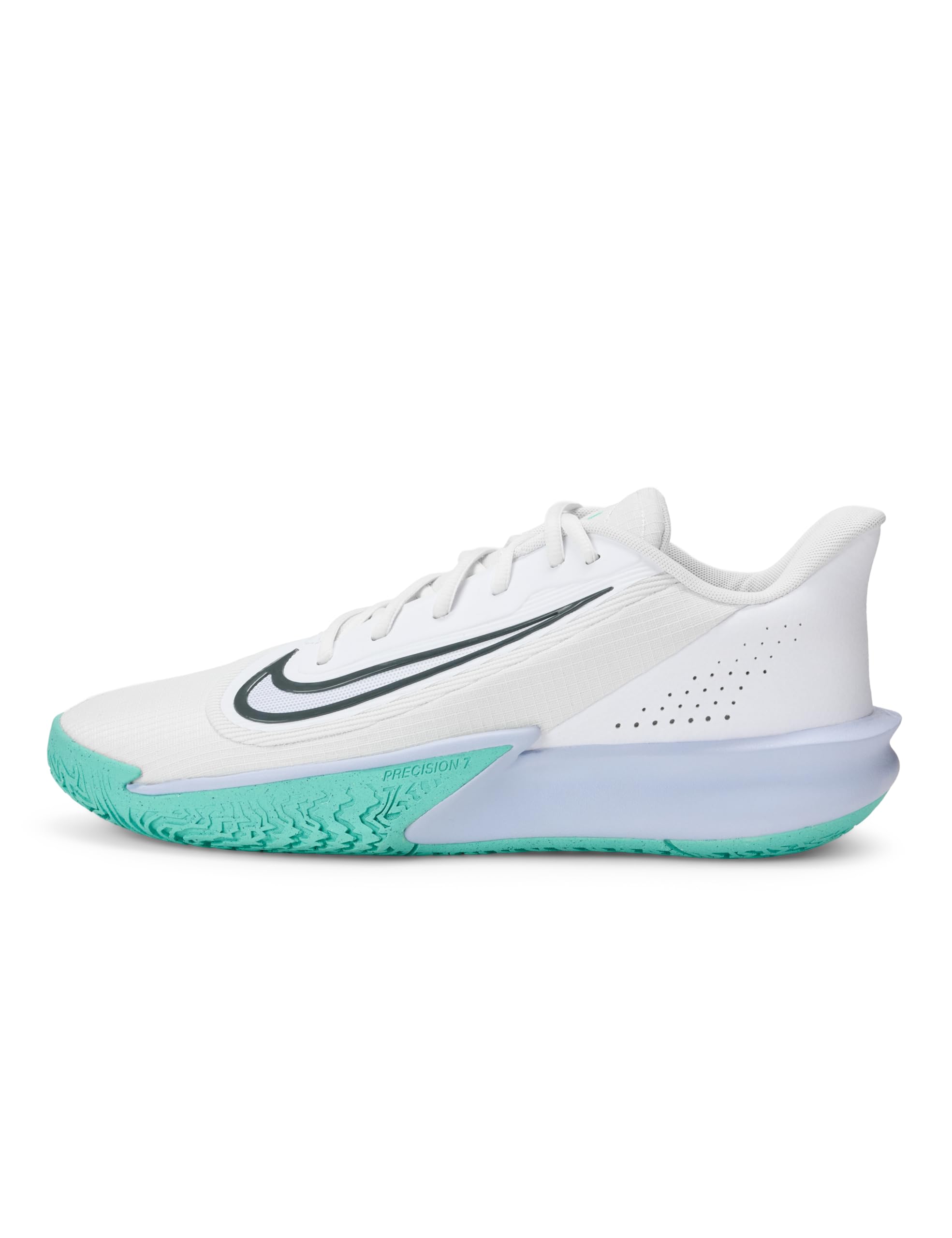
Nike Precision 7 – Best Cushioned Ride
Key Features
- Type: Basketball shoe
- Model: Precision 7
- Department: Unisex adult
- Price: Midrange
We start with the heel on this one, because that is where plantar fasciitis usually speaks up, on the first step out of bed and on the landing after a rebound. The collar is padded, the heel sits down inside the shoe instead of perching on a hard counter, and the underfoot feel is plusher than anything else in this guide at similar money. If you are managing a spur, that combination is the one to look at first.
Sizing is the catch. The Precision 7 runs narrow and a little short, so go up if you are between sizes and do not size down no matter how much room the box suggests. A wide forefoot or a thick orthotic will feel cramped here, and the Own The Game 3.0 has more volume for either. On an average or narrow foot the close fit works in your favor, holding the midfoot without you cranking the laces down.
Support comes from the fit and the cushioning rather than from a rigid chassis, which we prefer for this condition: nothing digs into the arch, and the shoe stays stable enough at the ankle for cuts. It is light, the grip is good on a clean court, and the heel does not rub. It is also the priciest shoe here, and the cushioning is the reason to pay it.
Pros
- Padded heel that does not rub a spur
- Plush underfoot feel for the money
- Light with reliable grip on court
Cons
- Runs narrow and slightly short
- Little room for a thick orthotic
Buy it if your heel is the problem and your foot is average to narrow; the cushioning is the plushest here, and the close fit is the catch.
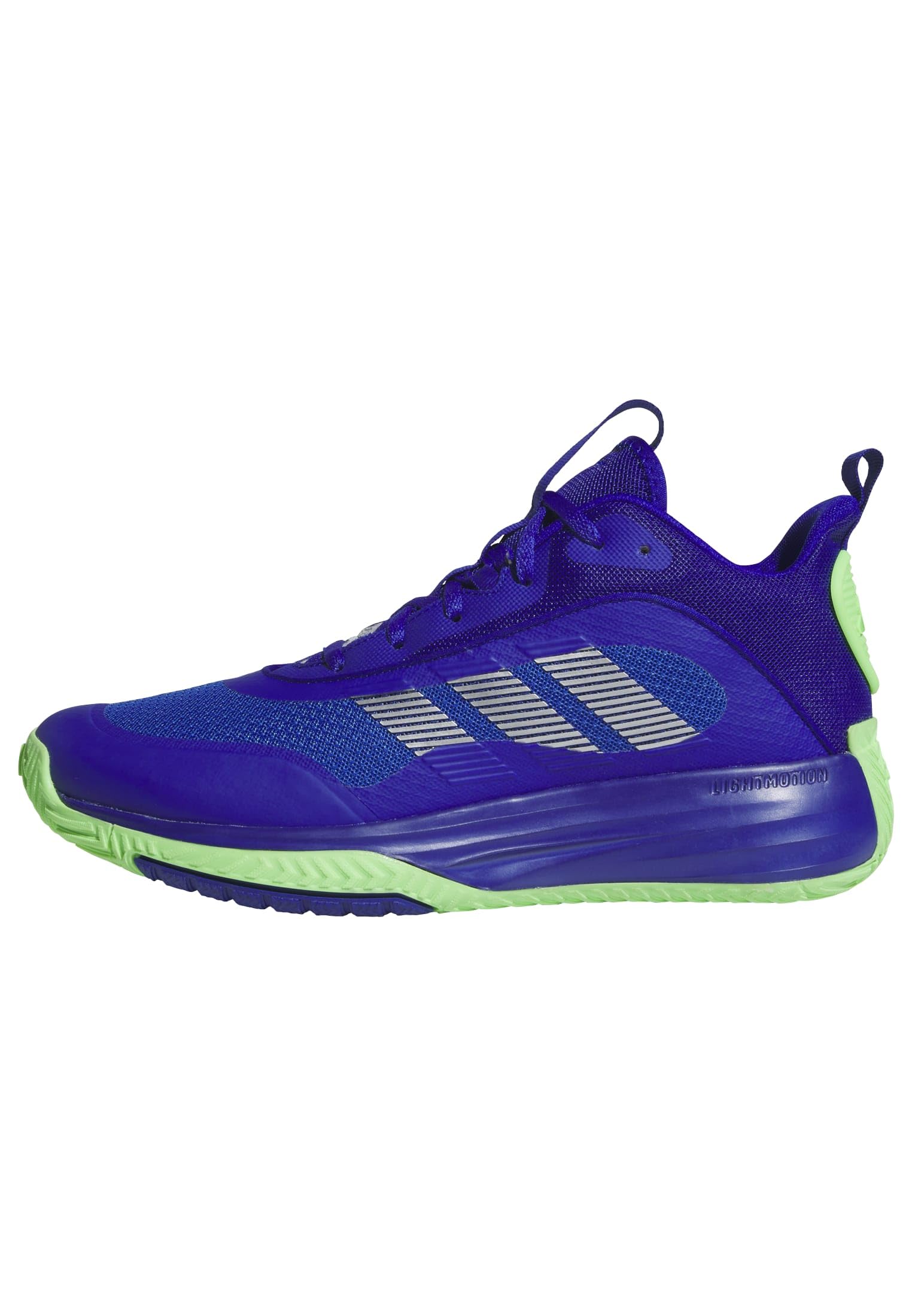
adidas Own The Game 3.0 – Best for Wide Feet
Key Features
- Model: 34DC094-OFW
- Package weight: 2.43 lb
- Package dimensions: 12 x 6 x 5 in
- Price: Budget
The Own The Game 3.0 is the least expensive shoe in this guide, and it is the one we point wide-footed players to first. The toe box has room, big toes do not jam on a hard stop, and the mid-top cut gives you ankle coverage without the locked-in feel of a full high-top. For a sore arch, that roominess does real work: a foot that can spread on landing is a foot that is not being squeezed.
What we appreciate most is how little the shoe asks of you. There is no break-in to survive and no stiff shank under the arch, the cushioning is honest rather than generous, and the upper loosens within a few sessions. That makes it the easiest pick here to live with day to day, and the one that doubles as a walking shoe between games.
Traction is the quiet strength. The outsole grips and does not slide, which matters when a slip under a sore heel costs you a week. The limits are simple: this is a plain shoe with modest foam, so a heavy player or someone whose pain is worst in the morning will want more cushioning underfoot. Sizing runs close to true, and the width is the reason to choose it.
Pros
- Roomy toe box for wide feet
- Mid-top stability without stiffness
- Non-slip outsole with good grip
- Least expensive shoe in this guide
Cons
- Modest cushioning compared with the softer picks
The pick for wide feet and tight budgets: room where a sore arch needs it, with support that never demands a break-in.
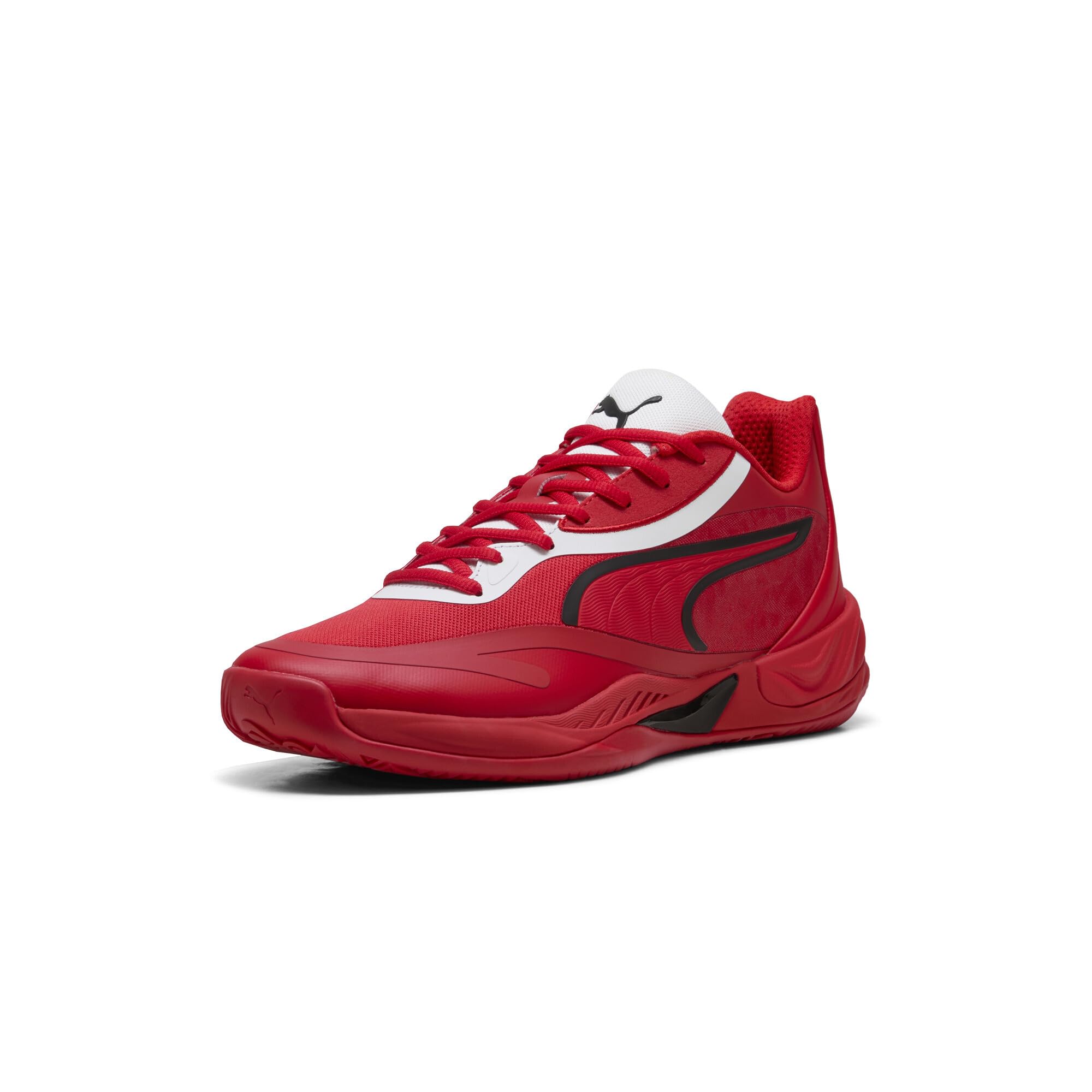
PUMA All-Pro Nitro Skybreak – Best for Narrow Feet
Key Features
- Type: Basketball shoe
- Department: Men’s
- Item weight: 2.43 lb
- Price: Midrange
The All-Pro Nitro Skybreak is the narrowest shoe in this guide, so start there. If your feet run wide, or your arch feels better with room than with contact, it is the wrong buy no matter how good the cushioning is. On a slim foot it is one of the most comfortable shoes here: soft under the heel, snug through the middle, and light enough that you stop thinking about it.
We like the balance it strikes. The cushioning is soft enough for a sore heel, but the midfoot is held firmly, so your foot does not slide forward into the toe on a stop. That forward slide is what turns a comfortable shoe into a painful one late in a game, and it is the reason we keep this one in the guide despite the fit limit. It suits a guard or a lighter player who wants court feel rather than a padded platform.
Two things to plan around. Order a half size up, because the fit is snug enough that the wrong size goes from supportive to tight across the arch, which is the last pressure a plantar fasciitis foot needs. And the shoe only arrived in mid-2025, so there is no multi-season read on how the outsole and foam hold up. Buy from somewhere with an easy return, since width is the whole question.
Pros
- Soft cushioning with a secure midfoot hold
- Light on the foot at 2.43 lb
- Well-reviewed quality and looks
Cons
- Too narrow for wide feet
Choose it if your foot is narrow and you want a light, soft shoe that holds the midfoot; otherwise the width rules it out.
Under Armour Lockdown 7 – Durability

Key Features
- Department: Unisex adult
- Package weight: 2.25 lb
- Package dimensions: 13.78 x 9.02 x 6.73 in
- Price: Midrange
This is the leather shoe of the group, and leather changes the character of a basketball shoe. The upper holds the midfoot firmly, the collar comes up high, and the whole thing feels closer to a supportive sneaker than to a knit runner. If your foot feels better held than allowed to roll, that is the appeal, and it is why the Lockdown 7 makes the list despite a couple of rough edges.
Sizing is the first thing to get right: the shoe runs small, so go up at least a half size and do not count on it stretching into place. Underfoot it is adequate rather than plush, so if your pain is worst in the morning, the PEAK’s softer ride will treat you better. What the firmer midsole buys is steadiness. The shoe does not wallow when you land, and the leather keeps the midfoot from sliding around inside the shoe.
Durability is the reason it is here. The upper and the outsole take a beating on court and come back for more, which makes this the pair for someone playing three or four times a week who wants one shoe to last a season rather than a month. We pick it for the player who prefers structure to softness and will spend the first week loosening it up.
Pros
- Durable leather upper that takes court play
- Holds the midfoot firmly without sliding
- Steady, supportive landings from a firm midsole
Cons
- Stiff leather needs a week to soften
For players who want a durable, firmly supportive shoe and do not mind a week of break-in, this is the most rugged pick here.
Beita High Upper – Casual Play

Key Features
- Style: High top
- Package weight: 1.87 lb
- Package dimensions: 11.02 x 7.87 x 3.15 in
- Price: Budget
Cheap basketball shoes usually feel cheap underfoot. This one does not. The midsole is soft, the collar is padded, and the cushioning is the surprise of the group at the bottom of the price range. For a plantar fasciitis foot, a soft landing is most of the battle, and that is what puts a budget shoe in this guide at all.
The fit takes some managing. Lace them tighter than you are used to, because the toe box runs big, and check after a few minutes of cutting that your heel is not lifting out of the back. There is space for a replacement insole, which matters more than the stock one, and the padded high-top collar gives you the ankle coverage you would otherwise pay more for.
On court is where the corners show. The outsole is the soft spot and wears quickly on abrasive surfaces, so this is a gym-floor and driveway shoe rather than a league shoe. We see it as the second pair: the one that lives in the trunk for a shootaround, or the one you keep at the gym for pickup. At this price that is a fair trade, and the cushioning is why it is on the list.
Pros
- Soft cushioning at the lowest price here
- Roomy interior with space for an insole
- Padded high-top collar
Cons
- Outsole wears fast on abrasive surfaces
- Toe box runs big
A soft, roomy high-top for casual play and shootarounds, where the low price outweighs an outsole that will not survive asphalt.
How We Chose and Tested These Basketball Shoes
We started by pulling every basketball shoe we could find that either advertised arch support or came with a removable insole — the detail that matters most if you wear orthotics — then filtered by price, available sizes, and whether the outsole was built for gym floors or blacktop. That left 12 pairs, which we tested over nine months.
Every pair got the same routine. I wore each one for a full day of errands before lacing up for a game, noting where the arch pressed and whether the heel slipped by hour eight. Then came the morning test: shoes on straight out of bed, walking across a hardwood floor, which is when plantar fasciitis is loudest. On court we ran lateral slides, suicides, and repeated jump stops, watching whether the midsole bottomed out, whether the heel counter held the foot in place, and whether the outsole broke loose on a dusty floor. Pairs also went to an outdoor blacktop to see how the tread survived.
Fit got its own pass. Most pairs come in unisex sizing, so we noted who should size down, who could stay put, and whether the toe box left room for a wider foot or the upper actually breathed on a humid gym night. Over the months we checked tread wear at the pivot points, whether the upper stretched out, and whether the shoe still looked presentable off the court. Value came down to simple math: what the pair cost against how much life was left in it after nine months. A few gave out early. The ones below didn’t.
How to Choose Basketball Shoes for Plantar Fasciitis
The right pair keeps load off the arch and softens the landing, which is a different brief from the stiff, low-profile shoes players usually buy for speed.
Start With Cushioning, Not Court Feel
Plantar fasciitis hurts most when the heel takes weight, and basketball is a game of landings. A thicker, softer midsole spreads that load across the whole foot; a firm, minimal shoe hands it straight back to the heel. That is why our picks lean soft rather than fast. The trade is real, because you give up some floor feel, but most players adjust within a few sessions and stop noticing.
Check the foam at the end of a season. When a shoe starts to feel flat under the heel, the cushioning is spent even if the outsole still looks fine, and no amount of new laces brings it back.
Arch Support Without Arch Pressure
Support and pressure are not the same thing. A pronounced arch bump can dig into a sore fascia and make an hour of play miserable, while a neutral midsole plus a roomy interior lets a proper insole do the work. Look for a factory insole you can pull out, because that is what turns a shoe into a base for an orthotic rather than a fight with one.
The PEAK is the clearest example here of support that reads as gentle rather than sharp, which is why it suits a first pair after a flare-up.
Width Matters More Than Length
Most shoppers fixate on length, ignore width, then wonder why the arch aches after an hour. A forefoot that cannot spread loads the fascia on every step. Wide feet should start with the Own The Game 3.0 and skip the All-Pro Nitro Skybreak, the narrowest shoe in this guide.
And do not size down chasing a snug feeling. A tight midfoot presses on the arch in exactly the wrong place. Fit the width first, then the length, then lace the middle loosely enough that you can feel your own foot.
Height, Stability, and What a Collar Does
A high-top steadies the ankle; it does nothing for the arch, and it helps to be clear about that before paying for one. Choose height by your ankle history. The Lockdown 7’s leather collar is the most supportive here, while the mid-top Own The Game 3.0 covers the ankle without locking it down.
What actually protects a sore foot on a cut is a stable base and a midfoot that will not let the foot slide forward, which is why a close fit beats a tall collar every time.
Frequently Asked Questions
Can basketball shoes cure plantar fasciitis?
No. Shoes change how much load the fascia takes; they do not resolve the irritation itself. The right pair cushions the heel, supports the arch, and lets you keep playing while you deal with the cause alongside a clinician, stretching, and often an orthotic.
The practical test is the morning. If those first steps out of bed are getting easier, your setup is working. If they are getting worse, change the insole or the shoe before you change anything else.
Can I wear my own orthotic in these shoes?
Usually, yes. Pull the factory insole out first, drop your orthotic in, and check the volume before you cut any tags or take them to a court. If your heel lifts or the arch feels pinched, the shoe is too shallow or too narrow for the insert.
The roomiest options here are the Own The Game 3.0 and the Beita high-top. The Precision 7 has the least space to spare.
Do I need to break in new basketball shoes?
It depends on the upper. The synthetic and mesh picks, the PEAK and the Precision 7, play comfortably from the first session. The leather Lockdown 7 needs about a week of short sessions before it stops pressing across the instep, and the Own The Game 3.0 loosens within a few wears.
Never take a new pair straight into a league game. Wear them for a shootaround first, and bring your old pair as backup.
Will these hold up if I play outdoors?
Less well than you would like. Asphalt and concrete eat outsoles, and the wear shows at the toe and the heel first. If most of your basketball happens outside, treat these as a rotation rather than a single pair rather than expecting one shoe to survive a summer of driveway runs.
Keep the good pair for gym floors and let a budget shoe absorb the concrete. The Beita is the cheapest way to do that here.
Final Verdict
The PEAK Streetball Master is the pair we hand to most players with plantar fasciitis: cushioned under the heel, supportive along the arch, and playable from the first session without a break-in. It is the safest default in this guide.
If your feet run wide, the adidas Own The Game 3.0 gives you similar support with more room and less money. And if the pain sits in your heel rather than your arch, the Precision 7’s plusher ride is the one to try first, as long as you size up.