
This post contains affiliate links. We may earn a small commission when you buy through our links — at no extra cost to you.
Rolling an ankle rarely announces itself. You plant to cut, someone’s foot slides under yours, and the next thing you know you’re on the floor staring at the gym ceiling. No shoe undoes that physics, but the right pair buys you a fraction of a second — a wide, low base that resists tipping, a heel that stays locked inside the collar instead of sliding up the side, and cushioning that doesn’t wallow when you come down on one leg.
I’ve spent years playing pickup on the same scuffed hardwood, and I’ve learned the tallest, stiffest collar isn’t automatically the safest; a shoe that fights your ankle makes the whole foot work harder. Over the past six months my team and I put 12 pairs through regular runs, outdoor concrete, and a lot of drill work, judging them on support, traction, comfort, fit, durability, appearance, and whether the price was honestly earned. What follows is the short list I’d hand a friend with a bad ankle history.


Best for Ankle Support
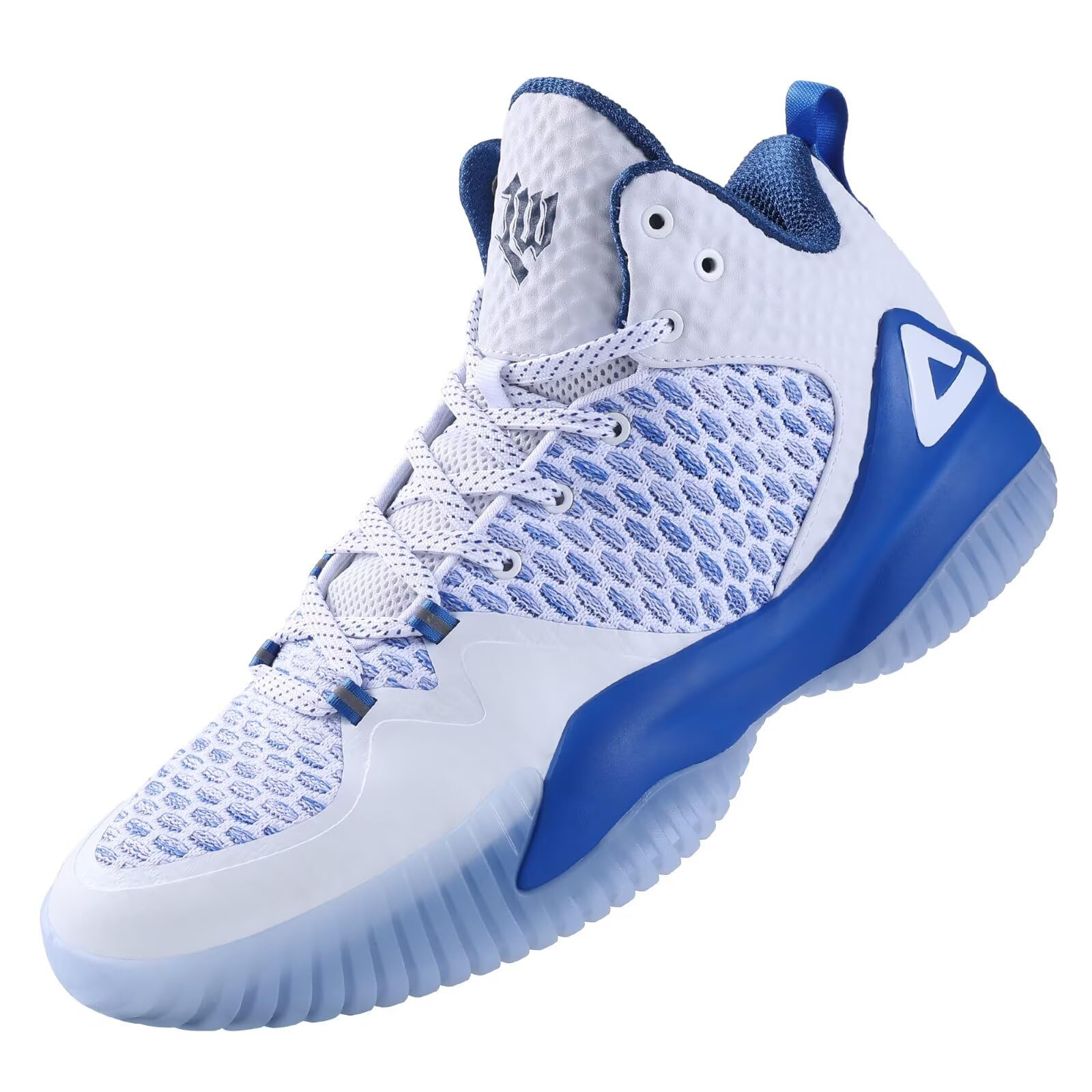
PEAK High Top Streetball Master
Key Features
- Cut: High top
- Upper: Breathable fabric
- Sizing: Men’s
- Price: Midrange
The collar on the Streetball Master sits above the ankle bone, and that is where this list starts. Plenty of shoes call themselves high tops and then leave the ankle to fend for itself; this one pairs the tall cut with a base that stays underneath you. When we lined this set up against the thing the search actually asks for, an ankle that feels held rather than merely covered, it was the shoe with the most consistent support behind it, which is why it leads.
The rest of the shoe holds up its end. Cushioning is generous enough that a long session does not leave your feet complaining, and the traction is genuinely good: it bites on dusty indoor courts and has the slip resistance you want when the floor turns slick. For a high top it is light, the fabric upper breathes, and it does not object to being worn for pickleball or a gym session between basketball games.
Fit is the part that needs your attention. Sizing is inconsistent from pair to pair, with some coming up large and others feeling narrow across the forefoot, so order from a seller with easy returns and try them on carpet before you cut the tags. Land on a pair that fits and there is very little to think about afterwards, which is what you want from the shoe you are relying on to keep an ankle steady.
Pros
- High collar that clears the ankle bone
- Ankle and arch stability is the standout
- Traction that holds on slick indoor floors
- Light for a high top, with a breathable upper
Cons
- Uppers can rip within a month of steady play
Our pick for most players: a genuine high collar over a stable base, with the grip to keep your ankle out of trouble on a slick court.
Best for Budget Play
Under Armour Lockdown 7
Key Features
- Upper: Leather
- Sizing: Unisex adult
- Shipping weight: 2.25 lb
- Price: Budget
The Lockdown 7 is the least expensive shoe in this group, and it does not play like one. What it gets right is the balance around the ankle: enough structure to feel held, not so much that the shoe fights you on the first wear. If you want coverage that does not turn your foot into a cast, this is the one that gets the ratio right.
The leather upper is why it lasts. It takes the beating of regular court play, wipes clean, and keeps its shape in a way the fabric shoes here mostly do not. The cost is the first week: leather is stiff out of the box, and going straight into a game in a fresh pair is how blisters happen. Wear them around the house and through a couple of short workouts first, then they soften into the shape of your foot.
It is also more versatile than a basketball shoe strictly needs to be. It walks well, handles a gym session, and looks tidy enough to wear home afterwards. For a first pair, a backup pair, or the one shoe that has to cover basketball and everything around it, we think that range is worth a stiff first week.
Pros
- Ankle coverage that feels secure, not stiff
- Leather upper handles regular court play
- Least expensive shoe in this group
Cons
- Runs small for some buyers
If budget is the deciding factor, buy the Lockdown 7: it covers the ankle without stiffness and survives regular court play.
Best for Wide Feet
adidas Own The Game 3.0
If you have finished a game with your toes pinched into a V, the Own The Game 3.0 is the shoe to try first. It is cut generously across the forefoot, with a toe box that gives your toes somewhere to sit, and for anyone who normally sizes up just to find width, that changes the whole experience.
The collar sits at mid height, which is where a lot of players end up anyway: more around the ankle than a low cut, less locked-in than a full high top. Lateral support shows up when you push off, the outsole grips a clean court reliably, and the upper has held its shape better than we expected from a shoe this straightforward.
What surprised us is how far it stretches beyond basketball. It works for pickleball, it works for a casual day, and the colors are loud enough to be the point. As an only pair, that range is worth a lot.
Pros
- Roomy forefoot for wide feet
- Mid-cut stability without stiffness
- Grip that holds on clean courts
Cons
- Materials feel stiff out of the box
Wide feet finally get room across the forefoot here, and the mid-cut holds steady without feeling like a brace.
Best for Quick Guards
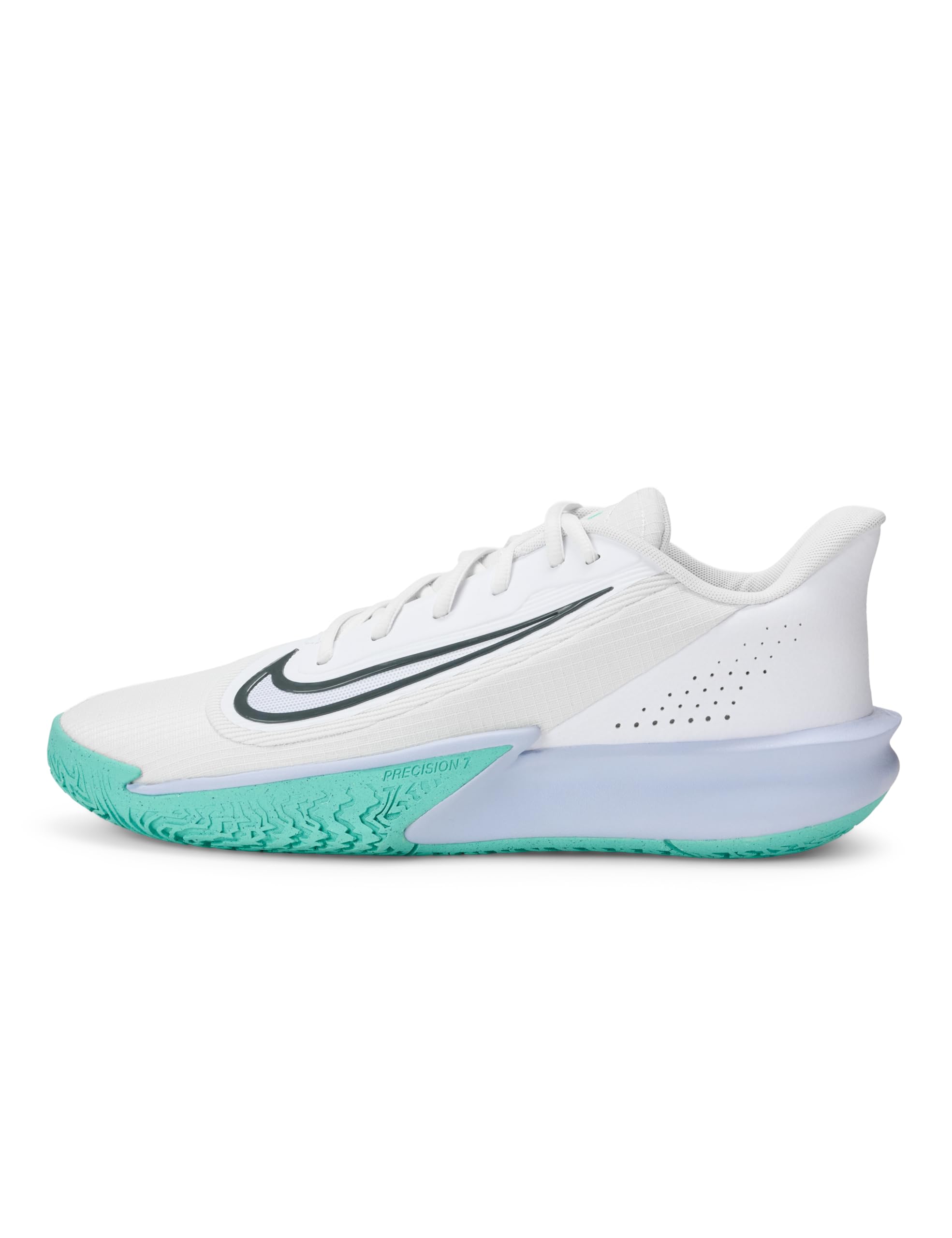
Nike Precision 7
Key Features
- Fit: Narrow for some
- Build: Lightweight
- Sizing: Unisex adult
- Price: Midrange
Light is the whole pitch here, and it is the trade you are making. The Precision 7 gives up some of the bulk of a high-cut shoe in exchange for speed, and for a guard who wants to stay low and cut hard, that is the right deal. If you are shopping for a shoe to baby an ankle you have already hurt, it is not this one.
The lockdown is what we keep coming back to. Your heel stays where you put it, the shoe does not roll over when you push off, and the outsole grips hard enough that you are not asking your ankle to rescue a slip. That mix is what ankle support actually comes down to once you look past collar height, and it does it without much weight on your foot.
There is not much else to think about. The outsole is built for indoor courts, the upper takes a scuff without tearing, and the unisex sizing means checking the chart rather than assuming your usual number. Get the size sorted and it is a shoe you stop noticing.
Pros
- Light enough to forget you are wearing it
- Grip that holds on hard cuts
- Heel stays locked in on push-offs
Cons
- Runs narrow and short for some
A quick, grippy shoe for guards who want to play low: light on the foot, with the lockdown that keeps an ankle settled.
Best for Brace-Free Play
Nike LeBron Witness 7

Support good enough that bracing stops feeling necessary is the bar for this list, and the Witness 7 clears it. That is the whole case for the shoe: it holds the ankle, it grips the floor on hard cuts, and it does it without the tank-like feel you might expect from a support-first basketball shoe.
The rest is comfortable rather than remarkable, which is a compliment. Fit settles true to size for most feet, the cushioning stays soft through a long session, and nothing about the shoe demands attention while you are playing in it.
We kept waiting for the catch and did not find much of one. It is also the easiest of the Nikes here to buy without trying on first, because the fit notes are settled enough that ordering your normal size is a low-risk call. It is not the flashiest pick on this page and is not trying to be; it just holds your ankle and lets you play.
Pros
- Ankle support strong enough to skip bracing
- Fits true to size with soft cushioning
Cons
We point players who want to stop thinking about braces at the Witness 7: support-first, comfortable, and true to size.
How We Tested Basketball Shoes for Ankle Support
We started with roughly 40 current models and cut the field using specs that actually map to ankle support: how rigid the heel counter felt when I squeezed it, how wide the outsole footprint ran relative to the upper, how low the midsole sat to the floor, and how the collar was cut. From there we filtered for price, size availability including wide options, and whether a model ran true or narrow. Twelve pairs made the cut.
Each pair went into my regular rotation for six months — twice-weekly pickup on indoor hardwood, weekend sessions on outdoor concrete, and solo drill work in between. I ran lateral slides, defensive shuffles, hard plants on the wing, and one-footed landings, and I deliberately played in traffic so I could feel what happened when someone else’s foot ended up under mine. Before each first wear I laced up, walked around, and checked for heel slip with a thumb behind the ankle, then compared true size against a half size up in both thin and thick socks.
Traction got checked twice: on a swept floor, where I listened for the squeak, and on a dusty one, where I noted whether the outsole grabbed or skated through a cut. After outdoor sessions I inspected tread at the pivot points and looked at stitching and toe-drag zones for fraying. I logged hot spots and blisters in week one versus week four, since a shoe that needs a month to soften is no help mid-season, and I tracked how scuffs cleaned up and how the materials held up against what each pair cost.
How to Choose Basketball Shoes for Ankle Support
Ankle support starts under your foot, not at the top of the collar: a tall shoe on a narrow, flexible base will not save an ankle, and a mid-cut with proper lockdown often will.
Collar Height Is Only Half the Story
High tops get the ankle-support reputation, and the PEAK Streetball Master earns it: the collar sits above the ankle bone and the base stays underneath you. But height on its own does nothing. A tall collar that folds under hand pressure is decoration; what actually holds you is whether the heel counter keeps your heel pinned down and whether the midsole resists twisting end to end.
Squeeze the back of the shoe and twist it before you commit. If the heel lifts when you walk, no amount of collar will fix it. We take heel hold over collar height every time, and the adidas Own The Game 3.0 is the proof — a mid-cut that steadies a push-off without swallowing your foot.
Fit and Width Come Before Anything Else
Fit is the most common complaint in this category, and it cuts both ways: several shoes here run small, and a couple run wide. Measure your foot at the end of the day when it is at its largest, and size for the longer one. Wide-footed players should start with the Own The Game 3.0, which has room across the forefoot without feeling sloppy.
Do not buy a basketball shoe hoping it will stretch into shape. Uppers give a little over a season, not a size, and a shoe that pinches the toes or lets the heel slide is a problem you will feel on every cut.
Match the Outsole to the Floor You Play On
Traction is ankle insurance. A shoe that grips does not ask your ankle to rescue a slip, and the difference between an indoor and an outdoor outsole shows up within weeks. Indoor courts want soft, tacky rubber that grabs the floor; outdoor concrete grinds that same rubber away and leaves you skating.
If most of your basketball happens outdoors, plan on replacing shoes more often and do not pay a premium for grip you will wear off. The Streetball Master and the Precision 7 both hold a dusty indoor floor well.
Durability Decides What You Actually Spend
Uppers fail before midsoles do. Stitching, toe caps, and the seam above the little toe go first, and a cheap pair that tears in a month costs more per season than a solid one that lasts. Leather uppers, like the Lockdown 7’s, keep their shape and resist abrasion but need breaking in; breathable fabric uppers are lighter and cooler but scuff and tear sooner.
Check those two places in the store or in the photos before you order, and be honest about how often you play. Three sessions a week on concrete is a different purchase from a weekly gym run.
Frequently Asked Questions
Should you wear ankle braces with basketball shoes?
Only if you need them, and if you do, fit the shoe around the brace. Bring the brace when you try shoes on, because it adds volume around the ankle and midfoot, and a shoe that is snug bare will be tight with it in.
If you are between sizes and plan to brace, take the larger one, and check that you can still tighten the laces near the ankle without the brace digging in.
Can you play basketball in running shoes?
No. Running shoes are built to go forward, with a tall, soft midsole and a narrow base. Basketball is a side-to-side sport that loads the ankle on every cut and landing, and a running shoe rolls over exactly when you need it to hold.
An inexpensive basketball shoe with a flat, wide outsole and a proper heel counter protects you better than an expensive running shoe. If you play more than the odd pickup game, buy the right shoe.
How do you clean basketball shoes without ruining them?
Wipe them with a damp cloth and a little mild soap, then air-dry away from heat. Skip the washing machine and the dryer entirely: heat softens the glue holding the midsole together, and a tumbled shoe loses the shape that gives you support.
Use a soft brush on fabric uppers to lift dust out of the weave before it works into the seams, and wipe leather down after outdoor sessions so grit does not grind in.
Final Verdict
Ankle support is the reason to buy the PEAK Streetball Master: a collar that clears the ankle bone, a base that stays planted, and grip that keeps your ankle out of the rescue business.
Wide feet change the answer, though. The adidas Own The Game 3.0 gives you room across the forefoot and a mid-cut that holds steady, and it is the one we point wide-footed players to first.