
This post contains affiliate links. We may earn a small commission when you buy through our links — at no extra cost to you.
The morning after my first long run in months, I stood at the top of my stairs and briefly considered sliding down on my backside. Soreness comes with training, but being wrecked for three days when you could be ready again in one is mostly about the half hour after you stop. A recovery powder covers the protein and carbs; the good ones also help you sleep, which is when most of the repair happens, and they don’t leave you clutching your stomach an hour later.
Over four months, my team and I worked through 14 of these powders, and the ones that survived did it on unglamorous details. Taste and dissolvability knocked out more than the labels did — a drink you dread at 9 p.m. is one you quit by week two. Something first-time buyers learn the hard way: sugar-free doesn’t mean low-calorie, and the scoop in a full tub is often bigger than the serving the label counts. Below are the ones worth keeping in the rotation, sorted by what they’re best at.
Our Top Picks


The Best Muscle Recovery Supplements for Athletes, Reviewed
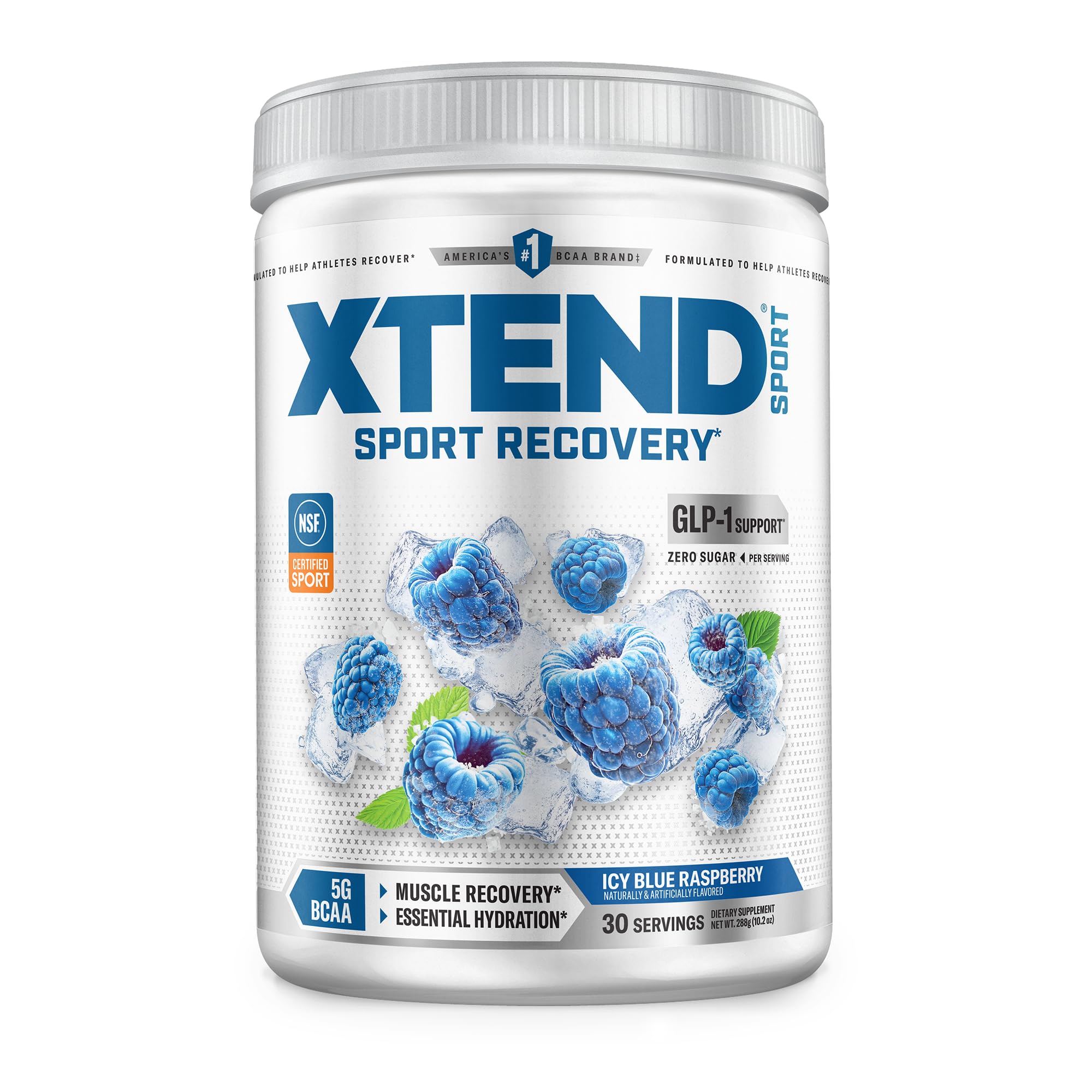
XTEND Sport BCAA Powder – Best Overall
Key Features
- Format: Powder
- Servings: 30
- BCAA dose: 7 g per serving
- Certification: NSF Certified for Sport
- Price: Midrange
XTEND Sport is the one recovery powder here with NSF Certified for Sport on the label, and for an athlete that is not a small detail. It means the product has been screened against a recognized banned-substance standard, which is the first thing we check before recommending anything an athlete will take before or after training.
Then comes the practical part: each scoop has 7 g of BCAAs in a 2:1:1 ratio, plus electrolytes, and no sugar or caffeine. We made it our top pick because it handles two jobs in one bottle: post-workout amino support and the kind of salty-sweet drink that is easy to finish after a hot session. It is not a protein replacement; it is the recovery habit you can keep in a shaker.
The catch is the label’s own direction: it points to at least 14 g of BCAAs a day, which means two scoops, not one. At that pace a 30-serving tub is a 15-day supply. We treat that as a buying fact rather than a flaw, because the scoop size is honest for a full dose. Blue Raspberry Ice is sweet and sucralose-based, so we do not call it subtle.
Compared with the capsule picks here, XTEND is the better default for anyone who wants a measured, drinkable recovery dose and does not mind carrying powder. If you want no shaker at all, go to the capsules instead.
Pros
- NSF Certified for Sport
- 7 g BCAA with electrolytes
- Sugar-free and caffeine-free
Cons
- Sucralose can upset sensitive stomachs
We recommend XTEND Sport as the default recovery powder for athletes who want certified BCAAs and electrolytes; just plan on two scoops to follow its daily target.
Optimum Nutrition BCAA Capsules – Best Budget Capsules
Key Features
- Format: Capsules
- Servings: 30
- BCAA dose: 1,000 mg per serving
- Amino ratio: 2:1:1
- Price: Budget
Two capsules give you one gram of BCAAs. That single fact explains both why we keep Optimum Nutrition’s capsule in the gym-bag tier and why it does not replace a 7-gram powder. It is the easiest way here to get a small, tasteless BCAA dose when you are away from a shaker.
The 2:1:1 ratio is the standard one, and the 60-capsule bottle gives 30 two-capsule servings. We like the no-fuss part: no flavor to get sick of, no powder dust, and nothing to mix. The capsules are small enough to swallow without a lot of water, and there is no aftertaste, which is not true of every BCAA capsule we have tried.
The arithmetic is the limitation. If you are trying to match a 7-gram serving, you need 14 capsules; a 1-gram serving is a top-up, not a full protocol. We see it as a backup for days when the powder stays home, or for someone who only wants a gram or two around training.
For the athlete who wants convenience without any flavor, it earns its place. For serious gram-level dosing, the powder picks are more practical.
Pros
- No flavor or shaker needed
- 30 servings in a small bottle
- Standard 2:1:1 BCAA ratio
Cons
- Capsules can get sticky in a damp gym bag
We keep Optimum Nutrition’s capsules as the no-shaker backup: easy to travel with, though two capsules deliver only a gram of BCAAs.
MuscleTech Platinum Glutamine – Best Unflavored Glutamine
Key Features
- Flavor: Unflavored
- Format: Powder
- Additives: No fillers or additives
- Glutamine dose: 5 g per serving
- Price: Midrange
Unflavored glutamine is one of the least glamorous supplements you can buy, and that is exactly why we like MuscleTech’s version. It disappears into water, juice, or a protein shake, so it does not add another flavor you have to tolerate.
Each scoop is 5 g of glutamine with no fillers or additives, and the powder is odorless. We used it as a stacker: one scoop in a post-training shake, another in water later in the day when the label’s two-serving routine made sense. It does not thicken a drink or leave a chalky finish.
The packaging is the annoyance. The jar is narrow and the scoop is short, so once the powder drops, you are digging for it. We still recommend it for anyone who wants a clean glutamine add-on without a flavor commitment; just expect to keep a long-handled spoon nearby or transfer it to a wider container.
It is not a complete recovery formula on its own, since there are no BCAAs or electrolytes here, so pair it with your existing shake or amino product. That narrow job is the point.
Pros
- Unflavored and odorless
- 5 g pure glutamine per scoop
- Mixes into shakes or juice
Cons
- Two servings daily shortens the supply
We recommend MuscleTech’s glutamine for anyone who wants a blank-slate 5 g scoop to add to their own recovery drink; it is not a complete formula.
Double Wood EAA Capsules – Best All-In-One Eaa Capsules
Key Features
- Format: Capsules
- Capsules: 225
- EAA dose: 1 g blend per serving
- Amino profile: All 9 EAAs
- Price: Budget
A capsule that carries all nine essential amino acids is a useful thing to have in a travel bag, and Double Wood’s bottle is the most straightforward version of that idea here.
Each serving is a 1-gram blend of all nine EAAs, including the three BCAAs, in 225 capsules. We like it for the days when a shaker is impractical: no flavor, no powder, no mixing, and nothing that will leak in a backpack. The capsules are small enough to take with a mouthful of water.
The catch is the dose. A 1-gram amino blend is a top-up, not a protein shake replacement, and it is not the product to buy if you are trying to match a 5- or 7-gram recovery serving. We see it as a travel or backup option for someone already eating enough protein, not as the centerpiece of a recovery stack.
If you want the all-nine-EAA idea in a larger, more premium capsule, Pure Encapsulations is the step up. If you want a bigger BCAA dose with no fuss, the powders are more practical.
Pros
- All nine EAAs in one capsule
- No flavor or mixing
- 225 capsules per bottle
Cons
We like Double Wood’s capsule for travel days and powder-free routines; just don’t expect its 1-gram serving to replace a protein shake.
Nutricost BCAA 1000 – Best Bulk Supply
Key Features
- Testing: Third-party tested
- Servings: 250
- BCAA dose: 1,000 mg per serving
- Amino ratio: 2:1:1
- Price: Budget
Five hundred capsules is the kind of number that makes a supplement feel like a commitment, and Nutricost’s BCAA bottle is exactly that: a bulk stash for people who already know they will take capsules.
The formula is simple: 1,000 mg of BCAAs per two-capsule serving, a 2:1:1 ratio, 250 servings per bottle, and third-party testing. There is no flavor, no sweetener, and no shaker to clean. We like it as a no-drama option that lives in a cabinet and comes out every training day.
The pill count is the trade. Two capsules for a gram means a 7-gram day is 14 capsules, and even a 3-gram top-up is six. We treat this as a low-to-moderate dose capsule, not a high-dose protocol; if you want a big BCAA hit, a powder is more sensible.
For the athlete who prefers capsules and wants a long supply, it is the most practical bulk pick here.
Pros
- 250 one-gram servings
- Standard 2:1:1 ratio
- Third-party tested
Cons
- 500 capsules take up storage space
We recommend Nutricost’s bottle when you want a long-lasting BCAA capsule stash; the trade is a high pill count at bigger doses.
FITAID Post Workout Recovery – Best Ready-To-Drink
Key Features
- Format: Ready-to-drink
- Calories: 40 per can
- Pack size: 12 cans
- Recovery blend: BCAA, glutamine, glucosamine, turmeric, CoQ10, quercetin
- Price: Premium
There is no scoop, no shaker, and no powder dust with FITAID. You crack a can, drink it, and get on with your day.
The blend is built for post-training: BCAAs, glutamine, electrolytes, vitamins, plus glucosamine, turmeric, CoQ10, and quercetin. It has 40 calories and is sweetened with organic agave, and the citrus flavor is light and carbonated rather than syrupy. We found it easiest to finish cold, straight from the fridge.
We reach for it when convenience is the whole point: after a late game, in a hotel gym, or on a day when a shaker would sit unwashed in the car. It is not the most economical way to get aminos, and that is the trade: you pay for the can and the fact that you will actually use it.
For athletes who already have a powder routine, it is a nice occasional alternative. For someone who never remembers to mix a drink, the ready-to-drink format may be the most reliable recovery habit here.
Pros
- Ready to drink with no mixing
- BCAA, glutamine, and electrolyte blend
- Only 40 calories per can
Cons
- Premium per-serving cost versus powders
- Carbonated texture is polarizing
We reach for FITAID when convenience is the whole point: a ready-to-drink recovery can for days when a shaker will not happen.
NOW Sports ZMA – Best Nighttime Recovery
Key Features
- Format: Veg capsules
- Formula: Zinc, magnesium, vitamin B-6
- Quality: NPA A-rated GMP
- Capsules: 180
- Price: Midrange
ZMA is a bedtime supplement, not an intra-workout drink, and NOW’s bottle is the version we kept by the bed.
The formula is the familiar zinc, magnesium, and vitamin B-6 combination, in 180 vegetable capsules, made under an NPA A-rated GMP program. We like it for athletes whose recovery problem is really a sleep problem: the routine is simple, the capsule count is manageable, and it does not add another flavored drink to the day.
The mineral load can be a stomach issue for some, and vivid dreams are a common enough experience that we avoid starting it on a night before an early flight or a big competition. Take it at bedtime, follow the label, and give yourself a few nights to see how you respond.
It is not a direct BCAA or glutamine dose, so do not expect it to replace those. It earns its runner-up spot as the nighttime piece of a recovery stack.
Pros
- Zinc, magnesium, and B6 in one capsule
- Simple bedtime routine
- 180-capsule supply
Cons
- Can cause nausea or vivid dreams
We recommend NOW Sports ZMA for the athlete who wants a simple bedtime mineral routine, not an immediate post-workout amino hit.
Optimum Nutrition Glutamine Capsules – Low-Dose Glutamine

Key Features
- Format: Capsules
- Capsules: 240
- Carbohydrates: 0 g per serving
- Glutamine dose: 1 g per 2 capsules
- Price: Midrange
If the texture of glutamine powder is what keeps you from taking it, these capsules solve that problem. Optimum Nutrition’s bottle is the powder-free version: no taste, no grit, no shaker to clean.
Each two-capsule serving gives 1 gram of glutamine with zero carbohydrates, and the 240-count bottle is a long supply at that dose. We like it for travel, for a desk drawer, or for anyone who wants a small glutamine top-up without another drink. The capsules are easy to swallow and leave no aftertaste.
The math is the catch. A 5-gram glutamine serving takes ten capsules, and even a 3-gram top-up is six. We see this as a low-dose convenience product, not the way to chase a large glutamine protocol; for that, the powder is more practical.
If you hate powder and only want a gram or two a day, it is the cleaner habit. If you want 5 grams at a time, buy the scoop.
Pros
- No taste or mixing
- 1 g glutamine per two capsules
- 240 capsules per bottle
Cons
- Costs more per gram than bulk powder
We keep Optimum Nutrition’s glutamine capsules for powder-free, low-dose days; they are not the practical route to a 5-gram serving.
OLLY Muscle Recovery Sleep – Bedtime Recovery

Key Features
- Count: 40 gummies
- Format: Gummy
- Melatonin: 3 mg per 2 gummies
- Tart cherry: Included
- Price: Budget
OLLY’s muscle recovery gummy is not a post-workout drink. It is a bedtime product, with 3 mg of melatonin and tart cherry extract in a chewy acai-berry gummy, and that framing is the right way to judge it.
The melatonin is the active that most people will notice; the tart cherry and vitamin D round out the label. We like the ritual: two gummies half an hour before bed, no water bottle to fill, no powder to mix. The flavor is pleasant, and the gummy is easy to take even when you are already tired.
We recommend it for athletes who already know melatonin agrees with them and want a simple sleep cue, not for anyone looking for a direct amino dose after training. The melatonin makes it a bedtime-only product, not a daytime recovery drink.
If you want tart cherry without melatonin, look for a plain tart cherry product. If you want a bedtime routine that feels more like a treat than a supplement, this is the one.
Pros
- Tart cherry plus 3 mg melatonin
- Easy two-gummy bedtime routine
- Pleasant fruit flavor
Cons
- Gummies can arrive stuck together in heat
We recommend OLLY’s gummy for athletes who already tolerate melatonin and want a simple tart-cherry bedtime routine; it is not a daytime recovery supplement.
Pure Encapsulations Essential Aminos – Best for Clean-Label Eaas

Key Features
- Format: Capsules
- Testing: Tested to verify potency
- Capsules: 180
- Amino profile: Full essential amino spectrum
- Price: Premium
Pure Encapsulations’ EAA bottle is the premium, clean-label end of this group. It is the one we point to when an athlete cares as much about what is left out as about the amino profile itself.
The formula covers the full spectrum of essential amino acids, including histidine, leucine, and tryptophan, and the capsules are free from common allergens, artificial ingredients, and GMOs. There are 180 capsules in the bottle, and the brand’s testing claim is part of what you are buying. We found them easy to swallow and free of the powdery aftertaste that can make amino tablets a chore.
The trade is transparency and price. The listing does not state a total gram dose per serving, so if you are trying to match a 5- or 7-gram protocol, ask before you buy or choose a product that puts the number up front. We see this as the pick for the athlete who wants a clean, full-spectrum EAA capsule and is willing to pay for the formulation rather than a big scoop.
It is not the value leader here, and it is not the one to choose if you want a flavored recovery drink. It is the quiet, premium capsule for someone who already has the rest of the routine sorted.
Pros
- Full essential amino spectrum
- Free from common allergens and additives
- 180 capsules per bottle
Cons
- Total gram dose per serving isn’t stated
- Premium price versus other EAA capsules
We see Pure Encapsulations as the premium clean-label EAA capsule for athletes who value a short ingredient list over a big gram dose.
How We Tested 14 Recovery Powders
We started with every recovery powder we could find that made a real claim to both protein and carbohydrate, then cut the list by reading labels. Anything that hid its ingredients behind a proprietary blend was out, as was anything carrying more than a few grams of added sugar per serving or listing a serving size the scoop couldn’t plausibly deliver. That left 14 products, which we used for four months.
Each one got the same treatment during real training weeks: a scoop within 30 minutes of long runs and heavy lifting sessions, a second serving about an hour before bed on the nights after our hardest days, and repeat doses on back-to-back training days when the second workout was the actual test. We kept a shared log and rated soreness each morning before getting out of bed, plus how long it took to fall asleep and how often we woke up.
Taste was judged twice, cold in a shaker bottle and stirred into a glass of water, since plenty of powders that seem fine shaken turn chalky and gritty when you’re tired and just want to get it down. We noted aftertaste and how sweet it actually tasted, not just whether it was sugar-free, and everyone recorded stomach upset, bloating, or anything else that surfaced in the hours afterward.
Recovery came down to whether we could handle the next session, not how we felt an hour after drinking. Value was cost per real serving, which meant weighing scoops, because a product that needs two to hit its label number doubles in price. We also dug into fresh tubs to see whether the scoop handle was long enough to reach the bottom without burying a hand in powder.
How to Choose a Muscle Recovery Supplement
Start with the recovery job you actually need to solve, then match the formula, dose, and format to it, not the other way around.
Match the formula to the recovery problem
BCAAs and EAAs are amino-acid products you take around training; glutamine is a single amino acid that is often used as a plain add-on; ZMA and tart-cherry or melatonin products lean toward sleep and overnight recovery. They are not interchangeable, and buying all of them is rarely the answer.
Choose one primary job. If you want a drinkable post-workout product with electrolytes, a BCAA powder like XTEND makes sense. If you want a blank-slate scoop to add to a shake, MuscleTech’s glutamine is the simpler tool. If sleep is the weak link, a bedtime product like NOW ZMA or OLLY is the better fit.
Read the dose before you count the servings
The serving count on the front of a bottle can hide a small dose. A BCAA powder may supply 7 grams per scoop, while a capsule product may supply 1 gram per two capsules. Those are different tools, even if both say BCAA on the label.
Look at grams or milligrams per serving, then calculate how many servings you will really use. XTEND’s label points to at least 14 grams of BCAAs a day, which means two scoops, so a 30-serving tub is a 15-day supply at that pace. With capsules, the same math shows up as pill count.
Pick a format you will actually use
Powder is the most flexible and usually the most economical, but it asks for a shaker, water, and a few seconds of effort. Capsules travel well and have no flavor, though they can turn a 5-gram dose into a handful of pills. Ready-to-drink cans and gummies win on convenience and lose on cost per serving.
Be honest about your routine. If you never remember to wash a shaker, FITAID or a capsule product is more useful than a superior powder that sits in the cabinet. If you train at home and already make a shake, an unflavored glutamine scoop disappears into it with no extra ritual.
Check testing and label fit for athletes
For athletes subject to drug testing, certification matters. NSF Certified for Sport is the clearest label here, and XTEND carries it. Other products may use third-party testing or GMP manufacturing, which speaks to quality control but not necessarily to banned-substance screening. Check the batch and certification before you rely on a product.
Then check the rest of the label against your day. A melatonin gummy is a bedtime product, not a post-workout drink. A ZMA capsule is not a BCAA. And a flavored powder with sucralose or agave may not suit a sensitive stomach. The best supplement is the one you can take consistently without guessing.
Frequently Asked Questions
Do I need BCAAs if I already drink protein shakes?
Probably not as a separate purchase. A protein shake already supplies BCAAs and the other essential amino acids, so a BCAA product is a convenience, not a requirement. It makes more sense when you want a low-calorie drink with electrolytes, a capsule for travel, or a break from sweet shakes. Count your daily protein first, then decide whether the extra bottle earns shelf space.
Do recovery supplements need to be taken right after a workout?
The exact post-workout minute matters less than getting enough total protein and calories across the day. A recovery drink or capsule is most useful when it fits a routine you will repeat, whether that is in the locker room or with your next meal. If you use a sleep-led product like ZMA or a melatonin gummy, take it at bedtime, not after training.
Are these supplements OK for teen athletes?
Not automatically. Teen athletes should get a clinician’s or sports dietitian’s advice before using any supplement, and a certification like NSF Certified for Sport is a contamination check, not proof that a product is appropriate for a minor. Food and a protein-rich diet come first. If a clinician approves a product, XTEND is the one here with that certification.
Final Verdict
XTEND Sport is the default we keep coming back to because it combines the two things an athlete needs most from a recovery powder: a certified label and a drinkable 7-gram BCAA scoop with electrolytes. The catch is the label’s 14-gram daily target, which means two scoops; plan for that.
If you will not carry a shaker, Optimum Nutrition’s capsules are the simpler habit. If sleep is the weak link, NOW Sports ZMA is the bedtime add-on. Start with the format you will actually use, and the rest of the stack gets easier.