
This post contains affiliate links. We may earn a small commission when you buy through our links — at no extra cost to you.
Anyone who’s played pickup at 6 a.m. knows the sound of an earbud hitting the floor mid-crossover. Sweat, momentum, and a head that snaps around are a rough combination for anything that sits loosely in your ear — and that’s before you get to the pairs that quietly stop holding a charge after a month in a gym bag. What you need is something that stays put through a full-court run, shrugs off sweat, and still sounds good enough that you’re not fighting the mix while you’re trying to find a rhythm.
I’ve spent nine months with 12 pairs of headphones and earbuds, wearing them through shooting drills, pickup games, and weight-room sessions, and the gaps between them showed up fast — and not always in proportion to price. The lesson I keep coming back to is that fit beats specs: a pair that feels fine for five minutes will ache 40 minutes into a run. You also don’t want maximum noise cancellation on a court, because you still need to hear someone calling a screen. The ones below earned a spot in my gym bag.



Best for All-Round Play
SHOKZ OpenRun
Key Features
- Fit: Wraparound titanium band
- Weight: 0.92 oz
- Water rating: IP67
- Playtime per charge: 8 hours
- Price: Premium
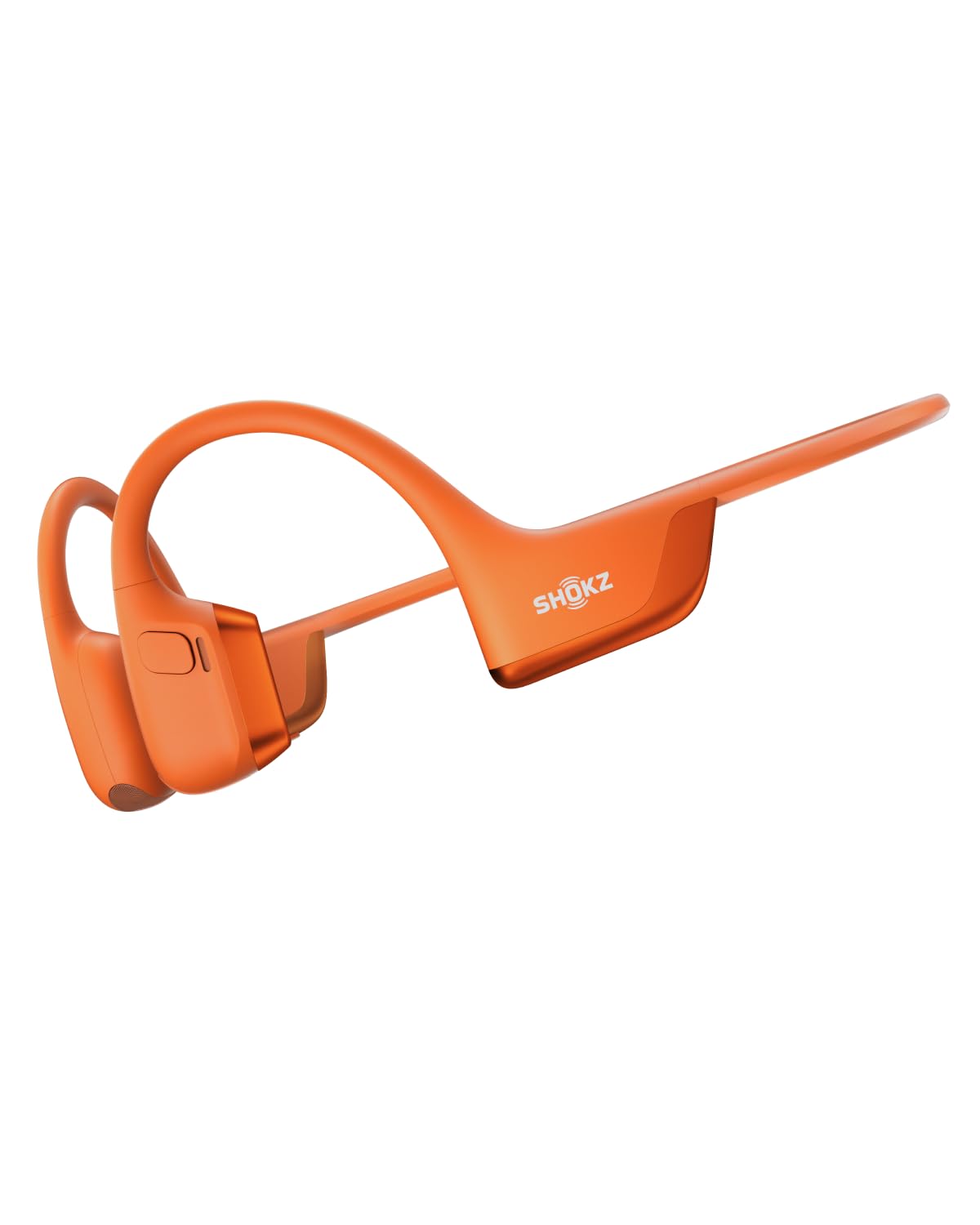
Bone conduction sounds like a gimmick until you are the one blinking sweat out of your eyes between drills. The OpenRun puts nothing in your ear canal — a titanium band hooks over each ear, the drivers rest against the cheekbone, and the whole thing weighs 26 grams. IP67 is the part that matters for basketball: it covers the soaking that turns an ordinary pair of earbuds into a warranty claim.
What keeps us recommending it is how little there is to manage. No tips to reseat, no case to open between plays, two buttons you can find by feel, and eight hours of playtime with a ten-minute top-up that buys an hour and a half. The sound is clear rather than rich, so you get the vocal and the beat but not the sub-bass, and for a sport where you need to hear a whistle that is the right trade.
The one fit question worth testing is glasses. If you play in sport specs or goggles, the band and the temple arms want the same strip of skin behind your ear, and that is the setup where the OpenRun can feel crowded. Against that, SHOKZ backs it with a two-year warranty, which on a pair of sweat-soaked headphones is worth more than it sounds.
Pros
- Nothing in the ear to work loose
- IP67 covers sweat, rain and a rinse
- The court stays audible
- Ten-minute charge buys an hour and a half
Cons
- Battery and band are the first parts to fail
The safest default for regular play: nothing goes in your ear, the band stays on through cuts, and IP67 shrugs off the sweat that kills ordinary buds.
Best for Sound Quality
SHOKZ OpenRun Pro 2
Key Features
- Weight: 1.07 oz
- Sound design: Bone conduction plus air-conduction bass driver
- Water rating: IP55
- Playtime per charge: 12 hours
- Price: Premium
The Pro 2 is the one we argue about. A second, air-conduction driver sits alongside the bone-conduction one, so there is real low end under a kick drum — it is the only pick here with a dedicated bass driver — and twelve hours per charge instead of eight. Dual wind-resistant mics, app EQ modes, a hard case and a unibody memory-wire frame round it out.
Then there is the number that gives us pause. IP55 means splash and jet resistance; IP67, which the cheaper OpenRun carries, includes immersion. For a sport where your head is the sweatiest thing on the court, the premium model is the one to think twice about rinsing under a tap. That is the trade this pick rests on, and it is worth understanding before you pay more for better sound.
What you get for it is the most complete listening experience of the open-ear group: bass you can feel on a run-out, clearer calls, and EQ you set once in the app. It is the pick for the player who spends more time in drills than in games, and who wants music rather than a backing track.
Pros
- Dual drivers give the fullest sound here
- Twelve hours per charge
- App EQ modes and wind-resistant mics
Cons
- Heavier than the OpenRun at 30.3 g
The best-sounding open-ear here, with twelve hours per charge — the pick for players who want music rather than a backing track.
Best for Budget Gym Bag
bmanl T16
Key Features
- Fit: Flexible earhooks, three tip sizes
- Warranty: 5 years
- Water resistance: Sweat, dust and splash resistant
- Playtime with case: Up to 80 hours
- Price: Budget
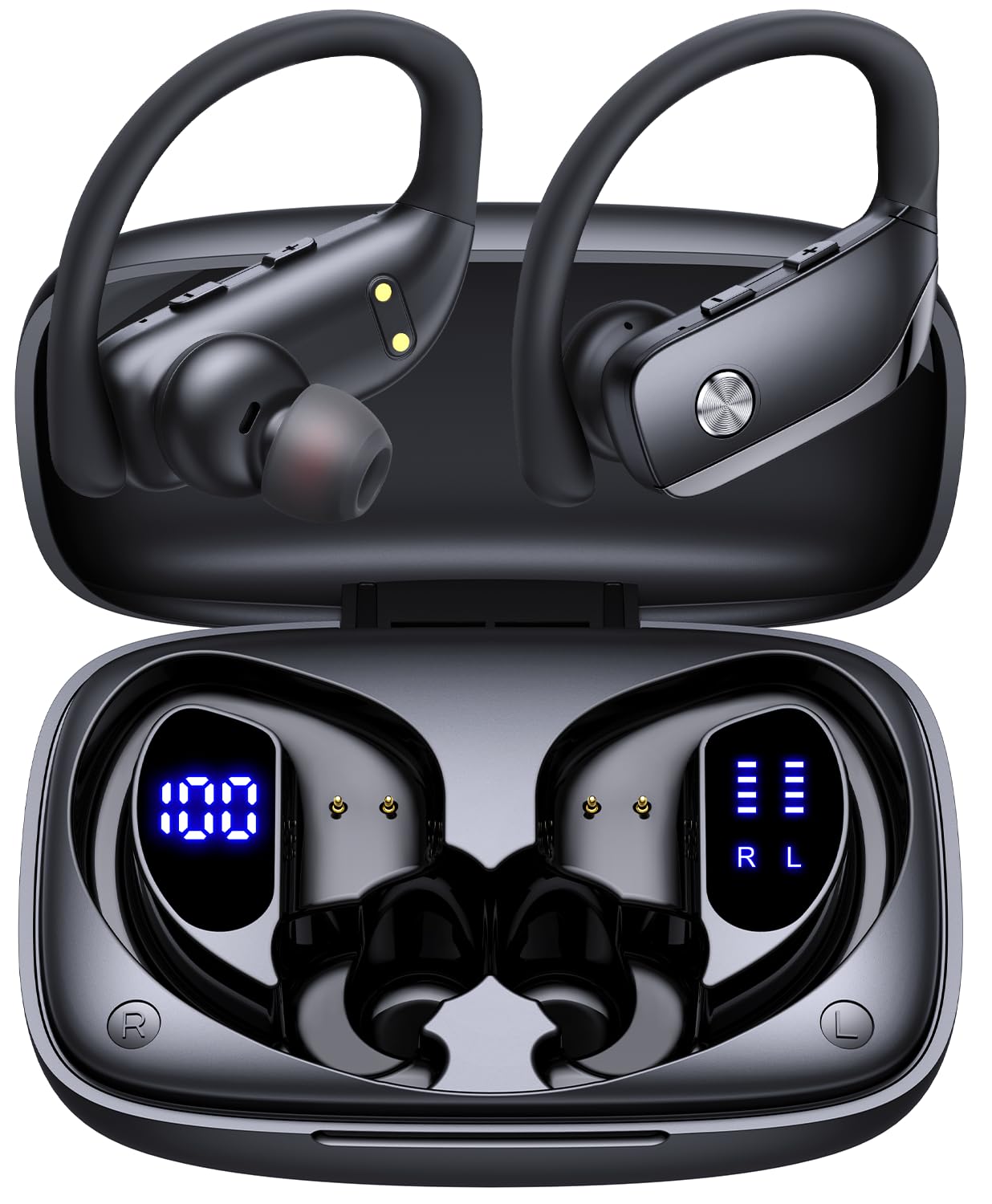
Cheap earhook earbuds are usually the same product in different plastic, so the useful question is which one has been through enough gym bags to prove itself. The T16 is that one: flexible hooks over the ear, silicone tips in three sizes, and a shell that shrugs off sweat, dust and splashes. It is the definition of spare-pair money.
The eighty hours on the box is the case’s total rather than one sitting, and the LED display on the front of the case tells you where you stand without opening an app. Ten-millimetre drivers and dual mics make it fine for calls and better than fine for a workout playlist, and the listed fifteen-metre range covers a phone left on the bench.
We think the hooks and the case are worth more than the spec sheet suggests. Longevity is where it asks for patience — the hooks and the battery are what go — and the low price is the reason that stings less than it would on a more expensive pair.
Pros
- Hooks and tips hold through sweaty sessions
- Eighty hours total with the charging case
- LED case display shows charge at a glance
Cons
- Sealed tips block out the court
- Sweat resistance is unrated
For solo work on a budget, this is the pair we hand over: hooks that hold, a charging case, and enough playtime that you stop thinking about it.
Best for Heavy Sweat
JOYWISE U18C
Key Features
- Fit: Earhooks with silicone tips
- Bluetooth: 5.3
- Water rating: IPX7
- Playtime per charge: 16 hours
- Price: Budget
IPX7 means it can be dunked, and this is the cheapest pair here that can say that. For a sport where the enemy is your own sweat, that is the whole argument: a rinse under the tap after a session instead of a careful wipe-down. Sixteen hours per charge, Bluetooth 5.3, a carrying case, and a bright green finish you will not lose in a gym bag.
We file this under beater pair, and that is a compliment. The sound is loud and clear rather than refined, the hooks hold through floor work, and the controls answer sweaty fingers. Buy it for the water rating, keep it for the convenience — this is the pair that lives in the bag and takes the abuse the good pair should not.
Pros
- IPX7, so sweat and a rinse are fine
- Sixteen hours on a single charge
- Hooks keep them in through floor work
Cons
- Some units quit within a few months
- Sealed fit cuts out whistle and calls
IPX7 at the bottom of the price range: the pair to sweat through without a second thought.
Best for Cheap Open-Ear
PSIER X12
Key Features
- Weight: 0.81 oz
- Bluetooth: 6.0
- Water rating: IPX5
- Playtime per charge: 10 hours at 50% volume
- Price: Budget
At 23 grams, the X12 is the lightest band we recommend, and weight is the whole argument for an open-ear design. A bone-conduction loop that clamps gets taken off after twenty minutes; a light one survives a full session, and that difference matters more than any frequency-response figure on the box.
Ten hours per charge, Bluetooth 6.0 with 60 ms latency to keep video lined up, and a box that includes foam earplugs for the times you would rather block the room out. The memory-titanium frame sits close to the head, so it stays out of the way of a headband or a cap, and Psier backs it with a two-year warranty — unusual at this end of the range.
Bone conduction and bass do not really coexist, so expect clear vocals and not much low end. What you get instead is the court at the same time as the music — a bounce, a whistle, a teammate’s voice — for the least money and the least weight in this guide.
Pros
- Lightest band in this guide at 23 g
- Open ear keeps the court audible
- Two-year warranty at a budget price
Cons
- IPX5 handles sweat, not a soaking
- Playtime assumes half volume
Twenty-three grams is the lightest band here, and it is the cheapest way to play with your ears open.
Best for Solo Training
Beats Powerbeats Pro 2
Key Features
- Sensors: Heart-rate monitoring
- Noise control: ANC with Transparency mode
- Water resistance: Sweat and water resistant
- Playtime with case: Up to 45 hours
- Price: Premium
Two things make the Powerbeats Pro 2 interesting for a basketball player, and neither is the sound. The first is the heart-rate sensor in each earbud, pulsing more than a hundred times a second to feed a workout without a chest strap. The second is noise cancelling with a real transparency mode inside an earhook design — shut a gym out for a shooting session, open it back up for a scrimmage.
The rest of the package is generous: up to 45 hours with a wirelessly charged case, one-touch pairing on both Apple and Android, and an earhook that holds its position through head movement. The sound itself is the least interesting thing about it, which is a strange sentence to write about a pair of Beats.
Our read is that it is a specialist, and the fit is the gamble. The earpiece is bigger than most, which is wonderful if your ear suits it and a return if it does not, and at the top of the price range that is not something to take blind. For solo work with a phone on the bench it is the most complete thing here; for five-on-five, you are paying for noise cancelling you will switch off.
Pros
- Heart-rate sensors built into the buds
- ANC plus a usable transparency mode
- Forty-five hours total with a wireless case
Cons
- Sweat resistance is a claim with no IP rating
The most capable pair here for training alone — heart rate, noise cancelling and a secure earhook — if the earpiece suits your ear.
Best for Light Open-Ear
DECHOYECHO O2

Key Features
- Fit: Flexible titanium hook
- Weight: 0.93 oz
- Bluetooth: 5.3
- Playtime per charge: 12 hours
- Price: Budget
Twelve hours of playtime, 26.4 grams, and a titanium hook that sits outside the ear canal: the O2 is air-conduction open-ear, which is a slightly different idea from bone conduction. A 15 mm driver fires toward the ear from just outside it, so there is more bass on offer than a vibrating pad manages — and more sound leaking out to the people around you.
The rest of the package is sensible: Bluetooth 5.3 with multipoint so the phone and the laptop stay connected, push-button controls that do not need bare skin, and a two-hour charge for the full twelve hours.
The hook runs well back behind the ear, which is worth knowing if you play in a cap, goggles or sport glasses. That is the one thing to try on before you commit.
Where we land is that this is an early-adopter buy. The design is right for basketball — open, light, long-running, with the controls you want when your hands are wet — but DECHOYECHO is a newer name, so you are buying the design rather than a proven one.
Pros
- 26.4 g on a flexible titanium hook
- Twelve hours and multipoint pairing
- Push buttons, no touch panel
Cons
- Sweat-resistant only, with no IP rating
- Hook sits far back behind the ear
A light, cheap open-ear with twelve hours and multipoint; the design suits a headband wearer, but the brand is new.
Best for Maximum Sweat
Raycon Bone Conduction
Key Features
- Fit: Sliding, adjustable earpieces
- Driver: 16 mm bone conduction
- Bluetooth: 5.3
- Water rating: IP68
- Price: Midrange
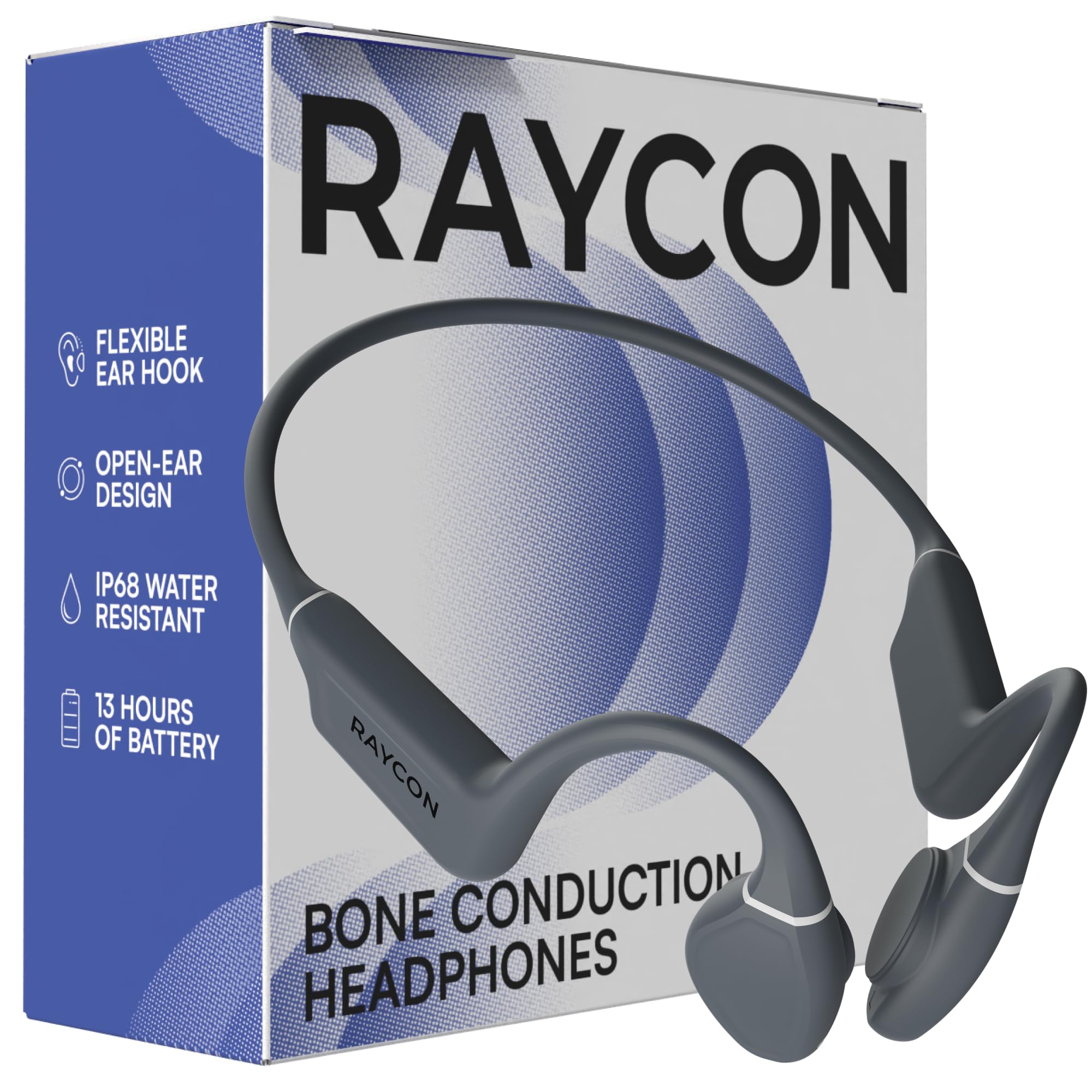
IP68 is the number to look for if sweat is what kills your headphones, and this is the only pick here carrying it. That is full dust sealing plus protection against continuous immersion, which is more than the pricier open-ear models here bother to claim.
The party trick is the sliding earpiece. Push the driver closer for more volume, pull it back for more awareness — a genuinely useful control on a court where the noise floor changes between a quiet gym and a full one. Bluetooth 5.3, a 16 mm bone-conduction driver, and a magnetic charging cable that is easy to lose.
The unknown is playtime. Raycon publishes a two-hour charge time and no runtime figure, so plan on charging after each session until you learn your own number. A bone-conduction band that lives in a gym bag takes a beating, and this one has not earned the benefit of the doubt yet.
Our take: if you sweat through everything you own, the water rating alone justifies it. Wear it around the house for an evening first — that is the whole test this pair needs.
Pros
- IP68, the best water rating in this set
- Sliding earpieces tune awareness against volume
Cons
- Rigid frame does not adjust to head size
The best water protection in this guide, plus sliding earpieces that tune how much court you hear.
How We Tested, On the Court and In the Gym Bag
We started with a list of about 40 models — in-ear buds, open-ear clips, and a few over-ear options — and filtered it by the specs that matter here: a sweat rating of IPX4 or better, at least six hours of rated battery, Bluetooth 5.2 or newer, and a price that makes sense for something you’re going to sweat into daily. That left 12 pairs, all bought at retail, and nine months of wearing them.
Testing looked like real training: outdoor courts in July heat, an indoor rec center with terrible acoustics, and the weight room between sessions. Each pair got two full shooting workouts a week, plus sprints, plus a walk to the far end of the gym to see where the Bluetooth signal dropped. After every session I noted whether the eartips and ear hooks were slick with sweat, wiped them down the way anyone would, and checked whether the buttons still responded with wet fingers. Each pair also lived in a gym bag next to a water bottle and a pair of shoes for a week, because that’s where they end up.
Battery life we timed instead of trusting: a full charge, drained at the volume I’d actually use on a court, until the low-battery chime. Sound we judged in the gym rather than on the couch — whether the low end pushed through crowd noise and whether a podcast stayed clear over a bouncing ball. Comfort got a 90-minute session, a full run plus free throws, and we noted where each pair pressed and whether the hooks stretched or the tips hardened by month nine. Noise cancellation we judged in two modes: fully on, and transparency with a ball bouncing nearby. Value settled a few close calls at the end, since a pair costing twice as much for a small gain in sound isn’t worth it. We’re still wearing the standouts weekly and will flag anything that dies early.
How to Choose Headphones for Basketball
The hardest thing to get right for basketball is not sound — it is that whatever sits on your head has to survive a jump, a landing and forty minutes of sweat without shifting a millimetre.
Open ear or sealed: decide this first
This one choice changes how the game sounds around you. A sealed in-ear design gives you bass and isolation; an open-ear band gives you the court. In a pickup game, hearing a teammate call for a screen or a ball bounce behind you is worth more than low end, which is why our top pick and two of the budget options here leave the canal open. Bone conduction vibrates through the cheekbone; air-conduction open-ear designs fire a small driver at the ear from just outside it, which usually buys a little more bass and a little more leakage.
The trap is noise cancelling. It is the headline feature on most premium sport earbuds and exactly the wrong thing during play. If you want a sealed pair for solo drills, get one with a transparency mode you can switch on for a scrimmage — the Beats Powerbeats Pro 2 is the example in this guide.
Fit is the specification that isn’t on the box
Every pick here weighs between 23 and 30 grams, and at that range the number matters less than the shape. A wraparound band is a single fixed loop, so it either suits your head or it doesn’t. A hook-and-tip design adjusts more, because both the tip size and the hook angle can change. If you wear sport glasses, goggles or a headband, test that first — the band and the temple arms want the same strip of skin behind your ear.
Our advice is unglamorous: buy from somewhere with returns, and wear the pair for twenty minutes around the house before the tag comes off. A band that clamps is a band that ends up in the car by February.
What the water rating actually tells you
Two digits, two claims. The first is dust, the second is water, and an X means the maker did not test that part. IPX5 is a jet of water — fine for sweat, not for a dunk. IPX7 survives submersion, IP67 adds dust sealing to that, and IP68 extends the submersion. For basketball, IPX5 is the sensible floor; IP67 or IP68 is what lets you rinse them under a tap.
The trap is the phrase sweat-resistant on its own. Without a number it is a marketing claim, and one of the budget picks here carries exactly that. If you sweat heavily, buy the number, not the adjective.
Hours per charge and hours with the case are different numbers
Playtime in this category comes in two flavours and they are not comparable. An earbud quoting forty-five or eighty hours is counting the charging case; a band quoting eight, ten or twelve is quoting one charge. For a two-hour session either is plenty. Case numbers matter if you are the person who forgets to charge; per-charge numbers matter on a back-to-back day.
Quick charging is the underrated one. Ten minutes for an hour and a half of play on the OpenRun covers the forgot-to-charge case better than a bigger battery does.
Durability, warranty, and the part that fails
Across this set the failure points are consistent: the band or cable at the joint, the battery after a year or two, and the charging contacts. Sweat gets into all three. That is why warranty length is a genuine specification on a sport headphone — two years tells you the maker expects the band to outlast a season.
A cheap pair with a short warranty is not automatically worse value; treating a pair as consumable is a legitimate strategy if you would rather replace than maintain. Just decide which of those two buyers you are before you spend.
Frequently Asked Questions
Can I just use my normal earbuds for basketball?
You can, and plenty of people do, until sweat gets into one of them or a bud pops out on a landing. The two things that end an ordinary pair are moisture and gravity, in that order.
If your current pair has no water rating and no hook, a cheap dedicated pair costs less than replacing the ones you already like.
How should I look after headphones I’ve sweated in?
Wipe the drivers or tips and the band with a damp cloth, dry everything before it goes near the case, and leave the case open overnight so the inside can air out. The charging contacts are where sweat does quiet damage — that means the magnetic cables the SHOKZ and Raycon bands use as well as the pins inside a charging case.
Do not rinse anything that is not rated for immersion, whatever the box implies.
Will they stay connected with my phone on the bench?
Every pick here lists a 10-metre or 33-foot range, which comfortably covers a bench and a bag under the net. A body between the phone and the headphones is the usual reason a signal drops, so leave the phone on the same side of the court you are playing, and put it down rather than in a pocket pressed against your hip.
Final Verdict
The SHOKZ OpenRun is the pair we point a basketball player at first. It keeps your ears open, it stays on through a cut, and IP67 handles the sweat — with a two-year warranty covering the part that actually wears out.
If you want real bass and twelve hours between charges, the OpenRun Pro 2 is the step up, as long as you accept IP55 instead of IP67. And if the court can go quiet — solo drills, weights, the treadmill — the bmanl T16 does the job for spare-pair money.