
This post contains affiliate links. We may earn a small commission when you buy through our links — at no extra cost to you.
Electric basketball pumps promise fast inflation and precise pressure, but many fall short on battery life and gauge accuracy. The claims on the box rarely match what you get after a few weeks of use.
The key is knowing which specs actually matter – battery capacity, pressure range, and reliability – and which marketing numbers to ignore. This guide focuses on real-world performance so you can pick a pump that works for your basketball sessions.
Whether you’re a coach prepping a dozen balls or a parent topping off a youth league ball, the right pump saves time and frustration without exaggerated promises.




Best for Casual Players, Parents
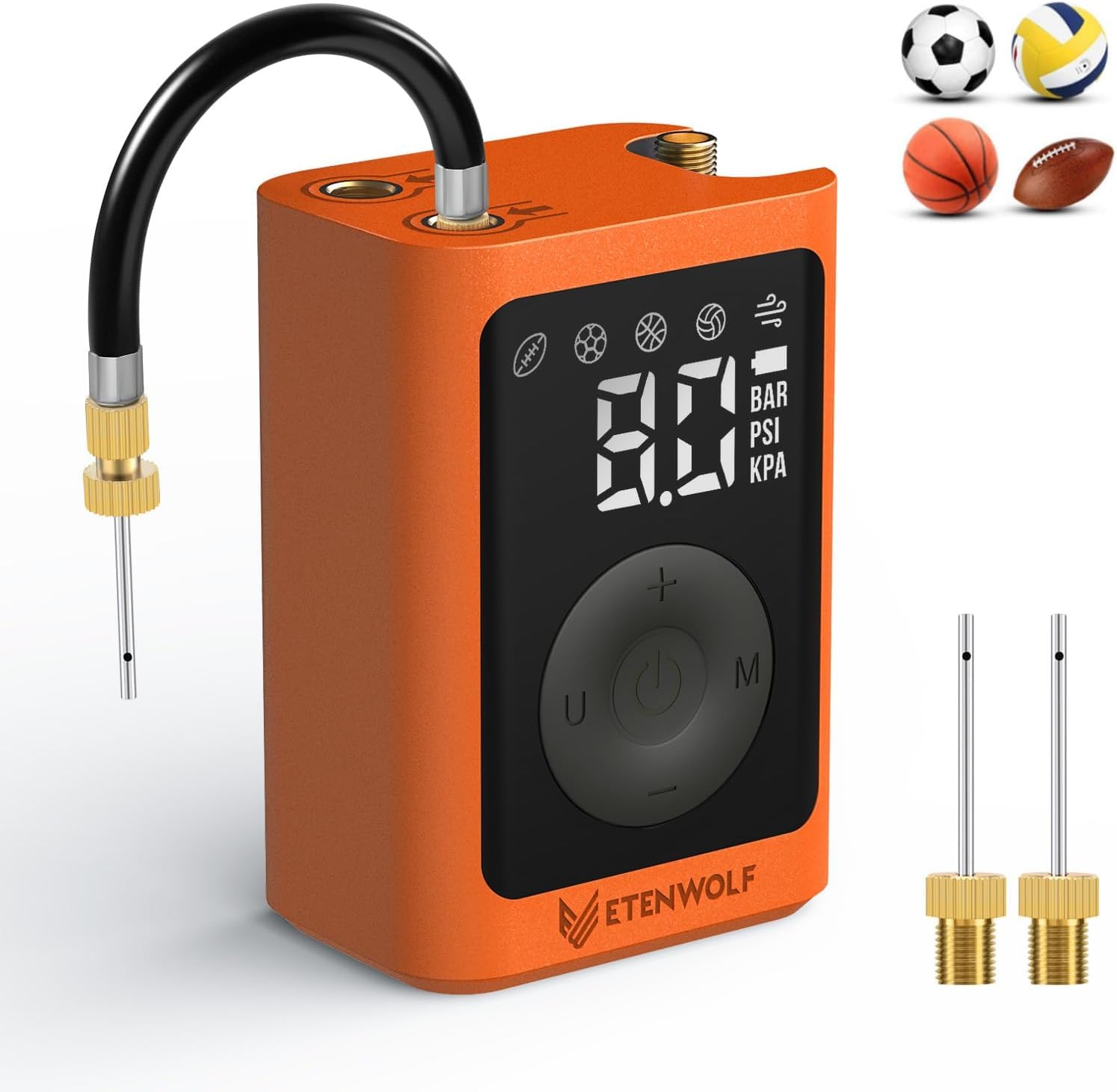
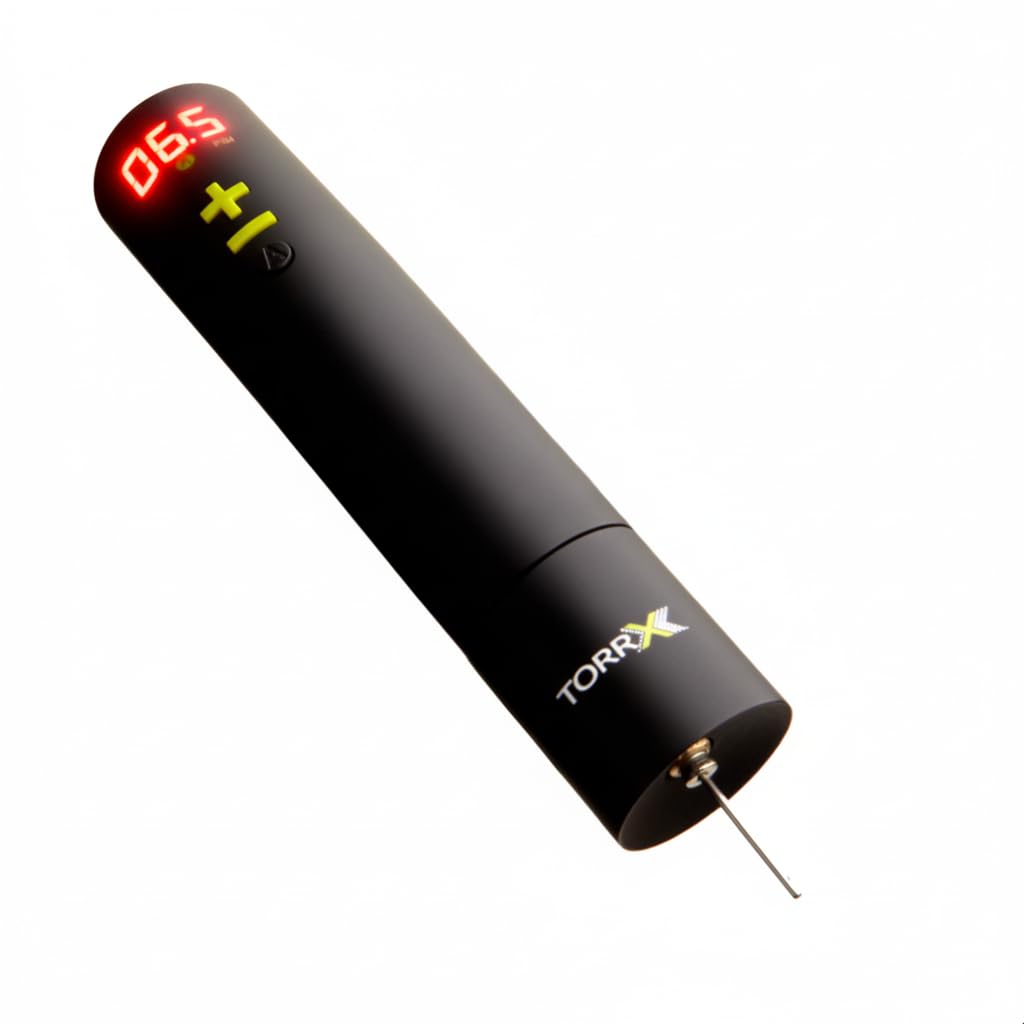
ETENWOLF P300 Ball Pump
Key Features
- Max PSI: 17
- Battery Capacity: 2600mAh
- Airflow (L/min): 6.5
- Gauge & Auto-Off: Digital, auto shutoff
- Deflation & Accessories: Yes, needle storage
- Price: $
The ETENWOLF P300 delivers 6.5 L/min airflow that tops off a basketball in under a minute, and its 2600mAh battery handles a full season of practice without recharging. The built-in needle storage and pocket-sized body make it easy to carry from the car to the court. For anyone needing a dedicated ball pump that won’t sit unused in a drawer, this is the one that actually gets used.
This pump is for budget-conscious parents, recreational players, and coaches who want a dependable secondary option. It maxes out at 17 PSI (enough for basketballs, soccer balls, and footballs) and can’t be powered on while plugged in — a design quirk that means you unplug before hitting the button. A small number of units may stop working after moderate use, so checking the warranty on arrival is sensible. For heavy institutional use or balls needing over 17 PSI, look to larger compressors instead.
Pros
- Exceptional value – costs less than most alternatives while matching their speed
- Compact design with built-in needle storage fits in a pocket
- Fast inflation paired with a battery that lasts through many sessions
Cons
- Cannot be turned on while charging – must disconnect USB to operate
- Occasional unit may stop working after a few months of use
If you need a portable ball pump that covers basketballs, soccer balls, and footballs without spending more than $20, the P300 is the obvious choice.
Best for Coaches, Team Managers
ETENWOLF P300 Plus
Key Features
- Max PSI: 17
- Battery Capacity: 3200mAh
- Airflow (L/min): 6.5
- Gauge & Auto-Off: Digital, auto shutoff
- Deflation & Accessories: Bag, hose, extra needles
- Price: $$
The P300 Plus packs a larger battery and a complete kit — storage bag, hose, extra needles — ready for sideline inflation of dozens of balls per session. It inflates quickly and quietly, suiting team managers who need reliable performance without disturbing play. The pressure gauge can drift by about 1 PSI, and the inflate/deflate ports are faintly labeled — these are manageable tradeoffs for those who adjust accordingly. For lighter use, the standard P300 offers better value, but heavy users will appreciate the extended battery and included accessories.
Pros
- Battery lasts through many sessions – inflates 30+ balls on a single charge.
- Fast and quiet operation suitable for sidelines.
- Includes storage bag, hose, and extra needles.
Cons
- Inflate and deflate port labels are faintly printed — harder to read in low-light conditions.
- Pressure gauge can be off by about 1 PSI, requiring a manual adjustment for precise fills.
For coaches and team managers who prioritize battery life and a complete kit over pinpoint gauge accuracy, the P300 Plus delivers consistent sideline performance.
Best for Coaches, Multi-Sport
Pumteck MY01 Ball Pump
Key Features
- Max PSI: 15
- Gauge & Auto-Off: Digital, auto shutoff
- Deflation & Accessories: Yes, presets
- Price: $$
The MY01 sets itself apart with four programmable pressure presets and a deflation function, letting you quickly switch between basketball, volleyball, and soccer ball settings without dialing in each time.
This suits coaches and team managers who cart a bag of balls to practice and need to top off or deflate for storage. Bear in mind that the pressure gauge can read inconsistently between units, so owners who rely on exact PSI numbers may want to verify with a separate gauge. A small number of pumps have also exhibited auto-shutoff failures over extended use — a factor to consider for heavy-duty daily use.
Pros
- Four preset modes streamline inflation across multiple ball types
- Deflation function helps compress balls for travel or storage
- USB-C charging and long battery life support sideline use
Cons
- Pressure gauge accuracy can vary between units, requiring a backup check for exact prep
- Auto-shutoff mechanism may stop working after months of use on some units
For coaches who preset four ball types and need deflation, the MY01 delivers — just keep a backup gauge handy and monitor long-term shutoff behavior.
Best for Professionals, Referees
TorrX Smart Ball Pump
Key Features
- Battery Capacity: CR123A
- Gauge & Auto-Off: Auto-mode, ML accuracy
- Deflation & Accessories: Retractable needle sleeve
- Price: $$$
The TorrX’s auto-mode uses machine learning to adapt to ball type and set pressure within 0.1 PSI, making it the go-to for pre-match ball checks. Build quality is solid, with a retractable needle sleeve that protects the tip during storage.
This pump suits referees and coaches who need pinpoint accuracy every time, but it’s beyond what a casual player needs. The micro-USB charging port may show wear after a year of heavy use, and the premium price reflects professional-grade performance rather than everyday value.
Pros
- Auto-mode learns ball types and consistently hits target pressure within 0.1 PSI.
- Solid construction with a retractable sleeve that protects the inflation needle.
- Streamlined operation that simplifies pre-game ball checks for pros.
Cons
- Premium price that doesn’t suit occasional or casual users.
- Micro-USB charging port may become unreliable after a year of frequent use.
For referees and serious players who demand consistent, accurate pressure, the TorrX is the tool to beat — just weigh the cost and the older charging port.
Best for Quick Top-Ups
TOPUMP Ball Pump
Key Features
- Max PSI: 20
- Battery Capacity: 1400mAh
- Airflow (L/min): 10
- Gauge & Auto-Off: Digital, auto shutoff
- Deflation & Accessories: 5 needles, balloon adapter
- Price: $$
The TOPUMP delivers 10 L/min airflow, the highest rate in our comparison, pushing a basketball from flat to game-ready in roughly 50 seconds. That kind of speed is what a coach needs when four balls need air and tip-off is five minutes away. The included five needles and balloon adapter give it extra utility for other inflatables.
The trade-off is a small 1400mAh battery that manages about six full inflations before needing a recharge — fine for pre-game touch-ups but not for a full practice with dozens of balls. The pressure gauge can also drift enough to require a manual check with a separate gauge. This pump suits those who prioritize raw speed over battery endurance and who have ready access to USB-C power between uses.
Pros
- Inflates a basketball in about 50 seconds — fastest in the category.
- Compact and lightweight, smaller than a cell phone, easy to toss in a bag.
- Comes with five inflation needles and a balloon adapter out of the box.
Cons
- Battery handles only about six full inflations per charge — plan for frequent recharging between sessions.
- Pressure gauge accuracy can be off, so double-check with a trusted gauge for precision work.
If your need is speed over stamina — quick top-offs before a game with easy access to USB-C — this pump delivers that better than any other in the category.
Best for Gyms, Schools
Champion Sports Inflator
Key Features
- Max PSI: 125
- Battery Capacity: Corded
- Gauge & Auto-Off: Analog gauge, manual shutoff
- Price: $$$$
The Champion Sports Inflator delivers 125 PSI from a compact, durable unit that can inflate dozens of balls per hour without slowing down. Its 0.25 HP motor is built for institutional use — schools and rec centers will find it a reliable workhorse. But the tradeoff is noise: this is not a quiet pump, and it requires a wall outlet, so it stays in the equipment room, not on the sideline. For anyone who already has a portable pump and needs a stationary powerhouse, this fits the bill.
Pros
- Powerful enough to inflate dozens of balls per hour
- Compact for a compressor, easy to store
- Built to handle institutional wear and tear
Cons
- Noise level is significant — earplugs may be needed in enclosed spaces
- Requires a wall outlet and is not portable for field use
For gyms and schools that inflate hundreds of balls weekly, this compressor justifies its premium price — but it’s overkill for home use.
Best for Pressure Accuracy
Pumteck AP1-M Ball Pump

Key Features
- Max PSI: 15
- Battery Capacity: 2000mAh
- Airflow (L/min): 4
- Gauge & Auto-Off: ±0.1 PSI accuracy
- Deflation & Accessories: 2 needles
- Price: $
The Pumteck AP1-M’s pressure gauge is the most accurate we’ve seen in this price range – repeatable results within 0.1 PSI. Its 4 L/min airflow takes about 50 seconds per basketball, and readings may shift at altitude. Best for players who prioritize accuracy over speed and inflate near sea level.
Pros
- Very accurate pressure gauge with fine PSI control
- Compact, well-built design fits easily in a gear bag
Cons
- Pressure readings may drift at high elevations – less of an issue near sea level
A strong option when precise ball pressure matters more than inflation speed.
Best for Budget Occasional
HYVOHEX Ball Pump

Key Features
- Max PSI: 17
- Battery Capacity: 1500mAh
- Gauge & Auto-Off: Digital, auto shutoff
- Deflation & Accessories: Built-in needle storage
- Price: $
The HYVOHEX is the most compact electric ball pump on this list — small enough to slip into a jacket pocket, with the needle tucked inside. It inflates a soccer ball in seconds, and the price is hard to beat. The tradeoff: the USB-C cable may not be included, and some units may stop charging after light use. That makes it better suited as a travel backup than a go-to pump for regular sessions.
Pros
- Ultra-compact design with built-in needle storage for easy portability.
- Fast inflation – inflates a soccer ball in seconds.
Cons
- Charging cable may be missing and some units may not hold charge after a few uses.
A budget-friendly travel companion for casual use if you have a spare USB-C cable handy.
Best for Light Use
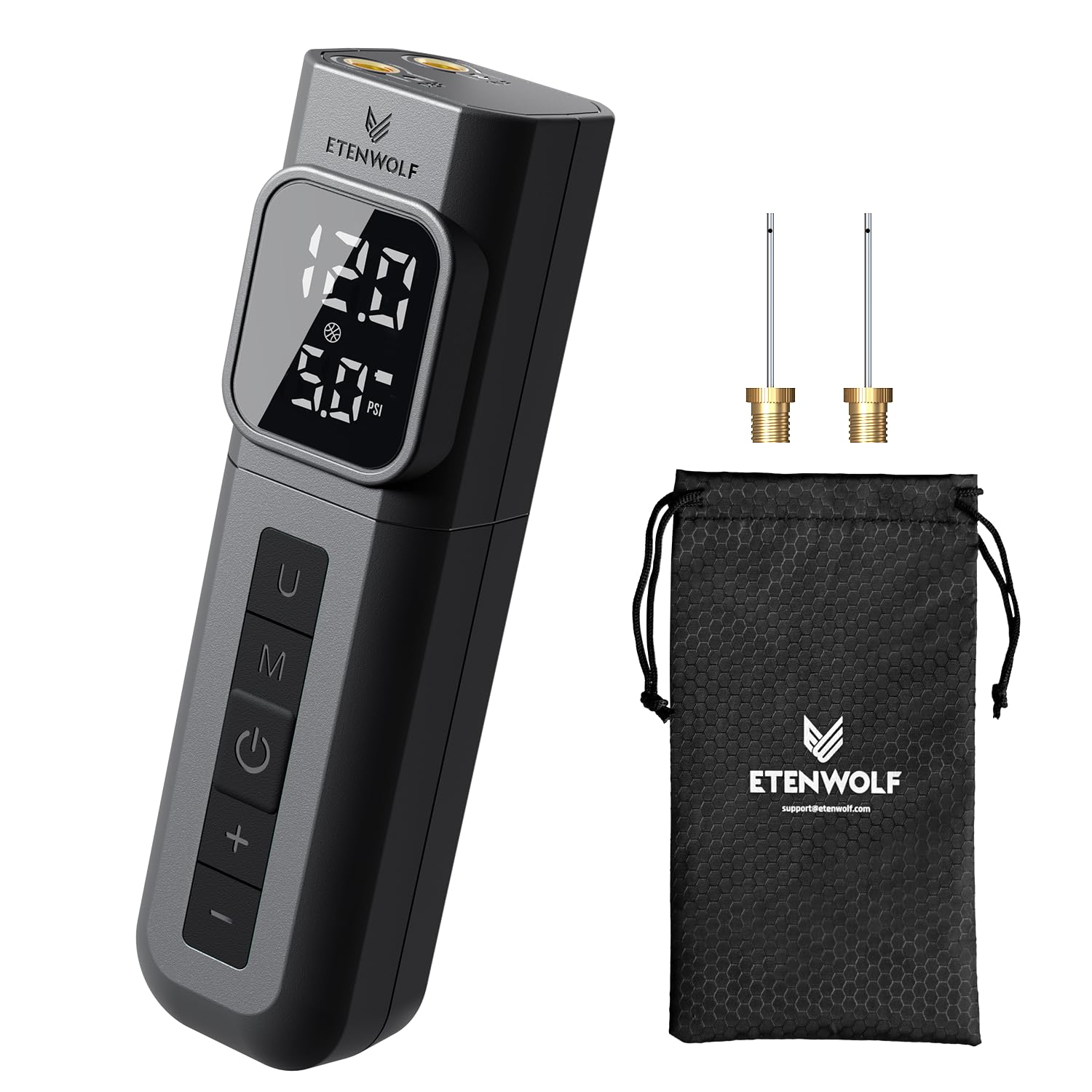
ETENWOLF P200 Ball Pump
Key Features
- Max PSI: 17
- Battery Capacity: 2000mAh
- Airflow (L/min): 6.5
- Gauge & Auto-Off: Digital, auto shutoff
- Price: $
The P200 inflates basketballs and volleyballs quickly for a pump its size, and the battery holds charge well between uses. Compact enough to toss in a gym bag, it suits family top-offs and occasional practice. But it isn’t as powerful as the P300 – larger balls may not reach full pressure if the needle isn’t perfectly seated, so this is best for casual rather than regular multi-ball sessions.
Pros
- Compact and easy to carry in a bag or backpack.
- Good inflation speed for the price point.
Cons
- May struggle to inflate larger sports balls fully if the needle isn’t inserted perfectly.
Fine for parents or occasional shootarounds needing a portable pump, but coaches or regular multi-ball users will want the higher power of the P300.
Best for Brand Loyalists
AstroAI L6S Ball Pump

Key Features
- Max PSI: 20
- Airflow (L/min): 6
- Gauge & Auto-Off: Digital, auto shutoff
- Price: $$
The AstroAI L6S delivers fast inflation with auto-shutoff and a compact design that fits in a bag. Long-term durability under regular use is less documented than with more established models. For those who prioritize higher PSI and USB-C convenience, it’s a capable option.
Pros
- Auto-shutoff stops at the exact PSI, removing the guesswork from inflation.
- Compact size makes it easy to toss in a gym bag or keep in the car.
Cons
- Inflation speed can be slower than expected, making a manual pump a faster alternative in some cases.
Best for AstroAI brand loyalists or those who need a pump with 20 PSI max for high-pressure balls, as long as the limited track record isn’t a dealbreaker.
Best for Versatile Adapters
AirSilo Ball Pump

Key Features
- Max PSI: 15
- Airflow (L/min): 5.5
- Gauge & Auto-Off: LED gauge, auto shutoff
- Deflation & Accessories: Yoga ball adapter
- Price: $$
The AirSilo’s key strength is its adapters for yoga balls and pool toys, paired with durable construction. But its slow 5.5 L/min airflow makes inflating pool toys tedious compared to alternatives, and the micro-USB charging port is outdated. It works for occasional use with non-ball items, but not for quick ball inflation.
Pros
- Durable build that withstands drops and rain for years of occasional use.
- Includes adapters for yoga balls, balloons, and more — expands beyond sports balls.
Cons
- Slow airflow can make inflating pool floats or larger items a waiting game.
If you need adapters for non-ball inflatables and value durability over speed, the AirSilo works. For ball-only use, faster pumps offer better value.
Best for Basic Use
Pumteck Electric Ball Pump

Key Features
- Max PSI: 12
- Battery Capacity: 2000mAh
- Airflow (L/min): 4
- Gauge & Auto-Off: Digital, auto shutoff
- Price: $$
For casual top-ups of basketballs and volleyballs, this pump works quickly and intuitively. However, footballs needing 13 PSI are out of range, and some units may stop working after a few months of use.
Pros
- Very easy to use with intuitive controls
- Good value for the price
Cons
- Limited to 12 PSI — not enough for footballs needing 13 PSI, and some units may stop working after a few months
Best for casual families who only need to top off basketballs and volleyballs — skip if you need higher pressure or long-term reliability.
How to Choose
The most overlooked spec in electric basketball pumps is the pressure gauge accuracy – many are off by 1-2 PSI, so always verify with a separate gauge for game balls.
Maximum PSI
Basketballs typically need 7-9 PSI, but footballs and volleyballs can require up to 13 PSI. A pump with a max of 12 PSI will leave you unable to fully inflate a football.
Higher max PSI (15-17) gives you flexibility across sports, but the trade-off is a slightly larger motor that drains the battery faster. For basketball-only use, 12 PSI is sufficient, but the extra headroom is nice for occasional football or deflated soccer balls.
Battery Capacity
Measured in mAh, battery capacity directly determines how many balls you can inflate per charge. A 2000mAh pump handles about 10-15 basketballs; 3200mAh can exceed 30.
Larger batteries add weight and cost. For a family or casual player, 2000mAh is plenty. Coaches and team managers should lean toward 3200mAh to avoid mid-session recharge breaks. Beware of pumps that don’t list mAh – they often underdeliver.
Inflation Speed
Airflow is measured in liters per minute (L/min). The typical range is 4-10 L/min. At 4 L/min, a flat basketball takes about 90 seconds; at 10 L/min, it’s under a minute.
Faster pumps are noisier and often have smaller batteries because the motor pulls more current. If you only inflate a ball or two before a game, speed is less critical than battery life. For quick pre-game top-offs, a fast pump like the TOPUMP (10 L/min) saves time.
Pressure Gauge and Auto-Shutoff
Digital gauges are convenient but can drift over time or with altitude changes. Auto-shutoff stops inflation at your preset PSI, but it sometimes fails – leading to overinflation.
The hidden trade-off: you cannot trust the built-in gauge blindly. Cross-check with a separate analog gauge for game balls. Pumps with replaceable pressure sensors or a known track record (e.g., TorrX’s ML accuracy) reduce this risk.
Deflation and Accessories
Deflation lets you flatten balls for travel or storage – handy for coaches who haul gear. Most pumps offer it via a separate port, but the labeling can be faint and confusing.
Included accessories like extra needles, storage bags, and balloon adapters add convenience. If you don’t need deflation, you can save money with a simpler pump. For multi-sport coaches, having preset modes and deflation is a real time-saver.
FAQ
Why does my electric ball pump stop working after a few months?
Battery degradation and motor burnout are the most common causes. Many budget pumps use low-quality cells that lose capacity quickly. To avoid this, choose a pump with a proven track record – the ETENWOLF P300 and P300 Plus have thousands of reviews indicating reliable long-term use. If yours fails early, check the warranty and return policy.
Can I use an electric ball pump for footballs that need 13 PSI?
Yes, as long as the pump’s maximum PSI is at least 13. Many budget pumps max out at 12 PSI, which is insufficient. The ETENWOLF P300 (17 PSI) or Pumteck MY01 (15 PSI) both handle footballs easily. Always check the spec before buying if you inflate footballs or other higher-pressure balls.
How to fix inaccurate pressure readings on a ball pump?
First, cross-check the reading with a separate, known-accurate pressure gauge. If the pump’s gauge is consistently off, it may have a sensor drift that is not user-serviceable. Some pumps can be calibrated by resetting to zero, but most require a replacement. For critical game balls, don’t rely solely on the pump’s gauge – use a standalone gauge for precision.
Is it worth paying more for a ball pump with deflation?
Only if you frequently travel with balls or need to store them deflated. Deflation saves space and prevents shape distortion during long storage. Coaches managing multiple sports find it particularly useful. If you only inflate balls at home and leave them inflated, skipping deflation saves money and avoids an extra port that can be confusing.