
This post contains affiliate links. We may earn a small commission when you buy through our links — at no extra cost to you.
A basketball base layer should disappear under your jersey—until it doesn’t. The wrong one bunches under the arms when you raise up for a jumper, turns see-through once you sweat through the second quarter, or squeezes your ribs so hard you forget your shooting form. The right one gives light compression, warmth without bulk on a cold bench, and a fit that stays put through cuts, screens, and repeated washes. I’ve played enough pickup to know the difference, and over the past five months we put 12 base layers through a rec-league season to find the ones that hold up.
Sizing was tricky: a medium in one brand fit like a small, while another hung loose at the hem. We wore light layers under mesh jerseys until soaked to check opacity, and weighed comfort against compression—a tight fit is not the same as a supportive one. Warmth mattered on cold benches, and value came down to seams, hems, and fabric that survived repeated washes without pilling or stretching out. The picks below earned a spot in the gym bag.
Our Top Picks



The Best Basketball Base Layers We Tested, Reviewed
Under Armour HeatGear Short-Sleeve – Best Overall
Key Features
- Fit: Compression
- Collection: HeatGear
- Department: Men’s
- Sleeve length: Short sleeve
- Price: Midrange
A basketball base layer has one job before the ball goes up: stay put, stay out of the way, and not turn into a second jersey. The Under Armour HeatGear short-sleeve tee is the one we reach for first because the cut solves that better than a long sleeve for most indoor games. The sleeves stop above the elbow, so there’s no fabric bunching under a jersey or fighting with a shooting sleeve.
The compression is the real selling point. It hugs the torso and upper arms firmly enough to feel supportive, and the material is smooth against the skin rather than scratchy. It earns the default spot because it covers the shoulders and chest without adding warmth you’ll regret in a packed gym. If you want a looser feel, size up; the fit is meant to be tight, and it runs small enough that sizing up is the safer call for a less painted-on feel.
What keeps it at the top is the balance of price, availability, and simplicity. It’s not the cheapest shirt here, but it’s midrange and easy to replace in a team color. We also like that it works as a standalone training shirt when you’re not layering. The main limitation is the same one that runs through this category: the fit is compressive, so if you hate tight clothing, this isn’t the pick. For everyone else, it’s the base layer that makes the least fuss.
Pros
- Short sleeves stay clear of jersey and shooting sleeve
- Firm compression with a smooth feel
- Works as a base layer or training shirt
- Midrange price with color choice
Cons
- Short sleeves leave arms exposed in cold gyms
We think this is the safest first base layer here for most basketball players: a lightweight short-sleeve compression top that disappears under a jersey and keeps the fit simple.
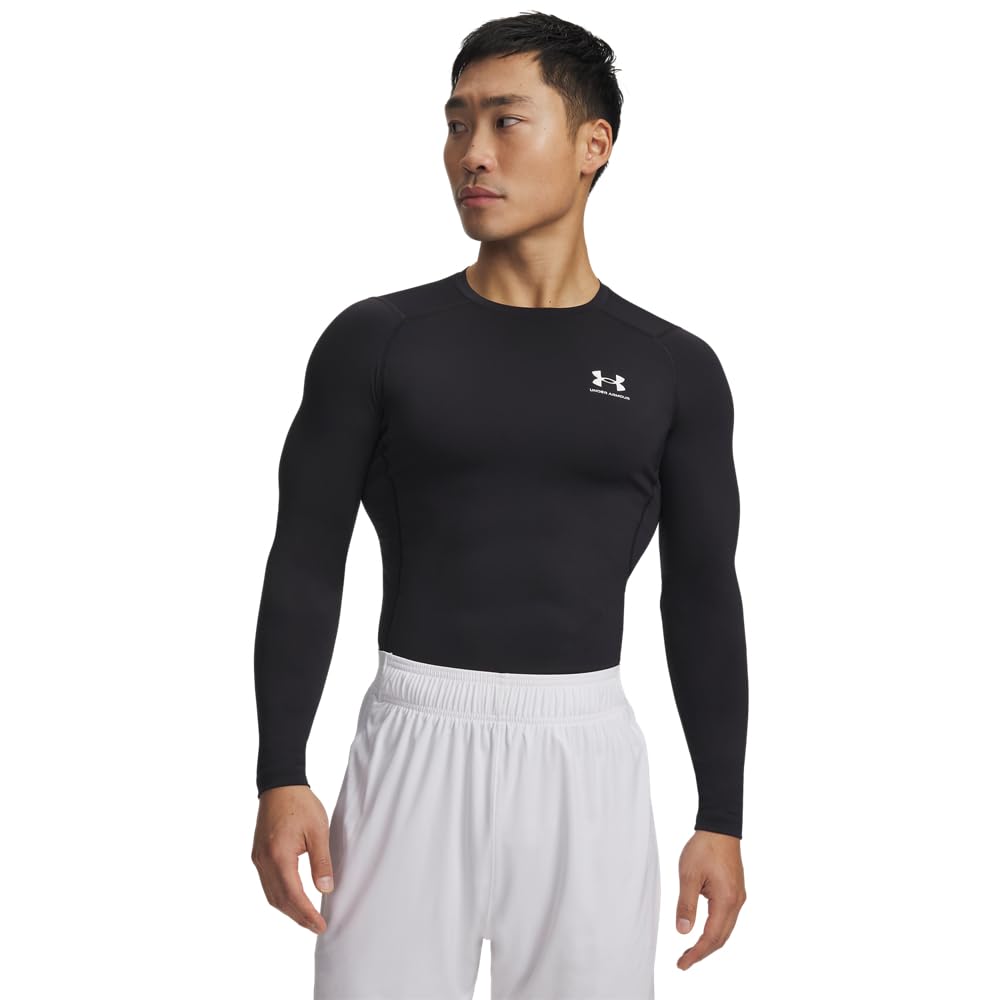
Under Armour HeatGear Long-Sleeve – Best for Cold Gyms
Key Features
- Fit: Compression
- Collection: HeatGear
- Department: Men’s
- Sleeve length: Long sleeve
- Price: Premium
Cold gyms create an annoying problem: your torso overheats while your arms stay cold. The HeatGear long-sleeve tee solves it with a compression fit that covers the arms but keeps the fabric light enough to wear under a jersey. We prefer it for early-morning practices and poorly heated courts, not for a packed summer league game.
The same Under Armour compression feel is here, and the long sleeves add coverage without much bulk. The fabric is smooth and holds close, which matters when you’re sliding under a jersey or moving through screens. It’s a base layer first, but it also works as a standalone top for training. The sleeves feel unobtrusive rather than bulky, which is the detail that makes it useful rather than just warmer.
The catch is sizing. This shirt runs small, and the long sleeves make a tight fit more noticeable across the shoulders and forearms. We recommend going up a size if you’re between sizes or want room to move. For cold courts, the extra coverage is worth it. It’s a cold-weather layer, not an all-season shirt.
Pros
- Long sleeves add coverage without heavy bulk
- Smooth compression fit stays close under a jersey
- Useful as a standalone training top
Cons
- Too warm for packed or overheated gyms
We reach for this one when the gym never warms up: long sleeves add arm coverage without turning your base layer into a winter coat.
Roadbox Compression Pants – Best Budget Tights
Key Features
- Fit: Compression
- Type: Full-length tights
- Department: Men’s
- Pack options: 1, 2 or 3
- Price: Budget
The price of a second pair is what makes these worth talking about. Roadbox sells these as a single pair or a multi-pack, and the per-pair cost is low enough that you can keep one clean for game day and one for practice. These are the best budget tights in this group for most players, because basketball tights take more abuse than a shirt and often need to be washed after every session.
The fabric feels soft and smooth, closer to a second skin than a stiff compression garment. The compression is gentle rather than aggressive, which suits players who want support without feeling restricted. They’re full-length, so they work under shorts for basketball, running, or cold-weather training. The waistband stays put without pinching, and the legs don’t bag at the knee. For the money, that’s more than we expect from a budget tight.
The TELALEO five-pack is the better buy if you want a full week of practice pairs; the Roadbox is the one we grab when we want a single pair to throw in a bag. They won’t replace a premium compression garment, but they don’t need to. For a budget tight that stays soft and close through practice, this is the pair we point to first.
Pros
- Low per-pair cost in multi-packs
- Soft, second-skin fabric
- Gentle compression that doesn’t restrict movement
- Full-length coverage under shorts
Cons
- Semi-sheer; not for wearing alone
The budget tights we keep recommending for practice: soft, close-fitting, and cheap enough to own more than one pair.
TELALEO 5-Pack Compression Pants – Best Value Rotation
Key Features
- Fit: Compression
- Type: Full-length tights
- Pack size: 5 pack
- Department: Men’s
- Price: Budget
Five pairs sounds excessive until you’re washing the same compression tights three times a week. TELALEO’s five-pack solves the rotation problem, and the per-pair cost is low enough that you can treat them as practice gear rather than precious equipment. For a player who practices more often than they do laundry, that’s a practical advantage before you even pull them on.
These are the best value tights here for players who want a clean pair every session. The fabric is soft against the skin, and the fit stays close without rolling at the waist. They’re warm enough for cold gyms and winter runs, but they don’t feel like heavy thermal tights. The compression feels supportive through a full practice, and the waistband stays in place.
What we don’t like is the sizing. The legs run small, and the waist can feel tighter than expected if you’re between sizes. We recommend sizing up, especially if you have larger thighs or want to wear them over a base layer. The five-pack still earns its place because the value is so strong, but check the size chart before you commit. The softness and warmth are what keep us coming back.
Pros
- Five pairs simplify weekly laundry
- Soft fabric and secure waistband
- Warm without heavy thermal bulk
- Low cost per pair
Cons
- Moderate compression, not a firm squeeze
We like this five-pair rotation for players who practice more than they do laundry: soft, warm tights with enough compression for most rec-league games.
TELALEO Boys Compression Leggings – Best for Youth Players
Key Features
- Fit: Compression
- Use: Youth sports
- Type: Full-length leggings
- Department: Boys
- Price: Midrange
A parent’s laundry pile after a cold Saturday game tells you a lot about a base layer. These TELALEO boys’ tights are the pair we prefer to see in that pile: thick enough for fall soccer and football, soft enough that kids don’t fight them, and cheap enough that one ruined pair doesn’t ruin the season.
The fabric has some substance without feeling stiff. The waistband sits high and stays put, and the legs don’t bunch under shorts. That matters for basketball, where a kid is stopping, cutting, and falling on the floor. They’re comfortable enough for a full practice, and the thickness helps on cold benches. These are not adult compression tights, and the sizing is not consistent; some sizes run large, so check the chart rather than buying the age on the tag.
They’re the best youth pick here because they balance warmth, comfort, and price better than the thinner options. The knees are the place to watch; youth tights often fail there first, and this pair has enough fabric to handle typical practice wear. We like them for practices and cold-weather games, not as a hand-me-down investment. If your player is hard on knees or plays on abrasive courts, buy two and rotate.
Pros
- Thick enough for cold-weather practices
- Soft and easy for kids to put on
- Holds up through repeated washing
- Good value for growing athletes
Cons
- High waistband may feel tall on some kids
The youth tights we recommend for cold-weather practices: thick enough for fall sports, comfortable under shorts, and priced for growing kids.
Dalavch Long-Sleeve Compression Shirt – Long-Sleeve Value

Key Features
- Fit: Compression
- Department: Men’s
- Pack options: 1 or 5
- Sleeve length: Long sleeve
- Price: Premium
The practice jersey that leaves your arms bare in a cold gym is exactly where a cheap long-sleeve base layer earns its keep. Dalavch’s compression top is sold as a single shirt or a five-pack, and the multi-pack option makes it easy to keep one in the gym bag. We like it as a practice layer, not as the shirt you save for games.
The fabric is soft and smooth, and the compression feels supportive without being painful. It’s warm enough for a chilly gym or an outdoor workout, and it wicks sweat rather than turning clammy. The stitching and fabric quality are better than the price suggests, which is why it stays in the conversation.
The sizing is the problem. It runs small, sometimes by as much as three sizes, so the label is almost useless. We recommend ordering at least one size up, maybe two if you’re broad-shouldered. The five-pack is still a good value if you get the size right, but this isn’t the shirt to buy in a hurry before a game. Check the size chart and be honest about your measurements.
Where it lands for us is as a value practice shirt. It’s not the first long sleeve we hand a player who wants a precise fit, and it’s not the one we trust for a state final. But for cold-weather practices, layering under a hoodie, or a rec-league player who wants arm coverage without spending much, it does the job. Buy it for the function, not the fit.
Pros
- Soft, warm fabric for cold gyms
- Supportive compression at a low cost
- Single or five-pack options
- Wicks sweat rather than clinging clammy
Cons
We recommend this budget long-sleeve layer for practice and rec leagues: soft, warm, and supportive, as long as you ignore the label and size up.
Runhit Compression Pants – Best for Lightweight Layering

Key Features
- Fit: Compression
- Type: Full-length tights
- Activities: Running, yoga, basketball
- Department: Men’s
- Price: Budget
There’s a difference between a tight and a compression layer, and the Runhit pants sit closer to the first. They’re inexpensive, thin, and easy to pull on under shorts, which makes them useful for practice or a cold-weather run. They’re a reasonable budget option if you want coverage and a little warmth without spending much. They aren’t the pair to buy if you want a firm, locked-in squeeze.
The fabric is soft and stretchy, and the waistband doesn’t dig in. They’re warm enough for a chilly morning, but they don’t feel bulky under basketball shorts. They’re easy to move in and easy to wash, which is what you want from a cheap practice layer.
If you’re rough on tights or play several times a week, the Roadbox or TELALEO options here are the safer buys. For occasional use, a cheap pair that you can throw in the wash without thinking is still useful. We trust them for a backup pair in the gym bag, not as the pair you build a season around.
Pros
- Low-cost coverage for practice
- Soft, stretchy fabric under shorts
- Good for layering in cold weather
Cons
- Light colors can be see-through
- Thin fabric may not last a full season
We treat this as a cheap, lightweight tight for layering under shorts, not the firm compression layer its name suggests.
How We Tested Basketball Base Layers
We started by combing through size ranges, fabric weights, and seam construction, then narrowed the field to 12 base layers that represented the main fits and price points shoppers actually encounter. Each one went into a five-month rec-league season: weeknight games, Saturday pickup, solo shooting sessions, and the cold walk from the car to the gym. We wore them under mesh jerseys and alone, washed them after every session, and kept notes on what changed.
Fit and sizing got the first pass. We compared each brand’s size chart against our measurements, then noted whether the labeled size matched the fit on the body—did the hem ride up during box-outs, did sleeves twist under a jersey, did the collar sit flat. Compression was judged in motion: could we raise our arms for a jumper without the fabric pulling across the chest, and did the seams stay put after a hard cut? Comfort came down to chafing, tags, and whether we noticed the layer at all during a full game. Opacity got its own sweat test—we wore light colors under mesh jerseys until soaked and checked them in the locker-room mirror.
Warmth was assessed before tip-off and after a long bench stint; we wanted a layer that took the chill off without turning into a sauna by the third quarter. Quality and value were tracked over repeated wash cycles: pilling at the underarms, stretched-out hems, split seams, and whether the fabric still felt supportive after a month. The layers that stood out stayed comfortable, kept their shape, and felt worth wearing again.
How to Choose a Basketball Base Layer
The right base layer disappears under your uniform and still feels dry at the end of the game, so start with cut and fit before you worry about fabric claims.
Match the cut to the uniform and the gym
For most indoor games, a short-sleeve compression shirt is the easiest place to start. It covers the torso without adding sleeve fabric under a jersey, and it leaves your arms free for shooting and passing. A long-sleeve layer makes more sense in a cold gym or on an outdoor court, where arm coverage matters more than ventilation. Full-length tights sit under shorts and add warmth and coverage for players who don’t like the feel of bare legs on a gym floor. Choose the shortest layer that handles the temperature; you can always add a sleeve, but you can’t remove one mid-game.
Size for movement, not for the label
Compression should feel firm and close, but it shouldn’t pinch at the waist or restrict your stride. Several of the picks here run small, and the difference between a snug base layer and a distracting one is often a single size. Measure your chest and waist instead of trusting the tag, and size up if you’re between sizes or want a less painted-on fit. The right fit stays put through a full range of motion without leaving deep marks.
We prioritize a fit that survives a full game over the smallest size on the chart. If a shirt feels tight before you start moving, it will feel worse in the fourth quarter.
Think about sweat and warmth separately
A base layer can keep you warm without being heavy, but those are two different jobs. For basketball, the fabric should move sweat away from your skin so the jersey doesn’t cling and chafe. A light compression layer is usually enough indoors; a thicker or long-sleeve layer is for cold gyms and outdoor courts. Cotton is the wrong choice because it holds moisture and gets heavy. Look for a smooth synthetic fabric that feels cool against the skin and dries quickly.
We treat warmth as a dial, not a badge. The best base layer for a heated gym is often the thinnest one in your bag, while a long-sleeve layer earns its place on a cold morning.
Check the wear points before you commit
The knees, waistband, and seams take the most punishment in basketball. Youth tights often fail at the knee first, and thin adult tights can go sheer or tear at the waistband. Look for flat seams, a waistband that stays put, and fabric with enough substance to handle repeated washing. If you practice several times a week, a multi-pack is not about hoarding; it’s about having a clean pair ready and spreading the wear.
We prefer two mid-priced pairs that survive a season to one cheap pair that fails in a month.
Frequently Asked Questions
Are basketball base layers worth buying?
If you already own a snug synthetic training shirt and tights that stay put, you have what you need. A base layer earns its place when your jersey sits directly on sweaty skin, when your legs feel cold under shorts, or when you want a light layer that doesn’t bunch. Skip cotton and loose fits; they hold moisture and defeat the purpose. Replace what you have only when it’s loose, worn through, or uncomfortable.
Can you wear compression tights without shorts?
Most full-length basketball tights are designed to sit under shorts, and the thinner ones can turn semi-sheer when you move. Wear them under basketball shorts unless the product is specifically made as a standalone running tight. If you want the option to strip off your shorts after a game, look for a thicker tight with a reinforced seat and no see-through panels.
Do youth players need a different base layer?
Yes. Adult compression sizing won’t fit a child’s proportions, and a loose youth layer defeats the purpose just as badly as an overly tight one. Use the manufacturer’s height and weight chart rather than buying the age on the tag, then check that the waistband stays up and the knees have room to bend. A youth-specific tight like the TELALEO boys’ pair here is the safer starting point.
Final Verdict
For most basketball players, the Under Armour HeatGear short-sleeve tee is the base layer that makes the least fuss: it stays under a jersey, gives firm compression, and doesn’t add heat you’ll regret. If your gym is cold, the long-sleeve version is the better call. If you need tights, start with the Roadbox pair for budget practices or the TELALEO five-pack when laundry is the real opponent. The one thing to sort before buying is size: order up if you’re between sizes.