
This post contains affiliate links. We may earn a small commission when you buy through our links — at no extra cost to you.
A basketball elbow pad has one job, and it’s harder than it sounds: stay where you put it while you dive on the floor, box out, and hoist a jumper. Most of the pads I’ve tried blew it — the sleeve rolled to my forearm by the second quarter, or the padding bunched into a lump that threw off my follow-through. The right pair does the job quietly, soaking up floor burn on hard cuts, cushioning elbow-to-rib contact in the paint, and then disappearing.
Sizing is where most people get it wrong. Elbow pads don’t follow shirt sizes — most are fitted by a bicep or forearm measurement, and the gap between snug and tourniquet is often an inch on the tape. We spent four months with 14 pairs in pickup runs and gym sessions, and the best ones shared a few things: they stayed put through a full game, cost less than a decent pair of socks, and never needed a second thought. The picks below are built around those priorities.
Our Top Picks



The Best Basketball Elbow Pads, Reviewed
McDavid HEX Shooter Sleeve – Best Overall
Key Features
- Pack: Single sleeve
- Sport: Basketball, football
- Elbow padding: Hexagonal pad
- Price: Midrange
Hexagonal padding over the point of the elbow, a snug compression fit and a profile low enough to vanish under a jersey: the HEX Shooter is the closest thing in this group to a pad designed for basketball first. It also arrives as a single sleeve. That catches people at checkout, and it is the first decision to make — if you want both elbows covered, you are ordering two.
The hex pad is bonded under the same stretch fabric that covers your arm rather than stitched on as a separate shell. We like what that does for how it wears: no raised edges to catch on a defender’s hand, nothing that shifts when you pull a shooting shirt over it. The cost is that the fabric over the pad is the part that ages. Scuffs and thin spots turn up there before the foam itself gives out, especially outdoors.
Compression is genuinely snug, and that is the whole mechanism — it is what keeps the pad on the point instead of letting it drift toward the forearm. Sizing runs generous at the small end, closer to a medium elsewhere, so measure your upper arm rather than reaching for your usual size. Heat is the price of a full-length sleeve; in a gym with no air moving you will feel it by the fourth quarter, though the knit wicks rather than soaking.
For the player who wants one sleeve to stop thinking about, this is our pick. The padding lands where a fall does, the compression does an honest job, and it reads as part of a uniform rather than first aid. Buy the second sleeve, treat the fabric over the pad as a wear item, and your elbow stops being part of the game plan.
Pros
- Hex pad sits right on the point of the elbow
- Snug compression keeps the pad from drifting
- Low profile under a jersey or shooting shirt
- Wicking knit instead of a sweat trap
Cons
- Sold as one sleeve, not a pair
- Fabric over the pad scuffs before the foam
Our pick for most players: the hex pad lands where a fall does and the compression keeps it there — order two sleeves if you want both elbows covered.
Bodyprox Elbow Protection Pads – Best Value
Key Features
- Pack: 1 pair
- Sizes: Small to large
- Padding: Thick EVA foam
- Material: Polyester, rubber, EVA foam
- Price: Budget
Thick EVA foam is what separates Bodyprox’s pair from the thinner honeycomb sleeves here. The pad is a solid slab over the elbow rather than a grid, so a hard landing spreads across more surface, and the material stretches a long way — the listing claims 60% beyond its resting diameter — which makes the sleeves easy to pull on and keeps them snug without much fuss.
We think this is the pair to buy when you want real cushioning without paying premium money for it. It is the most padding per sleeve in this group, the foam holds its shape, and it is the set to hand a player who lands on his elbows every week rather than once a season. The one rule is to size down. The stretch that makes them easy to pull on is also why your usual size can end up sliding down the forearm ten minutes into a game.
Coverage runs from above the elbow down the forearm, which is more than a shooter needs and about right for anyone who reaches for loose balls on the floor. These are also the least subtle sleeves here — they look like protective gear, not apparel, and they take a minute longer to dry after a wash than the thin knits. Neither of those is a problem if the job is protection.
Pros
- Most foam per sleeve in this group
- Covers the forearm as well as the elbow
- Stretch fit that stays snug without straps
- Holds up over long use
Cons
- Foam bunches when the elbow is fully bent
- Warmer than a thin hex sleeve
We recommend this pair when you want the most padding for the least money and you are willing to size down.
AceList Shield Padded Sleeves – Best Pair for Both Elbows
Key Features
- Pack: 2 sleeves
- Sport: Basketball, volleyball
- Padding: Shield-shaped panel
- Price: Budget
Two sleeves in one pack is the entire argument. The McDavid sleeve arrives on its own; this AceList set covers both elbows for roughly what one premium sleeve costs, and each one carries a broad shield-shaped panel over the point rather than a thin strip or a grid.
The panel wraps further around the joint than a hex pad does, which is what you want for the sliding falls that take skin off — a dive for a loose ball, a slide after a charge. They layer under a jersey without adding much, the compression runs evenly from biceps to forearm, and the sleeves stay where you put them. Sizing skews small, though: the extra large fits closer to a large, so measure rather than assume.
We keep coming back to what you get for the money here. Two players in one house, a spare in the gym bag, a first pair for a teenager still deciding whether he likes the feel — this is the set that makes all of that painless. The catch is care: the pad is a foam panel sealed inside the fabric, and a hot wash can break it into loose pieces. Cold water, hang dry, and they see out a season.
Pros
- Two padded sleeves in one pack
- Broad shield panel suits sliding contact
- Stays in place through play
Cons
- Runs small at the top of the size range
The pair we hand to a player who needs both elbows covered without spending much — just wash them cold.
Newbyinn Padded Arm Sleeves – Best at Staying Put
Key Features
- Pack: 2 sleeves
- Padding: Crashproof pads
- Coverage: Elbow and forearm
- Price: Budget
A pad protects exactly the spot it is sitting on, which makes a sleeve that creeps down your forearm worse than no sleeve at all. Newbyinn’s two-pack stays put: the compression runs from biceps to wrist, the fabric is airy rather than hot, and the pad is a firm panel rather than a soft cushion. That combination is why we rate it the best of the two-packs here for players who spend time on the floor.
Padding runs down the forearm as well as over the elbow, so it is the set for diving after a loose ball or sliding to save a possession. That is floor-burn protection first and impact protection second — there is enough foam to take the sting out of a landing, not enough to shrug off a knee to the elbow. For volleyball it is an obvious fit; for basketball it is the guard who ends up on the deck who gets the value.
The fabric is thin, and thin fabric is what gives out. A hard slide on outdoor concrete can wear a hole at the pad, while the same sleeves last considerably longer on a gym floor. Wash them cold and hang them, and check the elbow panel after a rough session. Two sleeves in the pack means one can live in the bag as the spare, which is the right way to treat a pair at this price.
Pros
- Stays put instead of rolling down the forearm
- Airy enough for a full indoor game
- Covers the forearm as well as the elbow
- Two sleeves in the pack
Cons
- Thin fabric wears through at the pad
We chose this as the two-pack for players who dive: it stays put, breathes, and covers the forearm as well as the elbow.
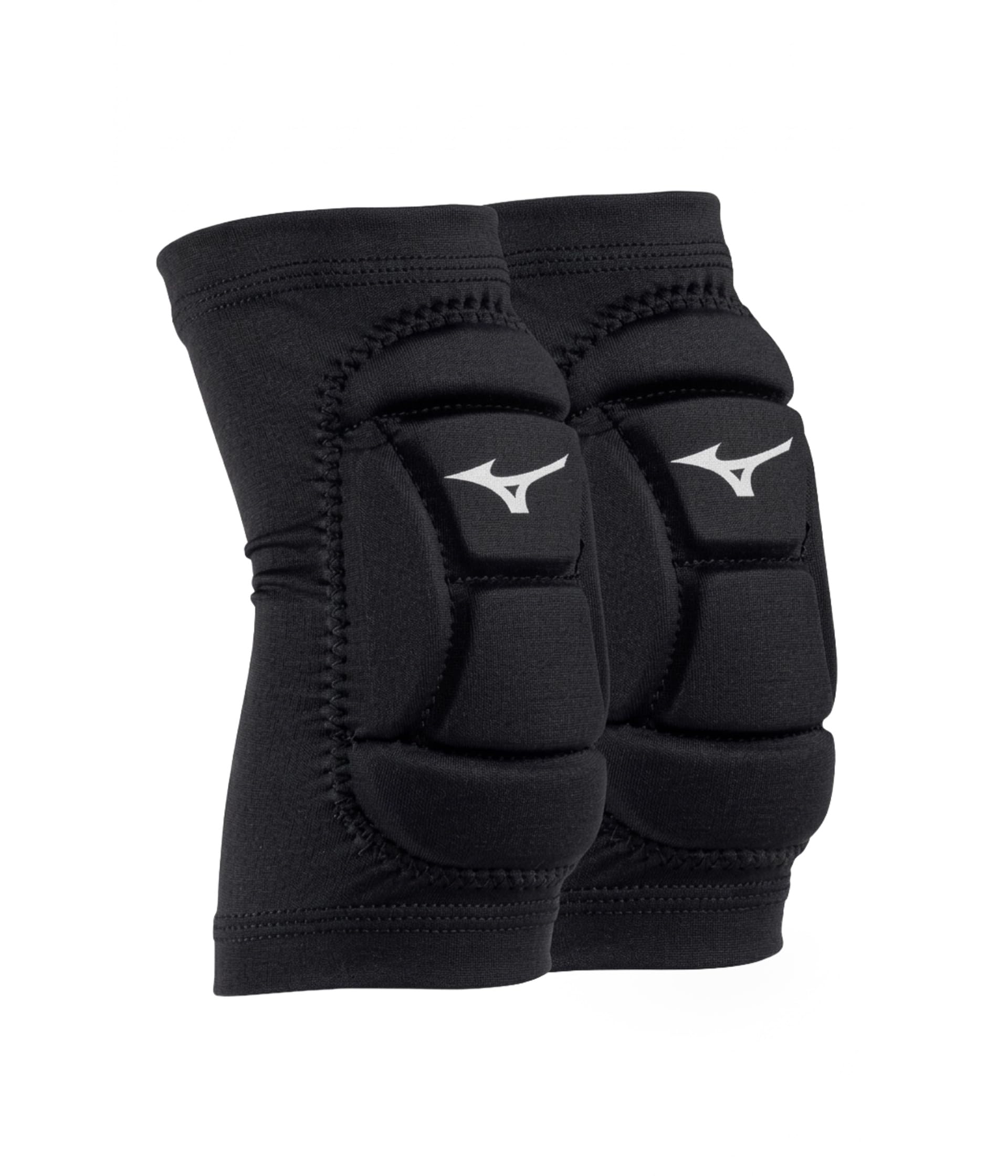
Mizuno MZO Elbow Pads – Best Premium Pick
Key Features
- Pack: Pair
- Padding: High-impact padding
- Material: Polyester, spandex
- Sleeve length: 7 inches
- Price: Premium
Seven inches of sleeve, a dense high-impact pad and a breathable knit: the MZO is the most substantial pad in this group and the only one that wears like serious court equipment. It is sold as a pair, which is the right call at the premium end — a single sleeve for this money would be hard to defend.
If you play on outdoor concrete or take contact on the elbow several times a game, the extra density earns its keep. The foam is broad enough to cover the point and the bony ridge above it, and seven inches of sleeve anchors the whole thing instead of relying on a narrow band. It stays comfortable too: breathable enough for a long practice, soft enough that it is not on your mind between plays.
Durability is the part that gives us pause. Most pairs hold up through a season of practices and games, but some come apart at the seams well before that, and replacing them twice a year gets expensive. Check the stitching when they arrive and treat the pair as match-day gear rather than everyday wear; a guard who rarely hits the floor gets the same job done by the cheaper sleeves here.
Pros
- Dense, broad high-impact padding
- Seven-inch sleeve stays anchored
- Breathable knit for long practices
- Sold as a matched pair
Cons
- Sizing runs small against the chart
We think it is worth the premium if your elbows take real contact: dense padding, seven inches of coverage and a matched pair. Check the sizing first.
AceList Kids Youth Elbow Pads – Best for Young Players
Key Features
- Pack: 1 pair
- Padding: Honeycomb cushion
- Age range: 5 to 15 years
- Price: Midrange
Buying for a child changes the question. Youth arms are short, so an adult sleeve bunches at the wrist and leaves the pad sitting below the point of the elbow, exactly where it does nothing. AceList’s youth pair is sized for that: the YM is listed for 7 to 10 year olds, with the range running from 5 to 15.
The detail that does the work is the wide grip band at the top. On a skinny upper arm that band, not the elbow circumference, is what keeps the sleeve up through a recess game. Measure around the biceps before ordering, and go up a size for a child who is between two, because the band is firm and sits close.
Honeycomb cushioning, a pair in the pack and a band that holds: for a kid in a school team or a weekend league, this is the pair we point parents toward. It is a flexible pad rather than a heavy one — enough for playground falls, floor burn and the odd collision, not for a child who launches himself at the bleachers. For that player, step up to the thicker foam pads.
Pros
- Youth sizing keeps the pad on the elbow
- Wide grip band holds the sleeve up
- Flexible honeycomb cushion over the point
- Two sleeves in the pack
Cons
- Light cushioning for repeated hard falls
For a young player, this is the pair we point parents toward: youth sizing, a grip band that holds, and cushioning for playground falls.
COOLOMG Padded Arm Sleeves – Best for Long, Slim Arms

Key Features
- Sport: Volleyball, football, basketball
- Padding: Padded elbow panels
- Coverage: Arm sleeve
- Price: Midrange
These run tight, and for a padded sleeve that is the right call: the compression is what holds the panel on the point of the elbow instead of letting it float on a loose knit. The padding is soft, bends with the joint instead of stiffening over it, and the sleeve runs far enough down the forearm to cover skin you would otherwise scrape.
Fit is where it gets complicated. The sizing is not true to the chart, and the cut suits a longer, leaner arm better than a short, heavy one — on a shorter arm the pad can sit low. Measure your upper arm and the distance from elbow to wrist before ordering, then take a size up from what the chart suggests.
Wear is the other caveat. The fabric over the pad is thin, and a hole can appear at the elbow after a couple of hard sessions on a rough floor, so treat these as gym sleeves rather than blacktop ones. We see them as the spare pair in a gym bag, or a first padded sleeve for a teenager who objects to bulk.
Pros
- Firm compression holds the pad in place
- Soft padding that moves with the joint
- Covers the forearm as well as the elbow
Cons
- Fabric over the pad wears through quickly
- Sizing is not true to the chart
A snug sleeve we like for slim arms and stocked gym bags, provided you measure first and keep it off concrete.
How We Tested the Best Basketball Elbow Pads
We started with a shortlist of about 30 pairs pulled from sporting-goods shelves, team-gear suppliers, and direct-to-consumer sites, then sorted them on the things that actually decide a purchase: whether the brand publishes a real size chart with bicep or forearm measurements, whether the pad is a compression sleeve or a strap-on, how thick the padding runs at the point of the elbow, and price per pair. Youth and adult sizing were evaluated separately, since plenty of pads sold as adult fit a high schooler and little else.
Fourteen pairs made it into rotation for four months. Two of us wore them to twice-weekly pickup runs, solo shooting sessions, and a steady diet of defensive slides and dive drills on a hardwood gym floor and an outdoor court, plus a rec-league season’s worth of elbows in the paint.
Fit was checked twice: we measured each cuff relaxed and stretched, compared that to the maker’s chart, and then had players with different arm sizes try the same pair so we could see where the size boundaries actually fall. During full 90-minute runs we glanced at the top edge at every timeout to see whether it had crept below the elbow point. We took dives onto the floor and noted whether impact registered as a sting or nothing at all, then wore the pads through bench time to check for sweat pooling, chafing, and pinching in the crease of the arm.
Every pair went through the wash at least four times per its care label, after which we looked at elastic recovery, stitching on the pad pocket, and pilling. Price was judged at the end, not the start — a bargain that flattens in a month isn’t one, and a mid-priced pair that still holds its shape clearly is.
How to Choose Basketball Elbow Pads
A pad only protects the spot it is covering, so fit and placement decide more than how much foam a sleeve advertises.
Pad Type: Hex Grid, Foam Slab or Broad Panel
Three constructions dominate this group, and they wear out differently. A hex pad is a grid bonded under stretch fabric: thin, low profile, and good at absorbing a single hard landing on the point. A solid EVA slab spreads impact across more surface but adds heat and bulk. A broad shield panel is built for sliding contact and floor burn rather than one sharp knock.
Choose by how you hit the floor. A shooter who goes down once a game and a guard who dives three times a quarter do not need the same pad, and the thicker sleeve that protects the second player will annoy the first.
Measure Two Places, Not One
The size chart is the least reliable part of buying a padded sleeve. What holds the sleeve up is your upper-arm circumference; what decides whether the pad covers the joint is the distance from the point of the elbow to the wrist. Measure both with a tape rather than guessing from a T-shirt size.
When you are between sizes, the safe move differs by design: go down for a stretch foam sleeve that needs to grip, and up for a banded sleeve that can dig in. A pad that shifts is a pad you stop wearing.
One Sleeve or a Pair
Not everything here is sold the way you expect — the McDavid HEX Shooter ships as a single sleeve, while most of the others arrive in pairs. Work out the cost per elbow before you compare, because a cheap single sleeve can cost more than a priced pair.
Plenty of players pad only the arm they land on, and nothing says you have to match. A pair also leaves you a spare, which matters more than it sounds once the first one wears through.
Heat and the Bent Elbow
Thick foam is warm, and it creases. With your arm folded into a shooting motion a slab pad bunches behind the joint, and a full-length sleeve traps heat in a gym with no air moving.
Neither bothers a post player or a rebounder, who plays with the arm extended. It bothers a guard taking set shots in a hot gym. If you run hot, take a thin hex or honeycomb sleeve; if you take contact, take the foam and accept the warmth.
What Wears Out First
Expect the fabric over the pad to go before the padding does. The foam usually holds; the knit covering it scuffs on hardwood, thins on concrete and separates at the seam. Wash cold, skip the dryer, and look over the stitching when the sleeves arrive, since heat is what breaks a foam panel apart.
Retire a sleeve once the pad has cracked or the fabric above it has worn through. A pad that no longer spreads the load is just a sweaty sleeve.
Frequently Asked Questions
Are padded elbow sleeves allowed in high school basketball?
Soft, padded sleeves are generally permitted, and officials usually object only to hard shells, exposed straps or anything they judge unsafe. Rules vary by state association and league, so show yours to an official before the first game rather than during it.
Keep a plain compression sleeve in your bag in case you are asked to change. That spare also covers you if a ref reads a thicker pad differently from your coach.
Do elbow pads actually prevent injuries?
They prevent the everyday damage: floor burn, bruising and the swelling that comes from landing on the point of the elbow again and again. What they do not do is stabilise the joint or treat tendon pain — that is a strap or a clinician’s job.
If your elbow hurts when you shoot rather than when you fall, padding is the wrong purchase.
Should the sleeve go on bare skin?
Bare skin, yes. Compression and any grip band need something to hold; over a shooting shirt or a loose tee the sleeve rotates, and the pad ends up behind your elbow instead of on it.
If you want a layer underneath, make it a tight base layer and put the sleeve on last. That order is the difference between a pad that stays on the point for four quarters and one you are tugging at every dead ball.
Final Verdict
Most players should start with the McDavid HEX Shooter. The hex pad sits on the point of the elbow, the compression holds it there through a quarter, and it disappears under a jersey. Order two sleeves if you want both arms covered.
If covering two elbows for the price of one matters more, the AceList pair is the value answer, and the youth AceList set is what to buy for a player under fifteen. The Mizuno earns its premium only if you land on your elbows most weeks.